
A Magical Hotstart: Where Parramatta’s Museum Objects Find New Life
A Magical Hotstart arrives at Powerhouse Parramatta on 26 and 27 November 2026, bringing experimental opera, neurodiverse musicians and the Australian Chamber Orchestra together.
There is something quietly transformative about looking at an everyday object long enough for it to become unfamiliar. A discarded tool, a household appliance or a fragment of machinery can carry the weight of a memory, suggesting a story that has little to do with its original purpose. In a museum, such objects are preserved as evidence of how people have lived. In the hands of an artist, they can become something else entirely.
That movement between the familiar and the unexpected sits at the heart of A Magical Hotstart, an experimental opera by Australian artist Justene Williams, developed in collaboration with nine neurodiverse musicians from Arts & Cultural Exchange’s Club Weld program. The work receives its world premiere at Powerhouse Parramatta on 26 and 27 November 2026, as part of the new cultural institution’s opening festival.
The production brings together contemporary art, original composition, sculpture, costume and live performance. Musicians from the Australian Chamber Orchestra join the Club Weld artists to perform a score developed over 12 months, drawing on research visits to the Powerhouse Collection.
Rather than treating the collection as a static record of technological and social history, A Magical Hotstart approaches it as a source of possibility. Objects become starting points for sound and movement, and the opera creates a space where memory, imagination and collaboration can shape an entirely new experience.
Its arrival is significant not only as a new commission for Powerhouse Parramatta, but as an example of what can happen when a major cultural institution makes room for artists whose methods and perspectives do not fit neatly into established categories.
A Magical Hotstart Begins With An Ordinary Memory
The title carries a practical meaning as well as an artistic one. Hot-starting a car is an act of improvisation, a way of persuading an uncooperative machine to move again. For Williams, the phrase also recalls a personal memory of her mother desperately trying to hot-start her car.
That recollection provides an appropriately everyday beginning for a work that moves between the ordinary and the extraordinary. A familiar frustration becomes a point of departure for a more expansive investigation of objects, images, sound and human connection.
Williams has built a distinctive practice around the collision of different forms. Sculpture, performance, costume and imagery often meet in combinations that resist a single interpretation. In A Magical Hotstart, those elements are brought into conversation with music composed by the Club Weld artists and the historical material held in the Powerhouse Collection.
The result is conceived as an avant-garde opera rather than a conventional narrative production. Its world is shaped by transformations, emotional associations and the unexpected relationships that emerge when objects are viewed from a different angle.
The title also offers a playful way to think about a museum itself. A collection can preserve objects for generations, but preservation alone does not determine how they will be understood. When artists encounter those objects, they can activate new associations and return them to public life through sound, movement and performance.
For Williams, this process sits close to the centre of her artistic practice. She has described the collaboration as a place where radical things can happen through the meeting of image, sound, sculpture and performance. Working with the Club Weld musicians and the Australian Chamber Orchestra has also pushed the work into directions she could not have reached alone.
That exchange is central to the production. The collection supplies material for thought, but the artists determine what that material might become.
From Museum Objects To Living Music
The Powerhouse Collection contains the physical traces of changing technologies, domestic life, industry and design. Objects removed from their original settings can appear remote, separated from the people who used them and the circumstances in which they mattered.
Art can narrow that distance. A machine might suggest rhythm; a domestic object might evoke a private memory; an unfamiliar form might inspire a sequence of sounds or gestures. These associations are not fixed. They develop through the experience and imagination of the people encountering them.
For A Magical Hotstart, research visits to the collection provided the starting material for a year of composition. The nine Club Weld artists – Jerrah Patston, Sienna Acquaro, Charbel Nehme, Adoni, Chris Stiles, Patrick Li, Nina Gotsis, Jonathan Yung and Tua Hunt – developed the score through a collaborative creative process.
Their work is not simply an interpretive layer added to an established composition. The score itself grew from their engagement with the collection, making the musicians’ ideas fundamental to the opera’s structure.
This distinction matters. Collaboration can sometimes be presented as a matter of participation, with different contributors invited into a project whose central direction has already been determined. Here, the composition is described as the product of sustained work by the Club Weld artists, whose creative decisions shape the performance.
The Australian Chamber Orchestra brings another musical perspective to the score. Its musicians work alongside the Club Weld artists, translating and performing the material through their own instruments while responding to the character of the original compositions.
The partnership asks professional musicians to listen and adapt, rather than simply impose a familiar performance framework. It also places the Club Weld composers’ work before audiences in a major cultural setting.
Violinist and ACO project lead Charlie Westhoff has described the collaboration as deeply fulfilling, noting the honesty and rawness of the compositions and the way they have encouraged the orchestra’s musicians to approach their instruments differently.
The process is a reminder that musical exchange is not a one-way transfer of knowledge. Each group brings its own skills and sensibilities, and the work develops through the space between them.
A Magical Hotstart And The Art Of Collaboration
For Arts & Cultural Exchange, the production continues a longstanding commitment to creative practice that makes room for artists to work across disciplines and challenge familiar assumptions about who makes contemporary art.
The organisation’s executive director, Anne Loxley, has worked with Williams since 1994. Their creative relationship provides a long history of shared exploration, but A Magical Hotstart also introduces a new dimension through the participation of the Club Weld musicians and the Australian Chamber Orchestra.
Loxley has described the collaboration as a milestone for ACE, placing the work of neurodiverse professional artists alongside that of an acclaimed contemporary artist on a major new stage at Powerhouse Parramatta.
The significance is not confined to visibility. The musicians are recognised as composers whose work deserves to be heard on its own terms, with their contributions integral to the production rather than peripheral to it.
This is an important distinction in discussions of inclusion in the arts. Access to a stage matters, but so does the opportunity to shape what happens there. A genuinely collaborative project gives artists the space to influence the form, direction and meaning of the work.
In A Magical Hotstart, that principle is reflected in the score’s development over 12 months and in the exchange between the Club Weld artists, Williams and the orchestra. The production brings together different working methods without requiring them to become identical.
The collaboration also continues an existing relationship between Club Weld and the Australian Chamber Orchestra. The two groups previously worked together on a creative development and performance project presented in November 2025. The new opera extends that connection into a larger work, placing the musicians’ compositions at the centre of a public premiere.
Such partnerships can alter how audiences understand artistic expertise. They invite listeners to encounter a work without assuming that originality must arrive through familiar forms, or that a particular musical language belongs to only one kind of performer.
The opera’s value lies partly in that openness. It allows the music to emerge from the people making it, while the wider production provides a setting in which those ideas can meet sculpture, costume and performance.
The Visual World Of A Magical Hotstart
Williams’ approach to performance frequently unsettles the boundaries between objects and bodies, images and sounds, the comic and the uncanny. Her work can begin with recognisable material before moving into a more fantastical register, where familiar forms take on unfamiliar meanings.
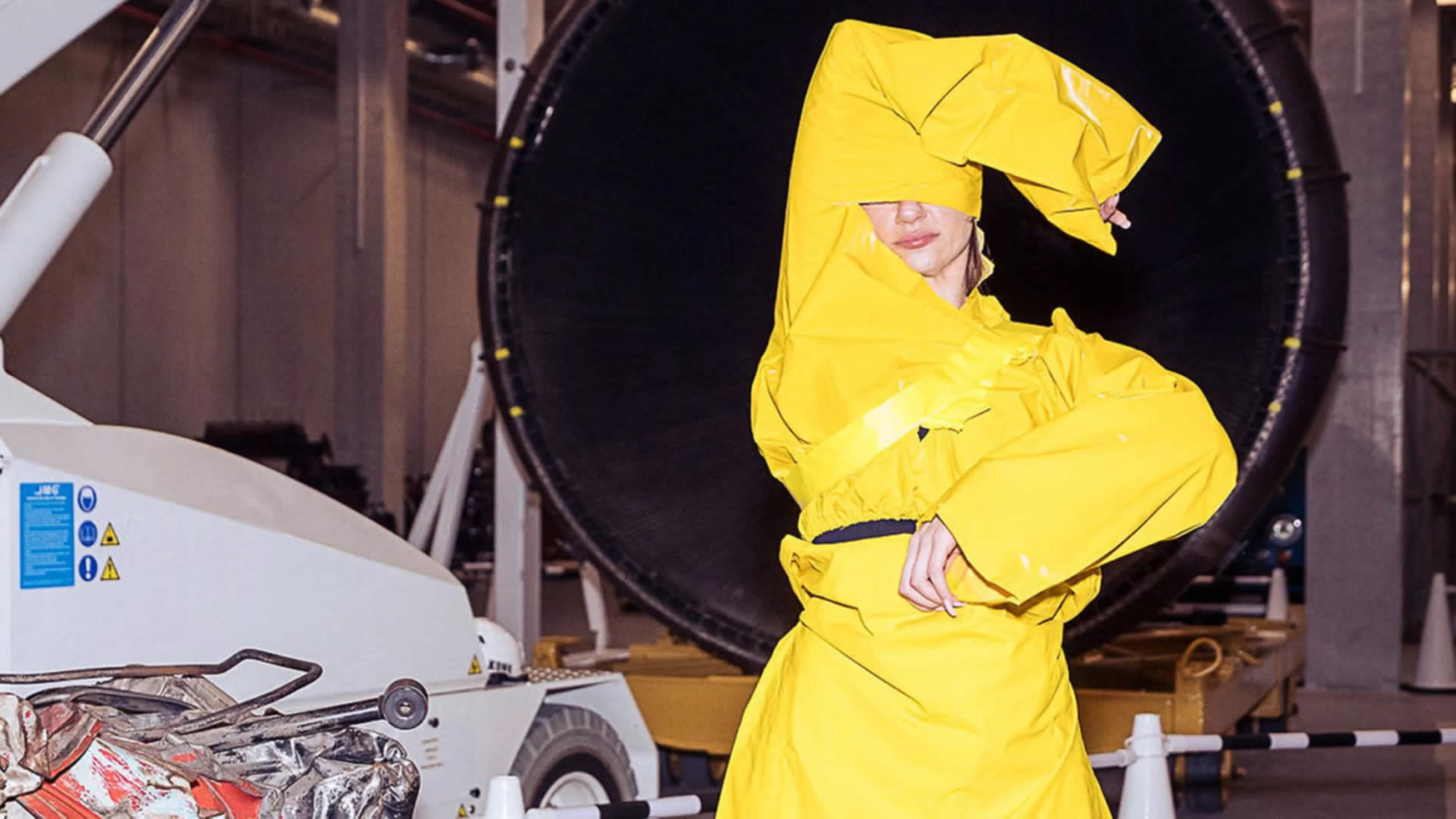
A Magical Hotstart draws on that sensibility. Fantastical costumes and sculptures sit alongside the musical score, helping to create a world that is at once physical and dreamlike.
The combination of forms is particularly suited to a work inspired by a museum collection. Objects are rarely only what they appear to be. They can be practical tools, historical evidence, design statements or repositories of personal memory. When taken out of their original context, they can acquire an unexpected theatrical presence.
The opera offers a way to explore those shifting identities without reducing them to a single explanation. Sound can suggest one association while an image points towards another. A sculpture might appear strange in isolation but become part of a larger pattern when encountered alongside music and movement.
This is not a promise of a neat narrative with every detail resolved. Avant-garde performance often works through accumulation, juxtaposition and atmosphere, inviting audiences to make their own connections as the work unfolds.
For viewers accustomed to theatre built around dialogue and a clearly defined plot, the experience may ask for a different kind of attention. Rather than following a story from beginning to end, audiences can watch relationships form between materials, performers and sounds.
That approach also reflects the way people encounter collections in everyday life. A visit to a museum rarely follows a single narrative. Attention moves from one object to another, guided by curiosity, recognition and the occasional detail that unexpectedly stays in the mind.
In this production, those encounters become part of the artistic language.
Powerhouse Parramatta And A New Cultural Chapter
The choice of venue gives the premiere an additional layer of meaning. Powerhouse Parramatta is part of a major expansion of Sydney’s cultural landscape, bringing a significant museum institution into a part of the city with its own deep histories, communities and creative energy.
Its opening festival, running from 7 to 29 November 2026, provides the setting for A Magical Hotstart. The festival positions the new institution as a place for encounters between collections, contemporary practice and public life. Williams’ opera fits naturally within that ambition because it treats the collection not as a closed archive, but as material that can be reinterpreted by artists working now.
Parramatta has long been a meeting place for different histories and perspectives. As the city continues to grow, cultural institutions have an opportunity to reflect the people who live around them and to create space for work that speaks to experiences beyond the traditional centre of Sydney’s arts scene.
For Powerhouse acting chief executive Abbie Galvin, A Magical Hotstart embodies the possibilities of the new institution. The project connects objects from the collection with artists who reimagine them, while drawing on the creative communities around Parramatta.
The relationship between place and programme is important. A museum’s collections may travel across time and geography, but the meaning of an exhibition or performance is also shaped by where it appears and who gathers to experience it. A premiere in Parramatta places this collaboration within a wider story about how Sydney’s cultural life is developing beyond the central city.
The opening festival gives audiences an opportunity to encounter the new venue through a range of events, with this opera offering a particularly layered introduction. It brings together contemporary art, original music and a collection that has long documented the ways people make, use and understand the world around them.
What Audiences Can Expect
The work is best approached with a willingness to follow its changes in mood and form. The combination of experimental opera, sculpture, fantastical costumes and a live ensemble suggests an experience that moves between different artistic languages rather than remaining within one established genre.
At its centre is the score created by the Club Weld artists. The Australian Chamber Orchestra’s involvement adds another dimension, with the musicians working together to bring the compositions into performance. Williams’ visual and theatrical approach surrounds that musical exchange with images and forms inspired by the Powerhouse Collection.
There is no need to know the objects that informed the work before arriving. The collection provides the starting point for the artists, but the performance is intended to make its own world. Audiences can engage with it through sound, movement and the emotional associations that arise along the way.
The Thursday performance also includes a post-show conversation between Williams and Loxley, exploring how artificial intelligence is reshaping creative practice. The discussion extends some of the questions raised by the opera itself: how artists work with new tools, how ideas move between different forms and what happens when established creative processes are challenged.
It offers an opportunity to hear directly from two artists whose professional relationship stretches back three decades, and to consider the broader questions surrounding contemporary art after experiencing the work.
The production’s themes are not limited to technology or museum history. Its deeper interest lies in the relationships that form when people, objects and disciplines are brought together. A memory of a car that refuses to start becomes a title; collection objects prompt a year of composition; musicians from different backgrounds develop a shared performance.
Each transformation begins with something tangible, then moves beyond its original purpose.
Event Details
A Magical Hotstart receives its world premiere at Powerhouse Parramatta on Thursday 26 and Friday 27 November 2026, with both performances scheduled for 6.30 pm.
The venue is Powerhouse Parramatta, 34 Phillip Street, Parramatta, NSW. The work is presented by Arts & Cultural Exchange in collaboration with Justene Williams and features the nine Club Weld musicians performing their original score alongside musicians from the Australian Chamber Orchestra.
Tickets are $25 for standard admission and $15 for concession, with free entry for children aged 16 and under. The Thursday performance includes a post-show conversation with Williams and ACE executive director Anne Loxley.
The premiere forms part of Powerhouse Parramatta’s opening festival, which runs from 7 to 29 November 2026.
For tickets and further information, visit the official Arts & Cultural Exchange event page: https://aceinc.org.au/whats-on/a-magical-hotstart
When The Familiar Becomes Something Else
A museum object can remain silent for decades, understood through its label, its date and the purpose it once served. Then someone looks at it differently. Its shape suggests a movement, its history opens a memory, or its ordinary function becomes the beginning of an unlikely idea.
A Magical Hotstart builds its world from that possibility. It brings together artists, musicians and objects without insisting that they speak in a single voice. Instead, it makes space for unexpected connections, allowing the score and its visual elements to develop through collaboration.
The result places the act of making at the centre of the experience. It asks what might happen when the familiar is approached with curiosity, and when creative work is allowed to emerge from perspectives that do not always share the same starting point.
As Powerhouse Parramatta opens its doors to a new chapter of cultural life, the opera offers a fitting invitation: to look again at what is already around us, and to consider what it might become when someone finds a different way to see it.