
Celebrate History Week across NSW from 5 to 13 September as more than 60 events explore how stories preserve places, people and community memory.
History rarely announces itself.
It sits quietly in the names of streets, in the shape of old verandahs and in photographs tucked into family albums. It survives in cemetery inscriptions, in buildings that have outlasted the people who built them, and in stories repeated around kitchen tables until nobody quite remembers who first told them.
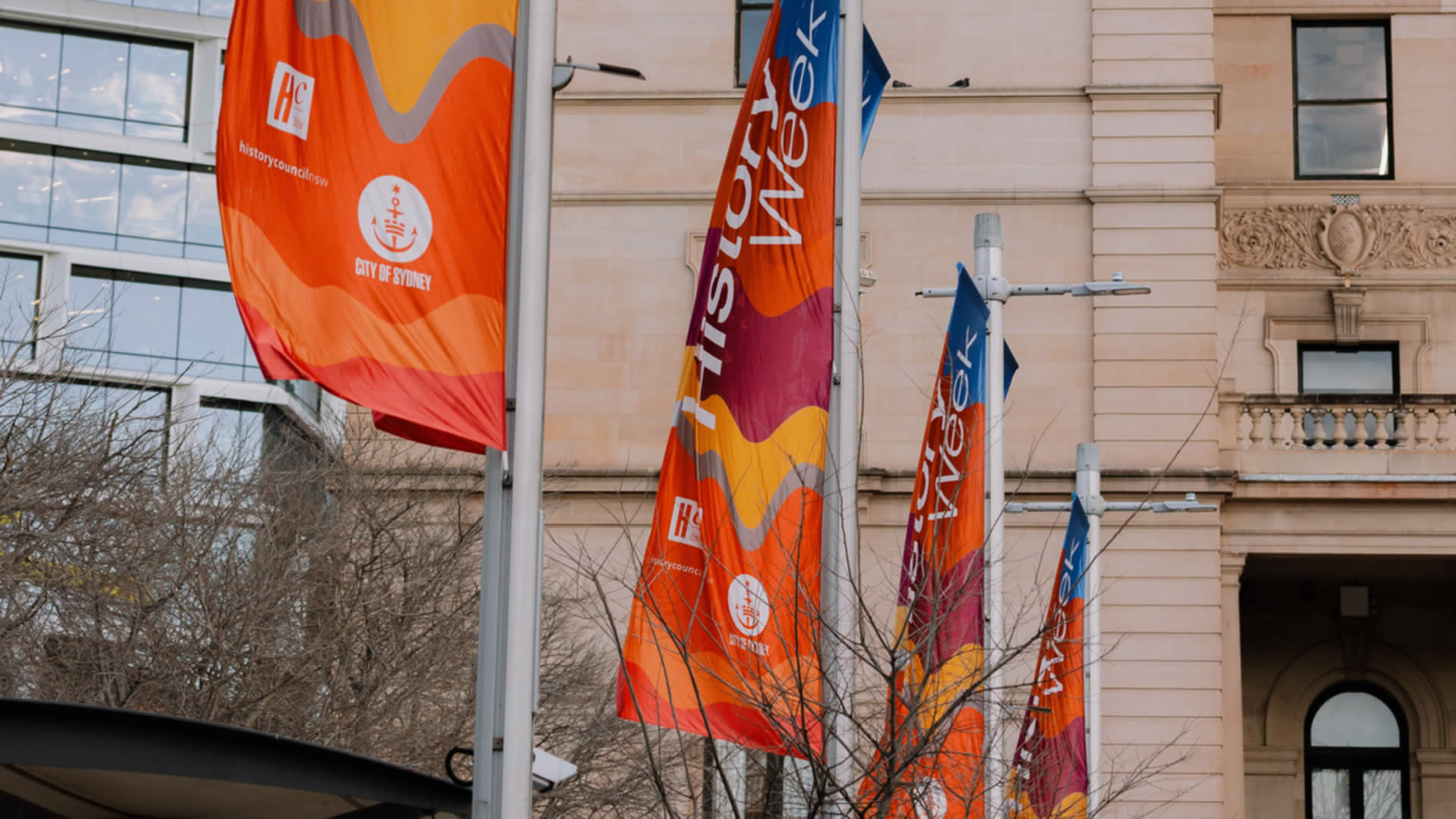
In early September, those fragments come together across New South Wales for History Week, the annual state-wide celebration organised by the History Council of NSW.
This year's theme is Keeping Stories, a deceptively simple idea that asks a larger question: how do stories keep history alive, and what do they tell us about ourselves?
From 5 to 13 September, more than 60 events take place across the state. There are talks and lectures, heritage walks, exhibitions, behind-the-scenes tours, open days, film screenings, book launches and opportunities to encounter places and collections that are not always visible in everyday life.
For Sydney, where layers of history are often compressed into a surprisingly small area, the week offers an opportunity to look again at the city and its surrounding communities.
Some stories are grand. Others are personal.
Many are both.
Why History Week Matters Now
History Week began in 1997 as an initiative of the History Council of NSW, giving organisations across the state an opportunity to engage the public with history and the work of historians.
Nearly three decades later, the premise remains straightforward but increasingly relevant.
Cities change quickly. Buildings disappear. Industries move elsewhere. Streets are renamed. Development alters familiar neighbourhoods. People who carry memories of earlier Sydney pass away, taking stories with them unless those stories are recorded and shared.
This year's theme places that act of remembering at the centre of the programme.
Keeping a story does not necessarily mean preserving every detail unchanged. Oral histories evolve. Family memories can conflict. Written records reveal things that personal recollections overlook, while personal stories can give emotional meaning to facts that might otherwise remain distant.
History exists somewhere between those forms of evidence.
That makes storytelling particularly important.
A photograph can show what a street looked like. A person's recollection might explain what it felt like to live there.
One tells us about a place.
The other tells us why it mattered.
Celebrate History Week Through Local Stories
The strength of History Week is its scale.
Rather than concentrating history inside a handful of major institutions, the programme reaches into communities throughout New South Wales. Local historical societies, libraries, museums, community organisations and heritage groups contribute events that often begin with a very specific place or collection.
That local focus can make history feel more immediate.
A heritage trail might follow a few streets and reveal traces that residents pass every day without noticing. An exhibition might draw on photographs donated by local families. A talk might explore an industry that once employed hundreds of people in a suburb that now looks entirely different.
These are not necessarily the stories that appear in school textbooks.
They are the stories that give a place its texture.
Sydney is particularly rich in them. Its history is not confined to the sandstone monuments of the CBD. It extends through the Inner West, along the harbour, into the western suburbs and beyond the metropolitan boundary to regional towns and rural communities.
History Week provides a reason to follow those connections.
Keeping Stories In Sydney
The theme of Keeping Stories has a natural resonance in Sydney.
The city is often described through its landmarks, but its character is equally shaped by less obvious places. A former factory may explain the growth of a suburb. A school archive may reveal generations of changing attitudes. A community hall might contain photographs that document decades of local celebrations.
Even familiar neighbourhoods can contain histories that remain largely invisible.
A walk through an established suburb can become a kind of informal archive. Federation houses, post-war apartment blocks, shopfronts and civic buildings represent different moments in the city's growth. Some have been carefully preserved. Others have changed almost beyond recognition.
The stories attached to them can disappear even faster.
This is where events such as talks, exhibitions and heritage trails become useful. They create a meeting point between physical places and the people who know their histories.
During History Week, a building is not simply an old building.
It becomes evidence.
A photograph is not merely an old image.
It becomes testimony.
The Stories We Choose To Keep
There is also a more complicated question beneath the theme.
Which stories survive?
Historical records have never been neutral. Some people and institutions had greater opportunities to document their lives than others. Official records tend to preserve the activities of governments, businesses and established organisations, while everyday experiences can be harder to find.
Oral history helps fill some of those gaps.
So do family collections, community archives, diaries, letters and photographs.
The process of keeping stories can therefore change the historical record itself. When a community chooses to document the experiences of people whose voices were previously overlooked, the picture of the past becomes broader.
History Week provides space for those conversations.
It also reminds audiences that preserving history is not simply about looking backwards.
The decisions being made now determine what future generations will be able to understand about the present.
The Annual History Lecture
One of the central events of the week takes place in Sydney on Friday 11 September, when the History Council of NSW holds its Annual History Awards and Lecture at Glebe Town Hall.
This year's Annual History Lecture is delivered by Richard Neville, the Mitchell Librarian.
The choice of venue is fitting.
Glebe Town Hall has its own place within Sydney's civic history, and Glebe itself remains a suburb where the layers of the city's development are particularly visible. Victorian terraces sit alongside later buildings, community institutions and modern development, creating a physical record of changing ideas about how Sydney should grow.
Within that setting, the lecture turns attention towards the wider practice of history.
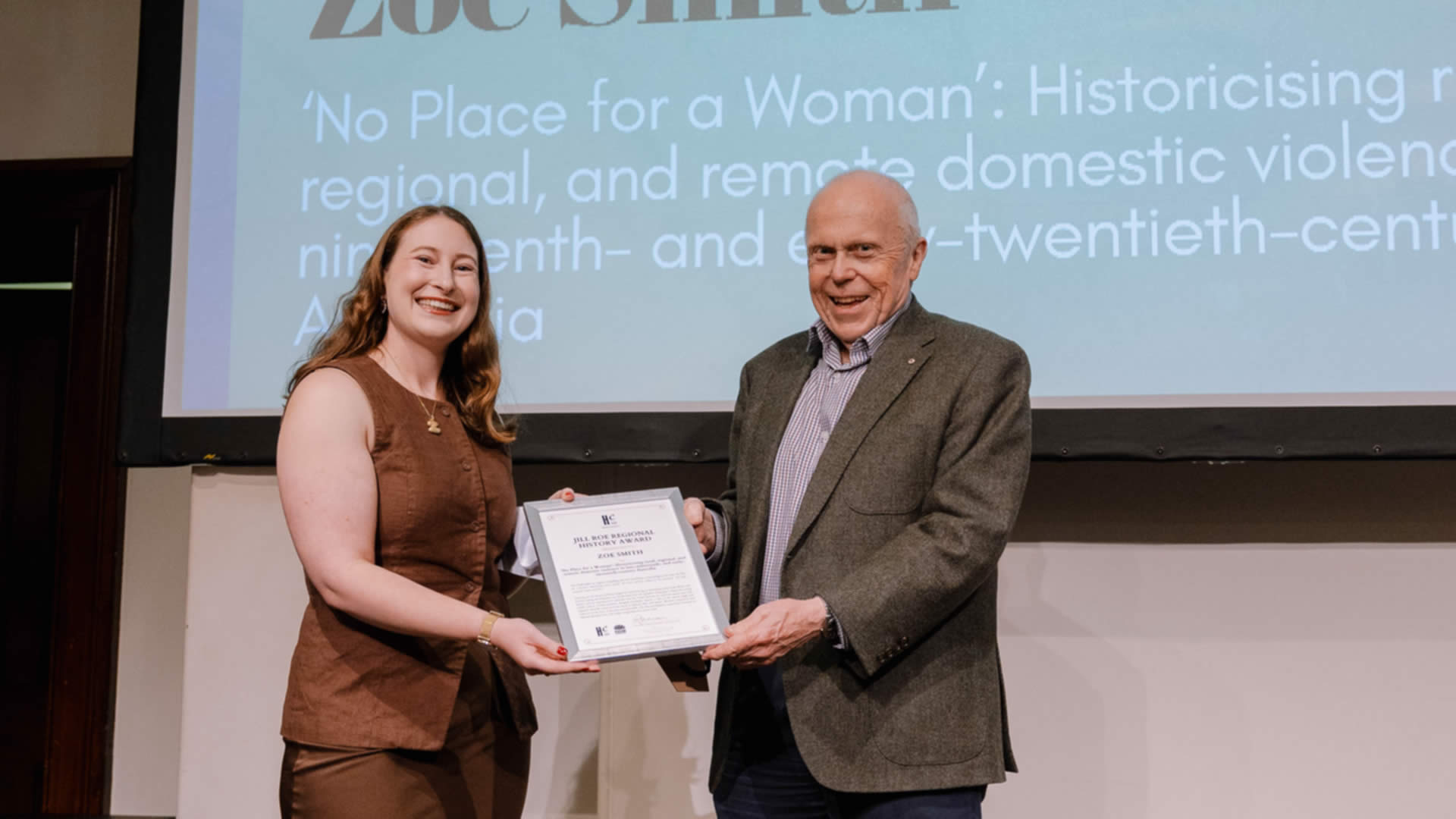
The History Awards also recognise work that contributes to the understanding and preservation of the state's past.
Awards can sometimes seem removed from everyday historical experience, but they highlight an important point. History is not kept alive automatically. Researchers, archivists, volunteers, curators, writers, community groups and families all make choices about what gets recorded, preserved and passed on.
More Than A Week Of Events
The programme extends well beyond a single central celebration.
Across the nine days, participating History Council of NSW member organisations present a varied collection of events connected to Keeping Stories.
Some are conventional forms of historical engagement. Talks and lectures allow researchers to explain new findings or revisit familiar subjects from another perspective. Book launches provide opportunities to encounter recently published histories.
Elsewhere, the format becomes more experiential.
Behind-the-scenes tours can reveal collections normally kept away from public view. Heritage trails connect historical information to the streets where events actually happened. Open days invite visitors into homes, gardens and buildings that may rarely be accessible.
Exhibitions work differently again.
A museum display can bring together objects that are separated by decades or generations, allowing visitors to make their own connections. Film programmes can preserve memories through moving images, while podcasts extend historical storytelling beyond physical venues.
The variety matters.
Not everyone encounters history in the same way.
For some people, a lecture is the most compelling format. Others understand a place better by walking through it, looking closely at its architecture and hearing stories attached to particular buildings.
History Week accommodates both.
A State Connected By Memory
Although many events are in Sydney, History Week belongs to the whole of New South Wales.
That matters because the state's history cannot be understood from Sydney alone.
Regional communities have their own archives, landscapes and memories. Agricultural towns, coastal settlements, mining communities and inland centres have developed histories shaped by industries, migration, environmental change and changing transport networks.
The stories of those places are different from Sydney's, but they also connect with it.
People move between regions. Goods travel along the same roads and railways. Families spread across the state. Industries rise and decline in response to decisions made elsewhere.
A state-wide history celebration makes those connections easier to see.
The result is not one single story of New South Wales, but many stories existing alongside one another.
How To Find A History Week Event
With more than 60 events taking place during History Week, choosing where to begin depends largely on what kind of history interests you.
The official events calendar is the most useful starting point. It allows visitors to search the programme and identify events taking place in their local area.
For Sydney residents, that might mean finding an event within walking distance of home. For others, it may provide a reason to explore a neighbouring suburb or make a day trip further afield.
It is worth approaching the programme without the expectation that every event needs to provide a definitive account of the past.
History is rarely definitive.
A local talk might introduce a question rather than settle one. A heritage walk might make a familiar street look different without changing anything physically. An old photograph might raise more questions than it answers.
Those moments of uncertainty are part of the value.
They encourage people to look more carefully.
Official History Week events calendar: History Council of NSW
Keeping Stories For The Future
There is an everyday version of History Week that does not require an exhibition, lecture or heritage trail.
It begins with asking someone to tell a story.
An older relative describing a childhood street. A neighbour remembering a shop that disappeared decades ago. Someone explaining why a particular building mattered to their family. A photograph whose people have not been identified.
These small acts of remembering can seem insignificant while they are happening.
They become more valuable with time.
The theme of Keeping Stories recognises that history is not only something found in archives. It is also carried by people. Sometimes it survives because somebody writes it down. Sometimes because a photograph is labelled. Sometimes because a story is told often enough that another generation learns to tell it too.
But keeping stories also involves deciding how they should be preserved and whose voices should be included.
That makes History Week a celebration, but also an invitation to pay attention.
Looking At Sydney Differently
The most rewarding way to approach History Week may be to resist the idea that history belongs somewhere else.
It is already here.
It is under the paving stones, behind altered shopfronts and inside community halls. It is present in the names of suburbs and streets, in old industrial sites and public buildings, in gardens that have survived changing fashions and in photographs that show how quickly a familiar landscape can disappear.
For nine days, History Week gives those stories a little more room.
The city continues around them. Trains run, construction sites operate, ferries cross the harbour and new buildings rise. Sydney keeps changing, as cities must.
But the past does not disappear simply because the landscape changes.
Sometimes it remains in a document.
Sometimes in a building.
And sometimes, most simply, in a story someone remembers well enough to tell.
Celebrate History Week Across NSW
History Week runs from 5 to 13 September 2026 across New South Wales, with more than 60 events exploring this year's theme, Keeping Stories.
The programme includes talks and lectures, behind-the-scenes tours, heritage trails, exhibitions, podcasts, film festivals, open days, book launches and other community events.
The History Council of NSW Annual History Awards and Lecture takes place on Friday 11 September 2026 at Glebe Town Hall, with the Annual History Lecture delivered by Richard Neville, the Mitchell Librarian.
For dates, locations, booking information and the full programme, visit the official History Council of NSW Events Calendar at https://historycouncilnsw.org.au/whats-on-2/.