
Children Of The Holy Dove will bring poetry, movement, music and immersive video to Redfern from 28 August, exploring humanity’s changing relationship with the Earth.
On a winter evening in Redfern, the city will begin to recede as the lights come up inside a small theatre on Regent Street.
Outside, the neighbourhood will continue at its familiar pace. Trains will move through Redfern Station, traffic will pass along Regent Street and people will make their way home through one of Sydney’s most historically layered inner-city suburbs. Inside Actor’s Pulse, however, the focus will shift away from the immediate city and towards something much larger.
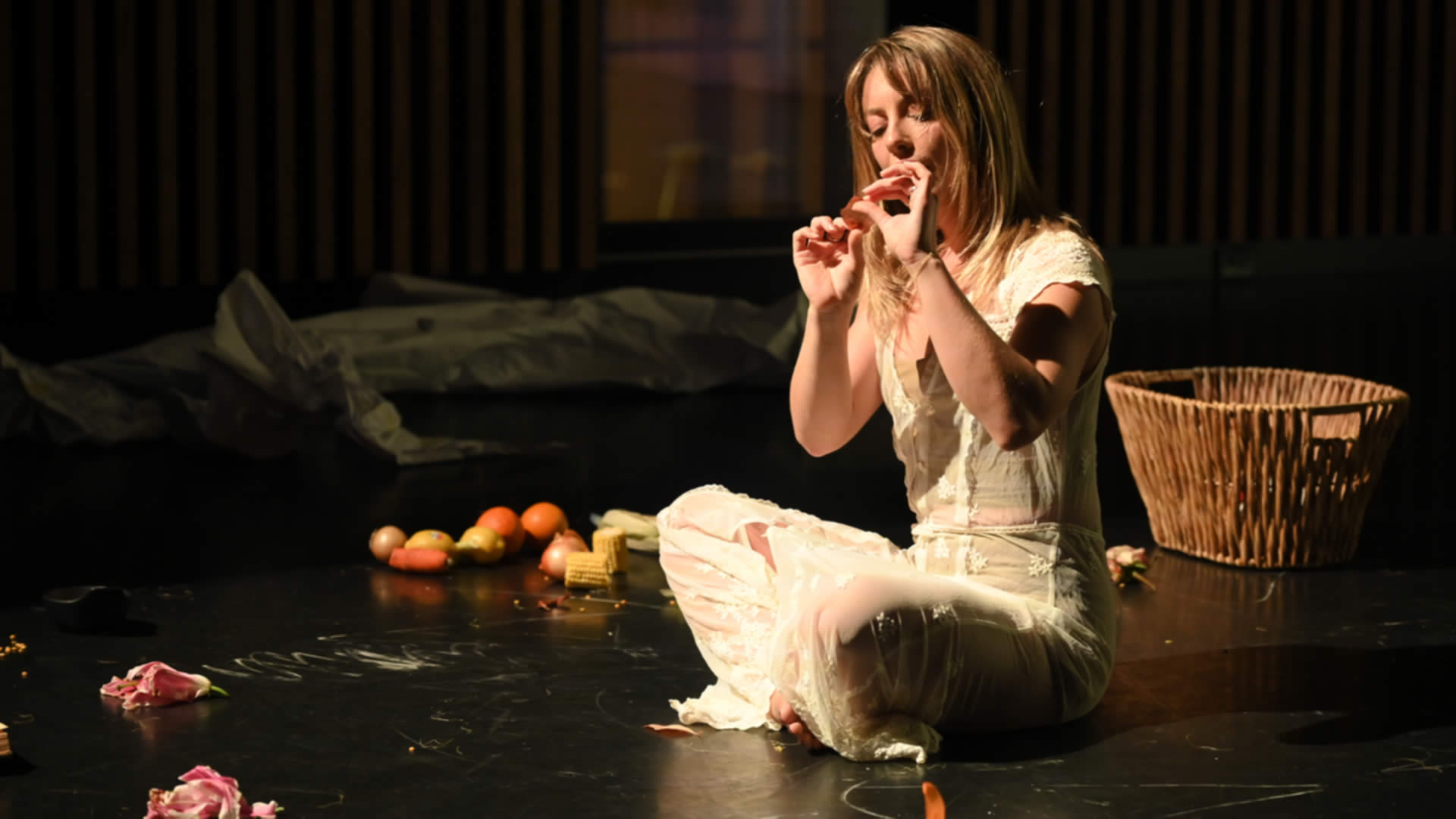
Children Of The Holy Dove will present Paradise Now (Redux), an experimental work combining spoken poetry, song, dance and immersive video in an attempt to find a contemporary language for the Earth.
The production will return to Sydney following earlier presentations in the city and Illawarra, as well as performances in Romania and Bulgaria. It will arrive at Actor’s Pulse in Redfern for three performances across the final weekend of August, offering audiences an evening that will move between poetry, philosophy, movement and images.
At its centre will be a deceptively simple question: how do we see the Earth as a whole?
It is a question that became newly visible in the late twentieth century, when photographs taken from space offered humanity an unprecedented view of its own planet. The production will begin from that moment of expanded perspective and follow a path through modern poetry and the traditions of earlier cultures.
Rather than presenting an argument in conventional theatrical form, Children Of The Holy Dove will seek to create an experience of wonder.
Children Of The Holy Dove And The View From Space
The story begins before the audience enters the theatre.
In December 1968, the crew of Apollo 8 became the first humans to travel around the Moon. From that distance, they saw something no human being had previously experienced in quite the same way: the Earth suspended against the darkness of space.
The image of the blue planet rising above the lunar horizon would become one of the defining photographs of the twentieth century.
For Paradise Now (Redux), that moment provides a point of departure.
The production will consider what happened when humanity suddenly gained the ability to see the Earth as a single, fragile object rather than a collection of countries, borders and territories. The perspective was physical, but its implications were philosophical.
If the Earth could be seen as one living whole, how should people speak about it?
And what happens to that sense of wonder in a world marked by conflict, environmental uncertainty and constant political division?
These questions will shape the work without necessarily being answered directly.
Theatre will instead become a place to consider them.
Poetry As A Language For The Earth
The production will draw on poetry from modern writers as well as the words and ideas of earlier cultures.
This mixture will allow the performance to move beyond the vocabulary of contemporary environmental discussion. Rather than treating the Earth solely as a scientific or political problem, Paradise Now (Redux) will explore the possibility that poetry may offer another way of understanding it.
That approach will give the work its distinctive character.
Poetry does not always explain. Sometimes it asks an audience to notice something that has become invisible through familiarity. A tree, a night sky, the changing seasons or the simple fact of standing on a planet can become strange again when described from a different perspective.
Children Of The Holy Dove will work within that space between explanation and sensation.
Words will be accompanied by movement, music and projected imagery, allowing the ideas to be experienced through several forms at once.
The result will be closer to a theatrical collage than a conventional play.
From Sydney To Eastern Europe
The production has already travelled beyond Sydney.
Previous presentations have taken place in Sydney and the Illawarra, followed by international performances at venues including Inculise Bucharest, the National People's Theatre in Sofia and Theatre Bacovia in Bacau.
That journey will form part of the work's character.
A production concerned with the Earth as a shared place will have itself moved between different cultural settings. The questions it explores may be universal, but audiences will inevitably encounter them through their own surroundings and experiences.
In Sydney, the work will arrive in a city shaped by its relationship with the harbour, the coastline and the natural landscape surrounding the metropolitan area.
The theatre itself will be much smaller than the vast spaces imagined by the work's central ideas.
That contrast may prove useful.
A small room in Redfern can become a place to contemplate the planet, just as an image from a spacecraft can make the entire Earth seem unexpectedly intimate.
Movement, Song And Immersive Images
At Actor’s Pulse, the performance will unfold through several artistic forms.
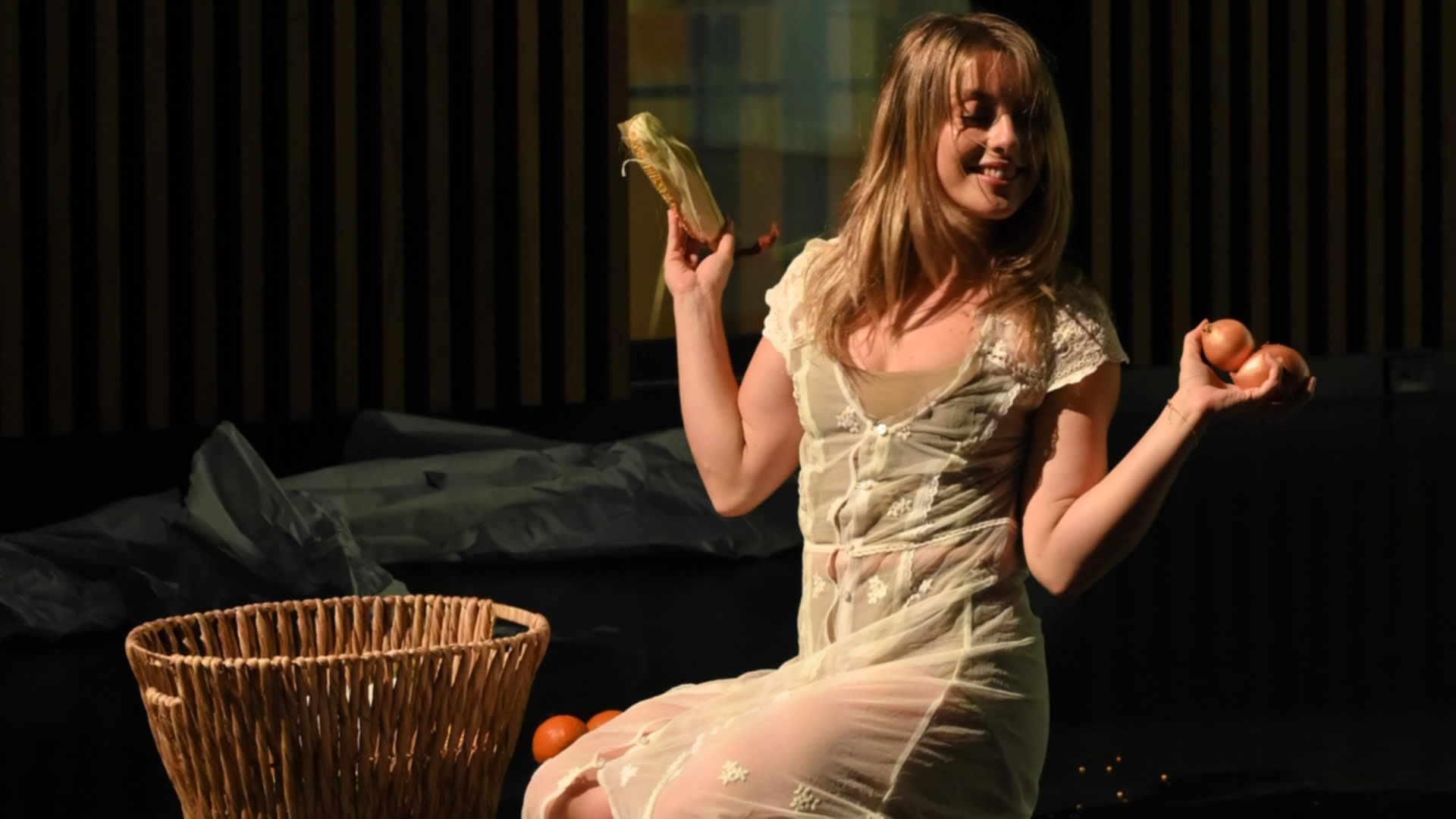
Claudia Cappeau will perform, sing and choreograph the work, with Geoffrey Sykes and Cappeau co-directing. Sykes will be credited as the creator, while video will be provided by Film South and Richard Jones.
The production's visual component will be particularly important.
Projected images will work alongside live performance rather than simply illustrating the words. This will allow the audience to move between the physical presence of the performer and larger, more abstract images of the world beyond the theatre.
Cappeau's background spans ballet, journalism, musical theatre, drama and film, while her recent work has included acting in short dramas in China. Her experience across different forms will suit a production that refuses to settle into one medium.
Sykes brings a long history of multidisciplinary theatre and arts projects, with more than 30 productions presented across Sydney, Melbourne, Adelaide, Canberra and Wollongong, as well as work shown at galleries, museums, schools and public venues.
Their collaboration will give Paradise Now (Redux) a deliberately open structure.
The audience will not simply be watching a story unfold. It will be invited to move through a sequence of impressions and ideas.
Children Of The Holy Dove And The Theatre Of Wonder
There is a particular kind of theatrical experience that depends less on plot than on atmosphere.
Children Of The Holy Dove will belong to that tradition.
Its subject is enormous, but the performance will approach it through intimate human gestures. A voice speaking poetry in a darkened room can feel unexpectedly close. A projected image can make a familiar landscape seem unfamiliar. A movement across a stage can suggest an idea that words cannot quite contain.
This is where the production's emphasis on wonder will become important.
Wonder is often associated with childhood, but it can also be understood as a way of looking. It asks an audience to suspend certainty for a moment and see something again as though it were new.
The Earth is perhaps the ultimate example.
Most people in Sydney will spend their lives surrounded by reminders of its physical presence without thinking consciously about the planet itself. Roads, buildings and technology create layers between daily life and the natural systems that sustain it.
A theatre performance can temporarily strip some of those layers away.
A Redfern Setting For A Global Question
Actor’s Pulse at 103 Regent Street will provide an intimate setting for the performances.
Redfern is an appropriate place for a work concerned with perspective and belonging. The suburb has undergone enormous change while retaining a strong sense of history and identity. Its streets contain traces of different eras of Sydney, and its proximity to the CBD places it between the commercial centre and the city's inner neighbourhoods.
The audience will arrive from that urban landscape and enter a performance concerned with an even larger one.
There will be no need for a grand stage to establish the scale of the subject.
Instead, the contrast between the small theatre and the vastness of the Earth will become part of the experience. The audience will sit together in a room while the performance looks outward, towards space, history, nature and the shared planet beneath it.
That intimacy may also make the questions feel more personal.
The Earth can seem impossibly large when discussed as an environmental or political issue. In a theatre, the conversation can return to the individual.
What do we notice?
What do we value?
And what language do we use when the thing we are trying to describe is larger than any one person?
Kingdom Of Air And Thoreau
The program will also include Kingdom Of Air, a work centred on Henry David Thoreau.
Thoreau's time living simply at Walden Pond has become a foundational story in modern environmental thought. His writing explored nature, solitude, society and the relationship between individual freedom and the world beyond the self.
Kingdom Of Air will place Thoreau alone in his hut at night, combining philosophy, comedy, satire and inspiration.
This will provide another perspective on the broader themes of the program.
Where Paradise Now (Redux) will look outward from Earth towards space and across cultures, Kingdom Of Air will turn inward towards one individual contemplating the natural world.
The two works will therefore approach similar concerns from different distances.
One begins with the planet seen from beyond it.
The other begins with a person sitting alone within it.
Together, they will suggest that environmental awareness can exist at both scales.
A Performance Still In Development
Although the work has already been presented in several locations, it will not arrive in Redfern as a fixed historical piece.
Paradise Now (Redux) has continued to develop, including a showcase presentation at the City of Sydney Creative Studios in May 2026. The Redfern performances will therefore represent another stage in its evolution.
That ongoing development is particularly suited to experimental theatre.
The work's central questions do not have simple conclusions, and the production can change as performers, collaborators and audiences encounter it in different places.
The associates involved in the current project include Jacinta Yardin and Adrien Stark, adding to a creative team that crosses performance, direction, choreography and film.
For audiences, this means the Redfern presentation will be less about seeing a finished monument and more about encountering a work still in conversation with itself.
An Evening Between Earth And Memory
The performances will run for approximately one hour and 50 minutes, including an interval.
That length will allow the audience to settle into the rhythm of the work rather than passing quickly from one idea to another. The interval will also create a natural pause between the different sections of the program.
For a piece concerned with the speed and complexity of modern life, the theatre will offer something increasingly unusual: sustained attention.
Phones will be put away. The lights will dim. A room of strangers will watch the same images and listen to the same words.
For a short period, everyone will occupy the same physical space and the same imaginative landscape.
That shared attention is one of theatre's oldest qualities, but it remains particularly powerful when the subject is something as universal as the planet itself.
Looking Outward From Redfern
When the performance ends, the audience will return to Regent Street.
Sydney will still be moving.
Cars will pass through the intersection, trains will continue along the lines beyond the suburb and the lights of the city will remain visible in the distance. The ordinary world will not have changed simply because a performance has ended.
But the way it is seen may have shifted slightly.
That is perhaps the most interesting possibility offered by Children Of The Holy Dove.
The production will not promise solutions to war, environmental crisis or humanity's complicated relationship with the natural world. Instead, it will ask whether attention itself can be a beginning.
The photographs taken from space half a century ago changed the way people imagined Earth. Paradise Now (Redux) will return to that sense of astonishment and ask whether it can still be recovered.
In the quiet after the final performance, the idea may linger.
The Earth will remain outside the theatre, immense and familiar at once.
And for a moment, after an evening of poetry, music, movement and projected images, it may be possible to look at the world around Redfern with slightly different eyes.
Event Details
Event: Children Of The Holy Dove – Paradise Now (Redux) and Kingdom Of Air
Dates: Friday 28 August and Saturday 29 August 2026 at 7:30pm; Sunday 30 August 2026 at 4:00pm
Duration: Approximately 1 hour 50 minutes, including interval
Location: Actor's Pulse, 103 Regent Street, Redfern, Sydney
Performance: Claudia Cappeau
Created By: Geoffrey Sykes
Co-Directed By: Geoffrey Sykes and Claudia Cappeau
Video: Film South and Richard Jones
Associates: Jacinta Yardin and Adrien Stark
Bookings: TryBooking – Children Of The Holy Dove
Event details are based on information supplied by the production and may be subject to change. Check the official booking page before attending.