
Distillery Botanica will introduce a new chapter in its Central Coast story with Luscious, a small-batch dark rum aged for almost three years in Erina.
There will be a moment, somewhere among the subtropical gardens of Erina, when the familiar scents of Distillery Botanica will give way to something deeper.
The sharp green lift of fresh botanicals will still be present. So will the herbs, flowers and foliage that have long formed part of the character of this tucked-away Central Coast distillery. But inside the barrel room, beneath the gardens, another scent will linger – oak, caramel, dried fruit, spice and the warm sweetness of aged spirit.
This will be the territory of Terrigal Rum Co, the newest chapter in the story of Distillery Botanica.
Almost three years after the first dark rum was laid down to mature, the distillery will release Luscious, its first premium dark rum. The limited-edition spirit will mark a departure from the gins for which master distiller Philip Moore has become known, although the move will be less a change of direction than an expansion of an already long-running fascination with botanicals, fermentation, distillation and the slow influence of wood.
The timing will also be significant.
Distillery Botanica has spent almost two decades establishing itself as one of Australia's small-scale craft distilleries. Now, as Australian rum continues to develop its own identity, Moore will be turning his attention to the darker, slower side of the spirit-making process.
For visitors arriving at the Erina distillery in the months ahead, the experience will offer a chance to taste a spirit that has spent years quietly changing in barrels just a short distance from the gardens.
Distillery Botanica And The Making Of Luscious
Luscious will begin with Australian molasses sourced from the Clarence River Valley, together with wine yeasts from France, Italy and Australia.
The fermented spirit will then be distilled in a hybrid copper still before beginning the longer process of maturation.
This is where the character of the new rum will develop.
Rather than relying on a single barrel, the spirit will have been aged through a combination of woods, including new medium-toast American oak, second-fill bourbon and barrels that previously held Jack Daniel's Tennessee whiskey and 60-year-old brandy. Each will contribute something different to the final spirit.
Time will do much of the remaining work.
The resulting rum will carry aromas of honey, peach, cinnamon, hazelnut, allspice, marmalade and toffee. On the palate, the distillery describes a rich, honeyed texture accompanied by baked dessert spice, caramel, dried fruit and ginger, followed by savoury tannins that will linger after the spirit has been swallowed.
It is a considerably different vocabulary from the bright citrus and botanical notes associated with gin.
Yet the connection to the garden will remain.
Distillery Botanica was established around the idea that plants can be more than decoration. Its gardens supply inspiration, ingredients and a sense of place, and that relationship between cultivation and distillation will continue to shape the way visitors encounter the distillery.
The rum will simply offer a different expression of that philosophy.
From Gin Country To Rum Country
When Distillery Botanica opened its doors in 2007, it was the sixteenth commercial small-scale distillery in Australia. Philip Moore established the operation after working as a herbalist and distiller, developing a range of spirits in which Australian botanicals would play an important role.
The distillery's Moore's Dry Gin would later become the first Australian gin to win Gold at the London International Wine and Spirit Competition, in 2017.
That history matters when considering the new rum.
Moore has not arrived at rum from outside the craft spirits movement. He was involved in the Australian gin renaissance at a time when small distilleries were still relatively unusual. The decision to make dark rum therefore represents another attempt to explore a category while it is still finding its place.
The first Terrigal Rum Co white rum appeared in 2023.
The dark rum will take the next step, using extended barrel ageing to create something with greater depth and a distinctly different texture.
Moore has described the project as a labour of love, particularly the experience of watching the spirit change during its time in the purpose-built barrel room.
That patience is perhaps the most revealing part of the story.
In a culture increasingly accustomed to immediate releases and rapid trends, a spirit that spends almost three years in wood represents a different measure of time. It is made, stored and observed. The final character cannot be entirely known at the beginning.
The distiller has to wait.
A Barrel Room Beneath The Central Coast
The physical setting will be an important part of the experience.
Distillery Botanica sits on three acres of gardens in Erina, just over an hour north of Sydney. The official distillery describes the grounds as tranquil gardens surrounding the boutique operation, with the landscape providing a backdrop to tastings, tours and other experiences.
The gardens will make an intriguing contrast with the barrel room.
Outside, the Central Coast will be green and growing. Inside, the rum will be moving at an almost imperceptible pace.
Oak will gradually release compounds into the spirit. The colour will deepen. Aromas will develop. Different barrels will impart their own traces of previous lives.
A whiskey barrel carries memories of whiskey. A brandy barrel brings another history. New American oak offers a different contribution again.
The resulting blend will therefore be more than a straightforward aged spirit. It will be a record of the vessels in which it has spent time.
This is also why the distillery's new rum experiences will take visitors beyond a conventional tasting.
The exclusive rum tour with Master Distiller Philip Moore will include a behind-the-scenes visit to the distillery and working barrel room, followed by a tasting of the dark rum range and an explanation of barrel ageing techniques. The experience is currently scheduled for the fourth Sunday of each month, runs for approximately 90 minutes and is priced at $50 per person.
For those interested in the process rather than simply the finished bottle, the barrel room will provide a rare opportunity to see where the spirit spends much of its life.
Three Expressions, Three Different Histories
Luscious will be only the beginning.
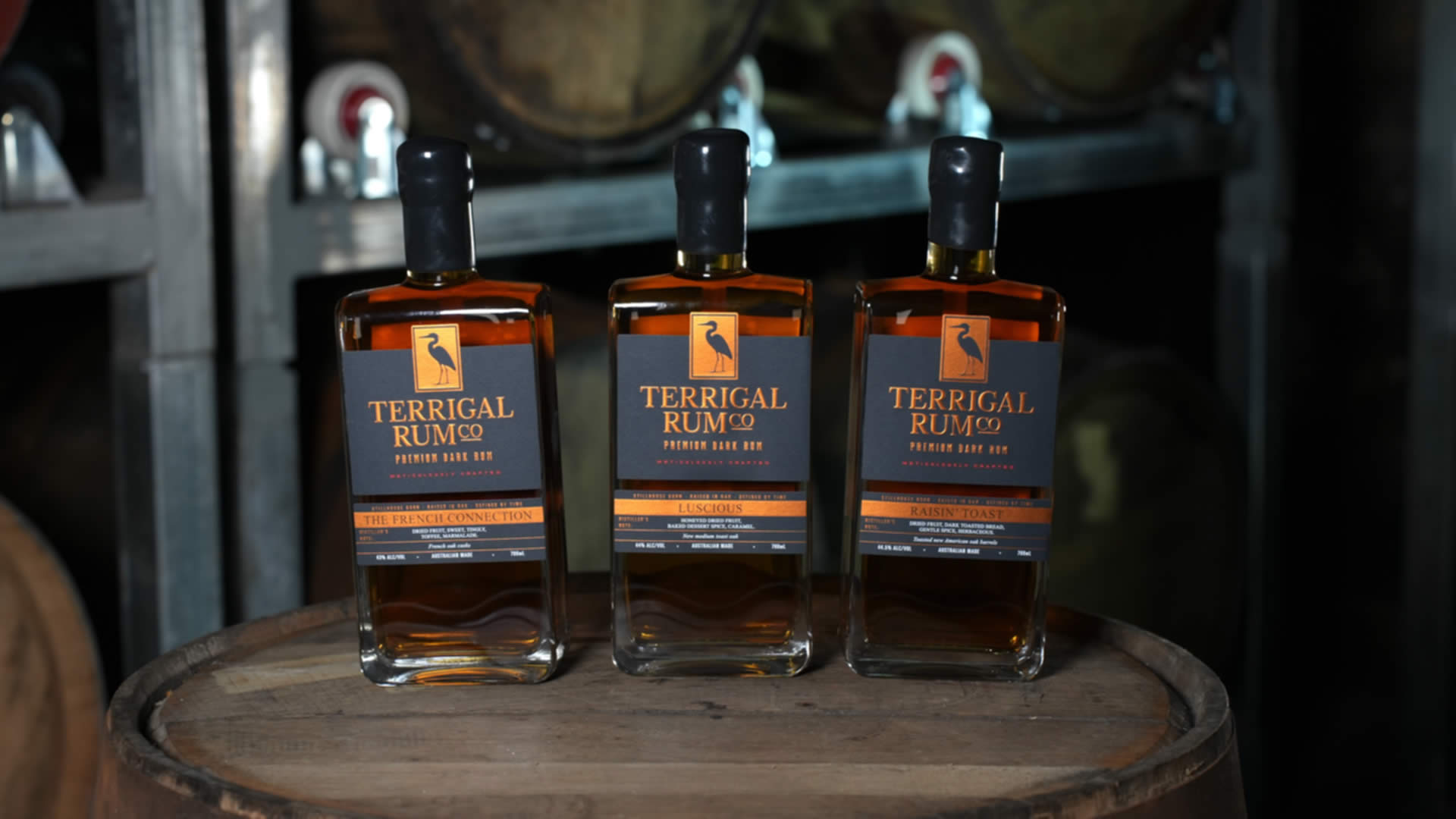
Following the first limited release, Terrigal Rum Co will also introduce The French Connection and Raisin' Toast. The three rums will share the same broader Australian identity but will be shaped by different approaches to barrel ageing.
The French Connection will spend time in French oak, bringing dried fruit, sweet toffee and marmalade characteristics to the spirit.
Raisin' Toast will use new American white oak with a medium toast, with an aroma intended to evoke toasted raisin bread alongside fruit and spice.
Luscious, meanwhile, will remain the more layered expression of the three, drawing from a mixture of barrel types and developing a profile that moves between honey, caramel, dried fruit, bakery spice and ginger.
All three are currently listed by Distillery Botanica at $130 per bottle.
The differences may be subtle to a casual drinker, but they reveal something important about modern Australian rum.
Rather than treating rum as a single style, the distillery will be using wood, fermentation and maturation to explore how dramatically the same basic spirit can change.
That approach will place the emphasis on craft rather than novelty.
A Taste Of The Central Coast
The new rum will also be accompanied by food pairings designed around the flavours of the spirit.
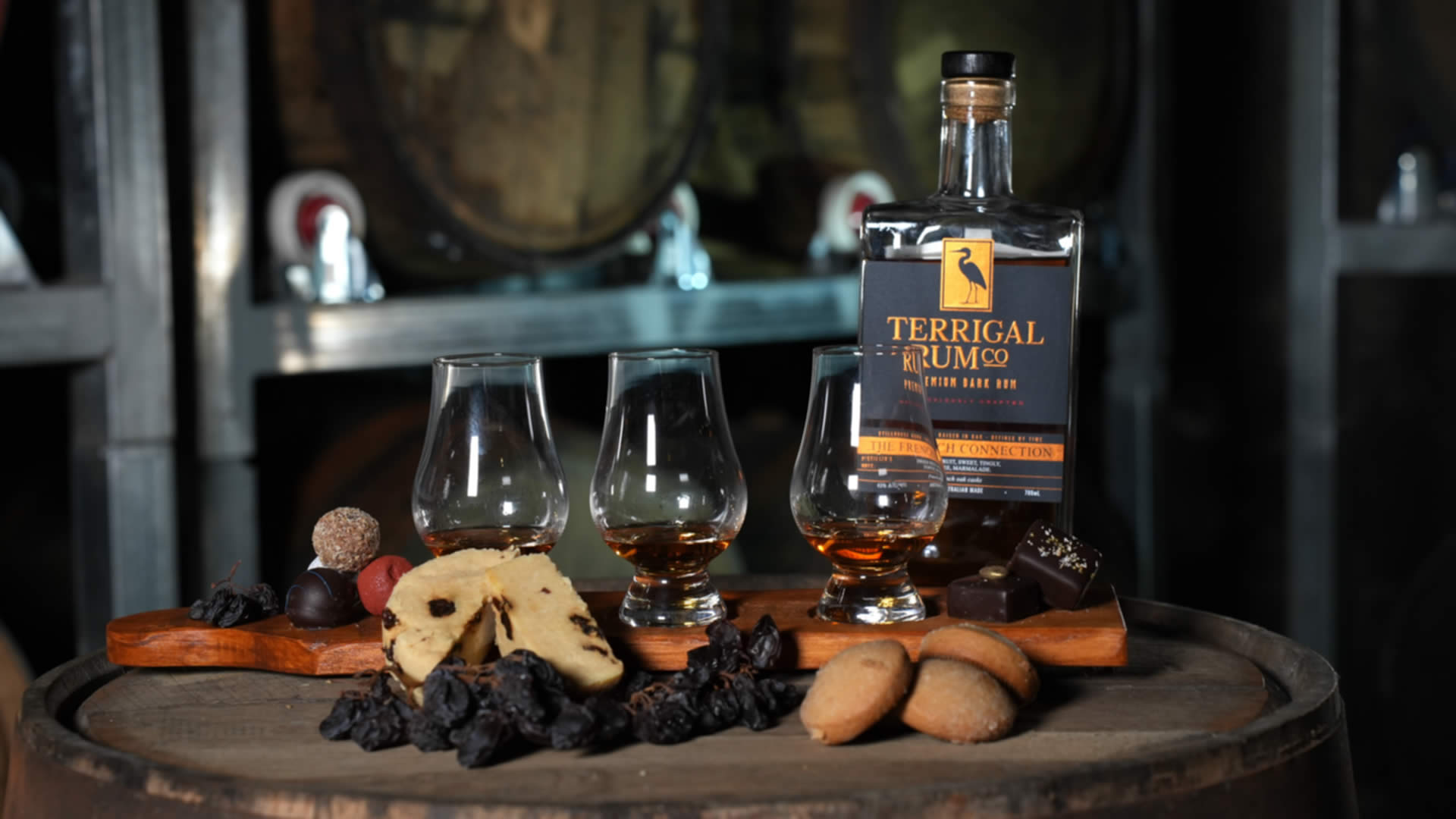
Visitors will be able to experience rum alongside handmade chocolate from Luka Chocolates, aged cheese from Little Creek Cheese and rum-glazed gingerbread from Adri's Gingerbread. Each producer is based on the Central Coast, creating a connection between the spirit and the region beyond the distillery itself.
It is an appropriate way to approach a dark rum.
The flavours of aged spirits often invite comparison with food. Chocolate can draw out caramel and roasted notes. Mature cheese can provide salt and savoury contrast. Gingerbread can echo the cinnamon, ginger and baking spices already present in the spirit.
At Distillery Botanica, the tasting will therefore become less about measuring whether one likes or dislikes rum and more about observing how the flavours interact.
The experience will sit naturally alongside the distillery's existing tasting program.
Its guided tastings will cover gins, liqueurs and spirits, while tasting paddles will offer three seasonal half-sized serves with garnishes and tasting notes. The distillery also runs garden and distillery tours, cocktail classes and hands-on workshops in which visitors select botanicals from the gardens before distilling their own spirit in small copper stills.
In that sense, the rum will not be an isolated attraction.
It will become another reason to look more closely at a place that has always connected its spirits with the landscape around them.
The Gardens Still Tell The Story
There is an unusual rhythm to Distillery Botanica.
The distillery's identity has always been closely tied to plants, from the botanicals used in its gins to the gardens surrounding the buildings. The official description of the property emphasises juniper, cardamom, turmeric and other plants cultivated across the grounds.
Rum does not depend on those botanicals in the same way.
Its origins begin with sugarcane, molasses, fermentation and distillation. Its later character comes from wood and time.
But the garden remains important because it provides the setting in which visitors will encounter the spirit.
A visit can begin with a walk among the plants and continue into the tasting room. The experience can move from living things to fermented liquid, from sunlight and leaves to copper, oak and glass.
That transition makes Distillery Botanica feel less like a conventional cellar door and more like a working landscape.
It is a place where the ingredients and the finished products exist within the same physical world.
Planning A Visit To Distillery Botanica
Distillery Botanica will be open from Wednesday to Sunday, 11am to 4pm, at 25 Portsmouth Road, Erina, NSW 2250. The official site recommends advance bookings for tastings, particularly for groups of four or more, although walk-ins will be accommodated when space permits.
There is free on-site parking, although visitors heading there on busy weekends or during events are advised that parking can become limited. The distillery, tasting room and most garden paths are wheelchair accessible.
The rum will be available to taste and purchase at the distillery, alongside the existing range of Moore's Dry Gin, Moore's Blood Orange Gin, Moore's Pearl Crush Gin, Roots & Leaves Dry Gin, vodka and liqueurs.
For visitors specifically interested in the new rum, the exclusive rum tour with Philip Moore will offer the deepest look into its production. The experience will include the barrel room and a guided tasting of the current dark rum range.
There is no single festival weekend or closing date attached to the release. Instead, Luscious and the accompanying rum experiences will form part of the distillery's ongoing program, making the Central Coast visit as much about the place as the bottle.
For official information, opening hours, tastings, rum experiences and current releases, visit Distillery Botanica.
When The Spirit Finally Leaves The Barrel
The most interesting thing about aged spirits is that the finished bottle conceals so much of its history.
A dark rum may appear simple once it is poured. There is the colour, the aroma, the weight of the liquid in the glass. But behind that first impression are years of fermentation, distillation, barrel selection and waiting.
At Distillery Botanica, that story will begin among the gardens of Erina and continue below them in a room where time has been doing its quiet work.
Luscious will arrive carrying traces of American oak, whiskey, brandy, molasses and Australian craftsmanship. It will carry the warmth of cinnamon and ginger, the sweetness of caramel and dried fruit, and the softer notes that emerge only after a spirit has been allowed to mature.
For visitors who make the journey north from Sydney, the new rum will offer something more than another bottle to taste.
It will offer a glimpse into the slower side of distilling.
Outside, the gardens will continue growing at their own pace. Inside, barrels will continue to rest. And somewhere between the two, a glass of Australian dark rum will provide a reminder that some flavours cannot be rushed.
That may be the most fitting new chapter for Distillery Botanica – a place whose story has always begun with what grows in the garden, but whose next chapter will be written in oak.