
Great Graze Streat Festival Barangaroo returns this October with two days of food, native ingredients, live music and waterfront dining from 12pm to 6pm.
There are few places in Sydney where lunch can be accompanied by the sound of ferries, the movement of the harbour and the sudden brightness of sunlight reflected from glass towers. Barangaroo is one of them.
On a spring weekend, the waterfront takes on a different rhythm. Office workers have disappeared for the weekend, the promenade begins to fill with families and friends, and the restaurants that line the precinct open towards the harbour. From Saturday 17 to Sunday 18 October, that everyday dining landscape becomes the setting for Great Graze Streat Festival Barangaroo, a free two-day celebration of food, culture, music and native Australian ingredients.
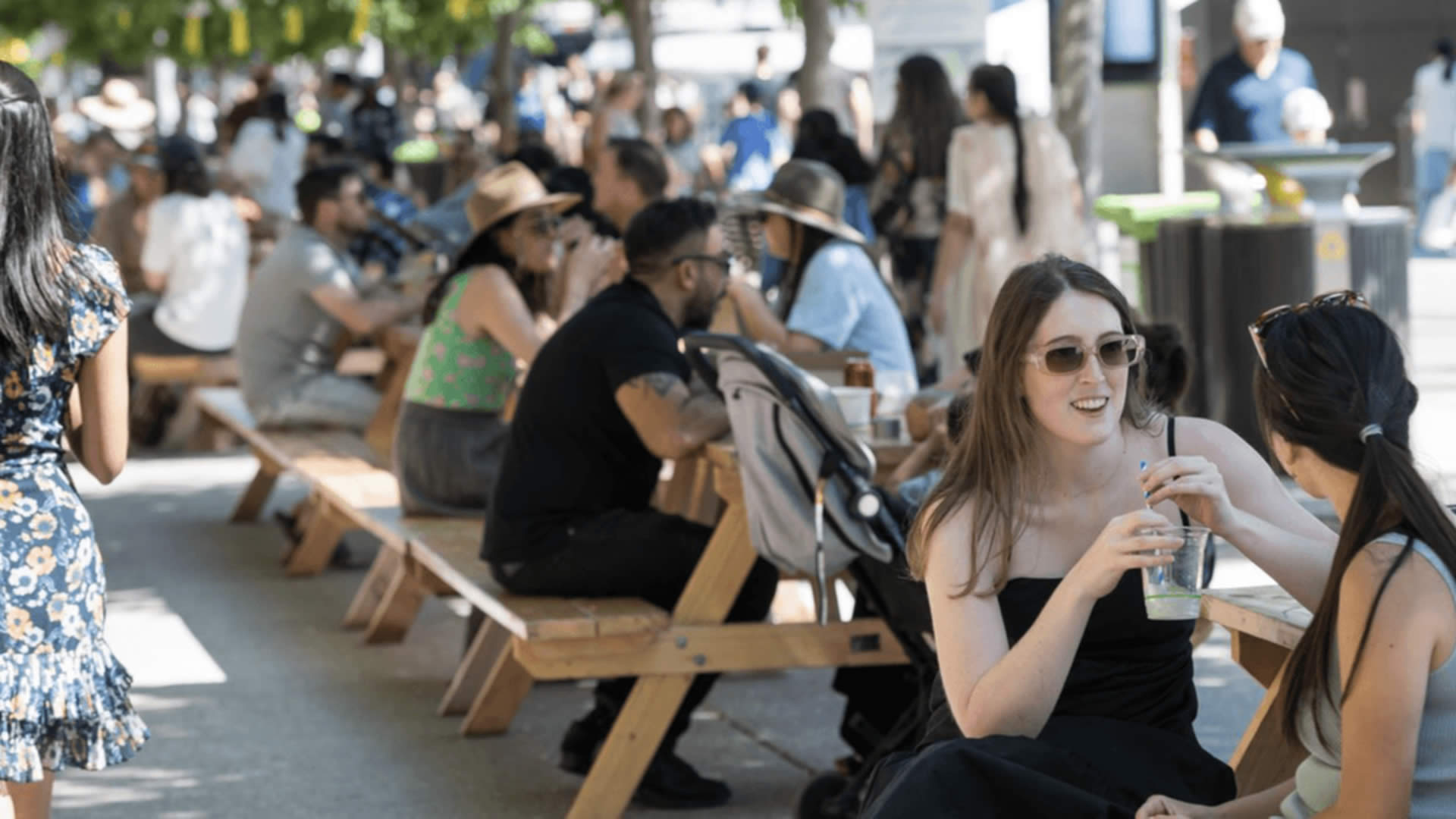
The festival runs from 12pm to 6pm each day, stretching along Wulugul Walk and Waterman's Cove. Rather than placing everything inside one enclosed festival ground, Great Graze encourages people to wander. Food appears at pop-up stalls, restaurants open onto the waterfront and the harbour remains visible between stops.
It is an approach that suits Barangaroo. This is a part of Sydney designed around movement, where walking is as much a part of the experience as sitting down. The Great Graze turns that movement into the central idea.
Great Graze Streat Festival Barangaroo Begins At The Waterfront
The first impression is likely to be one of space.
Wulugul Walk runs along the edge of Sydney Harbour, with the water opening out towards the eastern side of the city. Behind it, Barangaroo's modern towers rise above the precinct, their glass and steel contrasting with the older maritime character that once defined this stretch of the shoreline.
For Great Graze Streat Festival Barangaroo, the waterfront restaurants spill out towards the promenade with a series of pop-up food stalls. The format makes grazing feel almost literal. There is no need to choose one restaurant and stay there. A visitor can begin with something savoury, continue towards Waterman's Cove, stop for something sweet and return to the harbour with a drink.
The festival's official program describes the Wulugul Walk tasting trail as a collection of street-style versions of signature dishes, with every participating venue featuring at least one native Australian ingredient.
That detail gives the event a stronger sense of purpose than a conventional food market. The food is still approachable and informal, but the native ingredients create a thread connecting dishes from very different culinary traditions.
A Sydney Dining Precinct Becomes A Tasting Trail
One of the pleasures of a food festival in Barangaroo is the sheer variety of cuisines that can be encountered within a short walk.
Anason brings Turkish flavours to the trail with manti, kofte and baklava. Belle's Hot Chicken takes its familiar style in an Australian direction with a Kakadu plum glaze chicken sandwich and native fruit syrup. Gina offers pasta and ragu alongside bucatini with lemon myrtle, while Lotus serves fried rice, spring rolls and barbecue pork buns. Muum Maam brings Thai dishes to the waterfront, and Zushi adds Japanese-inspired offerings including Australian honey prawns.
The individual dishes are small enough to make comparison part of the experience. A group might divide several plates between them, turning the afternoon into a succession of tastes rather than a single meal.
This is where the geography of the festival matters. Food is not simply being displayed. It is being encountered while walking through the precinct.
The harbour becomes a backdrop rather than a separate attraction. Between one stall and the next, there is water, breeze, passing boats and the changing perspective of the city. It gives the food a sense of occasion without requiring the festival itself to become theatrical.
Native Australian Ingredients Take Centre Stage
The most significant thread running through this year's Great Graze is the partnership with Indigiearth.
Every participating venue is showcasing at least one signature dish using native Australian ingredients. The intention is not simply to add an unusual ingredient to a menu, but to create a connection between contemporary dining and First Nations food knowledge.
That approach becomes more visible at Pier Pavilion, where a First Nations Native Food Market brings together food producers, makers and businesses working with native ingredients and cultural knowledge.
The market is curated by Sharon Winsor, founder of Indigiearth and a Weilwan and Ngemba woman. Participating businesses include Ziggy's Wildfoods, LORE Australia, South Coast Seaweed, The Unexpected Guest and Native Botanical Brewery.
For visitors, this creates a different kind of food experience. Some products are intended to be eaten on the day, while others offer an opportunity to take something home. The market also provides a chance to understand where ingredients come from and how they are being used by First Nations businesses today.
Native Botanical Brewery, for example, works with ingredients including lemon myrtle and strawberry gum, while South Coast Seaweed connects food production with knowledge of Yuin Sea Country. Ziggy's Wildfoods works with seasonal wild and native ingredients in products such as ferments, sauces, misos and vinegars.
Together, these businesses broaden the idea of what an Australian food market can be.
Great Graze Streat Festival Barangaroo And The Waterman's Cove Market
The festival continues beyond Wulugul Walk.
At Waterman's Cove, another collection of food stalls creates a waterfront market featuring restaurants from The Streets of Barangaroo. The offerings range from Vietnamese and Italian food to pastries, drinks, gelato and Middle Eastern dishes.
Anita Gelato gives the sweet side of the festival an Australian accent with crème brûlée ice cream incorporating wattleseed. Banksia Bakehouse offers wattleseed and chocolate chip cookies alongside a crème brûlée Danish, while Sweet Belem introduces wattleseed and saltbush into Portuguese-style pastries and desserts including a Davidson plum doughnut.
Elsewhere, Banh Meats & Co serves banh mi and vermicelli bowls, Mr Panino offers Italian-style sandwiches including one built around quandong chutney, and Zanobia brings Lebanese-inspired pastries, falafel and skewers to the market.
The variety is characteristic of Barangaroo itself. Its food culture is not built around one national cuisine or a single dining style. Instead, it reflects the way Sydney eats now, with cuisines and traditions meeting within a compact urban neighbourhood.
At Great Graze Streat Festival Barangaroo, that diversity becomes particularly easy to explore.
Music Gives The Afternoon Its Rhythm
Food may provide the reason to arrive, but the festival is designed to encourage people to stay.
Live DJs provide the soundtrack across the precinct, beginning with more relaxed daytime sets and moving towards livelier weekend music. The result should be less like a formal concert and more like an atmosphere that develops around the food and the harbour.
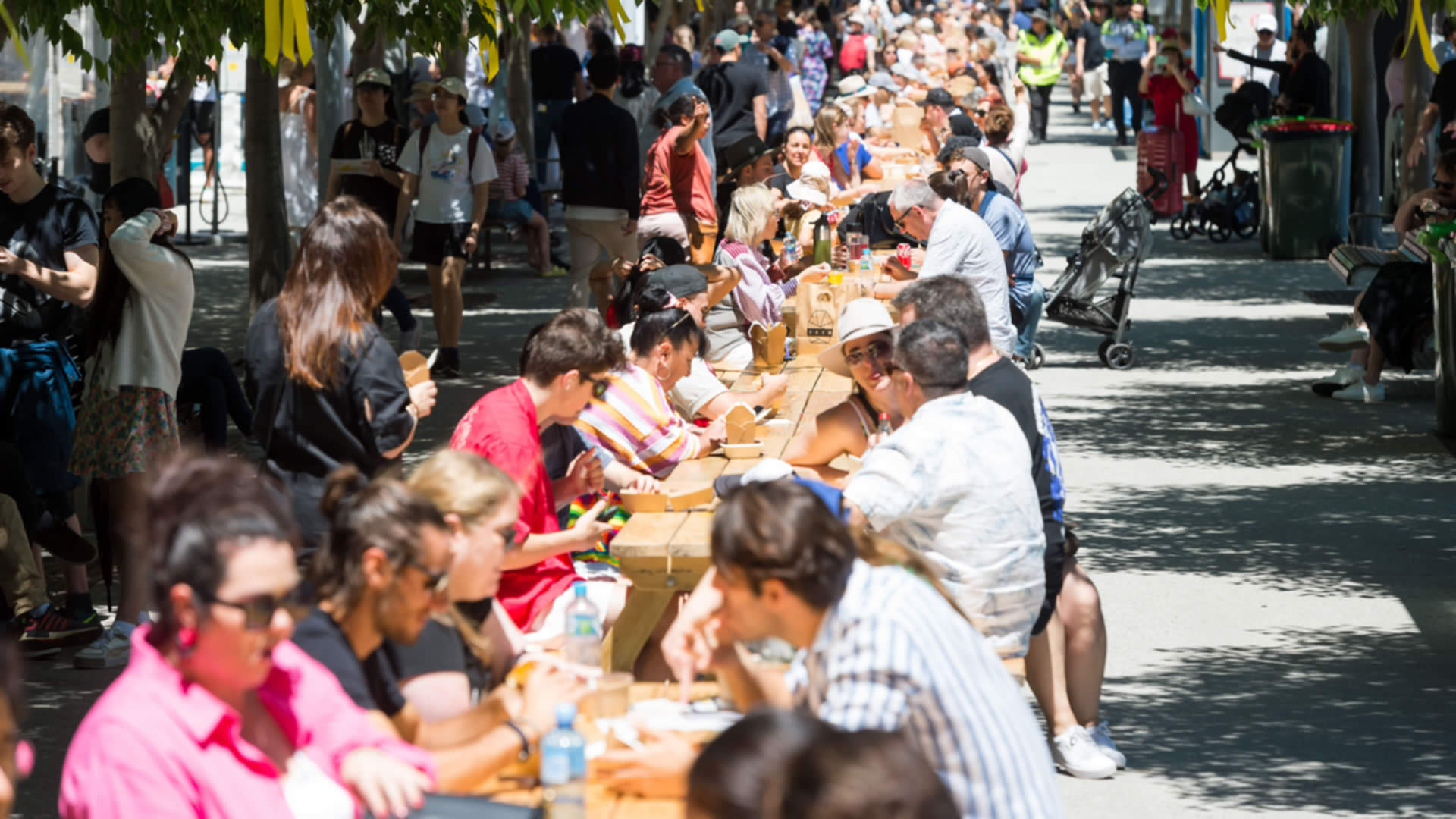
Barangaroo House becomes the licensed hub, with visitors able to collect food from participating venues and settle on the lawn with a drink. It is a useful arrangement for groups because it removes the need for everyone to choose the same meal.
One person can return with Turkish manti, another with fried chicken, another with a Vietnamese dish, while the table becomes a shared map of the festival.
The family-friendly nature of the event also means the atmosphere is not limited to the late afternoon crowd. People can arrive earlier, explore at their own pace and move between the waterfront, food stalls and market areas.
The absence of an entry fee makes that flexibility easier still. Visitors do not need to commit to the entire day. They can drop in for lunch, return later for dessert or make the festival one stop within a broader Saturday or Sunday outing around the city.
A Different Way To Experience Barangaroo
There is a useful tension in holding a food festival in such a carefully planned urban precinct.
Barangaroo is unmistakably modern. Its towers, plazas and promenades are part of a new chapter in Sydney's waterfront development. Yet the harbour itself remains much older than the buildings around it, and the name Barangaroo recalls the Cammeraygal woman whose life is connected to this place.
The inclusion of First Nations food businesses and native ingredients gives the festival an opportunity to acknowledge that deeper layer of place.
It does not turn the event into a history lesson. Instead, culture enters through food, ingredients, makers and stories. A visitor might encounter wattleseed in a pastry, lemon myrtle in pasta or native botanicals in a drink, then discover the businesses and people behind those ingredients at the Native Food Market.
That can be one of the quieter strengths of food festivals. Eating becomes a way of paying attention.
Planning A Visit To Great Graze Streat Festival Barangaroo
Great Graze Streat Festival Barangaroo takes place on Saturday 17 and Sunday 18 October 2026.
The festival runs from 12pm to 6pm on both days and is free to attend. Food and drinks are purchased separately from individual vendors.
The main festival areas are Wulugul Walk and Waterman's Cove at The Streets of Barangaroo, with the First Nations Native Food Market located at Pier Pavilion. Barangaroo House provides a licensed area where visitors can sit with food purchased from participating venues.
Event Details
Great Graze Streat Festival Barangaroo
Saturday 17 and Sunday 18 October 2026
12pm to 6pm each day
Wulugul Walk and Waterman's Cove
The Streets of Barangaroo, Barangaroo NSW 2000
Free entry
Food, drinks and market purchases at individual vendor prices
First Nations Native Food Market at Pier Pavilion
The official event information and current program are available through The Streets of Barangaroo.
With the festival spread across the precinct rather than concentrated in one venue, comfortable walking shoes and an appetite for small portions make sense. Sydney's spring sun can also be strong along the waterfront, where there is little to block the afternoon light.
The Harbour At The End Of The Day
By six o'clock, the formal festival day comes to a close, but Barangaroo rarely feels as though it has suddenly switched off.
The harbour continues moving. Ferries cross the water. Office towers catch the changing light. People who arrived for a quick lunch may still be sitting with a final drink, while others make their way towards the city carrying something sweet or a product discovered at the native food market.
That lingering quality feels appropriate.
Great Graze Streat Festival Barangaroo is built around movement, but it is not a race from one dish to another. Its most memorable moments may be the pauses between them: a table shared with friends, a new ingredient that prompts a question, music drifting across the promenade or the taste of something unfamiliar against the salt air.
For a spring weekend in Sydney, there are worse ways to spend an afternoon than following the harbour, one plate at a time.