
Discover Halloween at the Museum of Illusions Sydney, where curious rooms, eerie transformations and interactive exhibits bring a playful twist to Sydney's October school holiday season.
There is something particularly fitting about celebrating Halloween in a place where the world already refuses to behave as expected. A room tilts perception, a familiar shape appears to change size, and a photograph captures something the eye struggles to explain. Add pumpkins, bats, spiders and a few unexpected encounters, and the Museum of Illusions Sydney becomes a natural setting for October's more curious traditions.
From 2 to 31 October 2026, Halloween at the Museum of Illusions Sydney brings a seasonal transformation to the attraction, introducing spooky decorations and themed experiences to its collection of interactive installations. Rather than relying solely on conventional Halloween frights, the event draws on the museum's existing fascination with perception, perspective and the curious ways the brain interprets what it sees.
The result is a Halloween experience built around discovery. Families, friends and younger visitors can move between rooms that challenge their senses, encounter familiar exhibits in unfamiliar forms, and find unexpected opportunities for photographs along the way. The atmosphere is designed to be playful rather than genuinely frightening, making it an option for a broad range of ages.
In a city where October brings a mixture of spring sunshine, school holiday outings and preparations for Halloween, the seasonal makeover offers a different way to spend time indoors. It also provides a reminder that some of the most memorable experiences do not depend on elaborate storytelling or spectacular scenery. Sometimes, all it takes is a room that makes the impossible seem entirely plausible.
Halloween At The Museum Of Illusions Sydney
The seasonal changes extend throughout the museum, where Halloween decorations introduce a different mood to the attraction's established collection of optical illusions and immersive spaces.
Pumpkins and bats contribute to the familiar visual language of Halloween, while spiders and other spooky details give the rooms a more unusual character. These additions work alongside the museum's illusions rather than replacing them, allowing visitors to encounter the attraction through a seasonal lens.
The distinction matters. An optical illusion is already a small disruption to the ordinary rules of everyday life. A corridor or room can appear to shift, a reflection can seem unfamiliar, and perspective can make a person look unexpectedly tall or small. Halloween provides an opportunity to lean into that uncertainty, using the atmosphere of the season to make each encounter feel a little stranger.
For visitors arriving with children, this combination creates room for different kinds of engagement. Some may be drawn to the decorations, others to the challenge of understanding how an illusion works, while the more photographically minded will find plenty of reasons to pause and experiment with camera angles.
There is no need to approach the experience as a conventional haunted attraction. Its appeal lies in curiosity and participation, with visitors encouraged to look carefully, test their assumptions and discover how easily the familiar can become unfamiliar.
From Spider Clones To The Pumpkin Portal
Among the seasonal transformations, several of the museum's existing installations take on new identities.
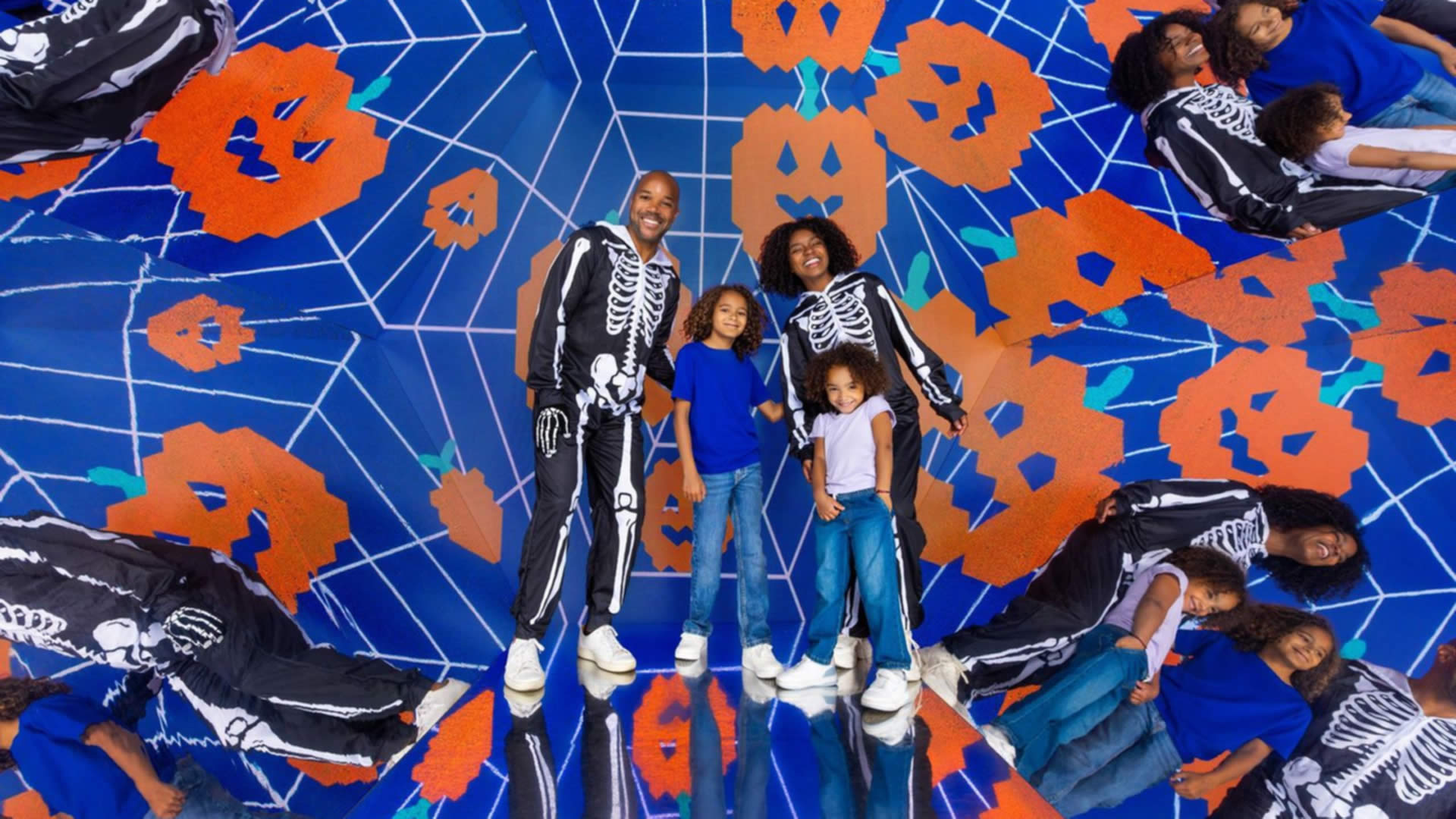
The Cloning Table becomes the Spider Clones Base, giving a familiar illusion a Halloween-themed interpretation. The installation plays with the visual effect of repetition, creating the impression that one person can occupy multiple positions at once. With its seasonal makeover, the concept takes on a distinctly more mysterious character.
The Infinity Room becomes the Echo Cave Base, offering another opportunity to explore the relationship between space, reflection and perception. Rooms built around repeating visual elements can be difficult to interpret at first glance. The eye searches for boundaries and reference points, attempting to establish where the room ends and what lies beyond it. That uncertainty is part of the experience.
Elsewhere, the Ceuchet Chair is transformed into the Bone Throne, while the Mirage Table becomes the Pumpkin Portal. Both draw on the museum's broader interest in the way perspective can mislead the senses. The names introduce a Halloween narrative without abandoning the underlying ideas that make the installations engaging.
These transformations are particularly suited to visitors who enjoy discovering the thinking behind an illusion. A room may appear to defy physical rules, but the effect often depends on carefully arranged angles, visual cues and the brain's instinct to make sense of incomplete information.
Halloween adds a layer of theatre to that process. A space that might ordinarily inspire questions about geometry or perception becomes part of a seasonal adventure, where the unexpected is not a mistake but the point.
The experience also encourages visitors to move at their own pace. Some installations invite immediate participation, while others reward a little time spent finding the right position or observing how an image changes from one viewpoint to another. For families, these moments can become shared puzzles, with each person trying to work out what they are seeing.
A Curious Welcome In The Foyer
The Halloween experience begins before visitors have made their way into the main collection of installations. In the foyer, a Holey Moley endless pit creates an early encounter with distorted perspective.
The apparent depth of a seemingly bottomless space can be unsettling at first, particularly when the eye expects a solid surface and instead encounters the suggestion of a drop. The illusion depends on the difference between what appears to be there and what is actually in front of the viewer.
It is an effective introduction to the museum's central idea. Our senses provide a continuous stream of information, but the brain must interpret that information using experience, expectation and context. When those elements do not align, even an ordinary-looking space can become difficult to read.
During Halloween, that moment of uncertainty fits neatly with the season's interest in the strange and unexplained. The effect does not require a jump scare or an elaborate supernatural story. It simply asks visitors to reconsider what they think they see.
For children, the installation may prompt a mixture of surprise and laughter. Adults, meanwhile, may find themselves looking more carefully at the edges of the scene, trying to identify the visual clues that reveal how the illusion works.
That shared process of looking, questioning and comparing impressions is central to the attraction's appeal. The most interesting moment is often the brief pause between seeing something unexpected and understanding why it appears that way.
Interactive Rooms That Reward A Second Look
Beyond the Halloween-themed installations, the museum's interactive spaces remain an important part of the experience. The Symmetry Room, Ames Room and Head on a Platter installation offer different ways to explore how the senses can be led astray.
The Symmetry Room invites visitors to consider balance, repetition and the way reflections can alter the appearance of a space. The Ames Room plays with perspective and proportion, producing visual effects that can make people appear dramatically different in size depending on where they stand.
The Head on a Platter installation takes a more theatrical approach, creating an illusion that is immediately recognisable and well suited to photographs. Its appeal comes from the gap between the image captured by the camera and the reality of the scene in front of it.
Together, these experiences demonstrate that optical illusions are not simply tricks for entertainment. They offer a practical glimpse into the processes that shape everyday perception. The brain constantly makes assumptions about distance, scale, symmetry and the relationship between objects. Under the right conditions, those assumptions can produce results that seem to contradict the evidence.
For visitors, the value lies in being able to test these effects rather than merely reading about them. Standing in a room, changing position or looking at an installation from another angle makes the experience physical and immediate.
The Halloween setting gives these familiar activities a common seasonal thread. Decorations and themed names help connect individual rooms, while the interactive format allows visitors to become part of the scene rather than remaining passive observers.
It is also an experience that can suit a mixed-age group. Younger children may be captivated by the visual surprises, teenagers may gravitate towards the photographic possibilities, and adults can enjoy the challenge of working out how the effects are achieved. Everyone can bring a different perspective to the same room.
Photo Opportunities And The Weird Wonders Wall
Photography has become an integral part of the way people experience immersive attractions. At the Museum of Illusions Sydney, the camera can reveal effects that are difficult to explain in ordinary language, turning a moment of confusion into an image that can be shared afterwards.
The Halloween program includes a roaming Weird Wonders Photo Wall opportunity, providing another way for visitors to engage with the seasonal atmosphere. Alongside the transformed installations, it offers a chance to capture the occasion without separating the photographs from the experience itself.
The most effective illusion photographs often depend on simple adjustments. A change in viewpoint can alter apparent size, while careful positioning can make objects appear closer together or further apart than they really are. In these settings, the person taking the photograph becomes part of the experiment, searching for the angle that brings the illusion together.
That process can be as enjoyable as the finished image. Friends and family members may take turns standing in different positions, comparing results and working out why one photograph looks convincing while another does not.
Halloween decorations add another dimension to these images. Pumpkins, spiders and themed installations establish the time of year, while the museum's unusual rooms provide backgrounds that are difficult to reproduce elsewhere.
For families planning an outing during the school holidays, these photographs can become a record of a shared experience. The images may look strange out of context, but that is part of their appeal. They preserve the moment when an ordinary room briefly appeared to follow a different set of rules.
A Free Squeezy Brain To Take Home
The Halloween program also includes a small keepsake for visitors purchasing a Halloween Package. Each package comes with complimentary Squeezy Brains to take home, with the number supplied depending on the group size.
A package for two adults and two children includes two Squeezy Brains. A package for one adult and one child includes one, while a package for two adults also includes one.
The giveaway adds a tangible element to an experience largely concerned with things that cannot be touched or trusted at first glance. After moving through rooms that challenge the senses, visitors can leave with a playful reminder of the attraction's fascination with the human mind.
For younger visitors in particular, a small souvenir can help extend the outing beyond the museum doors. It also provides an easy way to recall the illusions and surprises encountered during the visit.
The emphasis remains on curiosity rather than fear. Although Halloween supplies the decorations and the seasonal theme, the activities are intended to be accessible to visitors of different ages, including those who prefer their Halloween experiences on the lighter side.
Families considering a visit should check the package details when planning their outing, as the included keepsake is tied to the Halloween Package rather than being described as a separate giveaway for every individual visitor.
An Indoor Halloween Outing In Sydney
Spanning more than 900 square metres, the Museum of Illusions Sydney features more than 80 interactive exhibits, including immersive rooms, three-dimensional illusions, holograms and installations built around perspective.
The scale of the collection gives visitors plenty to explore, while its indoor setting provides an alternative to outdoor Halloween activities. October in Sydney can bring warm spring afternoons, unsettled weather and changing conditions, so an indoor attraction offers some flexibility when planning a family day out.
The museum's format also makes it possible to combine entertainment with informal learning. Rather than approaching perception as an abstract subject, visitors encounter its effects directly. A room appears to stretch or contract, a reflection creates a visual puzzle, or a photograph seems to capture something physically impossible.
These experiences can encourage questions about how the brain works and why people do not always interpret the same scene in the same way. Children can experiment through play, while adults may find themselves revisiting ideas about perspective that they have not considered since school.
During Halloween, the seasonal decorations provide an additional reason to explore the attraction. Themed installations offer a sense of occasion, but the underlying experience remains rooted in observation and participation.
For Sydney residents, the event can fit into a broader day spent exploring the city, meeting friends or enjoying the spring school holiday period. It is also an option for visitors looking for an activity that does not depend on outdoor conditions or a single performance time.
The most rewarding approach is to allow time to move through the rooms without rushing. Optical illusions often reveal more when visitors stop, change position and look again. What first seems inexplicable may become clearer with a different viewpoint, although some effects remain entertaining precisely because they continue to resist an immediate explanation.
Finding The Strange In The Familiar
Halloween at the Museum of Illusions Sydney brings together two ideas that naturally belong in the same space: the pleasure of being surprised and the realisation that appearances are not always reliable.
The pumpkins, bats and spiders establish a familiar seasonal mood, while the transformed rooms encourage visitors to question what they see. A chair becomes a throne, a table becomes a portal, and an apparently endless space invites a second look. The names may be playful, but the experiences draw attention to something more enduring about human perception.
That is what gives the attraction its appeal beyond Halloween. The illusions remind visitors that seeing is not simply a matter of receiving information. It is an active process shaped by expectation, context and the brain's constant effort to make sense of the world.
For families, friends and curious visitors, the October event offers a chance to share that discovery in a setting designed for participation. The photographs provide souvenirs, the themed rooms establish a sense of occasion, and the interactive installations create moments that can be enjoyed differently by each person in the group.
By the time visitors return to the ordinary streets of Sydney, the city may look much as it did before. Yet there is a small satisfaction in having spent an afternoon somewhere that unsettles familiar assumptions. Sometimes, the simplest way to see the world differently is to step into a room that asks you to look again.
Event Details
Event: Halloween at the Museum of Illusions Sydney
Dates: 2 to 31 October 2026
Location: Museum of Illusions Sydney, Sydney, NSW
Times: Check the official website for current opening hours and session availability before visiting.
Official Website: https://moisydney.com/