
HMAS Vampire (II) marks 70 years with a weekend of history, art and family activities at the Australian National Maritime Museum in Darling Harbour.
From the water at Darling Harbour, HMAS Vampire (II) looks less like a museum exhibit than a ship waiting for its next assignment. Its long, purposeful lines, angular superstructure and imposing guns belong to an era when Australia's naval presence was defined by vessels built for speed, endurance and the demands of service at sea. Alongside the waterfront, surrounded by the movement of ferries and the everyday activity of the city, the destroyer has become a familiar part of Sydney's maritime landscape.
This year marks 70 years since HMAS Vampire (II) was launched from Cockatoo Island in 1956. The anniversary brings renewed attention to a vessel that has travelled a remarkable distance from working warship to public landmark. Known to generations of sailors as The Mean Machine and affectionately as The Bat, it now holds another distinction: HMAS Vampire (II) is the largest museum object in the Southern Hemisphere.
The Australian National Maritime Museum is marking the milestone with a new publication, a curator and historian talk, and a weekend programme called Festival of the Bat. The anniversary publication and accompanying talk take place on Tuesday 27 October 2026, while the main celebrations run across Saturday 31 October and Sunday 1 November.
For visitors, the weekend offers an opportunity to look beyond the familiar outline of the ship and consider the people, technology and history contained within it. There will be guided experiences, creative workshops, family activities and live music, with the vessel itself providing the setting for a celebration that connects naval history with contemporary Sydney.
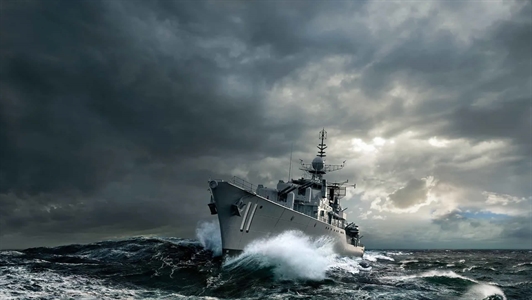
HMAS Vampire (II): From Cockatoo Island To Darling Harbour
HMAS Vampire (II) was launched at Cockatoo Island in 1956 as one of the Royal Australian Navy's Daring-class destroyers. Its arrival reflected a period of significant change in Australia's post-war naval capability, when modern ships were being designed to operate across long distances and respond to changing strategic demands.
A destroyer is built around movement and purpose. Its design balances speed, weapons systems, communications and the ability to operate as part of a larger naval force. On a vessel such as Vampire, the arrangement of decks, equipment and working spaces reveals something of the discipline required to keep a ship functioning at sea.
For the sailors who served aboard, the vessel was not simply a collection of steel structures and machinery. It was a workplace, a home and a close-knit environment in which everyday responsibilities were shared. Watches, maintenance, navigation and the routines of life at sea shaped the experience of those who knew the ship from within.
The nickname The Mean Machine speaks to the vessel's reputation and character, while The Bat reflects the affection that grew around it. Such names are part of naval tradition, giving a ship an identity that extends beyond its official designation.
Today, HMAS Vampire (II) occupies a different role. Preserved as part of the Australian National Maritime Museum's collection, it offers visitors a tangible connection to the Royal Australian Navy's history. Its scale is difficult to appreciate from photographs alone. Standing beside it, or walking through its decks, gives a more immediate sense of the engineering and human effort involved in operating a warship.
The People Behind The Ship
A ship's history is often told through its construction, equipment and service record. Yet its most enduring stories belong to the people who worked aboard it.
For generations of naval personnel, life on HMAS Vampire (II) involved a combination of routine and responsibility. The ship's operations depended on individuals carrying out specialised tasks, often in confined spaces and under conditions that demanded concentration. Each role contributed to the larger work of keeping the vessel ready.
There were also the relationships formed through shared experience. Time at sea creates a particular kind of community, shaped by long periods away from home, close quarters and the understanding that everyone depends on the people around them. The language, humour and traditions that develop in such environments can remain with former sailors long after their service ends.
The anniversary is therefore about more than the survival of a historic vessel. It recognises the people whose lives intersected with HMAS Vampire (II), including serving sailors, veterans and their families.
Peter Fray, Deputy Director of the Australian National Maritime Museum, describes the milestone as an opportunity to celebrate both the ship and those connected to it. The Festival of the Bat is designed to bring those stories into public view, inviting visitors to step aboard and encounter the vessel from different perspectives.
For younger visitors, the ship may first appear as an impressive object in the harbour. For former naval personnel, it may carry memories of service, colleagues and a particular period of their lives. The museum's role is to make room for both perspectives, allowing the same vessel to speak to different generations.
A New Publication Marks The Anniversary
The anniversary programme begins with the launch of a new publication, Last of the Big Guns, on Tuesday 27 October 2026. The launch coincides with the anniversary of the ship's 1956 launch and includes a free talk exploring its history.
Museum Curator of Navy Stirling Smith and historian Catie Gilchrist will discuss the vessel and its place in Australia's maritime story. Their perspectives bring together the museum's curatorial knowledge and historical research, offering visitors a deeper understanding of the ship's significance.
The title Last of the Big Guns points towards an important aspect of naval history: the changing role of large-gun warships as technology and military strategy developed. Ships such as HMAS Vampire (II) belong to a period when naval design was evolving, and their preservation provides an opportunity to examine that transition.
A publication also offers a different way to engage with the past. Where a ship reveals its scale and physical structure, a book can follow the details of its history, the decisions behind its design and the experiences of those who served aboard.
Although the launch takes place before the Festival of the Bat weekend, it provides an important starting point for the anniversary celebrations. Visitors attending the weekend can carry that historical context onto the vessel itself, where the details discussed in the talk become easier to imagine.
Festival Of The Bat Brings The Ship To Life
The main anniversary celebrations take place on Saturday 31 October and Sunday 1 November, from 10 am to 4 pm at the Australian National Maritime Museum in Darling Harbour.
The programme is designed to encourage visitors to explore HMAS Vampire (II) in more than one way. Some activities focus on naval history, while others invite people to draw, make, investigate or simply spend time aboard the ship.
One of the more unusual offerings is Drawing the Bat, a three-hour pastel masterclass conducted aboard the vessel by Australian naval artist Robert McRae. The setting provides an opportunity to study the ship at close quarters, from its structural lines to the arrangement of its equipment and the way its form changes when viewed from different angles.
For those who prefer a more active approach to exploration, The Mean Machine Treasure Hunt offers a free, bookable challenge. Participants follow clues and collect hidden puzzle pieces across the ship, turning the process of discovery into a shared activity.
Short volunteer-led Spotlight Tours will also run throughout the weekend. These guided encounters provide a way to learn about particular features of the vessel without necessarily committing to a longer tour. They can also bring attention to details that might otherwise be missed during an independent visit.
A weekend film programme and a special birthday broadcast from the Radio Room add further layers to the celebrations. Together, these activities make the ship a place not only to look at, but to listen, learn and participate.
Tracing HMAS Vampire (II) From The Museum To Cockatoo Island
One of the programme's most distinctive experiences is History of the Bat – In Three Acts and Three Locations, a special harbour experience developed with Harbour Trust.
The event traces the story of HMAS Vampire (II) between the Australian National Maritime Museum and Cockatoo Island, where the destroyer was launched in 1956. It connects the ship's present home with the industrial setting in which its story began.
Cockatoo Island is an important part of Sydney's maritime and industrial history. Its former dockyards and workshops played a significant role in the construction and maintenance of vessels, and the island remains a powerful reminder of the labour and engineering that shaped the harbour.
The journey between the museum and Cockatoo Island offers a broader perspective than a visit to the ship alone. It places HMAS Vampire (II) within the working history of Sydney Harbour, where shipbuilding, naval activity and commercial transport have influenced the city's development.
For visitors, the experience also makes the anniversary more than a celebration of a preserved object. It links the vessel to the place where it was built and to the people whose work brought it into existence.
This special harbour programme has its own arrangements, so visitors should consult the museum's booking information for availability and details before planning their day.
Family Activities And A Birthday On Board
The Festival of the Bat also gives younger visitors a chance to engage with the anniversary through hands-on activities.
Kids on Deck takes place on Sunday, with a programme that includes badge making, Navy dress-ups, face painting and bat-themed crafts. These activities offer a more accessible introduction to the ship's history, particularly for children who may be encountering a naval vessel for the first time.
There is something memorable about seeing a large ship through a child's eyes. The height of the structure, the unusual equipment and the narrow passages can make the vessel feel like an entirely different world. Creative activities provide a way to turn that first impression into curiosity.
Sunday's celebrations also include the cutting of a specially made 3D birthday cake modelled on HMAS Vampire (II). The cake gives the anniversary a suitably playful centrepiece, bringing the ship's 70th birthday into the shared rituals of a public celebration.
Free festival badges and limited-edition Mean Machine and Vampire Sports Club T-shirts will also be available as keepsakes. For those who have a personal connection to the vessel, these items may carry a little more meaning than ordinary event merchandise.
The programme is intended to welcome people with different levels of knowledge about naval history. Visitors do not need to arrive with an understanding of the ship's service record to enjoy the activities. The weekend offers several ways to begin exploring its story.
Music, Drawing And The Social Side Of The Celebration
Sunday afternoon brings live music aboard HMAS Vampire (II), with the Royal Australian Navy Band's Jazz Ensemble performing two free sets.
The music adds a different atmosphere to the anniversary. The ship is usually encountered through its history and physical form, but live performance allows visitors to experience it as a gathering place. The sound of a jazz ensemble aboard a historic destroyer offers an unexpected meeting of naval tradition and contemporary cultural life.
Visitors can also take part in a drop-in life-drawing session with artist Noni Cragg and the Gladdy Drawing Club. The activity provides another creative way to spend time with the ship, encouraging participants to look closely at the people and surroundings rather than simply moving through the vessel.
Bat-themed food will be available at HarbourWatch, while the Manly-Warringah Radio Club will contribute a special birthday broadcast. These elements help give the weekend a festival atmosphere while keeping the ship at the centre of the occasion.
The programme balances formal interpretation with informal participation. A visitor might arrive for a tour, stay for the music and finish the afternoon watching an artist at work. Another might come with children for the treasure hunt and discover an interest in the ship's history along the way.
That variety is part of the value of the anniversary. A museum object of this scale can be approached through engineering, art, personal memory, family activity or simply curiosity.
Planning A Visit To The Festival Of The Bat
The Festival of the Bat takes place at the Australian National Maritime Museum, Darling Harbour, on Saturday 31 October and Sunday 1 November 2026. The museum's anniversary publication launch and free talk took place on Tuesday 27 October at 12 noon.
70 Years Of HMAS Vampire (II) – Festival Of The Bat
What: Anniversary celebrations for HMAS Vampire (II), including tours, workshops, family activities, live music and special experiences
When: Saturday 31 October and Sunday 1 November 2026, 10 am to 4 pm
Anniversary publication launch and free talk: Tuesday 27 October 2026, 12 noon
Where: Australian National Maritime Museum, Darling Harbour, Sydney
Bookings: Selected programmes require registration. Check the official programme for availability and booking requirements.
Official event information: https://www.sea.museum/festival-of-the-bat
Visitors should check the museum's website before attending for the latest programme details, individual session times and booking conditions. Some activities have limited capacity, so advance registration is recommended where required.
A Ship That Continues To Tell Its Story
Seventy years after its launch at Cockatoo Island, HMAS Vampire (II) has become part of the everyday view of Darling Harbour. Its presence is familiar to people who walk along the waterfront, but familiarity can sometimes obscure the scale of what stands before them.
The ship is both an engineering achievement and a record of human experience. Its decks and compartments speak to the practical demands of naval service, while the stories associated with it reach into the lives of sailors, families and communities.
The Festival of the Bat offers a chance to look again. Through tours, art, music and family activities, the anniversary brings together people who remember the vessel from service and those who are discovering it for the first time.
There is a particular significance in celebrating a ship not simply by recalling where it has been, but by inviting people aboard to explore what it represents. In a city shaped by its harbour, HMAS Vampire (II) remains a tangible link between Sydney's industrial past, Australia's naval history and the waterfront life of the present.
As visitors leave the museum and return to the harbour promenade, the ship will remain alongside the water, its silhouette set against the changing light. The city will continue around it, but for a weekend, the stories held within its steel will take centre stage.