
Jacaranda season starts this weekend in Kirribilli, with temporary road closures guiding visitors to McDougall Street as Sydney’s purple blooms return.
There is a moment each spring when Sydney begins to look different. A familiar street acquires a violet haze, the footpath gathers a scatter of fallen petals and people who might otherwise hurry towards the station slow down to look upwards. The change arrives gradually, then seems to happen everywhere at once.
In Kirribilli, on the lower North Shore, jacaranda season brings this transformation into sharp focus. McDougall Street, known for its canopy of purple blossoms, becomes a destination for residents, photographers and visitors hoping to catch the trees at their seasonal best. From late October, the street draws increasing numbers of people, turning an ordinary residential road into one of Sydney's most recognisable spring scenes.
This weekend marks the start of temporary traffic arrangements designed to manage those crowds. North Sydney Council will close McDougall Street between Clark Road and Willoughby Street, along with a section of Hipwood Street, on Saturdays and Sundays from 7am to 7pm. The arrangements begin on 31 October 2026 and are expected to remain in place for approximately six weeks, depending on crowd management requirements.
The closures are not a formal council-run festival. They are a practical response to the popularity of a natural spectacle, intended to give pedestrians room to move safely when visitor numbers rise.
For anyone planning a spring outing, the change is worth knowing before leaving home. But the story of jacaranda season extends beyond traffic arrangements. It is also about the way flowering trees alter familiar neighbourhoods, invite people to pause and briefly change the pace of city life.
Why Jacaranda Season Draws Visitors To Kirribilli
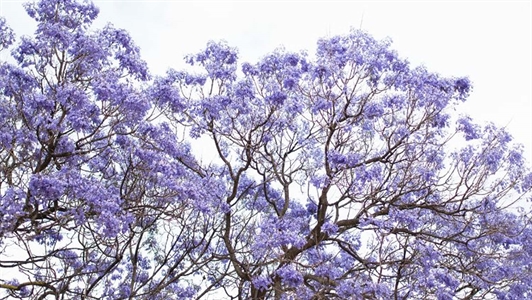
Jacarandas have a way of changing the scale of a street. Their branches spread overhead, their blossoms soften the hard edges of buildings and their colour gathers against the sky in a way that can make even a brief walk feel like a seasonal ritual.
In McDougall Street, the trees are the main attraction, but the setting matters just as much. Kirribilli is a residential neighbourhood of older homes, narrow streets and leafy corners, close to the harbour and the busy approaches to the Sydney Harbour Bridge. Its everyday character gives the flowering season a different quality from a display in a formal garden or a public park.
Visitors come to see the canopy, but they also encounter a living neighbourhood continuing around them. Residents make their way through the street, people walk their dogs and the ordinary routines of the area unfold beneath the blossoms. The result is a meeting between local life and a seasonal attraction that draws people from well beyond the North Shore.
That relationship calls for a little consideration from everyone who visits. A photograph may take only a moment, but large numbers of people stopping in the same place can narrow a footpath or spill into the road. The temporary closures are intended to reduce that pressure when pedestrian numbers are highest.
For visitors, the simplest approach is to treat McDougall Street as a residential place first and a photographic destination second. Keep access clear, follow directions from traffic controllers and allow others space to enjoy the trees without blocking the movement of people who live nearby.
What To Expect From The Road Closures
From Saturday 31 October, the temporary arrangements will apply each Saturday and Sunday between 7am and 7pm. North Sydney Council expects the measures to continue for approximately six weeks, although the flowering period itself can extend from mid-October through December.
The affected sections are McDougall Street, between Clark Road and Willoughby Street, and Hipwood Street, for up to 50 metres from its intersection with McDougall Street. Traffic controllers will be stationed at the relevant intersections, with barriers and an approved traffic guidance arrangement in place.
During closure hours, vehicle access is restricted to eligible residents within the designated area, subject to identification and directions from traffic controllers. Visitors with parking permits cannot use those permits to enter the closed section, although they remain valid in surrounding streets where the usual parking rules allow.
Taxis and rideshare vehicles, including Uber, cannot enter during closure hours unless they are carrying a resident who lives within the restricted area and can confirm their address. Residents should arrange to leave the closure area for pickups.
The measures are intended to give pedestrians more room and reduce the risks associated with people stopping for photographs in the carriageway. They do not mean the streets are closed to all movement, nor do they give visitors unrestricted access simply because the trees are flowering.
Drivers should follow traffic controller instructions and use the available detours. Those who are visiting purely to see the blossoms will generally find it easier to approach on foot rather than trying to drive into the affected streets.
The closures are scheduled for weekends because that is when visitation can be especially high. They are based on anticipated crowd numbers and the time needed to organise traffic control, rather than on a precise prediction of when every tree will reach full bloom.
Walking Beneath The Purple Canopy
The appeal of jacaranda season is partly visual, but it is also physical. There is the dappled light beneath the branches, the contrast between purple flowers and pale spring skies, and the occasional petal drifting onto a footpath or gathering at the edge of the kerb.
On a busy day, the street can become a slow-moving procession of people looking up, stepping aside and trying to find a clear view between the branches. Cameras and phones appear, but not every visitor is intent on taking a photograph. Some simply stand for a moment, taking in the colour before continuing on their way.
The experience is best approached without too much urgency. Flowering trees do not provide a fixed timetable for visitors. Weather, temperature and the condition of individual trees all influence how the season unfolds, so the street may look different from one weekend to the next.
That uncertainty is part of the appeal. A visit is not quite like arriving at an exhibition where every detail remains unchanged. The canopy shifts as flowers open and fall, while wind and rain can alter its appearance overnight.
Visitors should also remember that the street is not a dedicated pedestrian plaza. Even when the temporary closures are operating, people need to pay attention to local access arrangements, follow directions from traffic controllers and avoid obstructing driveways or entrances.
The most considerate visit may be a relatively short one. Take time to appreciate the trees, leave room for others and then continue exploring the neighbourhood on foot. There is no need to turn a residential street into an all-day destination to enjoy what spring has brought.
When Is The Best Time To See The Jacarandas?
The flowering season generally stretches from mid-October into December, with the strongest display varying from year to year. In Kirribilli, the temporary closures are expected to run for up to six weekends, but visitors should not assume that every tree will be at full bloom when they arrive.
The first weekend of the traffic arrangements is a useful marker for the start of the busy period rather than a guarantee of peak colour. Some trees may already be flowering, while others take longer to develop their canopy. A warm spell, strong wind or heavy rain can also change the appearance of the street.
For those hoping to avoid the largest crowds, visiting outside the busiest weekend periods may be worth considering. The temporary restrictions described by council apply on Saturdays and Sundays from 7am to 7pm, so weekday visits offer a different set of conditions, although the street remains a residential area and normal traffic rules continue to apply.
Early morning can bring softer light and a quieter atmosphere, but it is also a popular time for photography. Later in the day, the changing angle of the sun may bring out different tones in the flowers and the surrounding buildings.
There is no single perfect hour. The best approach is to allow some flexibility, check the weather and accept that the trees will look different as the season progresses.
The important distinction is between the flowering season and the road closure period. Council bases its traffic arrangements on visitor numbers and the time needed to organise accredited traffic controllers. The closures may therefore overlap with the strongest bloom without beginning or ending on the exact dates that the trees reach their peak.
Getting There And Visiting Considerately
Kirribilli is well served by public transport, and visitors can plan their journey around the local train and bus network. Travelling by train to Milsons Point or another nearby station and walking through the neighbourhood is a practical alternative to searching for a parking space close to McDougall Street.
Those who drive should expect increased demand for parking during the flowering season. Surrounding streets may have time limits, resident restrictions or other parking conditions, so signs should be checked carefully. A visitor parking permit does not provide access to the road closure area during restricted hours.
There are specific arrangements for people with mobility parking permits. Access is allowed where the permit holder is in the vehicle and the state-issued permit is displayed, subject to the traffic controllers' directions and the need to take extra care around pedestrians.
Residents of the affected streets also have particular access arrangements. People living within the closure area must show photo identification confirming their address when entering by vehicle. Residents returning to homes on Hipwood Street or Bradly Avenue must follow the designated approach via Clark Road and the instructions given by traffic controllers. Short-term accommodation guests, including Airbnb visitors, are not eligible for resident vehicle access during closure hours.
For drivers who live in the area, council asks that they give way to pedestrians and reduce their speed to 10 kilometres per hour while the jacarandas are flowering. Extra care is particularly important when reversing or manoeuvring near people taking photographs.
These arrangements can seem detailed for a seasonal display, but they reflect a straightforward challenge: a narrow residential street must accommodate the everyday needs of its residents while welcoming a much larger number of visitors.
A little preparation makes the experience easier for everyone. Check the official notice before travelling, follow temporary signs, keep driveways clear and avoid stopping in the roadway. The trees can be enjoyed without placing residents or other visitors in difficult situations.
A Seasonal Change In The Neighbourhood
Jacaranda season has become part of the rhythm of spring in Sydney. Across the city, flowering trees transform streets and parks for a few weeks, creating familiar scenes that nevertheless feel different each year. Their arrival is brief enough to be anticipated and unpredictable enough to reward a return visit.
In Kirribilli, the attention drawn to McDougall Street also highlights the relationship between a neighbourhood and the people who come to see it. The street's appeal rests on trees that have grown within an established residential setting, not on an attraction built specifically for visitors. That distinction matters when the foot traffic increases and the ordinary business of the area continues around the spectacle.
The temporary road closures are one way of making room for that seasonal interest while reducing the risk of conflicts between vehicles and pedestrians. They are not an invitation to treat the street as a pedestrian event space without restrictions. Traffic controllers remain in charge of access, and visitors are expected to follow their directions.
For those arriving on foot, the reward is a chance to experience one of Sydney's more distinctive spring streets at a slower pace. Look beyond the camera frame and there is more to notice: the way the branches meet overhead, the changing light on the buildings and the small movement of petals across the pavement.
The flowers will not remain indefinitely. As the weeks pass, the canopy will change, petals will fall and the street will gradually return to its familiar appearance. That temporary nature is part of what makes the season memorable.
For now, as the purple blossoms begin to spread across the North Shore, Kirribilli offers a reminder that some of Sydney's most compelling seasonal experiences require little more than a walk, a moment of attention and consideration for the people who call the place home.
Event And Road Closure Details
What: Jacaranda season in Kirribilli and temporary weekend road closures
Start Date: Saturday 31 October 2026
Expected Duration: Approximately six weeks, subject to crowd numbers and traffic arrangements
Closure Times: Saturdays and Sundays, 7am to 7pm
Location: McDougall Street between Clark Road and Willoughby Street, and Hipwood Street up to 50 metres from McDougall Street, Kirribilli, NSW
Admission: Free public access to the neighbourhood
Parking: Visitor parking permits are not valid within the closure area during closure hours. Surrounding streets remain subject to their usual parking restrictions.
Official Information: North Sydney Council: Kirribilli Road Closures For Jacaranda Season