
José González brings his intricate acoustic folk to the Sydney Opera House Forecourt on 27 February 2027, pairing intimate songs with a summer night by the harbour.
There are few places in Sydney where music and landscape seem to share the same stage. On a summer evening, the harbour changes with the light, ferries trace their familiar paths across the water and the white sails of the Sydney Opera House hold the last warmth of the day. As darkness settles over Circular Quay, the city becomes a place of reflections, distant voices and the soft movement of water against the shore.
On Saturday 27 February 2027, Swedish-Argentinian singer-songwriter José González will bring his understated, finely detailed music to the Opera House Forecourt. The open-air performance will place his intimate guitar arrangements and restrained vocals within one of Sydney's most recognisable waterfront settings, where the surrounding city becomes part of the evening's atmosphere.
González is an artist whose music rewards attention rather than demanding it. His songs often begin with little more than a fingerpicked guitar and a voice that sits close to the listener. Repeated patterns gather momentum almost imperceptibly, creating a sense of movement without the need for dramatic crescendos. The effect can be meditative, but rarely static. Small changes in rhythm, melody and emphasis gradually reveal the depth beneath the apparent simplicity.
For an audience gathering beside Sydney Harbour, that musical restraint offers a compelling alternative to the spectacle often associated with large outdoor concerts. The evening will centre on songs shaped by patience, observation and a careful relationship between sound and silence.
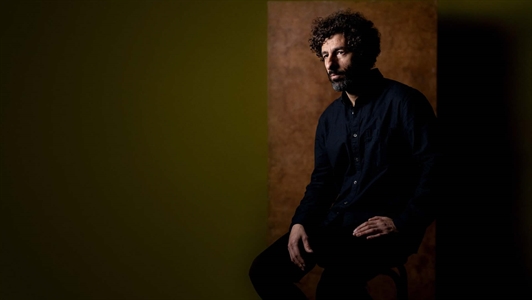
José González and the Art of Listening Closely
Since the release of his debut album, Veneer, in 2003, José González has established a distinctive place in contemporary folk. His music draws on classical guitar technique, Latin American folk traditions and alternative songwriting, creating arrangements that feel both carefully constructed and quietly spontaneous.
The guitar is central to this approach. González's fingerpicking produces interlocking notes that can sound almost like several instruments moving together. A repeating figure provides the foundation, while subtle changes in timing and emphasis give the music its character. Rather than filling every space, he allows individual notes to ring out, making the spaces between them as important as the melody itself.
His voice follows a similar principle. Soft and measured, it carries songs without overwhelming their arrangements. There is little theatrical distance between performer and listener. Instead, the music creates a sense of proximity, as though a thought is being worked through in real time.
That quality has helped González's songs travel well beyond the acoustic folk scene. His version of Heartbeats, originally recorded by Swedish electronic duo The Knife, introduced many listeners to his approach, while Crosses remains one of the defining songs from his early catalogue. Both demonstrate how a restrained arrangement can give familiar emotions an unusual clarity.
At the Sydney Opera House, audiences can expect to hear selections from across his five solo albums, including established favourites and material from his latest record, Against the Dying of the Light, released in March 2026. The performance is planned around his original solo setup, with guitar-led arrangements and a small selection of covers.
For listeners who have followed González for years, the concert offers a chance to return to songs that have accompanied different periods of life. For those discovering him for the first time, it presents an introduction to an artist who finds considerable expressive range in a deliberately spare musical language.
A Sydney Opera House Setting Made for Summer
The Forecourt occupies a distinctive position within the Opera House precinct, between the building's celebrated architecture and the open waterfront. It is a space where the usual movement of the city remains close at hand, yet an evening performance can create a temporary sense of focus.
Arriving at Circular Quay in late February, visitors will encounter Sydney during the final stretch of summer. The days are still long, the harbour remains busy and the transition into evening often brings a welcome change in temperature. Around the Opera House, the architecture takes on different qualities as the light fades, its surfaces shifting from bright white to softer shades against the darkening sky.
An outdoor performance changes the way music is experienced. There is no enclosed auditorium to separate the audience entirely from its surroundings. Instead, the air, the changing light and the broader waterfront environment form part of the occasion.
González's music seems particularly suited to this setting. Its detail is often delicate, its arrangements built around repetition and small shifts rather than sheer volume. Beneath an open sky, those qualities can encourage a different kind of attention. The listener has room to settle into the rhythm of a song while remaining aware of the place in which it is being performed.
The setting also connects the concert to Sydney's wider cultural life. The Opera House is both a major international performing arts venue and a familiar part of the city's everyday landscape. People cross the precinct on their way to work, meet friends near the water or stop to watch the harbour as the afternoon passes. On concert nights, these ordinary movements give way to a shared purpose, bringing audiences together around a particular artist or performance.
For González, whose songs often explore human connection and the relationship between individuals and the wider world, the Forecourt offers an apt backdrop.
From Veneer to Against the Dying of the Light
González's career has been marked by a consistent interest in what can be achieved with relatively few elements. Veneer introduced listeners to the clarity of his guitar work and the unforced intimacy of his songwriting. Its success established an international audience for music that resisted the prevailing tendency towards increasingly elaborate production.
Subsequent albums expanded that approach without abandoning its essential character. In Our Nature explored questions of human behaviour, belief and the natural world, while Vestiges & Claws developed a warmer, more layered sound. Local Valley continued his interest in the relationship between language, identity and place, reflecting the Swedish-Argentinian background that has informed his perspective throughout his career.
Alongside his solo work, González has performed with the band Junip and collaborated with Göteborg String Theory, exploring arrangements that extend beyond the solitary guitar. These projects reveal an artist interested in musical conversation, even when his best-known songs remain remarkably spare.
His 2026 album, Against the Dying of the Light, brings that sensibility into a world increasingly shaped by technological change and uncertainty. The record considers human connection, the consequences of progress and the question of what it means to remain human amid rapid transformation.
Its themes reflect a recurring concern in González's work: how individuals make sense of the world around them. Rather than approaching such questions through grand declarations, he tends to favour careful observation and measured reflection. His songs create room for uncertainty, allowing listeners to draw their own conclusions.
That perspective gives the new material a natural place alongside the older songs. Heard together, the catalogue traces an artist who has continued to refine his methods while returning to questions that remain unresolved. The music changes, but the interest in human experience remains.
For the February performance, the balance between familiar songs and newer work will be particularly significant. The older material carries the associations of two decades of listening, while the recent album introduces ideas shaped by a different moment in the world. Together, they offer a picture of an artist whose music has matured without losing its original sense of intimacy.
Two Decades of Songs and a Return to Sydney
González's relationship with Australian audiences stretches back to the early years of his career. His music found listeners here through its understated arrangements and its ability to communicate emotion without relying on elaborate production.
His return to the Sydney Opera House follows three sold-out Concert Hall performances during Vivid LIVE in 2023. The February 2027 concert will mark his first appearance at the venue since those shows and his first visit to Australia since 2024.
The change of setting is notable. The Concert Hall offers an enclosed environment in which the audience can concentrate on the smallest details of a performance. The Forecourt, by contrast, opens the music to the waterfront and the changing conditions of an outdoor evening.
González has previously described the Opera House as an internationally recognised cultural landmark, comparing its significance to that of a cathedral for the arts. The comparison speaks to the venue's unusual standing in the public imagination. Its architecture is familiar even to people who have never attended a performance, while its position on the harbour makes it inseparable from the image of Sydney itself.
For a returning artist, the location offers both continuity and a different experience. The audience may recognise the songs and the distinctive guitar arrangements, but the surroundings will alter the way the evening unfolds.
The late-summer timing adds another dimension. February in Sydney is often associated with long afternoons, outdoor dining and the gradual movement of people towards the water as the day cools. An evening concert provides a reason to remain in the city beyond the usual routines of work and travel.
For visitors, it can also become part of a broader Sydney itinerary, combining a performance with a walk around Circular Quay or an evening spent exploring the surrounding streets. The Opera House precinct is well connected to public transport, making it accessible without needing to plan an evening around driving and parking.
A Wider Summer Program at the Opera House
José González will join an expansive summer program at the Sydney Opera House, which is set to feature an international range of established artists and contemporary performers.
The announced line-up includes Geese, Heilung, Damien Rice, Suede, The Avalanches, Madness, Leon Bridges with special guest 54 Ultra, Angus & Julia Stone, Dijon, Cat Power and Tara Clerkin Trio, with further announcements expected.
The breadth of the program reflects the Opera House's role as a meeting point for different musical traditions and audiences. Across the year, its contemporary music calendar moves between independent songwriting, electronic music, experimental performance and familiar names from several generations of popular music.
The Forecourt performances extend that activity into the open air, allowing the building's public spaces to become part of the cultural program. Rather than entering a theatre and leaving the surrounding city behind, audiences experience the concert within the landscape that has made the Opera House such an enduring symbol of Sydney.
González's appearance brings a quieter musical perspective to that broader program. His songs do not depend on elaborate staging or constant movement. Their impact develops through repetition, careful phrasing and the gradual accumulation of detail.
This contrast is part of what makes the concert an interesting addition to the summer calendar. It offers an alternative to the louder, more visually elaborate forms of live performance, inviting audiences to concentrate on the relationship between a voice, an instrument and a song.
Planning Your Visit to José González at the Sydney Opera House
The concert is scheduled for Saturday 27 February 2027, with gates opening at 6pm at the Sydney Opera House Forecourt. Tickets are listed at $119.90, plus a booking fee.
As the event approaches, ticket availability, entry arrangements and any updated performance information should be checked through the official Sydney Opera House website. The published program may also provide details about access requirements and other practical considerations for attending an outdoor event.
The Opera House is within walking distance of Circular Quay railway station, ferry wharves and the surrounding transport connections. Arriving by public transport is a practical option, particularly on a busy summer evening when the waterfront attracts both concertgoers and visitors exploring the precinct.
It is worth allowing time to reach the Forecourt before the performance. Circular Quay can become busy around evening events, and an unhurried arrival leaves room to take in the harbour before finding the entrance.
Late summer weather can be changeable, even when the day begins warm and clear. Checking the forecast before leaving home and preparing for an outdoor performance will help make the evening more comfortable. Visitors should also review the venue's current conditions of entry before attending.
Event Details
Event: José González Live
Date: Saturday 27 February 2027
Time: Gates Open at 6pm
Venue: Forecourt, Sydney Opera House, Sydney, New South Wales
Ticket Price: $119.90 Plus Booking Fee
Official Website: https://www.sydneyoperahouse.com/
The Quiet That Remains After the Music
Some concerts are remembered for their scale, the volume of the crowd or a moment of spectacle that seems to suspend everything around it. Others leave a quieter impression, built from details that become clearer only after the performance has ended.
José González's music belongs to the latter tradition. His songs often create their own momentum through patterns that repeat and gradually shift, drawing attention to the spaces between notes and the small changes that might otherwise pass unnoticed. The simplicity is deliberate, but the emotions it carries are not.
At the Sydney Opera House Forecourt, those qualities will meet the shifting light and movement of the harbour. The audience will gather as the day gives way to evening, with the city continuing beyond the performance space. For a time, the guitar and voice will provide a common point of attention within that larger scene.
When the final song ends, Sydney will still be moving around the waterfront. Ferries will continue across the harbour, lights will shimmer on the water and the paths around Circular Quay will carry people towards their next destination.
The music will leave no physical trace in the landscape, yet the setting may become part of the memory of hearing it. A particular melody can recall the colour of the sky, the temperature of the air or the feeling of standing beside the harbour after dark.
For González, whose work repeatedly returns to questions of connection and the human experience, that relationship between music and place feels appropriate. His February performance will offer an opportunity to listen closely, away from the distractions of everyday life, while remaining firmly within the living city.
As summer begins to draw towards autumn, the evening promises a meeting of intimate songwriting and an expansive Sydney setting. The result will depend not on spectacle, but on the simple act of gathering beneath the sky to listen.