
Discover Loa, a late-night music room beneath Oxford Street in Darlinghurst, where DJs, live music, thoughtful cocktails and Nikkei-inspired plates shape Sydney nights.
On Oxford Street, the evening has always carried the possibility of becoming something else. A dinner can turn into a drink, a familiar corner can become a meeting place, and the hours after dark can offer a different version of the city from the one seen during the day. In Darlinghurst, where Sydney's nightlife has long been tied to music, performance and self-expression, a new venue looks to continue that tradition from below street level.
Opening on Friday 23 October 2026, Loa is a late-night music room tucked beneath Oxford Street, within the heritage-listed 90 Oxford Street building. The venue sits below Amé, the Nikkei restaurant recently opened by ESCA Hospitality Group, and introduces another layer to the group's growing presence in the neighbourhood.
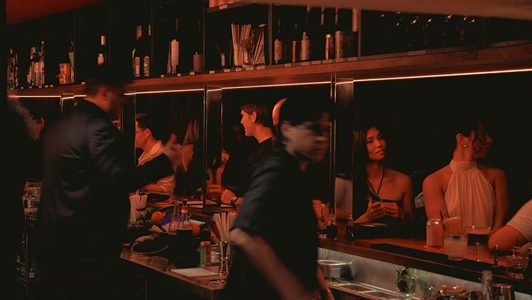
Rather than positioning itself simply as another cocktail bar, Loa places music at the centre of the experience. A rotating programme of live acts, resident DJs and special guests will shape the room across the week, moving through neo-soul, R&B, disco and house. Drinks and a compact food menu provide the supporting cast, while the design favours intimacy over spectacle.
The idea is straightforward: create a place where the night can gather momentum naturally, with a soundtrack that changes as the week progresses and a dance floor that becomes more animated as the hours pass.
Loa And The Continuing Story Of Oxford Street
Oxford Street is more than a thoroughfare connecting parts of inner Sydney. It has long been a place where nightlife and cultural identity overlap, where restaurants, bars, performance spaces and late-night meeting points reflect the city's changing tastes and communities.
Darlinghurst, in particular, has played an important role in Sydney's social life. Its streets hold traces of different eras of music, nightlife and self-expression, even as new businesses and developments reshape the precinct. The challenge for a new venue is to find its place within that history without treating it as a decorative backdrop.
For ESCA Hospitality Group co-founder and creative director Ibby Moubadder, Loa has been part of the wider vision for the Oxford and Foley precinct from the beginning. The intention, he explains, is to carry forward the area's relationship with music and nightlife by creating a room where the soundtrack takes priority and the atmosphere develops over the course of the evening.
That emphasis gives Loa a particular role within the building. Amé provides the restaurant experience upstairs, drawing on Japanese and Peruvian influences, while the venue below offers a more informal setting for drinks, small plates and music. The relationship between the two is less a division between dinner and nightlife than a continuation of the evening across different spaces.
The wider Oxford and Foley precinct is also taking shape around a growing collection of food, drink and lifestyle businesses. With Mecca Coffee and Aenza among its newer arrivals, and Soho House planned for a neighbouring site in 2028, the area is becoming another point of activity within Darlinghurst's evolving streetscape.
Loa enters that landscape with a focus on the hours when the city begins to loosen its pace.
Inside Loa, A Room Designed Around Sound
Hidden below the street, Loa is designed for a capacity of 100 people. Architect Matt Darwon, a longtime collaborator of ESCA, has shaped the interior around low-set red ceilings, timber seating and chrome details. The effect is intended to be intimate and atmospheric, with the room's materials and lighting creating a distinct contrast with the movement of Oxford Street above.
The design draws inspiration from ESCA's Japanese rooftop bar, Jōji, while adapting that sensibility to a smaller, enclosed setting. Instead of relying on expansive views or a large open floor, Loa brings attention inward, towards the people gathered in the room and the music connecting them.
At its centre is a DJ booth equipped with a custom-built Martin Audio sound system. That installation is more than a technical detail. In a music-led venue, sound determines how a space feels, whether conversation remains comfortable, and how the energy of a room changes when the beat begins to take hold.
Loa's programme is designed to reflect that relationship. Live acts will feature on Wednesday and Thursday nights, exploring neo-soul, R&B and eclectic grooves. From Friday through Sunday, resident DJs and visiting guests will take over the booth, drawing connections between disco and house.
The progression gives the week its own rhythm. Earlier nights offer a setting for listening, conversation and a drink after work, while the weekend programme has more room to build towards a dance floor. Rather than promising one fixed atmosphere, Loa will change character according to the music, the night and the people who arrive.
That flexibility is central to the idea of a late-night music room. It is a place that can begin quietly and become more animated without losing its sense of intimacy.
A Late-Night Music Room With A Cocktail List Of Its Own
The drinks programme follows a similar approach, taking familiar cocktail forms and giving them a contemporary interpretation. Led by Jerom Morris, whose previous experience includes Los Angeles venues Gwen by Curtis Stone and Accomplice Bar, the list draws on recognisable classics while introducing unexpected ingredients and textures.
The Cobalt Cosmo combines Absolut vodka and Cointreau with blueberry, tarragon and lavender. The Skinny Colada brings together Havana Club rum, cream sherry, pineapple and coconut water, finished with a strawberry rim. For a different take on a tequila-based drink, the Perfect Cadillac pairs Los Altos with lime and agave, accompanied by an orange-infused reposado shot.
One of the more unusual offerings comes from a soft-serve machine, which serves a reimagined Gimlet made with house gin and lime soft serve. The format turns a familiar drink into something more playful, fitting the venue's intention to balance technique with a sense of ease.
Morris describes the drinks as an extension of the music and atmosphere, combining familiar orders with fresh ingredients and refined preparation. The programme also includes non-alcoholic cocktails, Australian and international wines, and beer on tap.
That range matters in a room designed for different kinds of evenings. Not everyone arrives at the same hour or stays for the same reason. Some may stop for a drink after work, others may come for a live set, and others still may arrive later, when the DJ has taken over and the dance floor begins to fill.
The menu is built to accommodate those shifts without asking the drinks to become the main event. They are part of the setting, designed to be enjoyed at the bar or between stretches of music.
Small Plates With A Japanese-Peruvian Influence
Food at Loa extends the connection with Amé upstairs. Executive chef Erik Ortolani, who also leads kitchens at Itō, Jōji and Amé, has curated a menu that draws on Japanese-Peruvian flavours in a more relaxed, late-night format.
The selection includes golden curry empanadas served with green herb sauce, chicken karaage accompanied by rocoto honey and sesame dip, and a Wagyu burger layered with American cheese, caramelised onion and tsukemono.
These are dishes suited to a room where people may be standing, moving between the bar and the music, or sharing food across a table. They bring the kitchen's broader influences into a setting where the meal is less formal and need not follow the familiar sequence of a restaurant dinner.
The menu also gives the venue a practical connection to the restaurant above. Amé and Loa operate in different registers, but their food programmes share an approach to flavour, allowing the experience upstairs to continue in a looser form downstairs.
For visitors who prefer to eat before settling into the music, the proximity makes it possible to treat the two venues as parts of one evening. For those who arrive later, the smaller plates offer something to accompany a drink without turning the night into a full dining occasion.
Finding The Night's Rhythm
Loa will open from Wednesday to Sunday, with doors at 5pm each evening. On Wednesdays and Thursdays, the venue closes at midnight, as it does on Sundays. Fridays and Saturdays extend until 2am, giving the weekend programme more time to develop.
A daily happy hour will run from 5pm to 7pm, featuring selected cocktails, house wines, lager and small plates. The early hours offer an opportunity to experience the room before the later music programme gathers pace, whether for a quick drink or the beginning of a longer night.
The venue is walk-in only, with no reservations. That approach leaves the evening more spontaneous, although it also means that visitors should allow for the possibility of waiting when the room is busy. With a capacity of 100, Loa is intended to remain relatively contained rather than expand into a large club environment.
Its location makes it accessible to those already spending time around Darlinghurst and Oxford Street, as well as visitors looking for a late-night destination within the inner city. The entrance leads down from the street into a space removed from the immediate noise and movement outside, though still closely connected to the neighbourhood that surrounds it.
As with any music venue, the character of a particular night will depend on the programme. A Wednesday live set will offer a different experience from a Saturday DJ session, and the distinction is part of the appeal. The schedule creates room for several kinds of gathering rather than prescribing a single version of nightlife.
A New Chapter Beneath Oxford Street
Sydney's nightlife is often discussed through the changing fortunes of its venues and precincts, but its character is also made through smaller encounters: a song that changes the mood of a room, a familiar face spotted across the bar, or the decision to stay for another set instead of heading home.
Loa enters Oxford Street with an understanding of that less tangible side of going out. Its design is compact, its food menu deliberately informal, and its music programme intended to shift between listening and dancing as the week unfolds. The drinks draw on familiar references without remaining bound to them, while the connection with Amé gives the venue a culinary identity that extends beyond standard bar fare.
Whether the room becomes a regular stop or a destination for particular performances will depend on the people who fill it and the music that passes through. What is clear is the intention to create a place where sound shapes the evening, rather than simply accompanying it.
Below the heritage-listed building, away from the traffic and footfall of Oxford Street, the night will take on a different scale. The room may begin with a conversation over a cocktail, move through the warmth of a live vocal or a familiar groove, and eventually gather around the DJ booth.
In a neighbourhood whose identity has long been intertwined with nightlife, Loa offers another setting for those hours when the city changes pace. Its success will ultimately be measured not by the design details or the names on the drinks list, but by what happens when the music starts and people decide to stay.
Loa: Event Details
Opening Date: Friday 23 October 2026
Location: Loa, LG.01, 90 Oxford Street, Darlinghurst, NSW 2010
Opening Hours:
- Wednesday: 5pm to midnight
- Thursday: 5pm to midnight
- Friday: 5pm to 2am
- Saturday: 5pm to 2am
- Sunday: 5pm to midnight
Happy Hour: Wednesday to Sunday, 5pm to 7pm, with selected cocktails, house wines, lager and small plates
Entry: Walk-ins only; no reservations
Official Website: http://www.loasydney.com
Instagram: https://www.instagram.com/loa.sydney/
Photos By: Ethan Smart