
Martin Place this Daffodil Day will become a sea of yellow on Thursday 20 August, as art, flowers and personal messages bring Sydneysiders together for cancer support.
On an August morning, Martin Place will begin much as it usually does. Office workers will cross the square with coffee in hand, buses will move through the city streets and the towers surrounding the precinct will catch the changing light.
Then, gradually, yellow will begin to appear.
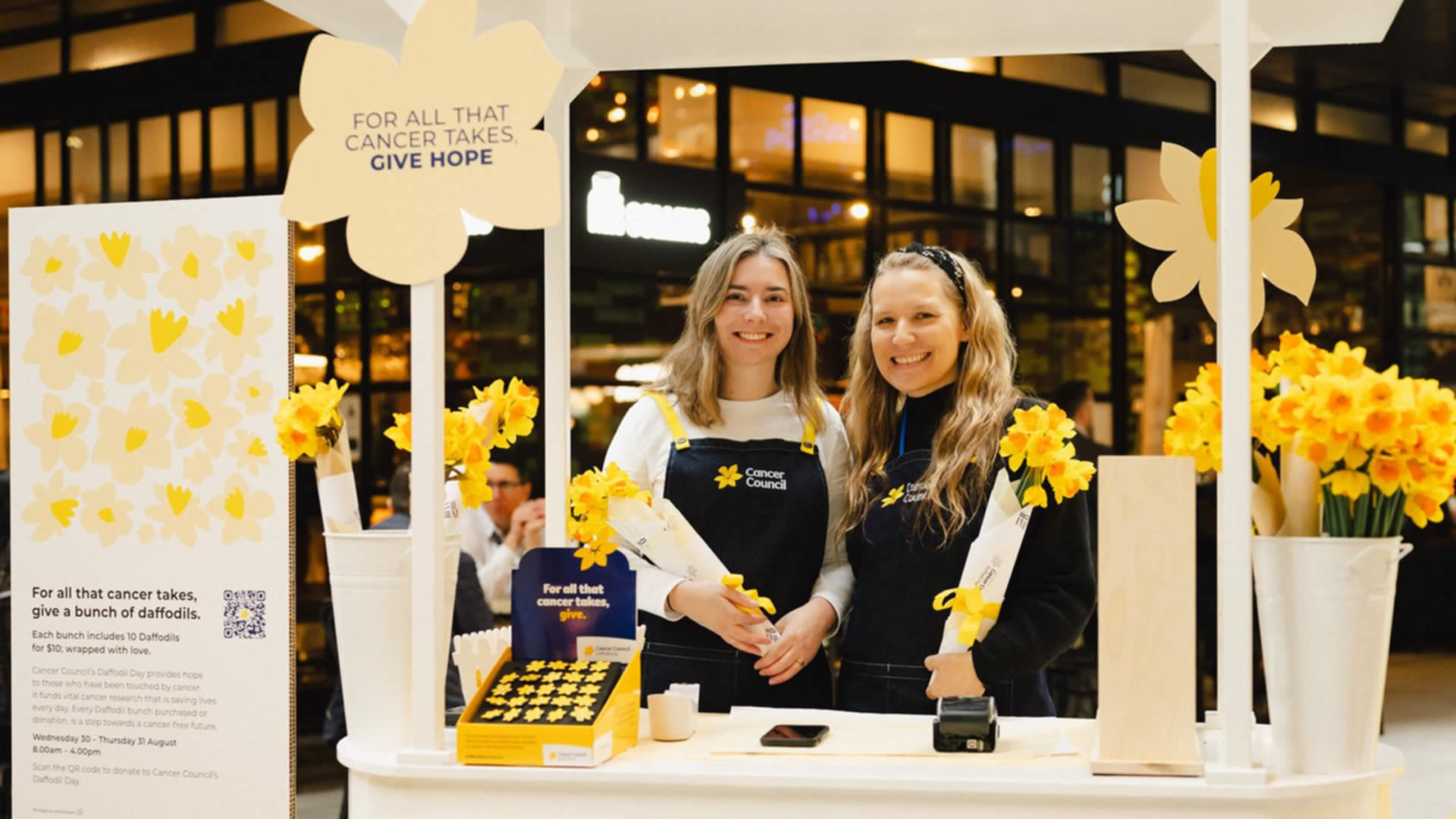
On Thursday 20 August, Martin Place this Daffodil Day will take on a different character as Cancer Council marks the occasion with a large-scale public activation centred on hope, remembrance and community. The familiar sandstone and glass of the Sydney CBD will provide the backdrop for flowers, artworks and installations, while people passing through the city will be invited to leave something of their own behind.
At the centre of the event will be a 10-metre collaborative artwork created by Australian artist Amy Gibb. Rather than remaining solely the work of one artist, the canvas will become a shared record of the people who stop to contribute. Visitors will be encouraged to add their names or a personal message of hope directly to the artwork.
By the end of the day, the canvas will contain hundreds of individual gestures, bringing together people who may otherwise have nothing in common beyond the city street they happen to share.
It will be a fitting expression of what Daffodil Day has come to represent in Australia. The daffodil has become a familiar symbol of hope, while the annual campaign raises funds for cancer research and supports Cancer Council's wider work with people affected by cancer.
Martin Place This Daffodil Day Will Turn Yellow
The colour will be impossible to miss.
Across Martin Place, immersive floral installations will sit alongside the main artwork, while LEGO daffodil displays will add another interpretation of the flower that has become synonymous with the campaign. Together, the installations will create a public space that feels noticeably removed from the usual rhythm of the CBD.
There is something particularly effective about placing an event like this in Martin Place.
The square is one of Sydney's great civic rooms, a place where everyday city life and public occasions regularly overlap. It has hosted celebrations, demonstrations, ceremonies, markets and installations, yet it remains a working part of the city. People pass through because they have somewhere to be.
That makes the Daffodil Day activation different from an event held behind closed doors. Participation will not require a ticket or a particular reason for being there. Someone heading towards Wynyard, a worker stepping outside for lunch or a visitor exploring the CBD will be able to encounter it simply by walking through Martin Place.
The artwork will therefore grow through ordinary encounters.
A Canvas Built By The City
Amy Gibb's 10-metre artwork will provide the centrepiece.
Known for creating colourful floral works, Gibb will approach the commission with a personal connection to cancer. She has said that two of her close friends are currently undergoing cancer treatment, making the project more than a public art exercise.
Her intention will be to create something that encourages people to pause and reflect on those who have experienced cancer, while also recognising the work undertaken by Cancer Council.
The decision to invite the public onto the canvas will change the nature of the finished piece.
Instead of simply looking at an artwork, visitors will become part of it. A name might be written for a parent, partner, friend or colleague. Someone else may leave a short message without explaining who it is for. Another person may simply add their name.
These small contributions will carry different private meanings, even as they become part of the same public image.
That tension between the personal and the communal will be central to Martin Place this Daffodil Day. Cancer affects individuals and families in deeply personal ways, yet its impact is widespread. Cancer Council states that almost one in two Australians will be diagnosed with cancer before the age of 85.
A public canvas cannot capture every story, but it can provide a place where some of those stories are acknowledged.
The Daffodil And Its Meaning
The daffodil has a long association with Cancer Council's work.
Over time, Cancer Council organisations across Australia adopted the daffodil as a shared symbol of hope. The flower's association with Daffodil Day has consequently become familiar across generations, appearing on badges, merchandise, fundraising materials and community events.
Its appeal is partly visual. Yellow stands out against the muted colours of an Australian winter and early spring, and a daffodil has an uncomplicated shape that translates easily from a real flower into a symbol.
But its meaning has grown beyond appearance.
Daffodil Day is intended to remember people affected by cancer, recognise those living beyond a diagnosis and support the ongoing search for better prevention, detection and treatment. Cancer Council describes the annual campaign as one of its most recognised fundraising events, with money raised supporting cancer research.
In Martin Place, that broader purpose will become visible through the physical presence of the flowers.
The city will briefly look different because people have chosen to make it look different.
Martin Place This Daffodil Day Will Invite A Pause
The pace of central Sydney rarely allows much time for reflection.
Martin Place is surrounded by some of the city's busiest streets and workplaces. People move through it with phones in hand, meetings to reach and trains to catch. Even the most beautiful corners of the CBD can become invisible when they are encountered every day.
The Daffodil Day installation will interrupt that routine.
The scale of the artwork will make it difficult to overlook, while the invitation to contribute will give visitors a reason to stop. Someone might spend only a few minutes there, while others may linger longer, reading messages and looking at the developing canvas.
That act of stopping will matter.
Public events do not always need to be loud to change the character of a place. Sometimes a simple alteration in pace is enough. A group standing around a piece of artwork can make a busy square feel quieter, even while the surrounding city continues at its usual speed.
For Martin Place this Daffodil Day, the contrast will be part of the experience.
From Private Stories To A Public Tribute
Cancer is often described through statistics because statistics help explain the scale of the disease.
But statistics cannot describe the waiting room, the phone call, the changed family routine or the long period of uncertainty that can follow a diagnosis.
That is why the personal messages on the artwork will be significant.
They will give people an opportunity to acknowledge the human side of an issue that can otherwise feel impossibly large. The messages may be brief, but their presence will make the artwork something more than a decorative installation.
The finished canvas will become a collective tribute.
It will contain traces of people who have passed through Martin Place on a particular Thursday in August. Some contributors may be directly affected by cancer, while others may simply want to stand alongside friends, relatives and colleagues who are.
The result will be a physical reminder that support does not always have to be complicated.
Sometimes it begins with showing up.
A Campaign Rooted In Community
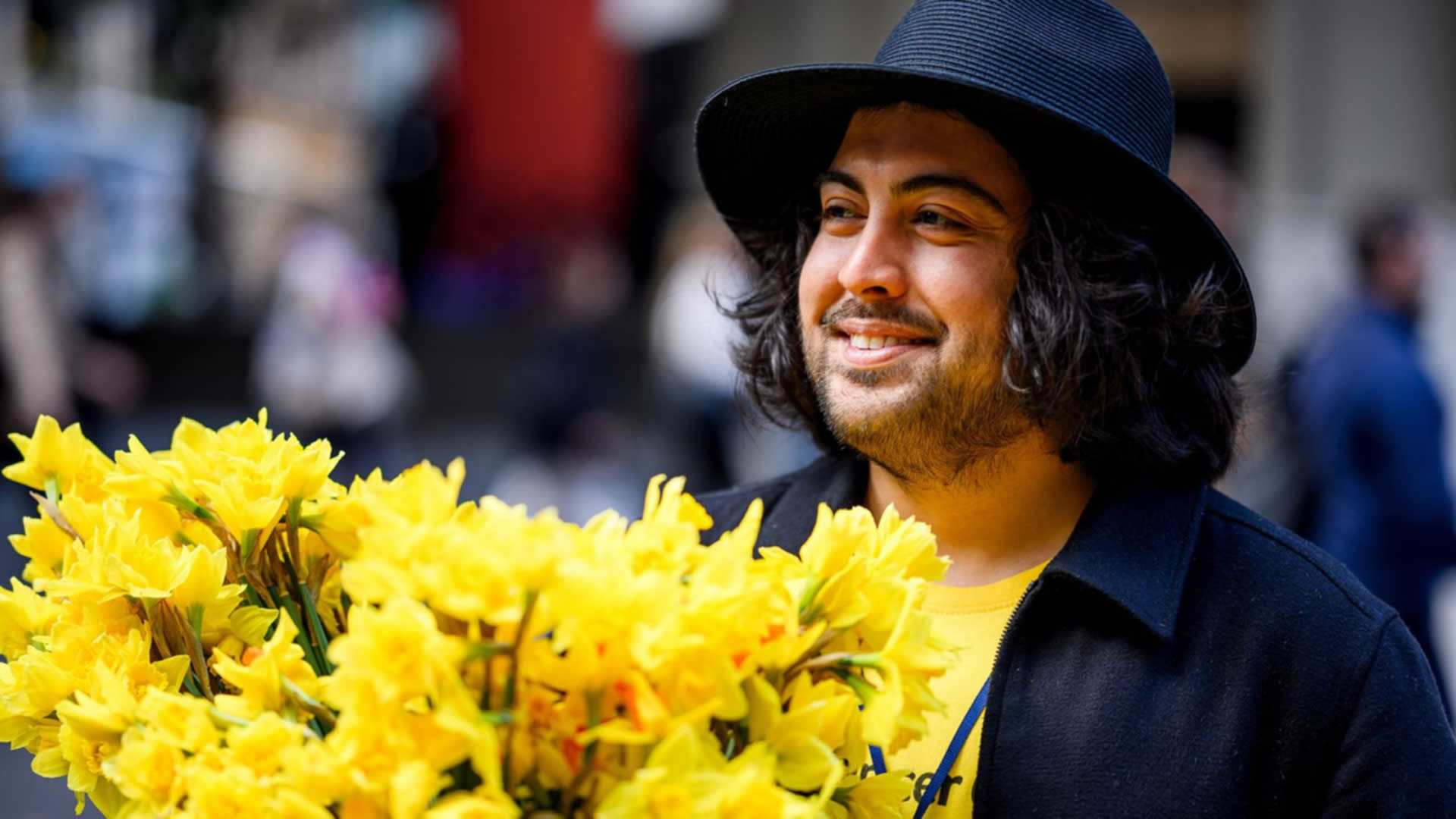
Daffodil Day has always depended on the involvement of ordinary Australians.
Cancer Council's fundraising programs extend beyond donations, with opportunities to volunteer, participate in community activities and organise fundraising events. The organisation works across research, prevention and support for people affected by cancer.
That community foundation will be reflected in the Martin Place activation.
The artwork will not be completed in isolation and then presented to the public. It will develop through public participation, turning the act of contributing into part of the event itself.
There will be no need to understand the technical language of cancer research or have a particular connection to the organisation. The invitation will be straightforward: come to Martin Place, see the installation and add a message of hope.
For a city accustomed to large commercial campaigns, that simplicity will be refreshing.
The focus will remain on people rather than products.
Why Martin Place Matters
Sydney has many spaces where public events can take place, but Martin Place has a particular civic character.
The precinct sits at the heart of the CBD, surrounded by significant buildings and within easy walking distance of major transport links. Its broad pedestrian areas have long provided a stage for public gatherings, allowing the private lives of city workers and the larger life of Sydney to overlap.
A Daffodil Day installation belongs naturally in such a place.
It will be visible to people who have not planned to attend, which is important for an awareness campaign. The person who sees the yellow flowers from across the square may not have intended to stop. The person who notices the artwork while walking to work may decide to add a name.
In this way, Martin Place will become part gallery, part meeting place and part memorial.
The city itself will provide the audience.
The Quiet Power Of A Shared Message
There is something understated about writing a name by hand.
In an age of instant messages and digital posts, handwriting takes time. It leaves an imperfect mark that cannot be edited once the pen has moved across the surface.
On a 10-metre canvas, those individual marks will accumulate.
Some will be large and confident. Others will be small. Some may carry a few words, while others may simply be a name. Together, they will form a visual record of the people who chose to participate.
That will give the artwork its eventual character.
The flowers surrounding it will provide the visual spectacle, but the handwritten messages will provide the emotional centre.
For those affected by cancer, seeing a familiar name among hundreds of others may be a small but meaningful acknowledgement. For those who contribute in memory of someone they have lost, it may offer a public expression of something normally kept private.
And for those who simply pass through, the artwork will provide a reminder that behind the statistics are millions of individual experiences.
A Different Kind Of Sydney Landmark
By late afternoon, the yellow installations will have spent a full day against the changing light of the CBD.
The crowds will shift. Office workers will leave their buildings, commuters will begin their journeys home and the people who have contributed messages will continue on with their day.
But the canvas will remain.
What began in the morning as a blank surface will have become something shaped by the city itself. Every signature and message will represent a moment when someone chose to stop, remember and participate.
That may be the most fitting way for Martin Place this Daffodil Day to conclude.
The event will not promise that a single day can change the experience of cancer. Instead, it will make visible the idea that research, care, support and generosity are built through many individual acts.
As evening settles across the CBD, the yellow flowers will stand out against the darker stone and glass. The artwork will carry the marks of everyone who has contributed, while Sydney's usual movement resumes around it.
For a few hours, one of the city's busiest public spaces will have asked people to slow down and remember.
And sometimes, in the middle of a busy city, that small invitation to pause can be enough to make hope visible.
Event Details
Event: Martin Place This Daffodil Day
Date: Thursday 20 August 2026
Location: Martin Place, Sydney CBD, NSW
Featuring: A 10-metre collaborative artwork by Australian artist Amy Gibb, floral installations and LEGO daffodil displays
Organiser: Cancer Council
Purpose: Daffodil Day Appeal, supporting cancer research and Cancer Council programs for people affected by cancer
Official Information: Cancer Council Daffodil Day Appeal
Event details are based on information supplied for the activation and may be subject to change. Check Cancer Council's official website for the latest information before attending.