
Parramatta Lanes will return from 21 to 24 October 2026, filling the Parramatta CBD with large-scale art, immersive installations, live performance, food and music.
There is a particular hour in Parramatta when the city begins to change.
Office workers leave the towers around the CBD. The last light settles over the river. Shopfronts begin to glow, and the ordinary geometry of streets, car parks and laneways becomes less fixed.
In October, that transition will become part of the event.
Parramatta Lanes will return from 21 to 24 October 2026, transforming the city's streets and public spaces into a four-night festival of art, music, food and performance. The event will be free to attend, with this year's program expected to bring more than 500 artists and 70 vendors across 21 sites throughout the CBD. Organisers are anticipating around 400,000 visitors.
The scale will be considerable, but Parramatta Lanes will not be experienced as a single venue.
Instead, visitors will move.
A turn into one lane will reveal an illuminated installation. A car park will become a temporary performance space. A familiar piece of city infrastructure will be transformed into something theatrical. Music will drift from one street while food aromas pull people towards another.
That movement is central to the character of Parramatta Lanes.
It encourages visitors to explore rather than simply arrive.
Parramatta Lanes And The City As A Stage
Parramatta has always been a city of movement.
The river runs through its centre, trains and buses connect it with the wider metropolitan area, and its streets sit at the meeting point of communities from across Western Sydney.
Parramatta Lanes will use that existing city rather than attempting to conceal it.
For four nights, everyday spaces will be given temporary identities. Streets that are usually corridors for getting somewhere will become places to stay. Laneways will become galleries. Public spaces will become stages.
The approach reflects the broader evolution of Parramatta as a cultural centre in its own right.
Rather than requiring audiences to travel into central Sydney to encounter major arts experiences, the festival will bring contemporary work into the middle of Western Sydney.
This year's program will be particularly focused on large-scale public art and installations that invite people to interact with their surroundings.
PurseZilla, by Benjamin Akuila, will be one of the most visible examples. The illuminated inflatable sculpture will invite audiences inside a work inspired by culture, identity and community.
Elsewhere, artist Mechelle Bounpraseuth will create giant versions of familiar everyday food items, turning ordinary objects into oversized pieces of public art.
The effect will be deliberately playful, but the setting will give the work a deeper context.
These pieces will not sit behind gallery walls.
People will encounter them while walking to dinner, looking for music or simply wandering through the city.
The Art Of Parramatta Lanes
The 2026 art program will continue that relationship between art and public space.
Samuel Kim and Lawrence Liang will present OURO, an immersive installation and interactive experience that will ask audiences to engage with the work rather than simply look at it.
Rosie Deacon's The Great Putty Pop-Up: Art Mini Golf will take another approach, combining colour, play and contemporary art in a work designed to encourage participation.
There will also be larger roaming and performance works.
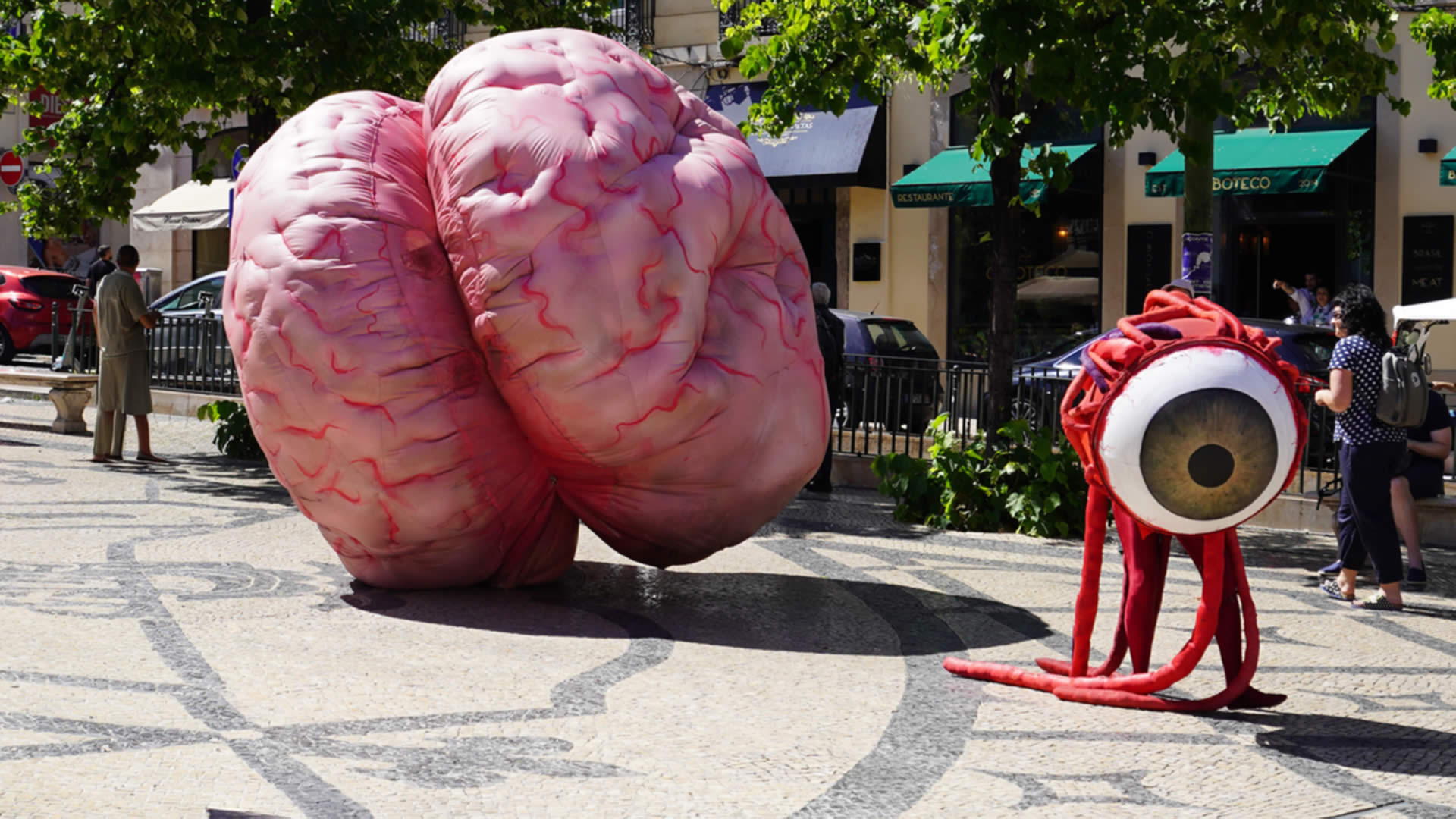
Snuff Puppets will bring Human Body Organs to the festival, a giant-scale roaming performance that will turn the streets themselves into a theatrical environment.
Marian Abboud will present a large-scale car installation performance piece built around community connections, volunteers and conversations.
These works will share one important characteristic: they will be difficult to separate from the place in which they appear.
That is one of the pleasures of public art.
A sculpture encountered in a gallery can be contemplated at a distance. A sculpture encountered unexpectedly in a city street interrupts the ordinary rhythm of the evening.
It makes people stop.
Someone will take a photograph. Someone else will ask what it is. Children will move closer. A group of friends may change direction simply because something unusual has appeared around the corner.
For a festival built around exploration, those moments will matter as much as the headline works.
Sound Off And The Sounds Of Western Sydney
Music will provide another layer to the festival.
Among the new elements will be Sound Off, presented by Low and Slow Brisbane and New Zealand curator Edith Amituanai.
The program will introduce Western Sydney audiences to the Pasifika siren and sound subculture, bringing a distinctive Pacific influence into the wider festival environment.
The inclusion will also reflect something fundamental about Parramatta.
Western Sydney is one of the most culturally diverse parts of Australia, and its music scene has developed through an extraordinary mixture of languages, communities and musical traditions.
Parramatta Lanes will place that diversity directly into the streets.
Rather than treating culture as a backdrop, the festival will use music, performance and art as ways of representing the people who live in the region.
The result should be particularly noticeable after dark.
Music carries differently outdoors. A bass line can travel down a lane. A voice from a stage can become part of the general soundscape. Different performances can overlap, creating an atmosphere that would be difficult to reproduce inside a conventional concert venue.
The city becomes the acoustical space.
Food Will Lead People Through The Lanes
The food program will sit alongside the art and music, creating another reason to keep moving through the CBD.
While the full 2026 food and entertainment program will be released online closer to the festival, Parramatta Lanes has established its reputation through the combination of street food, pop-up bars, local restaurants and temporary dining spaces.
The 2025 festival featured more than 80 food stalls and pop-up bars, with cuisines and vendors spread across the CBD.
That approach will remain important in 2026.
Food in a street festival works differently from food in a restaurant.
There is less ceremony. A dish can be eaten while standing, carried through a crowd or shared between friends before the group moves on to the next lane.
The smell of grilled meat, spices, fried food or something sweet will become part of the navigation system.
Visitors may arrive with a plan, but Parramatta Lanes is the kind of festival where the plan can easily change.
A crowd gathering around a performance might delay dinner. An installation may lead people down a street they had not intended to explore. A food stall may become the destination simply because its aroma has travelled further than expected.
The festival's food program will therefore contribute to the sense of discovery that defines the event.
Parramatta Lanes And The Culture Of The Unexpected
The most interesting thing about Parramatta Lanes may be its willingness to make ordinary places temporarily strange.
A car park is normally somewhere to leave a vehicle.
A laneway is normally somewhere to pass through.
A city square can be a place to wait.
During the festival, each can become something else.
That transformation is particularly valuable in a city such as Parramatta, where development is constantly changing the physical environment.
New buildings rise, transport infrastructure expands and established streets acquire new roles.
Parramatta Lanes offers a different kind of change.
It is temporary.
For four nights, a familiar part of the city will become something that does not normally exist. Then the installations will disappear, the stages will be dismantled and the streets will return to their everyday uses.
The memory, however, will remain attached to the place.
Someone walking through the CBD months later may remember where a giant sculpture once stood. A particular laneway may become associated with a song heard late at night. A car park may be remembered not for its concrete levels but for the performance that took place there.
That is one of the subtle strengths of a festival that uses public space.
It changes how people remember the city.
A Festival For Walking
Parramatta Lanes will reward a certain kind of visitor.
Not the person who wants to see everything in a strict order, but the person prepared to wander.
The festival will spread across 21 sites, meaning that a single evening can become a small journey through the CBD.
There will be no need to remain in one place.
The experience will come from the movement between places.
One of the most effective ways to approach Parramatta Lanes will likely be to begin without trying to account for every minute. Start with one installation, follow the music, stop for something to eat, then continue when something else catches the eye.
The festival will be designed around that instinct.
Previous editions have used streets, rooftops, car parks and laneways as temporary venues, creating a network rather than a single festival ground. The 2025 program, for example, spread more than 200 music acts across multiple stages alongside interactive artworks and food vendors.
The 2026 edition will continue that city-wide approach.
It will also mean that Parramatta itself becomes part of the experience.
Visitors arriving by train will enter the festival through the city's transport hub. Those arriving by car will encounter changes to parking and traffic arrangements. People who live or work nearby will experience the festival almost as an extension of their neighbourhood.
There will be no clear boundary between event and city.
Parramatta As Western Sydney's Cultural Centre
The festival's growing scale reflects Parramatta's changing cultural identity.
The City of Parramatta describes Parramatta Lanes as a way to highlight the city's role as Western Sydney's cultural capital, while the 2026 program has been supported by the City of Parramatta and Create NSW's four-year Multi-year Funding Program.
The funding matters, but the more significant story is what happens when that investment reaches the street.
Artists are given public spaces.
Audiences encounter work without needing to enter a theatre or gallery.
Local businesses become part of a cultural program.
And residents can see their own city represented through the work of artists from different backgrounds.
This is especially relevant in Western Sydney, where cultural identity cannot easily be reduced to a single tradition.
The region contains multiple generations, languages, communities and histories.
A festival such as Parramatta Lanes can reflect that complexity simply by allowing many different voices to occupy the same streets.
The result will not necessarily be tidy.
It will be noisy, colourful and occasionally unexpected.
That is part of the point.
Planning A Night At Parramatta Lanes
Parramatta Lanes will take place across the Parramatta CBD from Wednesday 21 October to Saturday 24 October 2026.
The festival will be free, although individual food, drink or special experiences may have their own costs.
The full 2026 program is expected to be released online closer to the event. The current announced program confirms more than 500 artists, 70 vendors and 21 festival sites, with the event expected to attract approximately 400,000 visitors.
Visitors should allow plenty of time to walk between sites and check the official program before arriving.
Transport will also require some planning.
As a city-wide street festival, Parramatta Lanes will involve changes to roads and public transport arrangements. NSW Government information has already listed extended trading arrangements for eligible licensed venues in the Parramatta local government area during the festival period.
The festival will also take place after dark, so comfortable footwear and a willingness to walk will be more useful than an elaborate itinerary.
For the latest program announcements, site information, artist details and festival updates, visit the official Parramatta Lanes website.
Event Details
Event: Parramatta Lanes 2026
Dates: Wednesday 21 October to Saturday 24 October 2026
Location: Parramatta CBD, Western Sydney
Entry: Free
Program: Large-scale public art, immersive installations, interactive experiences, contemporary performance, music, food and entertainment
Sites: 21 locations across the Parramatta CBD
Artists: More than 500 artists are expected to participate
Vendors: More than 70 vendors are expected across the festival
Official information: atparramatta.com/lanes
The exact daily performance times and individual site schedules will be published as the 2026 program is released. Visitors should check the official festival website before travelling for the latest information.
When The Streets Return To Normal
There will be a particular quietness after Parramatta Lanes.
The lights will come down. Temporary structures will disappear. Artists will pack away their equipment, food stalls will close and the public spaces will return to their everyday purposes.
The city will look much as it did before.
But it will not necessarily feel the same.
For four nights, Parramatta will have encouraged people to slow down and look differently at streets they might normally cross without noticing.
A laneway will have become a gallery.
A car park will have become a theatre.
An ordinary public space will have held a giant sculpture, a roaming performance or a sound that travelled further than expected.
And thousands of people will have walked between them.
That is perhaps the lasting value of Parramatta Lanes.
It will not ask visitors to leave the city behind in order to experience culture. It will ask them to look more closely at the city they are already in.
When the festival ends, the streets will become ordinary again.
But for anyone who has wandered through Parramatta after dark, following music through a laneway or turning a corner to find something unexpectedly enormous, the city may never be quite as ordinary as it was before.