
Parramatta Lanes returns to the Parramatta CBD from 21 to 24 October 2026, bringing four nights of food, music and art to more than 20 city sites.
There is something particularly effective about experiencing a city after dark. During the day, Parramatta is busy with commuters, workers, shoppers and people moving between trains, offices, restaurants and the river. By evening, the same streets can feel more open to possibility.
That change is central to Parramatta Lanes.
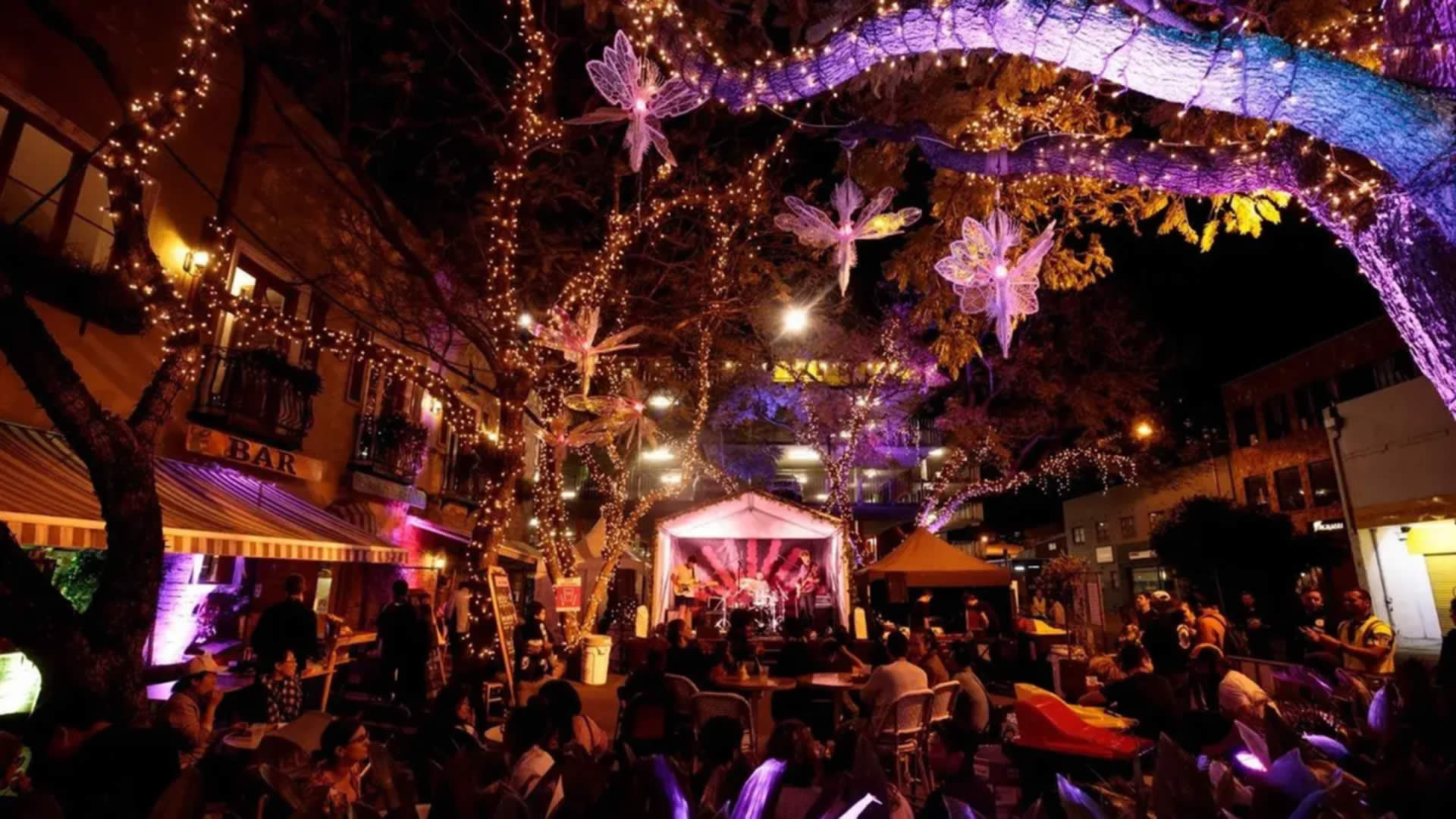
Rather than concentrating everything inside a single festival ground, the event moves through the existing fabric of the city. Its stages, food stalls, bars, installations and other experiences occupy laneways, public spaces, rooftops and unexpected corners of the CBD. The result is a festival that rewards movement. There is no single entrance that defines the experience and no obvious route that everyone follows.
Instead, people wander.
A distant bass line might draw a group towards one corner. The smell of something smoking or frying might send another group in the opposite direction. A brightly illuminated installation catches attention from across a street. Somewhere nearby, a band starts playing.
The city itself becomes the connective tissue.
Parramatta Lanes runs from 5pm to 10pm on Wednesday 21 and Thursday 22 October, extending until 10.30pm on Friday 23 and Saturday 24 October. The festival takes place throughout the Parramatta CBD.
Parramatta Lanes And The Art Of Wandering
The most interesting thing about Parramatta Lanes is the way it encourages people to look differently at familiar surroundings.
A laneway normally exists to get somewhere else. A car park is usually associated with practicality rather than atmosphere. A rooftop can seem remote from the movement below. During the festival, these ordinary urban spaces become part of a larger cultural landscape.
Large-scale artworks and illuminated displays add another layer to the evening. Some installations are designed to be noticed immediately, while others reward those who take a slower route through the city. The distinction matters because Parramatta Lanes is at its best when visitors are not simply moving from one scheduled performance to another, but allowing the night to unfold around them.
The 2026 program expands into new and returning precincts, including the Latin Quarter and Concrete Plaza. The latter introduces a skateboarding arena to the festival environment, adding another kind of movement to streets already filled with music, food and people.
This approach also reflects something distinctive about Parramatta itself. The city is not a static collection of heritage buildings, commercial towers and transport links. It is one of the places where Sydney's different communities, histories and ambitions meet, and Parramatta Lanes makes that diversity visible through the way the city is used.
Music Around Every Corner
Music gives Parramatta Lanes much of its sense of movement.
The 2026 program features more than 400 artists from Sydney and around the world, with performances spread across the festival's different spaces. Rather than relying on one dominant stage, the program moves through jazz, hip hop, electronic music, Latin sounds, DJs, live bands and other performances.
That variety suits the geography of the festival.
A large outdoor performance can create a gathering point, while a smaller set in a more intimate location can feel almost incidental, discovered rather than scheduled. On one night, the music might pull visitors towards a dance floor. On another, it might simply provide a soundtrack to dinner or conversation.
By Friday and Saturday, the festival takes on a later rhythm, with performances continuing until 10.30pm. The official program includes rooftop DJs, intimate live sets, heavier sounds and late-night performances, giving the final two nights their own character.
For visitors, that means there is value in resisting the urge to plan every minute. The festival map is useful, particularly for understanding where the different precincts sit, but part of the appeal lies in hearing something unexpected and following it.
Eating Through Parramatta Lanes
Food is another reason Parramatta Lanes works so naturally as a city festival.
Parramatta has long been one of Sydney's strongest places for eating across cultures, and the festival extends that reputation into the streets. In 2026, more than 70 food stalls, bars and pop-up experiences are spread across the festival area.
The food program ranges widely. Black Bear BBQ serves slow-smoked brisket burgers, while KOI Dessert Bar brings festival-only desserts. Yummy Yummy Knafeh offers Nabulsi knafeh, with its crisp pastry, syrup and rich texture providing a distinctly different kind of late-night festival food.
Elsewhere, BAR30 and Parilla returns to PARKROYAL Parramatta with South American barbecue, including choripán and asado. Mountain Culture Beer Co provides beer, while the CINCiN Spritz Bar gives visitors another reason to head upwards to the Eat Street Rooftop.
The appeal is not simply the number of choices. It is the way eating becomes part of the wandering experience.
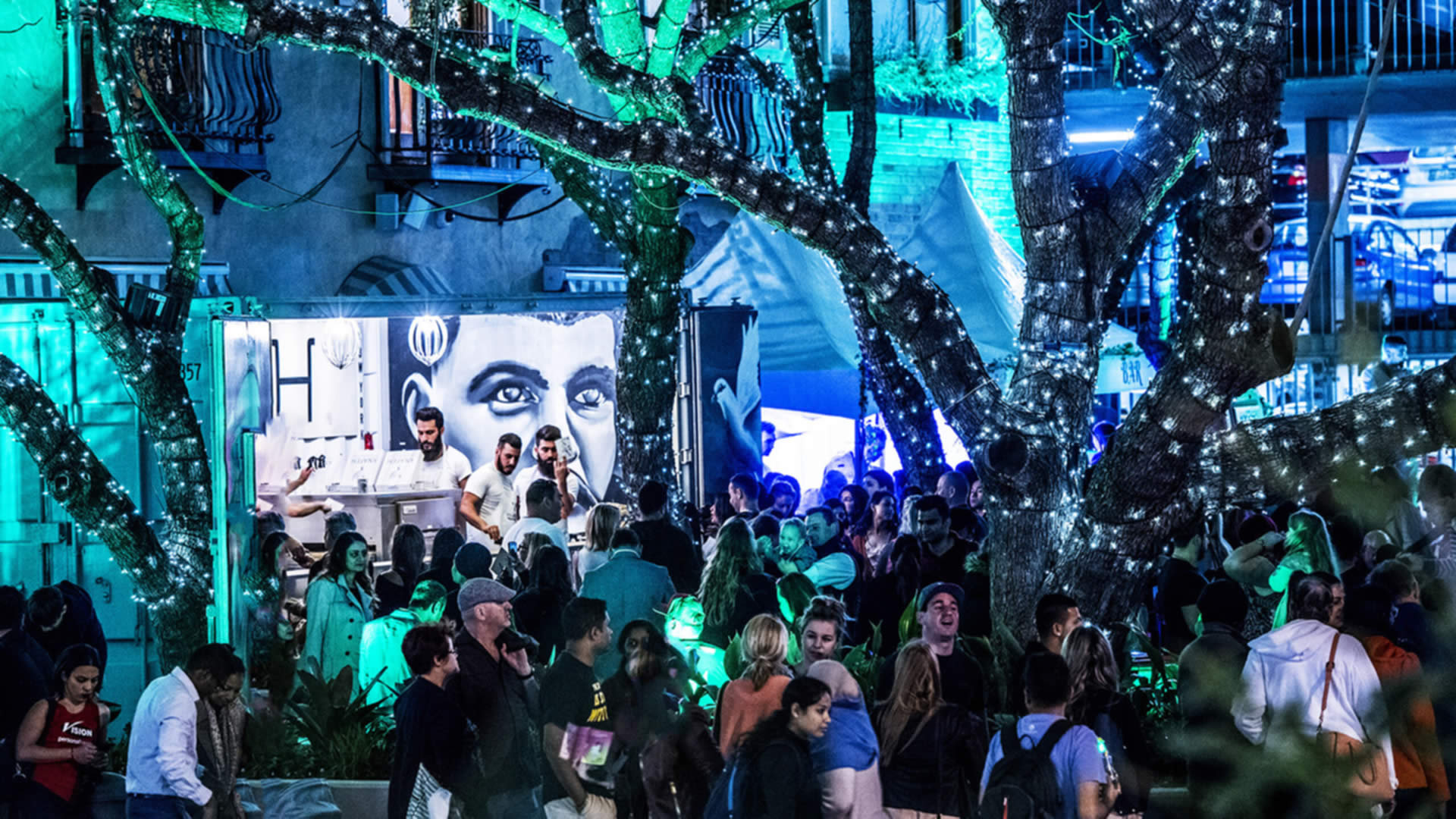
A meal can become a stopping point between performances rather than the central purpose of the evening. A snack can be shared while walking to another precinct. A drink can turn into an hour spent watching the city move below.
In that sense, Parramatta Lanes treats food less like a collection of stalls and more like another way of exploring the city.
Parramatta Lanes Beyond The Main Streets
The festival's expanding footprint also changes the relationship between Parramatta's central streets and the less obvious spaces around them.
The Latin Quarter brings a stronger focus on Latin sounds, food and atmosphere, while Concrete Plaza introduces a very different visual and physical presence. Around them, art installations and performances help connect the various areas into something that feels larger than a conventional street party.
That variety is important because Western Sydney does not need to imitate the cultural life of central Sydney to be interesting. Parramatta has its own social geography, its own food traditions and its own relationship with public space.
Parramatta Lanes works when it reflects that reality.
The festival draws together local artists, international influences, independent food operators, musicians and audiences from across Sydney. For a few nights, the boundaries between neighbourhood, entertainment precinct and public space become less obvious.
It also makes the CBD feel more porous. People who might normally travel through Parramatta without stopping have a reason to stay. People who know the area well are encouraged to see it from another angle.
Finding A Different Side Of Parramatta
There is a particular pleasure in attending an event that does not ask visitors to stay in one place.
Parramatta Lanes encourages a different pace. You might begin with dinner, walk towards a performance, stop for an installation, find another piece of music and then realise that an hour has disappeared. The experience is built from these small decisions.
That makes the festival especially suited to groups of friends, couples and families who prefer to make their own evening rather than follow a fixed itinerary. It also means that two visits can feel quite different.
Wednesday night has its own atmosphere as the festival begins. Thursday develops the program further, while Friday and Saturday bring longer evenings and a stronger late-night energy. The official program is divided by day, allowing visitors to explore performances and precincts according to their interests.
For anyone unfamiliar with the city centre, the festival map is worth checking before arriving. With more than 20 sites spread through the CBD, knowing roughly where the precincts sit can make it easier to move between them without turning the evening into a logistical exercise.
Parramatta Lanes At Night
As the evening deepens, the character of Parramatta changes again.
Office windows become reflections against the dark. The sound of conversation gathers around food stalls. Music travels between buildings, sometimes clear and close, sometimes reduced to a distant pulse. People who arrived separately begin to occupy the same streets, moving between performances and stopping wherever something catches their attention.
This is perhaps the enduring strength of Parramatta Lanes. It does not simply place entertainment inside Parramatta. It makes Parramatta itself part of the entertainment.
The festival also arrives at an interesting moment in the city's continuing evolution. Parramatta has become one of Sydney's major centres in its own right, rather than simply a destination beyond the traditional city centre. Events such as this reveal how much cultural life can happen when public space is given room to breathe.
There is no need for every corner to be polished or spectacular. A good festival can make an ordinary place feel temporarily significant.
That is what happens when the lanes fill, when a rooftop glows above the street and when music leads people around a corner they might normally walk straight past.
Planning Your Parramatta Lanes Visit
Parramatta Lanes takes place across the Parramatta CBD from Wednesday 21 October to Saturday 24 October 2026. The festival is free to attend.
Wednesday 21 October runs from 5pm to 10pm.
Thursday 22 October runs from 5pm to 10pm.
Friday 23 October runs from 5pm to 10.30pm.
Saturday 24 October runs from 5pm to 10.30pm.
The festival is accessible, with official information covering accessibility, transport, maps and support services. Visitors can use the official festival map to plan a route through the different precincts and discover performances and experiences across the city.
For the full program and current visitor information, visit the official Parramatta Lanes website.
A City That Keeps Moving
By the end of the night, the most memorable part of Parramatta Lanes may not be a particular performance or dish. It may be the accumulated feeling of having moved through a city that briefly operates differently.
Parramatta's streets become places to pause rather than simply pass through. The laneways become stages. Rooftops become meeting places. Food becomes part of the route, and music becomes a kind of informal navigation system.
For four October nights, the Parramatta CBD asks visitors to slow down enough to notice what is already there.
And when the lights eventually go out, the streets return to their usual purpose. Yet the memory of the city after dark tends to linger – the sound of music travelling between buildings, the warmth of a shared meal, and the feeling of turning into an ordinary lane and finding something unexpected waiting there.