
Parramatta Lanes returns from 21 to 24 October 2026, filling the Parramatta CBD with food, music, art and late-night discoveries.
By late afternoon, Parramatta begins to change.
The office crowds thin out, the last of the daylight settles between the buildings and the city's laneways start to acquire a different rhythm. What might ordinarily be a passage between one part of the CBD and another becomes somewhere to stop. Music begins to travel through the streets. Food stalls draw people towards unfamiliar corners. Light catches on installations and temporary structures, and the city takes on the character of somewhere being explored rather than simply crossed.
This is the setting for Parramatta Lanes, which returns from Wednesday 21 to Saturday 24 October 2026 for four nights of food, music and art. The festival will spread across more than 20 sites throughout the Parramatta CBD, with expanded precincts including the Latin Quarter and Concrete Plaza. Entry is free.
Now in its 15th year, Parramatta Lanes has become an annual moment when the geography of the city feels temporarily rearranged. Familiar streets lead somewhere unexpected, car parks become gathering places and the spaces between established venues become part of the evening.
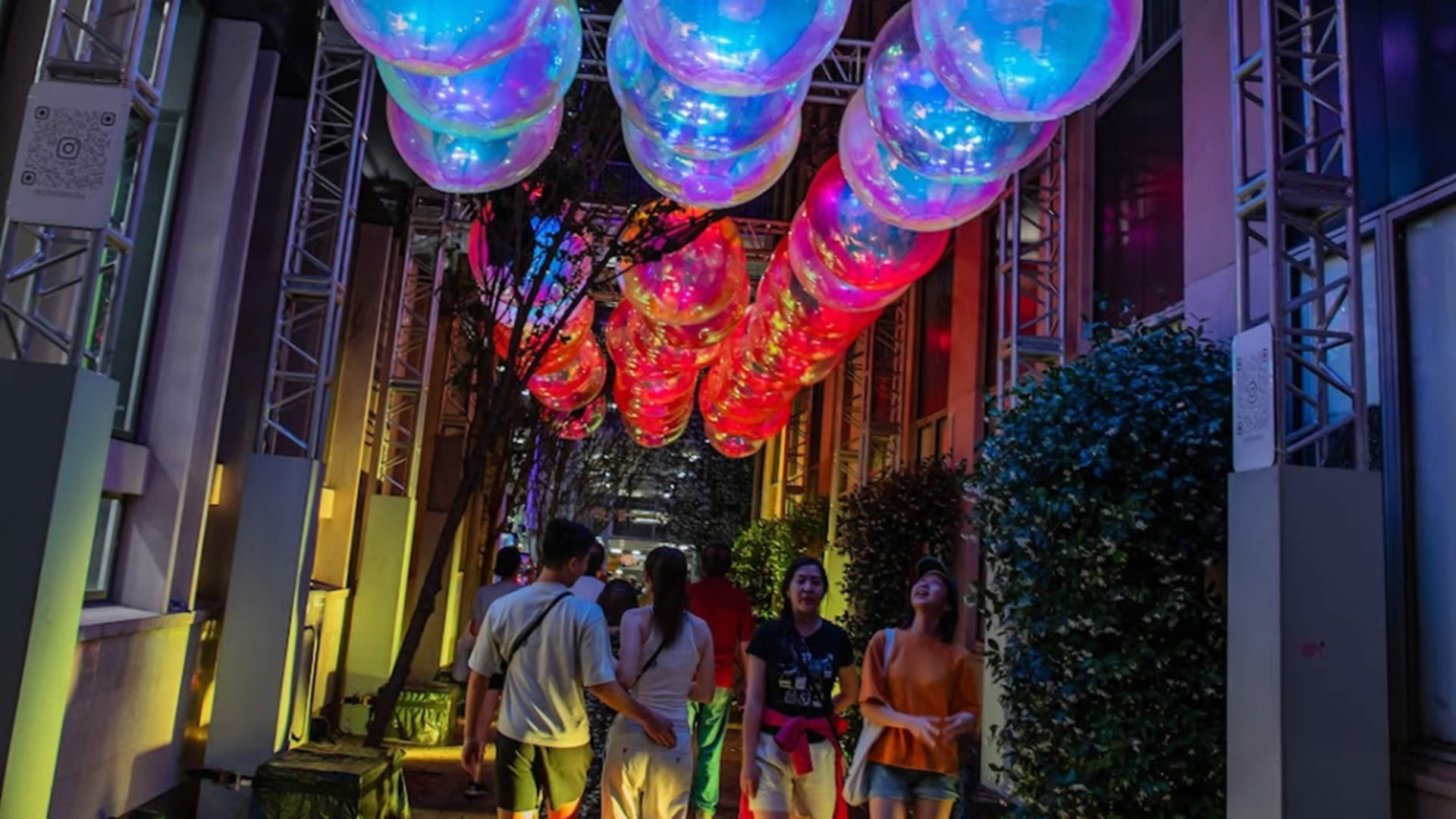
Parramatta Lanes And A City After Dark
There is something particularly suited to Parramatta about a festival built around movement.
The city's centre has never been a single, self-contained cultural district. It is layered, with commercial streets, historic buildings, public squares, restaurants, theatres, parks and newer developments sitting alongside one another. The festival takes advantage of that mixture rather than attempting to conceal it.
Instead of concentrating everything behind one entrance, Parramatta Lanes encourages people to move.
One moment might be spent listening to a band, the next searching for a particular food stall or following the glow of an artwork around a corner. A crowd gathers where there was no crowd an hour earlier. A familiar building becomes a backdrop for something temporary.
The result is less like attending one event and more like spending an evening inside a changing city.
That sense of discovery has always been central to the Lanes concept. The official 2026 program describes more than 20 unique festival sites, with live performances, pop-up bars, large-scale art installations and an expanded footprint across Parramatta.
Four Nights Across Parramatta
The 2026 festival runs across four consecutive evenings, beginning Wednesday 21 October and continuing through Saturday 24 October.
The published festival hours are 5pm to 10pm on Wednesday and Thursday, extending to 10.30pm on Friday and Saturday.
Those hours are significant because Parramatta Lanes is fundamentally a nighttime experience.
The early part of an evening has its own character. There is still enough daylight to see the architecture and familiar streets clearly, while the first lights and installations begin to appear. As darkness arrives, the festival becomes more atmospheric. Music carries further. Illuminated artworks become more prominent. People who arrived for dinner may stay for a performance, while those who came for music may find themselves stopping for something to eat.
By Friday and Saturday, the later finish gives the city even more time to unfold.
For visitors, there is no requirement to experience everything. The nature of the festival makes wandering part of the experience.
Food From Around The World
Food is one of the most immediate ways Parramatta Lanes reflects the character of Western Sydney.
The 2026 program is being built around street food stalls and pop-up bars, with the full Eats line-up still to be announced. The festival describes the offering as a chance to encounter tastes from around the globe within the Parramatta CBD.
That description fits naturally with Parramatta itself.
The city is home to restaurants, markets and food businesses representing an extraordinary range of communities, and the festival brings that diversity into the streets. Rather than separating dining from the rest of the program, food becomes part of the movement through the city.
A meal can become a destination, but it can also become a pause between performances.
That distinction matters. Parramatta Lanes works best as an evening rather than a checklist. There may be a dish that catches attention from across a crowd, a stall discovered by accident or a smell that leads people away from the route they thought they were taking.
The food is part of the geography.
Music That Moves Through The Streets
The other defining element is sound.
For 2026, Parramatta Lanes is promising music stages featuring more than 400 artists from across Sydney and around the world, with the detailed Beats line-up still to be released.
The scale matters, but so does the way the music is positioned.
In a conventional concert setting, the audience arrives at a predetermined room and remains there for the performance. At Parramatta Lanes, music can become something encountered while moving between places.
A bass line might draw a group towards a stage. A singer might be heard from another street. A performance can become the reason to stay somewhere longer than expected.
This creates a different relationship between audience and performer. The music is not necessarily the sole purpose of the night. It becomes one of the things that gives the city its temporary personality.
That variety is part of the attraction of a festival spread across more than 20 sites.
Parramatta Lanes Turns The City Into A Gallery
After dark, the distinction between street and gallery becomes increasingly difficult to maintain.
The 2026 festival's Art program will include large-scale installations, illuminated displays and immersive artworks designed to transform parts of Parramatta into an open-air gallery. The full program is still being released, but the festival describes the work as spanning sculpture, sound, contemporary art and interactive experiences.
This is where the temporary nature of Parramatta Lanes becomes particularly visible.
A car park is no longer simply a place for cars. A laneway becomes a place to gather. A building facade becomes part of an artwork. Ordinary pieces of the city become backdrops for colour, sound and movement.
There is also something appealing about encountering contemporary art this way. Visitors do not need to enter a gallery or already consider themselves an art audience. The work is simply there, encountered while walking through the city.
The experience can be brief or absorbing. A visitor might stop for a few seconds before continuing, or remain long enough to understand the work around them.
Either way, the city becomes part of the exhibition.
The New Corners Of Parramatta Lanes
For 2026, Parramatta Lanes is expanding its festival footprint with new or expanded precincts including the Latin Quarter and Concrete Plaza.
The importance of those spaces is less about adding another destination to a map and more about changing the way visitors move through the city.
A festival of this scale encourages people to reconsider distances that might otherwise feel insignificant. A few minutes' walk becomes part of the evening. A side street becomes a route worth taking. The spaces between major venues become as important as the venues themselves.
That is particularly appropriate in Parramatta, where older and newer parts of the city continue to meet.
The festival temporarily exaggerates that quality. It makes the overlooked visible.
For regular visitors, there is also the pleasure of seeing familiar places behave differently. A street that normally belongs to traffic can become a pedestrian space. A car park can become a performance setting. A public square can feel more like a meeting place than a thoroughfare.
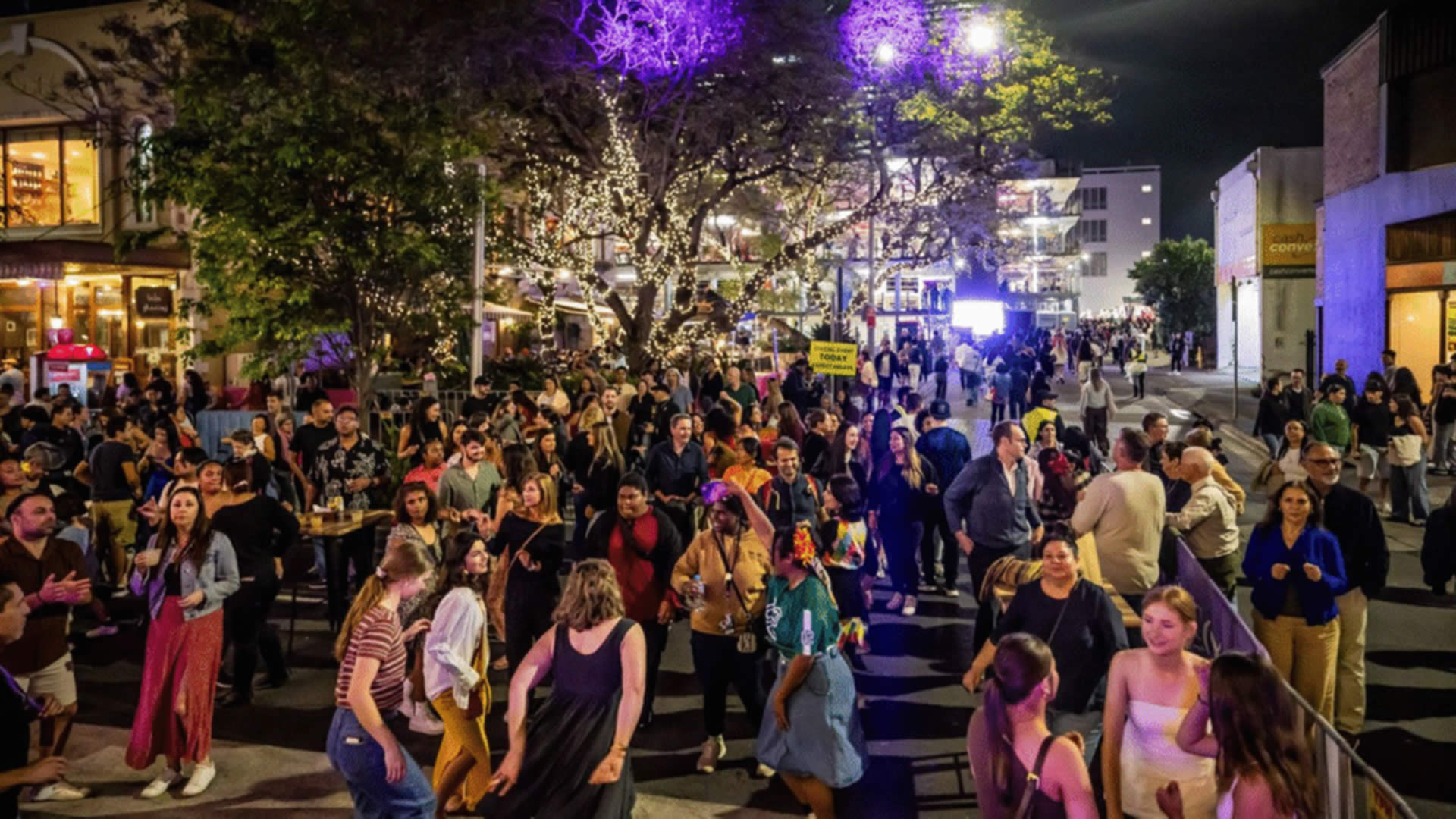
Walking Through Parramatta Lanes
The most natural way to approach Parramatta Lanes is without trying to control the entire evening.
There will be plenty to plan around, particularly once the full music, food and art programs are announced, but the festival is designed around movement. Visitors can begin in one precinct, follow the sound of music elsewhere, stop for food and continue towards an installation that has caught their attention.
Transport planning is worth considering in advance. Parramatta Lanes affects roads, parking and public transport arrangements around the CBD, with festival-day changes expected as the event takes over parts of the city. The official festival site will provide updated visitor and accessibility information as the event approaches.
The festival is free, and accessibility planning is built into the event. According to the official accessibility information, all Lanes sites are accessible, although some routes are easier to navigate than others. Accessible toilets, viewing areas and low-sensory spaces are also planned across the festival footprint.
For anyone unfamiliar with Parramatta, the simplest strategy is to arrive by public transport and allow time to walk.
The city is at its most interesting here when the route is not entirely predictable.
A Festival That Reflects Western Sydney
There is a larger story underneath the food stalls and illuminated streets.
Parramatta occupies an unusual position in Sydney. It is both a major urban centre in its own right and a place through which people move from many different parts of Western Sydney. Its population, businesses and cultural life reflect that wider region.
Parramatta Lanes makes that diversity visible without requiring it to be explained.
The food comes from different traditions. The music moves between genres and communities. The art occupies public space rather than remaining confined to institutions. People arrive from different suburbs and spend several hours sharing the same streets.
That is one reason the festival feels different from a conventional ticketed event.
There is no single audience and no single way to participate.
Someone can come primarily for dinner. Someone else may follow the music. Families can explore installations. Friends can meet for drinks. Art lovers can look for new work. Visitors can simply wander.
The festival accommodates all of those approaches without requiring them to become the same experience.
When Parramatta Belongs To The Night
By the final hour, the festival will have a different texture from the one that appeared at 5pm.
The daylight will be gone. Street lights and installations will provide much of the illumination. Music will continue to move between the precincts, and the city will be full of people who have stayed longer than they originally intended.
That is perhaps the most distinctive quality of Parramatta Lanes.
It does not ask visitors to look at Parramatta from a distance. It asks them to walk through it.
For four nights in October, the familiar geography of the CBD becomes fluid. Streets become stages, food becomes part of the journey, art appears where it is least expected and music provides a kind of informal compass.
Then, after Saturday night, the installations disappear and the temporary stages come down.
The streets return to their ordinary purposes.
But for those four evenings, Parramatta offers another version of itself – one that is best understood on foot, after dark, with no particular reason to hurry.
Event Details
Parramatta Lanes 2026
Wednesday 21 October to Saturday 24 October 2026
Wednesday and Thursday: 5pm to 10pm
Friday and Saturday: 5pm to 10.30pm
Location: Parramatta CBD, Parramatta, NSW
Entry: Free
Official information: Parramatta Lanes at AT Parramatta
Dates, times and program details should be checked against the official festival website before visiting, as further 2026 information is still being released.