
Powerhouse Parramatta will open on 7 November 2026, bringing major exhibitions, science, design and culture to the banks of the Parramatta River.
On the western side of Sydney, the Parramatta River has always been more than a boundary between suburbs. It is a line through the city's history, carrying traces of industry, transport, agriculture, migration and the many communities that have grown along its banks.
Soon, another landmark will join that landscape.
On Saturday 7 November 2026, Powerhouse Parramatta will open to the public, marking the arrival of a major new cultural institution on the riverfront. Designed as a place where art, science, technology, design, learning and community can meet, the museum will become the newest chapter in the long story of Parramatta's transformation.
The scale is difficult to overlook. The new museum encompasses around 30,000 square metres and includes more than 18,000 square metres of public and exhibition space. It has been designed by Franco-Japanese architecture practice Moreau Kusunoki, with Australian firm Genton as local architect and Arup involved in engineering. The building's large structural exoskeleton gives it an immediately recognisable presence from the surrounding streets and riverfront.
But the significance of Powerhouse Parramatta will ultimately be measured less by its size than by what happens inside it.
The opening will introduce five major exhibitions, drawing together more than 3,000 objects, including more than 1,600 from the Powerhouse Collection, 120 new acquisitions and hundreds of loans from Australian and international collections.
For Western Sydney, it represents a new place to encounter the world without leaving the region.
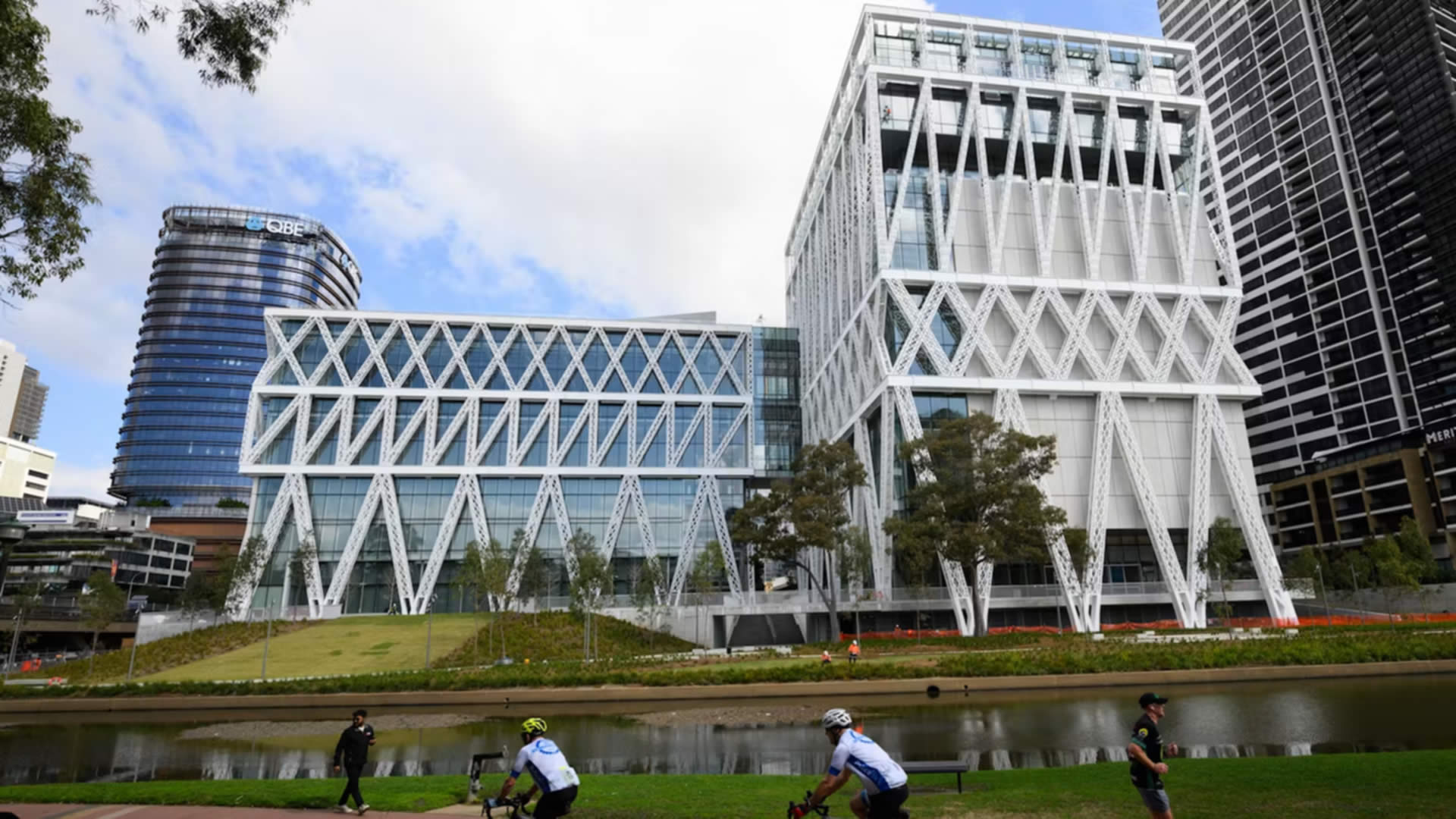
Powerhouse Parramatta And A Changing City
Parramatta has never been static.
The city has developed from an important place along the Parramatta River into one of Australia's major urban centres, with a skyline that has changed rapidly in recent decades. Residential towers, offices, restaurants, transport infrastructure and public spaces now sit alongside much older layers of the city.
Powerhouse Parramatta arrives within that changing landscape.
The museum is being built on Dharug land, and its relationship with Country is an important part of the institution's identity. The Powerhouse acknowledges the Traditional Custodians of the ancestral homelands on which its museums are situated and recognises their continuing connection to Country.
Its position beside the river also matters.
Museums can sometimes feel self-contained, places that visitors enter and leave without much relationship to what surrounds them. Powerhouse Parramatta has instead been conceived as part of a broader public environment, linking the cultural institution with the riverfront and the city beyond its walls.
The intention is for people to come not only for an exhibition, but to spend time in the building, meet others, learn, eat, attend programs and return repeatedly.
That makes the museum as much a piece of civic infrastructure as an exhibition venue.
Inside Powerhouse Parramatta
The first impression will be architectural.
The building's vast structural frame creates an industrial quality, a reference that sits comfortably within the broader history of Powerhouse itself. The original museum at Ultimo occupied a former tram power station, where engineering and industrial architecture became part of the character of the collection.
At Parramatta, that relationship is expressed in a very different way.
One of the building's most striking spaces is a column-free exhibition hall more than 2,000 square metres in size, with an 18-metre height. It has been designed to accommodate exhibitions that could not easily exist within a conventional museum gallery.
That scale becomes particularly relevant to the opening program.
Rather than filling the building with a single exhibition, Powerhouse Parramatta will open with five different worlds, moving between aerospace, architecture, First Nations knowledge, contemporary art and experiences designed specifically for children.
The effect should be less like walking through a sequence of conventional galleries and more like moving through different interpretations of what a museum can be.
The First Exhibitions At Powerhouse Parramatta
The opening program begins with Task Eternal, an ambitious exhibition exploring humanity's attempts to overcome gravity, fly and travel beyond the Earth.
Its objects range from historic aviation and aerospace material to drawings by Leonardo da Vinci, a NASA Moon rock and an extensive collection of flight-related objects. The exhibition will also include the historic Qantas Avro 504k aircraft and a new immersive light work by American artist James Turrell.
The scale is deliberate.
Flight is one of those subjects that naturally moves between science, engineering, imagination and culture. A museum can explain the mechanics of an aircraft, but it can also ask why humans have spent centuries imagining themselves beyond the limits of the ground.
Elsewhere, The Mall turns to something much closer to everyday life.
Developed with OMA and its research and design practice OMA/AMO, the exhibition examines the shopping mall as an architectural and cultural phenomenon. It will explore the evolution of malls in Australia and around the world, alongside design, fashion, technology and engineering. Objects include the archive of architect Victor Gruen, early barcode designs and the Levi's 501 jeans worn by Apple co-founder Steve Jobs.
For Western Sydney, that subject has an especially local resonance.
Shopping centres are not simply places where people buy things. They have become meeting places, social environments and part of the geography of suburban life. The exhibition looks at how those spaces have shaped the way people move, gather and interact.
Powerhouse Parramatta Looks At Water
Another opening exhibition turns towards something much older than the shopping mall.
Overflow is a First Nations-led exhibition focused on Water Country and the importance of saltwater and freshwater systems across New South Wales. Developed with seven Aboriginal organisations, it considers issues including environmental protection, fishing, flood mitigation, water monitoring, language and cultural water rights.
The exhibition uses film by Kamilaroi filmmaker Ivan Sen alongside stories and knowledge from communities working directly with waterways.
Its presence within a museum beside the Parramatta River creates an understated connection between exhibition and location.
Water is not simply a subject on the walls. It is outside the building, moving through the city and connecting the river to a much larger system of Country.
That proximity gives the exhibition another layer, particularly for visitors who live in Western Sydney and encounter the river as part of ordinary life.
Es Devlin And The Imagination Of Space
British artist Es Devlin will make her first major Australian exhibition with The Turning.
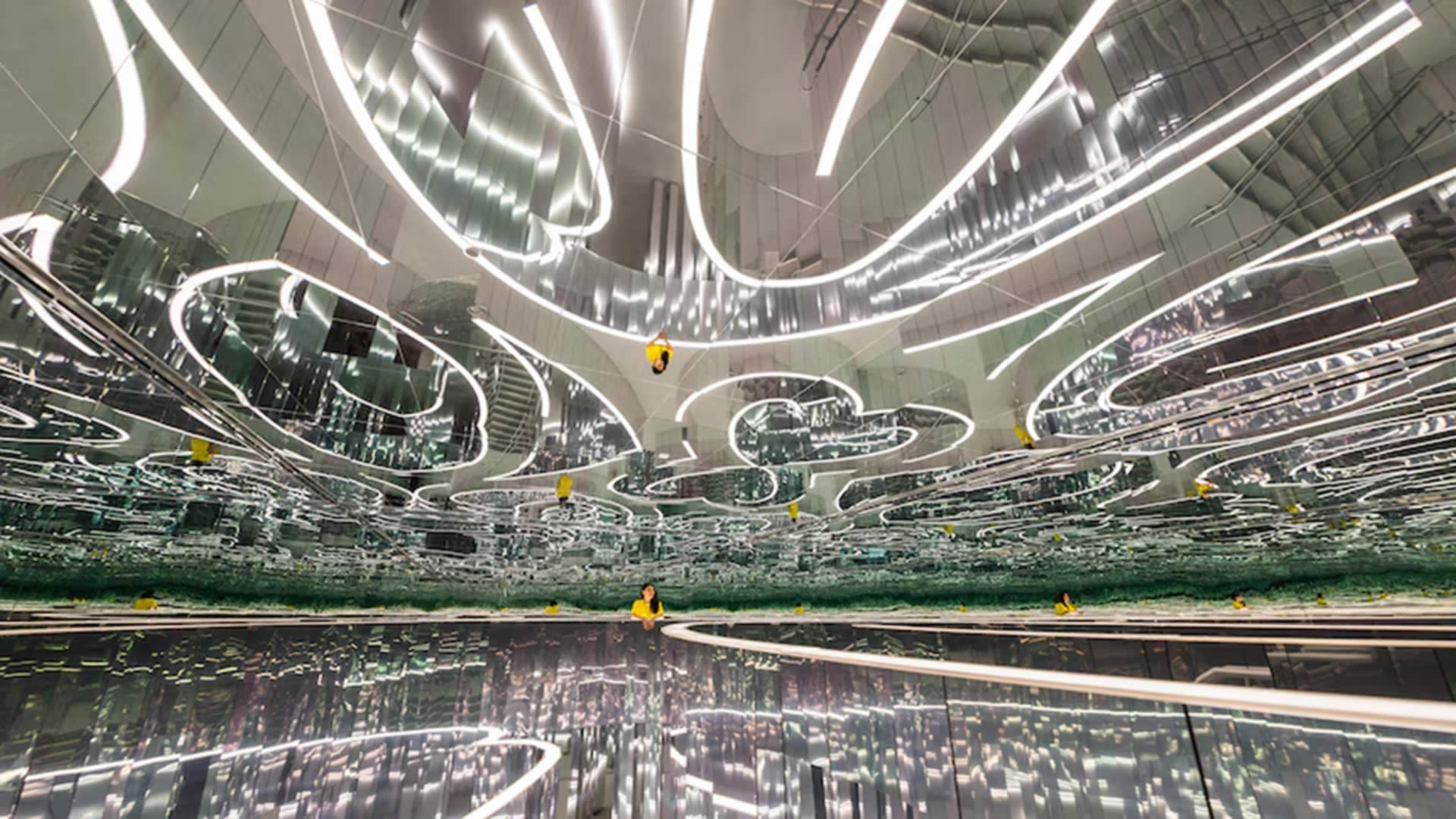
The exhibition brings together five immersive works that move between sculpture, architecture, film, language and performance. Among them is Forest of Us, a mirror environment exploring the visual relationship between trees and the branching structures within human lungs. Memory Palace creates a three-dimensional landscape through which audiences move across major changes in human perspective.
Other works invite visitors to consider drawing, portraiture, biodiversity and the way humans represent themselves.
The exhibition is less concerned with the traditional museum experience of standing quietly in front of an object.
Here, the visitor becomes part of the environment.
That distinction reflects a broader ambition within Powerhouse Parramatta. The museum is not being designed simply as a warehouse for objects. Its program is intended to encourage participation and movement, allowing visitors to encounter ideas physically as well as intellectually.
A Museum For Children
The fifth opening exhibition, The Dark, is designed for children aged four to 12.
It begins with an idea that is familiar to almost anyone who has ever been young: the darkness of a bedroom after the lights go out.
From there, the exhibition moves through a series of spaces including a bedroom, crystal tunnel, forest and imagined landscape populated by giants. More than 800 objects are involved, including material from the Australian Museum mineral collection, First Nations animations and objects contributed by children from Western Sydney.
The decision to place children's experience alongside major international exhibitions is revealing.
It suggests that the museum does not regard young visitors as an audience to be accommodated after the serious cultural work has been done. Their curiosity is part of the institution's central purpose.
For families, that could change the rhythm of a museum visit.
A day at Powerhouse Parramatta may begin with an aerospace exhibition, move through contemporary art and First Nations perspectives, and end with children disappearing into an imagined landscape.
The museum becomes something that can be experienced differently by different generations standing in the same building.
Powerhouse Parramatta As A Place To Stay
There is another ambition embedded in the building that is easy to miss when concentrating on the opening exhibitions.
Powerhouse Parramatta will include the Lang Walker Family Academy, with accommodation for regional and Western Sydney school students taking part in immersive STEM programs. The program is expected to welcome more than 10,000 students each year.
There will also be 30 residential studios intended to bring scientists, researchers and artists from Australia and overseas into the museum's working environment.
That makes the institution less of a finished destination and more of a working place.
The public sees exhibitions, but behind them will be researchers, educators, artists, students, conservators and other specialists using the building for longer periods.
The distinction is important.
A museum that only presents finished objects tells visitors what has already happened. A museum that also supports research and experimentation can show something of how knowledge is made.
A Free Museum In The Heart Of Parramatta
Access will be another significant part of the opening.
Four of the five opening exhibitions will be free, while Task Eternal will be ticketed for adults and free for visitors under 16. The museum says its opening program is designed to make cultural experiences accessible to a broad audience.
That approach has particular significance in Parramatta.
A major cultural institution does not need to be an occasional destination reserved for special trips. If large parts of the museum can be entered without a ticket, it becomes possible to drop in for an hour, return another day, bring visiting relatives or make the museum part of an ordinary weekend in the city.
That is perhaps when a new institution truly becomes local.
Not when the building first opens, but when people stop describing it as new.
Visiting Powerhouse Parramatta
Powerhouse Parramatta will officially open to the public on Saturday 7 November 2026.
The museum is located on the Parramatta River in Parramatta, Sydney, and the opening program will comprise Task Eternal, The Mall, Overflow, Es Devlin: The Turning and The Dark.
The official Powerhouse visitor information currently confirms the opening date, while detailed daily opening hours and session information should be checked closer to a visit.
The museum's official visitor page is available here:
Powerhouse Parramatta Official Visitor Information
For the opening program, visitors should allow several hours if they want to explore more than one exhibition. The scale of the building and the breadth of the opening program mean that this is unlikely to be a museum best understood in a hurried circuit.
It is a place designed for lingering.
The River Beyond The Museum
There is something fitting about a museum devoted to the relationship between people, objects, technology and ideas opening beside the Parramatta River.
The river has watched the city change for centuries.
Now a new building stands beside it, carrying aircraft, moon rocks, clothing, machines, artworks, stories of water and the accumulated traces of human ingenuity under one enormous roof.
Powerhouse Parramatta will arrive with the weight of a major public project, but its lasting character will be determined by smaller encounters.
A child looking at a mineral in The Dark. A visitor standing beneath an aircraft. Someone recognising a shopping centre from their childhood. A student staying overnight to work on a science project. A local resident wandering in after lunch simply because the doors are open.
Those moments are quieter than the architecture, but they are where a museum becomes part of a city.
On the river outside, Parramatta will continue moving at its own pace.
Inside, the new Powerhouse will ask visitors to stop for a while, look closely and consider how the things around them came to be.
That is the beginning of a museum.
And, perhaps, the beginning of another chapter for Parramatta.