
The Powerhouse Parramatta Opening Festival brings 23 days of art, music, science and culture to Western Sydney, celebrating a new era for Sydney's museum scene.
There is a different rhythm to Parramatta as the afternoon light settles over the river. Ferries move along the water, office workers make their way home and the streets around the city centre begin to fill with people looking for somewhere to spend the evening. Now, a new cultural landmark is adding another reason to linger.
The arrival of Powerhouse Parramatta marks an important moment for Western Sydney. After years of planning and construction, the Museum of Applied Arts and Sciences has opened its newest home on the banks of the Parramatta River, bringing a major cultural institution into a part of Sydney whose creative identity has long extended well beyond the traditional boundaries of the city centre.
To celebrate, the Powerhouse Parramatta Opening Festival runs from 7 to 29 November 2026, transforming the new museum into a meeting place for artists, scientists, musicians, designers, historians and local communities. Across 23 days, more than 170 programs and experiences explore everything from First Nations knowledge and contemporary art to space exploration, architecture, food, film and live performance.
The festival arrives at an interesting time for Parramatta. The city's growth has been accompanied by an expanding cultural landscape, with new public spaces, performance venues and creative organisations changing the way people experience Western Sydney. Powerhouse Parramatta adds another substantial piece to that picture, not simply as a museum but as a place where different disciplines and communities can meet.
With the festival now approaching its final weekend, there is a particular sense of occasion around the building. Its opening is more than the completion of a major construction project. It represents a new chapter in the cultural life of a city that has increasingly become a destination in its own right.
Powerhouse Parramatta Opening Festival Marks A New Chapter
The opening of Powerhouse Parramatta is one of the most significant cultural developments in Western Sydney in recent years.
Located on Burramattagal and Dharug Country, at 34 Phillip Street, the museum occupies a prominent position beside the Parramatta River. Its scale is immediately apparent, with a striking structural exterior that gives the building a distinctive presence among the surrounding streets and waterfront.
Designed by French-Japanese architecture practice Moreau Kusunoki in collaboration with Australian architects Genton, the building brings an international architectural perspective to a distinctly local setting. Its monumental structural framework is not merely decorative. It forms part of the building's identity, creating a recognisable silhouette that sets it apart from the more traditional museum buildings found elsewhere in Sydney.
The museum officially opened to the public on Saturday 7 November 2026, becoming Western Sydney's first state cultural institution and the largest museum built in New South Wales.
The Opening Festival provides the public with an extended introduction to the institution, with a program designed to encourage visitors to move between exhibitions, performances, talks and hands-on activities.
Rather than concentrating on one particular art form or subject, the festival reflects the breadth of the Powerhouse collection and the organisation's wider interests. Science and technology sit alongside design and contemporary art, while First Nations knowledge and community-led experiences give the program a strong connection to the region.
That combination feels appropriate for Parramatta, a city whose identity has always been shaped by different communities, industries and generations.
Five Opening Exhibitions That Explore The World Around Us
At the heart of the new museum are five opening exhibitions, each approaching the relationship between people, objects and ideas from a different perspective.
The scale of the collection is considerable. More than 3,000 objects feature across the opening exhibitions, including more than 1,600 items from the Powerhouse Collection. Together, they provide a sense of the institution's ambition, bringing historical artefacts into conversation with contemporary design, scientific discovery and artistic interpretation.
Task Eternal is among the most substantial attractions. Exploring aviation, space and humanity's enduring desire to move beyond Earth, the exhibition considers the achievements and ambitions that have driven generations of explorers, engineers and scientists. It takes visitors from the history of flight towards the possibilities of future space exploration, placing technological achievement within a much longer story of human curiosity.
For those interested in the relationship between design and everyday life, The Mall offers another perspective. Shopping centres are familiar parts of Australian life, but their architecture, social role and commercial influence reveal much about the way communities have changed. The exhibition examines this environment through the objects, design ideas and experiences associated with retail culture.
Overflow turns attention towards water, Country and the environmental knowledge that informs our understanding of the natural world. Grounded in First Nations perspectives, the exhibition considers water as something more than a resource, recognising its cultural, ecological and spiritual significance.
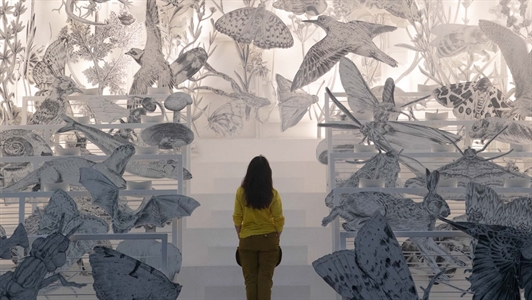
The relationship between art, nature and human responsibility also sits at the centre of Es Devlin: The Turning. British artist Es Devlin is known for large-scale installations that combine sculpture, light and immersive visual experiences. Her work brings an international contemporary art perspective into the museum's opening program.
Completing the group is The Dark, an exhibition that explores darkness as a subject of scientific investigation and creative curiosity. It invites visitors to consider what lies beyond ordinary perception, drawing on the mysteries of the natural world and the limits of human understanding.
The exhibitions give the museum a broad starting point. Rather than asking visitors to follow one particular historical narrative, they encourage movement between disciplines, allowing an interest in engineering to lead towards art, or a discussion about the environment to open into questions of culture and history.
For families, this variety provides plenty of opportunities to explore together. For adults, it offers a reason to return, particularly as the museum's exhibition and event program develops beyond its opening season.
First Nations Knowledge And The Stories Of Western Sydney
An important part of the Powerhouse Parramatta Opening Festival is its recognition of the Country on which the museum stands.
The building is located on Burramattagal and Dharug land, and the program places First Nations knowledge and creative practice within the wider conversation about science, culture and innovation.
This is significant in a museum environment, where the preservation of objects has traditionally been central to how history is presented. First Nations knowledge, however, is also held through language, performance, storytelling, relationships with Country and practices passed between generations.
The festival includes performances and discussions that make room for these forms of cultural knowledge.
Among the program's highlights is Eseli's Story, a story dance from Badu Island in the Torres Strait. Featuring 44 male dancers alongside eight singers and musicians, the work draws inspiration from childhood memories of watching World War II fighter planes taking off from Ngurapai, also known as Horn Island.
The production brings together movement, music and personal recollection, connecting a particular community's experience with a wider period of Australian and Pacific history.
Another important contribution comes through Jannawi, featuring Jannawi Dance Clan and collaborators in a welcome to Country through dance, song and storytelling.
Food and cultural knowledge also feature in a conversation involving Gamilaroi Elder Aunty Beryl Van-Oploo and Ngemba Weilwan woman Sharon Winsor, founder of Indigiearth. Their discussion explores native ingredients, shared knowledge and the continuation of cultural practices through food.
These experiences give the festival a strong connection to the communities surrounding the museum. They also reinforce an important distinction between simply displaying cultural material and creating opportunities for the people who carry that knowledge to speak, perform and lead.
For a new institution in Western Sydney, that distinction matters.
Powerhouse Parramatta Opening Festival Looks Beyond The Museum Walls
Performances, Music And Community Events | 26 To 29 November 2026
The festival's final days bring some of its most distinctive live experiences to the museum, extending the program beyond traditional exhibition spaces.
One of the more unusual productions is A Magical Hotstart, a new avant-garde opera by Australian artist Justene Williams, developed in collaboration with neurodiverse musicians from Club Weld.
Inspired by objects from the Powerhouse Collection, the production brings together music, visual art and performance in a work about transformation and connection. Members of the Australian Chamber Orchestra accompany the musicians, with a score incorporating compositions by several Club Weld artists.
The title refers to the process of hot-starting a car, a fitting idea for a performance created to mark the beginning of a major new cultural institution.
The remaining performances take place on Thursday 26 and Friday 27 November, both at 6.30pm, in the Western Sydney University Forum on Level 1. Tickets are priced at $25 for adults, with concession tickets at $15 and free entry for children aged 16 and under.
The Thursday performance is followed by a conversation about the influence of artificial intelligence on creative practice, adding another layer to a work already interested in the relationship between technology and artistic expression.
Music also takes a different form on the museum's rooftop, where the Rooftop Music program has brought together musicians, DJs and collectives throughout the festival. With views across Parramatta and Western Sydney, the rooftop offers a setting that connects live performance with the changing atmosphere of the city.
On Friday 27 November, Eric Avery and salllvage feature in the program.
The final weekend also includes A Swell of Stars, a creative project developed alongside the memoir Gather Up Your World In One Long Breath by S. Shakthidharan.
The project explores celestial stories, mythology, the changing seasons and the possibilities of shared creative expression. Workshops invite visitors to contribute to an evolving sculptural artwork, while the performance transforms the museum into a moving theatrical environment.
On Saturday 28 November, the free performance runs from 6.30pm to 8.30pm. Led and directed by young people from across Western Sydney, the procession moves from the rooftop towards the river, with participants transformed into imagined characters, celestial figures and otherworldly forms.
It is an interesting way to experience the building, encouraging audiences to follow a performance through different parts of the museum rather than remain in a conventional auditorium.
Sunday 29 November brings The West Ball, an event celebrating the local ballroom community. Led by Father Xander Silky and Jamaica Moana, the evening brings ballroom culture into the museum through competitive categories, performance and the recognition of local talent.
Running from 2pm to 10pm, the event reflects the cultural influence of Western Sydney's diverse communities and the importance of giving local creative movements a visible place within major cultural institutions.
The festival also includes The Future of History, a series of free conversations on Sunday 29 November at 11am, 1pm and 4pm. Exploring how objects, memories and cultural practices shape the stories passed between generations, the discussions consider the role of museums in deciding what is remembered and how history continues to evolve.
These events help establish the museum as a place for participation rather than passive observation. Visitors are invited to listen, contribute, move through the building and encounter ideas in unexpected ways.
Food, Science And The Pleasure Of Gathering
Food has its own place in the festival, with a program that considers cooking as both a cultural practice and a form of scientific exploration.
One of the featured guests is Nik Sharma, the Mumbai-born, Los Angeles-based food writer, molecular biologist and cookbook author whose work brings together flavour, science and personal history.
His contribution includes Flavour Science, a public talk on Saturday 28 November, exploring how scientific principles influence the way ingredients behave and how flavours develop. The session considers familiar cooking techniques from a different perspective, demonstrating how an understanding of chemistry can change the way people approach food.
There is also an opportunity to experience his approach through Nik Sharma: Feast, a shared dinner on Saturday 28 November from 5.30pm to 8.30pm at PS7 on Level 4. The $50 event combines a live conversation with Sharma, hosted by food and culture writer Neha Kale, followed by a family-style meal.
It is a particularly interesting addition to a museum program because food is often one of the most immediate ways people connect with culture. Recipes travel between countries, ingredients take on new meanings and cooking techniques evolve as communities settle in unfamiliar places.
In Western Sydney, where food traditions reflect an extraordinary range of cultural backgrounds, this conversation feels especially relevant.
The festival's broader food program also encourages visitors to consider the relationship between everyday ingredients and scientific discovery, making it accessible to people who might not ordinarily attend a lecture about chemistry or food technology.
A Museum Shaped By Its Surroundings
The location of Powerhouse Parramatta is an important part of its identity.
Parramatta has long been a centre of movement and exchange, shaped by the river, its early colonial history, its industrial development and the arrival of successive migrant communities. Today, it is one of Australia's most culturally diverse urban centres and an increasingly important destination for business, education and the arts.
The museum's position near the river places it within this changing landscape.
The surrounding area offers opportunities to combine a museum visit with a walk along the Parramatta River foreshore. Parramatta Park, the historic streets around the city centre and the restaurants and public spaces of the central business district are all within reach.
Visitors arriving by public transport can travel to Parramatta Station and continue towards the museum on foot. Parramatta Wharf also provides a connection for those travelling by river ferry, although services and journey times should be checked before setting out.
The building itself is designed to accommodate a substantial public program, with 18,000 square metres of public and exhibition space and seven large-scale exhibition spaces.
Its architectural presence makes it an important addition to the city's waterfront, but its longer-term significance will depend on how successfully it becomes part of everyday life in Parramatta.
That means more than attracting visitors during major events. It means providing a place where local schools can learn, artists can develop ideas, researchers can share discoveries and families can return as exhibitions change.
The opening festival offers an early indication of that ambition.
Planning A Visit To Powerhouse Parramatta Opening Festival
With the festival reaching its final weekend, visitors have several opportunities to explore the new museum and its remaining program.
The museum is open seven days a week. During the festival, opening hours are 10am to 5pm from Monday to Wednesday and 10am to 9pm from Thursday to Sunday.
A number of exhibitions are free, while selected talks, performances, workshops and dining experiences require bookings or paid tickets. Around 65 per cent of the opening program is free, and children aged under 16 receive free entry to all exhibitions.
For those planning a visit, it is worth allowing several hours rather than treating the museum as a quick stop. The exhibition spaces cover a considerable range of subjects, and the festival's talks and performances provide additional reasons to spend time inside.
The final weekend is particularly appealing for visitors interested in live performance and community culture.
Saturday 28 November brings the A Swell of Stars procession, food events and family activities, while Sunday 29 November features The West Ball and The Future of History conversations.
The complete event schedule, individual session times, ticket prices and booking requirements are available through the official festival program.
Event Details
Event: Powerhouse Parramatta Opening Festival
Dates: Saturday 7 November to Sunday 29 November 2026
Location: Powerhouse Parramatta, 34 Phillip Street (1 Danyamada Place), Parramatta NSW 2150.
Opening Hours During The Festival:
- Monday to Wednesday: 10am to 5pm
- Thursday to Sunday: 10am to 9pm
Remaining Festival Highlights:
- A Magical Hotstart: Thursday 26 and Friday 27 November, 6.30pm.
- We Are Studios Conversations: Thursday 26 November, 5.30pm and 6.30pm.
- Eric Avery and salllvage: Friday 27 November.
- Flavour Science Public Talk: Saturday 28 November.
- Nik Sharma Feast: Saturday 28 November, 5.30pm to 8.30pm.
- A Swell of Stars Performance: Saturday 28 November, 6.30pm to 8.30pm.
- The West Ball: Sunday 29 November, 2pm to 10pm.
- The Future of History: Sunday 29 November, 11am, 1pm and 4pm.
Admission: Free entry to the museum, with selected exhibitions and festival events ticketed. Children under 16 receive free exhibition entry.
Getting There: Parramatta train station, Parramatta Wharf and local bus services provide public transport connections.
Official Website: https://powerhouse.com.au/program?categories=Opening+Festival
Individual event availability and booking conditions may vary. Check the official program before visiting.
A New Place For Western Sydney To Tell Its Stories
The opening of Powerhouse Parramatta represents more than a new building on the banks of the river. It is an opportunity to reconsider where cultural experiences happen in Sydney and whose stories occupy the centre of the conversation.
For a long time, major museum experiences have been associated with the established cultural institutions of the inner city. Parramatta offers a different perspective, one shaped by a rich mix of communities, histories and creative practices.
The Opening Festival brings many of those influences together. Its program moves between scientific discovery, contemporary art, First Nations knowledge, food, music and performance without insisting that one discipline is more important than another.
That breadth is perhaps its most interesting quality.
A visitor might arrive to see an exhibition about space and leave having encountered a story dance from the Torres Strait Islands. Someone attending a food event might find themselves thinking differently about chemistry, migration and cultural identity. A family following a performance through the museum might discover a new appreciation for the building itself.
As the festival draws to a close on 29 November, the longer story of Powerhouse Parramatta is only beginning.
The crowds will eventually settle, the opening celebrations will give way to the ordinary rhythm of museum life, and new exhibitions will take the place of the inaugural program. But the building will remain, overlooking a river that has witnessed generations of change.
For Parramatta, that is perhaps the most meaningful part of the occasion. A major cultural institution has found a new home in Western Sydney, and the stories it will hold are still being written.