
On 11 November, Sydney gathers at the Anzac Memorial in Hyde Park to remember those who served and sacrificed in war, marking Remembrance Day with a solemn ceremony in the heart of the city.
There are moments when a city seems to move at a different pace. In Sydney, one of those moments arrives each November, when the familiar rhythm of the streets gives way to a quieter kind of gathering.
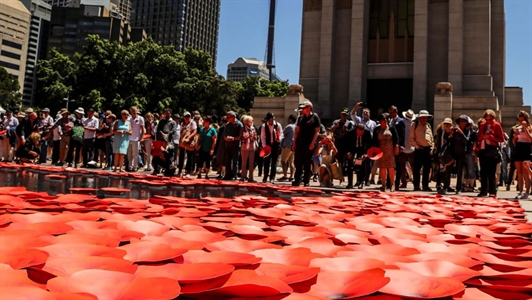
On Remembrance Day, the southern end of Hyde Park becomes a place of reflection. Office workers, visitors, veterans, families and passers-by come together at the Anzac Memorial, where a commemorative service honours Australians who have served in wars, conflicts and peacekeeping operations.
The occasion is not defined by spectacle. Its significance lies in the simplicity of the act: people gathering, listening, remembering and observing a minute of silence for those who never returned, those who continue to serve, and the families whose lives have been shaped by service and loss.
On Wednesday 11 November 2026, the Anzac Memorial hosts its annual Remembrance Day commemoration. Running from 10.45am to 11.15am, the free public service offers Sydneysiders an opportunity to step away from the ordinary demands of the day and acknowledge a shared history.
It is a short ceremony, but its meaning reaches well beyond the half-hour set aside for the event.
The Anzac Memorial And Its Place In Sydney
At the southern end of Hyde Park, the Anzac Memorial occupies a distinctive place in the city's landscape. Surrounded by established trees, open lawns and the movement of one of Sydney's busiest districts, the building offers a deliberate change of atmosphere from the commercial streets nearby.
The memorial is both a public monument and a place of personal remembrance. Its architecture invites visitors to slow down, while its position within Hyde Park makes it accessible to people moving through the city for entirely different reasons.
For some, the memorial is a familiar destination, visited regularly or connected to family histories of military service. For others, it may be somewhere they have passed countless times without stepping inside. Remembrance Day provides a reason to look more closely.
The building commemorates the service and sacrifice of Australians who have taken part in armed conflicts and peacekeeping operations. It also provides a space for education, historical interpretation and reflection, ensuring that remembrance is not confined to a single day on the calendar.
The memorial's setting is particularly fitting for the occasion. Hyde Park has long served as an important public gathering place, offering a pocket of green within the dense urban fabric. On 11 November, its northern forecourt becomes the setting for a ceremony that brings the city's attention to a history that remains deeply connected to Australian life.
There is something meaningful about holding such an occasion in the middle of an active city. The ceremony does not remove itself from everyday life. Instead, it creates a moment of stillness within it.
Understanding The Significance Of Remembrance Day
Remembrance Day is observed annually on 11 November, marking the anniversary of the armistice that brought fighting on the Western Front in the First World War to an end in 1918.
The armistice came into effect at 11am, bringing an end to hostilities after more than four years of devastating conflict. The date subsequently became a time to remember those who died in the war, and its significance has expanded to include Australians who have served and lost their lives in conflicts and peacekeeping operations since.
In Australia, the observance is marked by ceremonies, commemorations and the wearing of the red poppy. At its centre is the minute of silence, a simple gesture that asks people to stop whatever they are doing and consider the human cost of conflict.
The silence is important precisely because it requires so little. There are no speeches to remember, no elaborate gestures to perform. For one minute, attention turns away from the usual concerns of the day.
At the Anzac Memorial, the commemorative service gives this tradition a local setting. It recognises not only those who have died but also Australians currently serving, former service personnel and the families who carry the consequences of military service.
The distinction between remembering history and recognising its continuing effects is an important one. Military service does not exist only in the past. Its influence is felt in families, communities and the experiences of those who continue to serve.
Remembrance Day offers an opportunity to acknowledge that wider picture.
What To Expect At The Remembrance Day Ceremony
Weather permitting, the 2026 Remembrance Day program begins at 10.45am on the Anzac Memorial's northern forecourt.
The service opens with a Remembrance Day address, followed by the Act of Remembrance. These formal elements provide a framework for the gathering, bringing the focus to the significance of the date and the people being remembered.
The ceremony also includes the opportunity for members of the public to enter the Hall of Memory and take part in the Star Ceremony.
This is one of the more personal aspects of the commemoration. Participants are invited to cast a star bearing the name of a New South Wales serviceperson who lost their life in service.
The gesture gives remembrance a tangible form. Rather than simply hearing names or dates, visitors participate in an act that connects an individual life to the broader history being commemorated.
Each star represents someone whose story belongs to a much larger national experience. For families with a direct connection to military service, the ceremony may carry particular significance. For those without that personal history, it offers a way to engage with the human stories behind the memorial's purpose.
The service concludes at 11.15am, although the significance of the gathering is not necessarily confined to its scheduled finish. Visitors may wish to spend additional time exploring the memorial and its surroundings, taking in the atmosphere before returning to the busy streets of the city.
The event is free, and members of the public are welcome to attend.
The Star Ceremony And The Names We Remember
Among the many traditions associated with military remembrance, the Star Ceremony at the Anzac Memorial offers a particularly direct connection between public history and individual lives.
The invitation to cast a star bearing the name of a New South Wales serviceperson who died in service is a quiet but considered act. It acknowledges that the history of war is not simply a collection of campaigns, dates and military decisions. It is made up of people, each with a name, a family, a community and a life that extended beyond their service.
For visitors, taking part in the ceremony provides a moment to consider the individuals behind the broader history. The star becomes a small expression of recognition, carrying a name into a space dedicated to remembrance.
The tradition also highlights the importance of local stories. While Australia's military history is national in scale, its effects are experienced in towns, suburbs and neighbourhoods across the country. New South Wales servicepeople are part of that history, and their names connect the memorial to communities throughout the state.
There is a particular poignancy in the simplicity of the gesture. It does not attempt to explain the full weight of loss or provide a complete account of an individual's life. Instead, it offers a way to acknowledge that a life was lived and is remembered.
For younger visitors, the Star Ceremony can also make remembrance more accessible. Historical events sometimes feel distant when presented only through dates and written accounts. A named star offers a more immediate connection, encouraging questions about the person being honoured and the circumstances of their service.
It is this relationship between individual memory and collective history that gives the ceremony its lasting relevance.
The Red Poppy And A Tradition Of Remembrance
As Remembrance Day approaches, the red poppy becomes a familiar sight across Australia. Worn on clothing, displayed at commemorative gatherings and placed near memorials, it has become one of the most recognisable symbols associated with the occasion.
Its origins are closely linked to the battlefields of the First World War, particularly the devastated landscapes of France and Belgium. In areas heavily affected by fighting, poppies appeared across disturbed ground, becoming associated with the landscape in which so many soldiers had lost their lives.
The flower gained wider recognition through the poem In Flanders Fields, written in 1915 by Canadian Lieutenant-Colonel John McCrae. Its imagery helped establish the poppy as a lasting symbol of remembrance across the Allied nations.
Over time, wearing a red poppy became a way for people to express respect for those who served and died in war. Its meaning is now understood well beyond its original connection to the First World War.
On Remembrance Day, the poppy offers a visible expression of something otherwise difficult to articulate. It allows people to participate in the occasion, even when they cannot attend a formal service.
Visitors attending the Anzac Memorial commemoration are encouraged to wear a red poppy. The memorial's shop also stocks poppy-related memorabilia, including brooches and accessories. Proceeds from sales support the memorial's interpretive and education programs, heritage conservation and collection management.
Whether worn as a small personal gesture or seen across a crowd gathered for the service, the poppy remains an enduring part of Australia's remembrance tradition.
A Moment Of Stillness In A Changing City
Sydney is a city accustomed to movement. Trains arrive and depart, buses negotiate busy intersections, and the footpaths around Hyde Park fill with people travelling between work, appointments and the city's many cultural destinations.
The Remembrance Day service introduces a different rhythm to this familiar environment.
For those attending, arriving a little before the ceremony begins allows time to find the northern forecourt and settle into the surroundings. The setting is open and central, yet the purpose of the gathering gives it a distinctly different character from the ordinary activity of the park.
There is no need to be a military historian or have a family connection to the armed forces to attend. Remembrance Day is a public occasion, and its invitation extends to anyone willing to take a moment to acknowledge the people being honoured.
Some visitors will arrive with personal memories. Others may come because they are interested in Australian history or because they happen to be nearby. A passing visitor might decide to stay after noticing the gathering, discovering an occasion that encourages a different perspective on a familiar part of the city.
That accessibility matters. Public remembrance is strongest when it remains part of everyday community life rather than becoming something experienced only through television coverage or formal commemorations.
The Anzac Memorial provides a place where those different experiences can come together. It is a site of national significance, but the ceremony itself is grounded in a simple local act: people gathering in Sydney to remember.
For anyone who has not previously attended a Remembrance Day service, the occasion offers a thoughtful introduction to the tradition. There is no expectation of elaborate participation. Being present, listening and observing the silence are meaningful in themselves.
Making Time To Visit The Memorial
Although the official ceremony runs for just 30 minutes, visitors may find it worthwhile to allow additional time around the event.
The Anzac Memorial is located at the southern end of Hyde Park, within easy walking distance of several central Sydney streets and public transport connections. Its position makes it possible to incorporate the commemoration into a broader visit to the city without needing to organise an elaborate itinerary.
Arriving before 10.45am is advisable, particularly for those wishing to take part in the opening address and Act of Remembrance. The program is weather dependent, so visitors should also be mindful that arrangements may be affected by conditions on the day.
After the service, spending some time within the memorial provides an opportunity to reflect on the history represented by the building. The Hall of Memory is central to the experience, particularly for those participating in the Star Ceremony.
Hyde Park itself offers a natural place to pause afterwards. Its shaded paths, established trees and open spaces provide a contrast to the surrounding city streets. On an ordinary weekday, the park is part of the daily routine for many Sydneysiders. On Remembrance Day, it takes on another layer of meaning.
Visitors may also choose to explore the wider area, including the nearby cultural and civic landmarks that form part of central Sydney. However, there is no need to rush away. Sometimes the most appropriate response to a commemorative occasion is simply to allow a little more time than usual.
The event is free, and the public is welcome. Those attending should be considerate of the solemn nature of the occasion and follow any directions provided by event organisers.
Remembering Beyond 11 November
The importance of Remembrance Day extends beyond the ceremony itself. It is an annual reminder that the consequences of conflict do not end when fighting stops, nor do the experiences of those who serve become less significant with the passing of time.
For veterans and serving personnel, the day can bring memories that are difficult to put into words. For families, it may be an occasion to remember relatives whose stories have been passed down through generations. For younger Australians, it offers an opportunity to understand more about the history that has helped shape the country.
There is also an important distinction between remembrance and celebration. The Anzac Memorial service is not an occasion for grand gestures or patriotic display. Its purpose is to acknowledge sacrifice, recognise service and give people space to reflect on the cost of war.
That sense of restraint is part of what makes the occasion meaningful. The ceremony does not need to be elaborate to leave an impression. A spoken address, a shared moment of silence and the casting of a star are enough to give the morning its significance.
In a city that is constantly looking ahead, Remembrance Day asks people to look back, not simply to revisit history but to recognise the individuals and families whose experiences remain part of the present.
A Quiet Invitation To Remember
On Wednesday 11 November, the Anzac Memorial provides Sydney with a place to come together and mark Remembrance Day.
For half an hour, the northern forecourt of the memorial becomes a gathering place for a shared act of reflection. The ceremony acknowledges Australians who have served, those who have lost their lives, those currently serving and the families who stand behind them.
Whether attending with relatives, friends or independently, visitors are welcome to take part in the commemoration and the Star Ceremony inside the Hall of Memory.
The date may be familiar, and the traditions may be well established, but the meaning of remembrance is renewed each year through the people who choose to participate.
When the service concludes and the city returns to its usual pace, the memorial remains in place at the edge of Hyde Park, holding the stories of those it commemorates.
For those who attend, the experience is likely to be less about what happens during the 30-minute program and more about what stays with them afterwards: a name, a moment of silence, a red poppy or the simple recognition that remembrance is something a community chooses to keep alive.
Event Details
Event: Remembrance Day at the Anzac Memorial
Date: Wednesday 11 November 2026
Time: 10.45am to 11.15am
Location: Anzac Memorial, Northern Forecourt, southern end of Hyde Park, Sydney NSW 2000
Admission: Free
What to expect: Remembrance Day address, Act of Remembrance, and public participation in the Star Ceremony inside the Hall of Memory.
Weather: The outdoor program is weather permitting.
Official event information: Remembrance Day at the Anzac Memorial