
Sessions on the Pier: Time & Tide will bring classical, jazz and popular song to Walsh Bay on 19 September 2026, tracing the changing seasons through music.
There are certain Sydney afternoons when the harbour seems to hold the light a little longer. In September, the edge of winter will already be loosening its grip, and the city will begin its gradual turn towards spring. Along Hickson Road, beneath the sandstone escarpments and the old wharves of Walsh Bay, the season will be felt in small details: brighter air, longer evenings, the first suggestion that summer is somewhere ahead.
On Saturday 19 September, that sense of transition will find its way indoors at The Neilson, ACO On The Pier, where Sydney Chamber Choir will present Sessions on the Pier: Time & Tide.
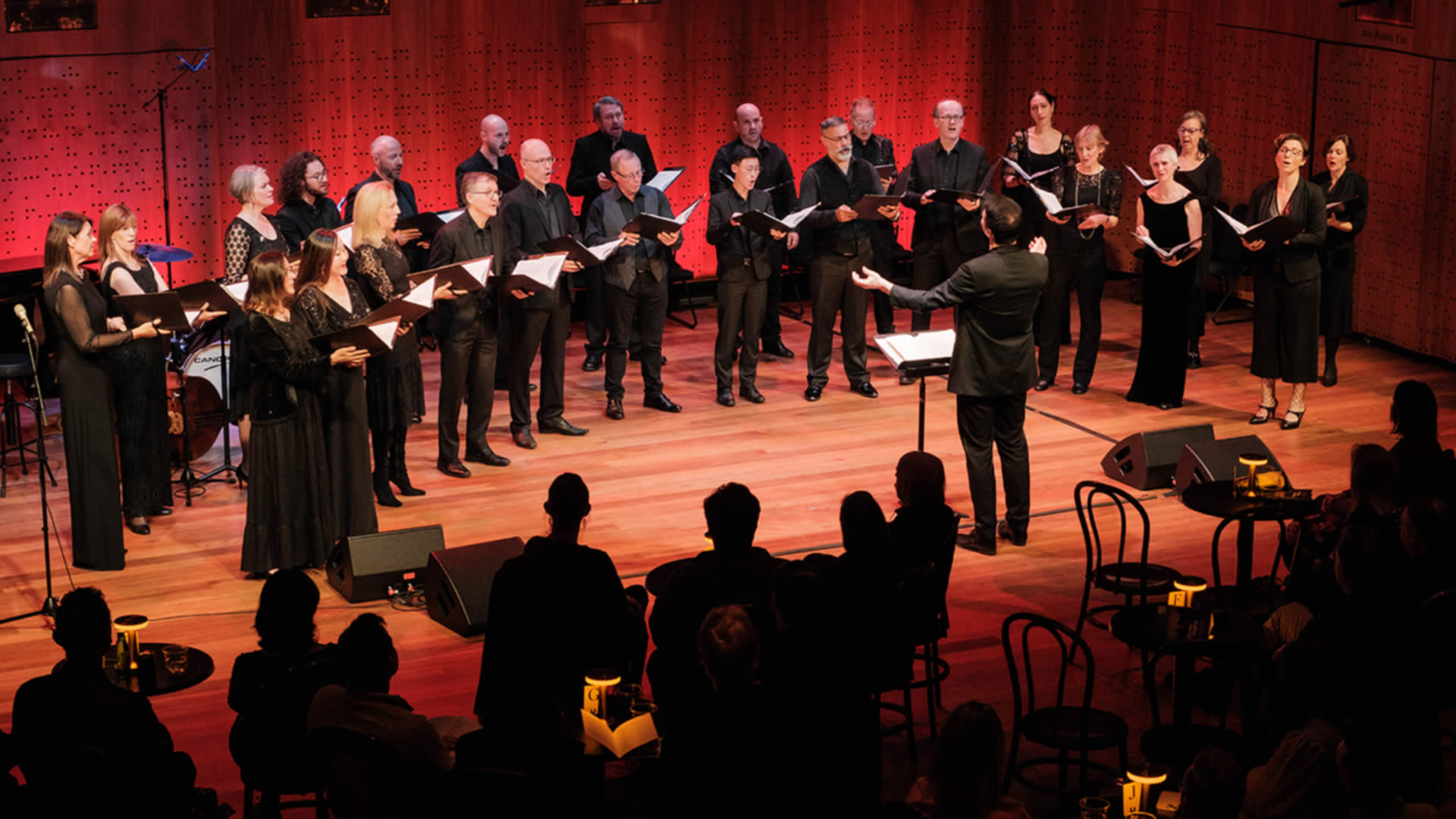
The concert will be performed twice, at 5pm and 8pm, offering two chances to experience a programme shaped around one of the most familiar rhythms in life: the passing of the seasons. Classical choral music will meet jazz and popular song, moving between stillness and swing, familiar melodies and more contemplative works.
The setting will matter as much as the programme. Walsh Bay has long been a place where Sydney's past and present sit closely together. The working waterfront, sandstone cliffs and timber piers have gradually become one of the city's cultural precincts, but the harbour remains present at every turn. For Sessions on the Pier: Time & Tide, the water and the changing light outside will provide a quiet counterpart to music concerned with movement, memory and time.
The concert will mark the third edition of Sydney Chamber Choir's Sessions on the Pier series, a format that brings together musical traditions that might otherwise occupy separate corners of the concert calendar.
Sessions on the Pier: Time & Tide and the Rhythm of the Year
The idea behind Sessions on the Pier: Time & Tide is simple, though the music will take the audience through many different emotional landscapes.
The programme will follow the changing year through songs of spring, summer, autumn and the quieter spaces between them. Benjamin Britten's The Succession of the Four Sweet Months will sit alongside George Gershwin's Summertime, George Harrison's Here Comes the Sun and Autumn Leaves, the enduring jazz standard associated with countless performers, including Nat King Cole.
Elsewhere, the programme will move through It Might as Well Be Spring, Softly, As in a Morning Sunrise, Their Hearts Were Full of Spring and Spring Can Really Hang You Up the Most. The seasons will not appear simply as scenery. They will become a way of considering changing moods and changing stages of life.
That is perhaps why seasonal music has such a persistent hold on audiences. Spring can suggest renewal, but also uncertainty. Summer can feel expansive or nostalgic. Autumn is rarely only about falling leaves. Winter is not always bleakness. The calendar provides a familiar structure, while music has a way of revealing how differently those periods can be experienced.
Sessions on the Pier: Time & Tide will draw on that ambiguity. The programme will move between radiance and reflection rather than attempting to turn the year into a straightforward progression.
Sydney Chamber Choir will be joined by a jazz trio, allowing the concert to shift naturally between choral textures and more rhythmically flexible arrangements. The result will be a programme in which formal concert music and songs from the popular imagination will share the same room.
The official programme also includes Dan Forrest's Good Night, Dear Heart and Joe Twist's On the Night Train, extending the evening beyond a simple sequence of seasonal references.
Where Classical Harmony Meets Jazz
At the centre of the evening will be a collaboration between Sydney Chamber Choir and musicians whose backgrounds cross between classical and jazz traditions.
The choir will perform under the artistic direction of conductor Sam Allchurch, with Naomi Crellin and Nick Begbie serving as co-directors. Crellin and Begbie are members of The Idea of North, the Australian a cappella ensemble known for its close vocal arrangements and stylistic range.
For Sessions on the Pier: Time & Tide, those musical worlds will come together with the Kevin Hunt Jazz Trio. Hunt will perform on piano, joined by Jacques Emery on bass and Chloe Kim on drums.
It is a combination that should change the physical feel of the music.
A choir brings one kind of collective precision. Jazz introduces another kind of conversation. Even when arrangements are carefully structured, the sense of pulse can shift. Harmony can linger. A familiar song can suddenly reveal a different shade of meaning through a changed rhythm or a reimagined chord.
Crellin's role will be particularly significant in shaping that meeting of traditions. Her arrangements will appear throughout the programme, including versions of Here Comes the Sun, When Summer Turns to Snow and other works.
She has described the programme as bringing together her early connection with classical choral harmony and her later development within jazz harmony. That meeting point, she suggests, will ask the choir to connect more deeply with both lyric and intention, while allowing the ensemble to express itself in a different way.
The distinction is worth considering before the concert begins. Choral singing can sometimes be approached as an architecture of sound, with individual voices disappearing into a carefully constructed whole. Jazz harmony, by contrast, can encourage the listener to notice colour and movement within the structure.
Sessions on the Pier: Time & Tide will have room for both.
A Concert Shaped for an Intimate Harbour Room
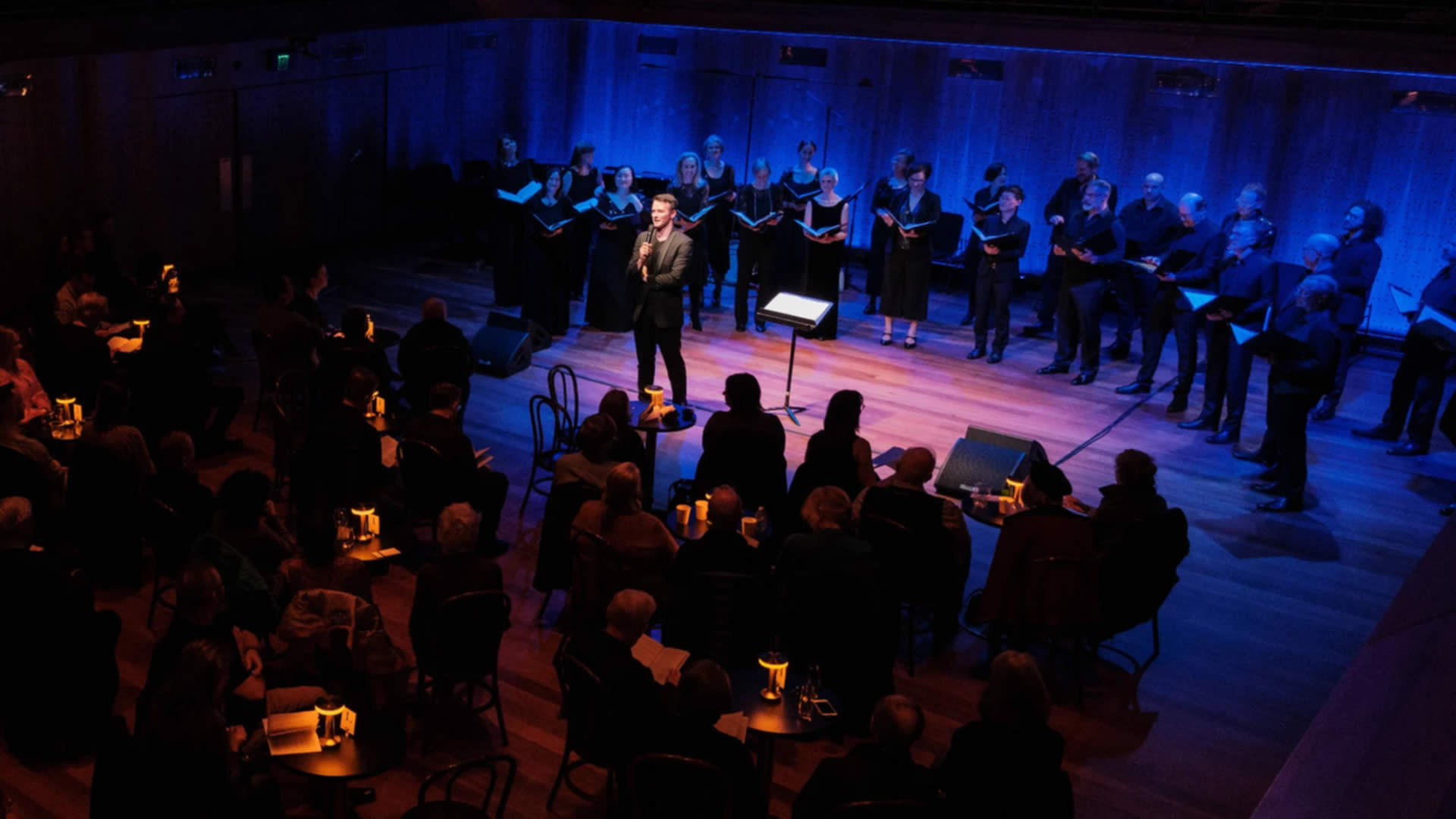
The Neilson at ACO On The Pier will provide a setting very different from a large concert hall.
The room sits within Pier 2/3 in Walsh Bay, where the cultural life of the city has gradually taken root among the former industrial structures of the waterfront. A concert here will feel connected to the harbour without being overwhelmed by it.
That sense of intimacy will suit the programme.
Much of the music chosen for Sessions on the Pier: Time & Tide depends on listening to the details between the larger gestures. A close harmony can be as important as a dramatic climax. A held note can create its own sense of space. A familiar lyric, heard in an unexpected arrangement, can take on a new emotional weight.
The 5pm performance will arrive at the edge of the evening, when Walsh Bay will still hold some of the day's light. The 8pm concert will begin after darkness has settled over the harbour. The music will remain the same, but the journey into and out of the venue will inevitably feel different.
The two performances are scheduled to run for approximately 90 minutes without an interval.
For audiences, that continuous format may be especially suited to a programme built around the movement of time. Rather than stopping to reset halfway through the evening, the music will be allowed to move through its own sequence of moods.
Familiar Songs in Unexpected Company
One of the pleasures of Sessions on the Pier: Time & Tide will lie in hearing songs that many listeners will already know placed alongside music from the classical choral tradition.
Here Comes the Sun carries decades of associations, from the Beatles' original recording to its many later interpretations. Summertime has travelled equally widely, moving through opera, jazz and popular music. Autumn Leaves has become one of those standards whose melody seems to belong simultaneously to several generations.
Placed within a programme for choir and jazz trio, these works will not simply be repeated in familiar form.
The arrangements will create new contexts around them.
That is one of the quiet strengths of a programme that crosses genres. The listener does not necessarily need to be a specialist in any one tradition. Recognition becomes a point of entry, but not the destination. A well-known melody can lead into unfamiliar harmonic territory, while a classical work can become more immediate when heard beside a song from a completely different musical world.
Britten's The Succession of the Four Sweet Months will bring a more formal reflection on the natural cycle, while Joe Twist's On the Night Train will introduce a distinctly contemporary Australian voice.
Together, the pieces will create something closer to a musical landscape than a chronological survey of the seasons.
There will be warmth, but not only warmth. There will be brightness, but also night. Spring will appear, but so will the emotional complications that often sit beneath the idea of renewal.
Sessions on the Pier: Time & Tide and the Changing Sydney Season
The timing of Sessions on the Pier: Time & Tide will give the programme an additional local resonance.
September in Sydney is a month of transition. The city begins to move outdoors again. Harbour walks become busier. Trees change almost imperceptibly before suddenly appearing greener. The heavy clothing of winter starts to disappear, though evenings can still carry a chill.
It is not quite summer, and that is part of its appeal.
The city remains in between.
For a concert about the changing year, that in-between quality will be especially fitting. Audiences will make their way through Walsh Bay at a moment when Sydney itself is shifting from one season towards another.
There is something quietly appropriate about experiencing music concerned with time on a pier.
A harbour is never entirely still. Water changes with wind and tide. Boats pass. Light moves across its surface. The built environment around Walsh Bay may seem solid and permanent, but the waterfront itself is defined by movement.
Music, too, disappears as it happens.
A performance exists only in the time given to it. The notes can be written down, rehearsed and remembered, but the particular combination of voices, room, audience and evening will occur once.
That is what makes an upcoming concert such as Sessions on the Pier: Time & Tide interesting before it has even begun. The programme can be known. The musicians can be named. The venue can be visited in advance.
But the actual evening will remain unwritten.
An Evening for Listening Closely
The concert will ultimately invite something increasingly difficult in a busy city: sustained attention.
The journey to Walsh Bay will pass through one of Sydney's most recognisable landscapes, but the performance itself will ask the audience to remain in one place and listen.
There will be no need to chase the next viewpoint or hurry towards another attraction. The experience will unfold through voices, instruments and the gradual progression of the programme.
As spring continues to gather around the city, Sessions on the Pier: Time & Tide will offer its own version of the season.
A song about sunlight may arrive after something more reflective. Jazz harmony may soften the edges of a familiar melody. A choir may create a stillness that makes the room seem temporarily removed from the streets outside.
And when the final music ends, the audience will step back into Walsh Bay.
At 5pm, there may still be light on the harbour. At 8pm, the water will likely have become part of the darkness, reflecting only the scattered illumination of the city.
Either way, the seasons will continue their work beyond the walls of the venue.
The tide will move. The evening will change. And somewhere between the old piers and the harbour, Sydney will be making its quiet approach towards summer.
Event Details
Event: Sessions on the Pier: Time & Tide
Date: Saturday, 19 September 2026
Times: 5:00pm and 8:00pm
Venue: The Neilson, ACO On The Pier
Location: Pier 2/3, Hickson Road, Walsh Bay, Sydney
Duration: Approximately 90 minutes, no interval
Tickets: From $30, with ticket categories up to $110
Official Event Information and Bookings: Sydney Chamber Choir – Sessions on the Pier: Time & Tide
Event details, artists, programme and current ticket information are available through the official Sydney Chamber Choir event page.