
Spring Cycle 2026 brings thousands of riders across Sydney Harbour Bridge on 11 October, with two routes linking the city to Pyrmont and Parramatta.
Before the first riders arrive, Sydney on a Sunday morning can feel almost unusually spacious.
The city is quieter around the edges, the streets still carrying the coolness of the night, while the harbour begins to catch the early light. From North Sydney, the towers and ferries provide the familiar backdrop. Ahead, the Harbour Bridge waits above the water.
On Sunday 11 October, bicycles will take the place normally occupied by much of the city's traffic as Spring Cycle 2026 returns for its 40th anniversary. Thousands of riders will gather at St Leonards Park before setting out across the Sydney Harbour Bridge and into the city, with two routes offering very different ways to experience Sydney on two wheels.
For some, it will be a family morning out. For others, the 50km Classic Ride will turn the occasion into a longer journey through the Inner West and towards Parramatta.
Both begin in the same place, but they tell different stories about the city.
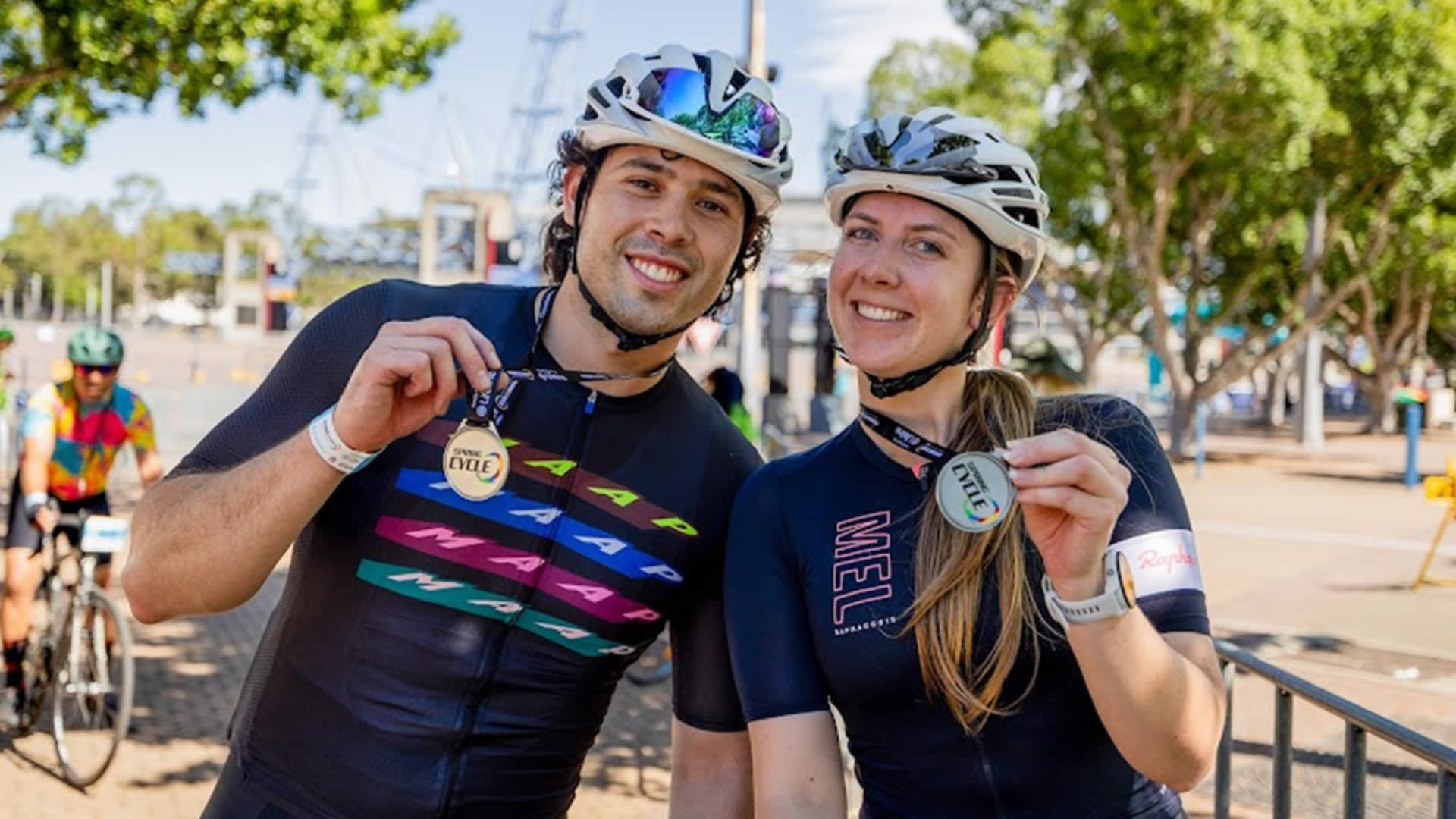
Spring Cycle Begins In North Sydney
The starting point for Spring Cycle is St Leonards Park, where riders gather from early morning.
The 50km Classic Ride begins first, with riders setting off from 6.30am. The 10km City Ride follows from 7.45am. The event site opens from 6am, and organisers recommend arriving around 30 minutes before the relevant start time, with additional time needed if riders are collecting packs or using the bag drop.
At that hour, Sydney is still in transition.
There is a particular character to a city before its ordinary Sunday routines begin. Cafes are only starting to open, traffic is lighter and the roads have a temporary sense of possibility. For cyclists, the landscape becomes more immediate. Buildings are no longer glimpsed through a windscreen. They pass at walking pace, then disappear behind the next corner.
That is part of what has kept Spring Cycle in Sydney's calendar since 1983. What began as a community cycling event has grown into a major ride, but its essential appeal remains relatively simple: get on a bicycle and see the city differently.
The most memorable part comes early.
The road rises towards the Harbour Bridge.
Spring Cycle And The Harbour Bridge
Crossing the Sydney Harbour Bridge by bicycle is a familiar experience for some commuters, but Spring Cycle changes the scale and atmosphere of the crossing.
The 10km City Ride takes place on closed roads from start to finish, allowing riders to travel through the route without ordinary traffic. From St Leonards Park, the course heads towards the bridge before continuing through the city and past some of Sydney's most recognisable landmarks.
There is something revealing about seeing the Harbour Bridge from a bicycle.
From the road, the steel structure becomes less like a postcard and more like a piece of the city's geography. The climb is tangible. The wind is easier to notice. The harbour opens out beside you. Below, the ferries and boats move through the water while the city stretches along both shores.
Then there is the descent towards the CBD.
The Opera House and The Rocks appear along the route, but they are not necessarily the main event. The pleasure is in the changing perspective between them. Sydney's best-known landmarks become part of a continuous journey rather than isolated destinations.
The ride gives participants a rare chance to move through parts of the city according to the rhythm of a bicycle rather than the rhythm of traffic.
For a morning, the familiar city becomes something slightly different.
A Shorter Ride With A Big Sydney View
The 10km City Ride is designed for families, beginners and leisure cyclists, including riders using adaptive cycles. Children can participate, although riders under 15 must be accompanied by a cycling adult, while children under eight cannot ride independently on their own bicycle.
Its distance makes the ride accessible without making the experience feel abbreviated.
The route starts at St Leonards Park and finishes at Pirrama Park in Pyrmont. The first riders are expected at the finish from around 8.30am, with the last 10km riders due by 11.30am. The finish site remains open until 12.30pm.
Pirrama Park provides a fitting conclusion.
After the enclosed feeling of the bridge and the movement through the CBD, the harbour opens again around Pyrmont. Riders can slow down, leave the road behind and settle into the finish festival.
The contrast is part of the experience. What begins as a concentrated movement of bicycles through the city gradually becomes a more relaxed gathering of families, friends and spectators.
There is no need for the shorter route to be treated as a lesser version of the day. It is simply a different way of inhabiting Sydney.
Spring Cycle Takes The Long Way West
For riders looking beyond the harbour crossing, the 50km Classic Ride follows a much longer line through Sydney.
It begins at 6.30am from St Leonards Park, taking in the opening section across the Harbour Bridge, through the city and past the Opera House and The Rocks. From there, the route continues into the Inner West before heading west towards Parramatta.
The character changes as the kilometres accumulate.
The city centre gives way to neighbourhood streets, parks and longer stretches of shared paths. There are fewer moments when Sydney announces itself with a single landmark. Instead, the ride becomes a succession of smaller observations: a row of terraces, a bridge over a creek, a patch of parkland, cyclists gathering at a rest point.
The 50km course is not entirely closed to traffic. The first 10km are on closed roads, while the remaining distance is approximately divided between shared bike paths and open roads. Course marshals, traffic controllers and NSW Police support riders along the open-road sections.
Rest stops are positioned along the longer route, including locations around Haberfield and Meadowbank, giving riders opportunities to pause as the morning develops.
By then, the early start has become a different kind of day.
The city is awake.
From The Inner West To Parramatta
The western section of Spring Cycle offers another view of Sydney, one that can be missed when the city is experienced mainly through its central landmarks.
The 50km ride travels through the Inner West before continuing towards its new finish festival at Parramatta Park. The first riders are expected to arrive from around 8.15am, with the final riders due by approximately 1.30pm. The finish site closes at 2.30pm.
This longer route has a useful quality: it makes Sydney feel large.
The Harbour Bridge can sometimes make the city appear compact. From its centre, the north and south shores seem close enough to hold in a single glance. But cycling from the harbour towards Western Sydney reveals the distances between those familiar points.
The journey becomes less about collecting landmarks and more about following the geography.
Parramatta Park is an appropriate place to finish. The pace slows, bikes are parked and the atmosphere changes from movement to gathering. Riders who left North Sydney in the half-light of morning arrive later with the city already deep into the day.
The ride has crossed more than a bridge.
It has crossed several versions of Sydney.

A Ride With A Purpose
Spring Cycle is also a fundraising event, with Lifeline as the 2026 national charity partner.
Funds raised through the event support Lifeline's crisis support and suicide prevention work. The connection between cycling and the charity is deliberately broader than a single day's activity. The event brings together movement, outdoor activity and community with fundraising for a service available to Australians experiencing emotional distress.
That gives the morning another dimension.
A bicycle ride can be a very ordinary pleasure. There is the simple physical sensation of turning the pedals, the conversation between friends riding side by side and the satisfaction of reaching the top of a hill. In a large group, those small experiences become communal.
The fundraising component takes that collective energy somewhere beyond the route itself.
Spring Cycle's organisers also position the event within the wider history of cycling in NSW. Bicycle NSW has been advocating for cycling for decades, while the event itself has grown alongside Sydney's changing relationship with bicycles as recreation, transport and part of everyday urban life.
For riders, those larger questions may remain in the background.
On the morning itself, the experience is immediate.
A wheel turns. A road opens. The bridge appears.
What Riders Need To Know
Spring Cycle takes place on Sunday 11 October 2026, with both rides starting at St Leonards Park in North Sydney.
The 10km City Ride starts from 7.45am and finishes at Pirrama Park, Pyrmont. The 50km Classic Ride starts from 6.30am and finishes at Parramatta Park.
Free public transport is included for registered participants on event day. Riders need to display their Spring Cycle rider number or present their Ride Guide email if requested by transport operators. Given the road closures and limited parking around the event, organisers recommend using public transport rather than driving to the start.
Rider pack collection is available at several locations during the week before the event, with a final collection opportunity at St Leonards Park on Saturday 10 October from 8am to midday. Event-day collection begins from 6am.
Registration is available for both distances, with adaptive cycling supported across the event.
For official information, route details, registration and rider guidance, visit the Spring Cycle official website.
Spring Cycle Sees Sydney Differently
There are many ways to see Sydney.
From the harbour, the city looks polished and compact. From the footpath, it feels busy and close. From a train window, suburbs slide past in fragments. From a bicycle, the transitions are slower.
That may be the enduring attraction of Spring Cycle.
The Harbour Bridge is the obvious image, but the ride is ultimately about what happens before and after the crossing. It is the early morning gathering in North Sydney. It is the first climb towards the bridge. It is the sudden expanse of water beside the road. It is the descent into the CBD, the changing streets of the Inner West and, for those taking the longer route, the gradual movement towards Parramatta.
For families, the shorter ride offers a morning in which some of Sydney's most familiar places become temporarily car-free spaces.
For experienced cyclists, the 50km route provides a longer physical journey through the city's changing landscapes.
And for everyone involved, there is the unusual sensation of seeing a city built around movement from the seat of a bicycle.
By late morning, the roads will begin returning to their ordinary rhythm. Cars will resume their routes. Pedestrians will cross streets. The harbour will look much as it always does.
But for several hours, thousands of bicycles will have drawn another map across Sydney.
The city will have been measured not in lanes or train lines, but in turns of the wheel, harbour crossings and kilometres travelled.
And somewhere above the water, with the steelwork of the bridge rising overhead and the harbour opening on either side, Sydney will briefly feel as though it belongs to the riders.
Event Details
Event: Spring Cycle 2026
Date: Sunday 11 October 2026
10km City Ride: 7.45am start, St Leonards Park, North Sydney, finishing at Pirrama Park, Pyrmont
50km Classic Ride: 6.30am start, St Leonards Park, North Sydney, finishing at Parramatta Park, Parramatta
Event site: St Leonards Park opens from 6am
Official website: Spring Cycle
Charity partner: Lifeline
Organiser: Lifeline Harbour to Hawkesbury Sydney
Routes: Sydney Harbour Bridge, Sydney CBD, The Rocks and, for the 50km route, the Inner West and Western Sydney