
The State Library of NSW celebrates 200 years with six weeks of performance, music and storytelling across Sydney from September to October 2026.
There are few places in Sydney where the past feels as physically present as it does at the State Library of NSW.
Step through its doors and the city seems to change pace. Outside, Macquarie Street carries its usual procession of buses, office workers and visitors moving between the Botanic Garden, Parliament and Circular Quay. Inside, voices soften. Footsteps cross stone and timber. Shelves rise towards high ceilings, holding books, manuscripts, maps, drawings and records gathered across two centuries.
In September, those stories begin to move in a different way.
As part of its 200th Anniversary celebrations, the State Library of NSW presents a six-week festival of performances, talks and live music, bringing artists, musicians, writers and audiences into conversation with one of Australia's oldest cultural institutions. The program unfolds across September and October 2026, with new works created in response to the Library's collections and spaces.
Rather than simply looking back at 200 years of preservation, the anniversary program considers what happens when an archive is activated. Stories held in books and boxes are brought into the present through dance, music, theatre, spoken word and performance.
The result is a season that uses the State Library of NSW itself as more than a venue. Its rooms become part of the work. Its collections become a starting point. Its long history becomes something that can be heard, seen and felt in real time.
The State Library of NSW As A Keeper of Stories
The State Library of NSW has been collecting stories since 1826. Over the course of two centuries, those stories have accumulated in forms both familiar and fragile: books and newspapers, letters and journals, artworks and photographs, maps, manuscripts and records that trace the changing lives of New South Wales.
Archives can sometimes appear still. Their contents wait patiently for someone to request them, open them or interpret them.
The anniversary performance program takes a different approach.
The works presented this spring have emerged from creative residencies undertaken across the past two years, giving some of Australia's leading artists time to work closely with the Library's collection and inhabit its spaces. Each project approaches the institution from a different direction, but all share an interest in what a library holds beyond the obvious.
Memory is not fixed. History is not complete. A collection can preserve a story while also leaving questions about who recorded it, who interpreted it and whose voice was missing.
That tension sits beneath the festival's most ambitious works.
State Library of NSW Opens With RECLAIM
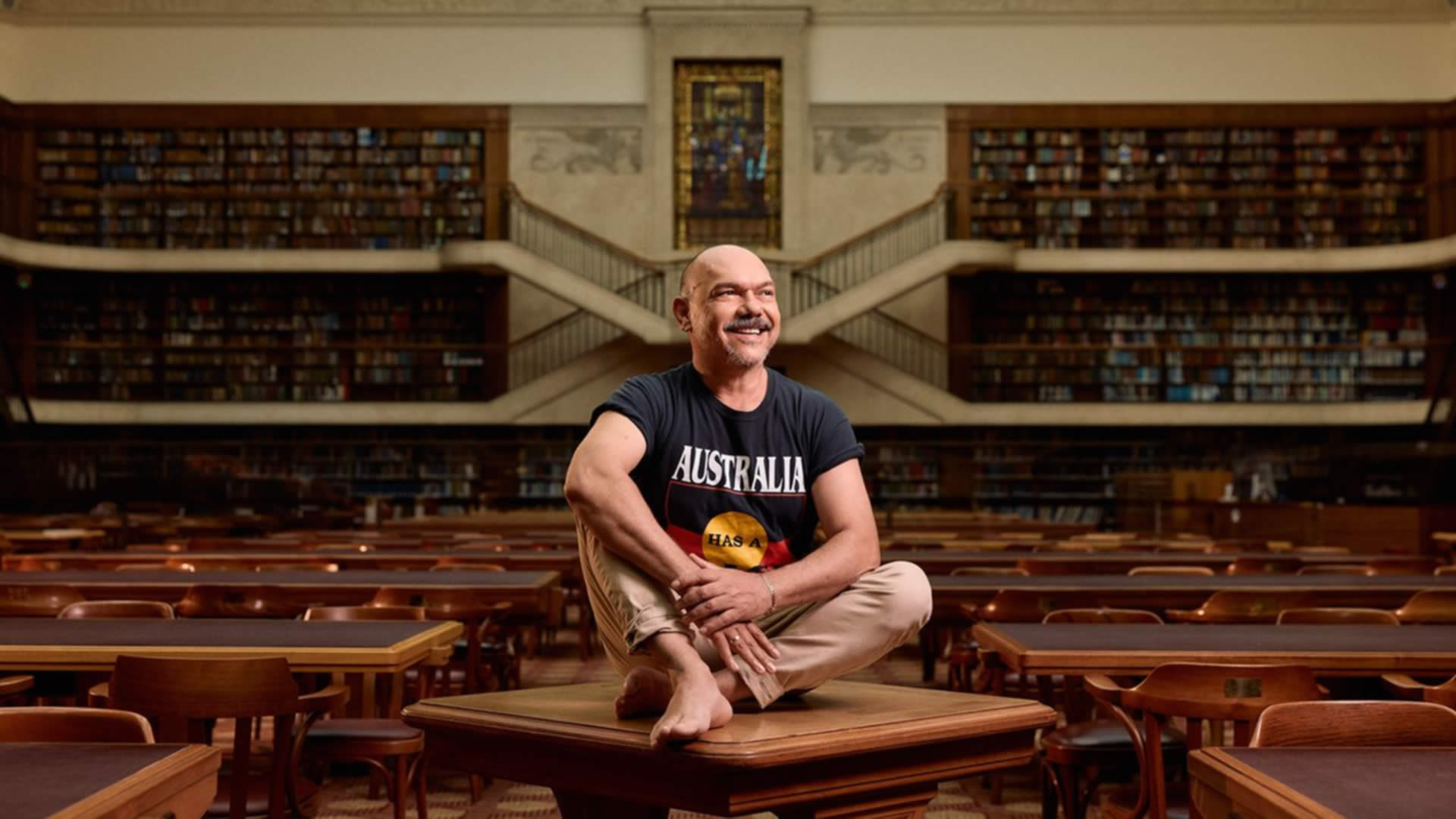
The performance program begins in the Mitchell Library Reading Room, one of Sydney's most recognisable interior spaces.
On 11 and 12 September 2026, Stephen Page AO presents RECLAIM: A Contemporary Ceremony, a new work that reawakens First Nations stories within the room's imposing architecture.
Page, a Nunukul and Munaldjali man and former artistic director of Bangarra Dance Theatre for 32 years, brings together dance, spoken word, poetry and music in a series of connected vignettes. The work surveys First Nations characters and experiences from First Contact to the present day, creating a continuum shaped by resilience, survival and presence.
The choice of location is central.
The Mitchell Library Reading Room has long been a place of study and historical research, where knowledge is consulted quietly beneath its high ceiling. For this performance, the room becomes a space in which that knowledge is challenged, revisited and embodied.
Working with an award-winning creative team behind productions including Wudjang: Not the Past and Baleen Moondjan, Page examines stories held within the Library and the land on which the institution stands.
His time in the archives, including conversations with long-term librarian and Bundjalung woman Melissa Jackson, has helped shape the work and its connection to Sydney's Koori history.
For an audience, the experience is likely to shift the familiar meaning of a reading room. The silence normally associated with historical study gives way to movement, voice and ceremony. The archive is no longer only something to be read.
It is something encountered.
Earth Flow Brings Music Into The Reading Room
A week later, the Mitchell Library Reading Room changes again.
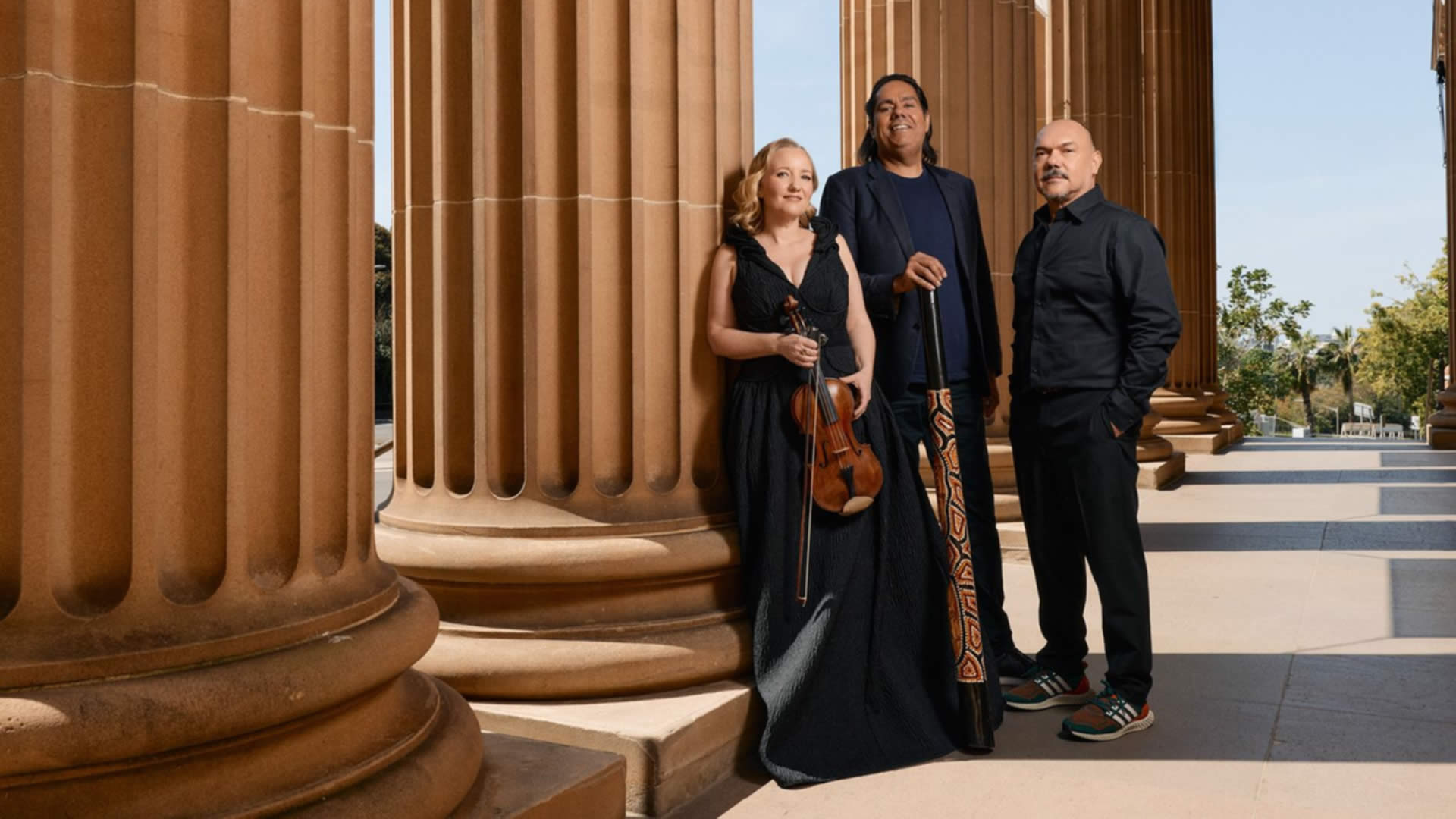
On 18 and 19 September, Kalkadunga composer and yidaki master William Barton presents Earth Flow, a work responding to the State Library of NSW and its two centuries as a keeper of stories.
Barton imagines the Library as a living forest.
The idea moves away from the image of an archive as something static and instead considers knowledge as a network of connections. Books form one part of that system, but so do the people who write them, read them, preserve them and carry their stories beyond the building.
In Earth Flow, poetry, movement, sound and song combine with a broad cast of performers and guests, including Aunty Delmae Barton, Jack Thompson, Ray Martin and the Sydney Street Choir.
The performance also includes the premiere of Song Book, a new piece composed by Barton for the Library's anniversary.
Barton has spent time travelling through regional New South Wales libraries and performing with local communities, with experiences in Tamworth, Dubbo, Gosford and Nowra informing the work that returns to Sydney.
That journey offers a reminder that the State Library of NSW sits within a much wider landscape of libraries and local collections. Knowledge does not only gather in the grand rooms of a major institution. It also lives in regional towns, family histories, community memory and the stories people continue to tell one another.
For two nights, those threads converge in the Mitchell Library Reading Room.
The Scott Sisters And The Art of Observation
The following week, attention turns towards the natural world.
From 25 to 27 September, The Scott Sisters: Pioneers of Science and Art brings the lives and work of 19th-century illustrators and naturalists Harriet and Helena Scott into the Library Auditorium.
Created by Skye McIntosh, Artistic Director of the Australian Haydn Ensemble, the immersive multimedia production is inspired by the sisters' remarkable scientific illustrations and their acclaimed work Australian Lepidoptera and their Transformations, often known as the Butterfly Book.
The Scott sisters lived and worked during a period when scientific discovery, illustration and colonial exploration were closely intertwined. Their detailed observations of Australia's natural world required both artistic skill and scientific precision.
The production draws on the State Library of NSW collections, including original artworks, letters, books, manuscripts and family papers. Across nearly a century of family history, the work follows a legacy that helped shape Australia's scientific, artistic and cultural record.
On stage, those archival materials meet contemporary performance.
Animations by Studio Gilay combine with theatrical storytelling and live classical music performed on period instruments by the Australian Haydn Ensemble. The approach allows historical material to be experienced as something more than an object behind glass.
For McIntosh, the enduring fascination lies partly in the Scott sisters' extraordinary ability to observe.
Their illustrations reward close attention. Wings, leaves and bodies are rendered with the patience of people who understood that detail could reveal an entire world.
In an age of constant movement and screens competing for attention, that kind of observation feels quietly radical.
A Night Inside The State Library of NSW
For younger audiences, and anyone who remembers being told to be quiet in a library, the anniversary program takes a more playful turn.
Australia's national Shakespeare company, Bell Shakespeare, presents A Night at the Library, written by Joanna Erskine.
The production follows a young student who has little interest in reading or libraries and finds themselves spending an unexpected night inside the building.
Being stuck in a library, however, turns out to be rather different from being bored in one.
Historical figures and characters from literature begin to appear, revealing the human stories that sit behind the Library's vast collection. The premise creates an adventure through the building and the worlds contained within it, suggesting that a library is not simply a place where stories end up.
It is where they can begin again.
A Night at the Library is presented on 20 September and from 29 September to 1 October 2026 in the Library Auditorium.
The limited season offers a fitting counterpoint to the more contemplative works elsewhere in the program. Where archives can sometimes seem distant to younger audiences, theatre offers a way through the door.
The shelves may be full of history, but history has always been populated by people with arguments, ambitions, fears, failures and imaginations.
State Library of NSW Moves Into Spring
The anniversary festival extends beyond the ticketed performance program.
Across September and October, the State Library of NSW continues to open its spaces to writers, musicians and audiences through a series of public events.
Sydney Writers' Festival's free Homegrown program brings local writers, thinkers, poets and performers into the Library, continuing the long association between the building and Sydney's literary life.
Then, from 16 September to 21 October, the Library forecourt becomes an evening meeting place through Spring Sessions, a free program of live music held every Wednesday.
The shift from reading rooms to the forecourt reflects one of the broader ideas behind the anniversary year.
A library can be both quiet and social.
It can be a place for individual research and collective experience. It can hold the work of people long gone while also creating room for contemporary voices.
On a spring evening, with the city moving beyond the gates and music carrying across the forecourt, the institution's role feels less formal and more immediate.
People gather.
Stories continue.
Two Hundred Years, Still Unfolding
Anniversaries can encourage institutions to look backwards, arranging their history into neat milestones and celebrating everything that has survived.
The State Library of NSW 200th Anniversary Festival takes a more interesting path.
Its performances ask what an archive means now.
Stephen Page brings First Nations histories into the centre of one of the Library's most iconic spaces. William Barton imagines the institution as a living system of interconnected knowledge. Skye McIntosh and the Australian Haydn Ensemble revisit the lives of two remarkable women whose observations helped document the natural world. Bell Shakespeare invites a new generation to see the Library as a place of adventure rather than obligation.
Together, the works suggest that preservation is only one part of a library's purpose.
A collection is also an invitation.
It invites people to return to old stories with new questions. It allows forgotten lives to surface again. It creates connections between a manuscript written generations ago and someone sitting in a reading room today.
After 200 years, the State Library of NSW remains full of things waiting to be found.
This spring, some of them step off the page.
And when the performances finish, the books will remain on the shelves, the manuscripts will return to their boxes and the reading rooms will settle again into their familiar quiet. Yet something of the season will linger in the idea that these rooms are not simply repositories for the past.
They are places where the past continues to speak.
Event Details
State Library of NSW 200th Anniversary Festival
Dates: September to October 2026
RECLAIM: A Contemporary Ceremony
Dates: 11–12 September 2026
Location: Mitchell Library Reading Room, State Library of NSW
Earth Flow
Dates: 18–19 September 2026
Location: Mitchell Library Reading Room, State Library of NSW
The Scott Sisters: Pioneers of Science and Art
Dates: 25–27 September 2026
Location: Library Auditorium, State Library of NSW
A Night at the Library
Dates: 20 September and 29 September–1 October 2026
Location: Library Auditorium, State Library of NSW
Spring Sessions: Every Wednesday evening from 16 September–21 October 2026
Location: State Library of NSW Forecourt
Location: State Library of NSW, Macquarie Street, Sydney NSW
Tickets and Official Information: https://www.sl.nsw.gov.au/200festival