
The Australian Ballet brings Cinderella to life in an enchanting 50-minute production for young audiences at the Sydney Opera House from 17 December 2026 to 3 January 2027.
There is something special about a child's first encounter with ballet. The quiet anticipation before the music begins, the movement of dancers across a stage and the moment a familiar story takes on a life of its own can leave an impression long after the final curtain falls. For families in Sydney, the summer holidays bring an opportunity to experience that introduction through Storytime Ballet, The Australian Ballet's family-friendly presentation of Cinderella.
Arriving at the Sydney Opera House in December, Storytime Ballet offers a gentler way into the world of classical dance. Designed for children aged three years and older, the production combines the familiar fairytale with live theatrical performance, an engaging narrator and a running time of approximately 50 minutes. It is an invitation to discover ballet without the expectations or extended sitting time often associated with traditional productions.
At its centre is Cinderella, a story that has travelled through generations and across cultures. Its themes of kindness, transformation and hope remain familiar, but on stage they take shape through movement, music, costume and theatrical imagination.
Presented by The Australian Ballet, the production arrives as part of the festive season's cultural calendar, offering Sydney families a chance to share a little theatre during the summer break.
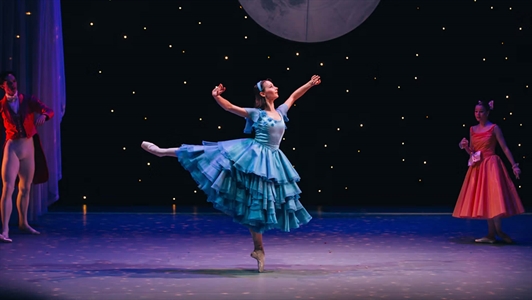
A Familiar Fairytale Finds A New Audience
Few stories are as readily recognised by children as Cinderella. A young woman lives under the authority of an unkind stepmother and her stepsisters, finding herself confined to a life of domestic work while others enjoy the privileges she is denied.
Then comes the invitation to the royal ball, an opportunity that seems impossible until her fairy godmother intervenes. With a little magic, Cinderella is transformed, complete with a beautiful gown and glass slippers, and finds herself entering a world that once seemed beyond reach.
The story's appeal lies partly in its simplicity. It offers young audiences clear characters, recognisable emotions and a narrative that moves towards a satisfying conclusion. There is injustice, kindness, anticipation and the possibility of change, all conveyed in a way that does not require a sophisticated understanding of theatre.
In Storytime Ballet, these elements are expressed through the physical language of dance. Rather than relying solely on spoken dialogue, the production allows gestures, expressions and movement to communicate the story.
For children encountering ballet for the first time, this can be an important distinction. A dancer's movement becomes part of the storytelling, while the music helps establish the mood and direction of each scene.
The familiar narrative also gives parents and carers an opportunity to share something recognisable with younger family members. Children may already know Cinderella from books, films or bedtime stories. Seeing the characters interpreted by professional dancers offers another way to understand how stories can move between different art forms.
Storytime Ballet Makes Classical Dance Accessible
The idea behind Storytime Ballet is straightforward: introduce children to the atmosphere and traditions of ballet in a format suited to their age.
Traditional full-length ballet productions can involve several acts, extended intervals and complicated storylines. For younger children, particularly those attending their first theatre performance, the experience can be difficult to navigate.
Storytime Ballet takes a different approach. Each performance is narrated, helping children follow the unfolding action while keeping the experience connected to the visual storytelling on stage.
The production runs for approximately 50 minutes, providing enough time for the story to develop without placing excessive demands on young attention spans.
This shorter format does not mean that ballet itself is simplified beyond recognition. The central elements remain: trained dancers, choreographed movement, theatrical presentation and classical music. What changes is the way these elements are introduced and arranged for the audience.
Children are also encouraged to participate in their own way. Dressing in a ballet-inspired outfit is welcome, while dancing gently in their seats is part of the relaxed atmosphere encouraged by the production.
It is a small but meaningful departure from the formality some families associate with theatre. Instead of expecting children to understand every convention before entering the auditorium, Storytime Ballet makes room for curiosity and natural reactions.
For parents, the experience offers a chance to introduce the performing arts without turning the occasion into a lesson. Children can simply watch, listen and respond to what is happening in front of them.
David McAllister's Cinderella Takes To The Stage
The production is choreographed and created by David McAllister, former Artistic Director of The Australian Ballet. His work on Storytime Ballet: Cinderella brings a well-known narrative into a format intended to encourage younger audiences to engage with dance.
McAllister's production draws on the theatrical possibilities of the fairytale, using choreography, music, costumes and stagecraft to build its world.
The music is Sergei Prokofiev's Cinderella, Op. 87, performed by Orchestra Victoria and conducted by Jonathan Lo. Prokofiev's score gives the story much of its dramatic character, moving between lighter passages, moments of tension and the more expansive musical themes associated with the royal ball.
For young audiences, music can be one of the most immediate ways into ballet. Even without recognising particular instruments or understanding musical structure, children can respond to changes in rhythm, volume and mood.
A lively passage might suggest excitement, while a quieter section can give a scene a more reflective quality. In this way, the score becomes another storyteller, working alongside the dancers and narrator.
The visual production is also an important part of the experience.
Costume designer Louisa Fitzgerald creates the clothing that helps distinguish Cinderella's world and its characters. Set designer Ishan Vivekanantham establishes the theatrical environment, while lighting designer Jon Buswell and illusion designer Lee Cohen contribute to the production's visual effects.
Together, these elements help translate the imagined world of a fairytale into something tangible on stage.
The result is an introduction to several aspects of theatrical production at once. Children see how movement, sound, light and costume combine to create a complete performance, even if they are not yet familiar with the individual disciplines behind it.
The Sydney Opera House Provides A Fitting Setting
From 17 December 2026, Storytime Ballet takes up residence in the Drama Theatre at the Sydney Opera House.
For families visiting during the summer holidays, the setting adds another dimension to the outing. Positioned at Bennelong Point, the Opera House is one of the city's most recognisable cultural landmarks, its distinctive sails standing above the harbour.
The surrounding precinct offers a natural opportunity to make an afternoon or morning of the visit. Families can arrive early, walk along the harbour foreshore and take in the views across Circular Quay before heading inside for the performance.
December brings a particular atmosphere to this part of Sydney. The city is moving towards the Christmas and New Year period, school holidays are beginning and the harbour becomes a gathering place for visitors and locals alike.
Within the Opera House, the experience shifts from the openness of the waterfront to the more intimate environment of the theatre. The audience gathers, the lights settle and attention turns towards the stage.
For children, entering a professional performing arts venue can be an experience in itself. It introduces the idea that theatre is a place where people come together to share a story, whether that story is told through words, music or movement.
The Drama Theatre provides an indoor setting for this encounter, making Storytime Ballet a suitable cultural outing during Sydney's warmer months.
It also offers parents an opportunity to introduce younger children to the Opera House before they are ready for longer productions. A shorter performance can help establish familiarity with the venue and the experience of attending live theatre.
A Summer Holiday Experience For Families
The timing of Storytime Ballet makes it particularly relevant to Sydney's December and January holiday period.
With school routines winding down and families looking for activities that offer something beyond the usual holiday schedule, a visit to the theatre can provide a welcome change of pace.
For children, the appeal may be the costumes, the dancing or simply seeing a favourite fairytale unfold in front of them. For adults, it is an opportunity to share a cultural experience that does not rely on screens or familiar forms of entertainment.
The production is intended for children aged three years and older, although younger children are also accommodated under the venue's ticketing arrangements.
Children aged 18 months and under can attend without a separate ticket, provided they sit on an accompanying adult's lap. Children aged three years and older require a standard ticket.
The relatively short running time is worth considering when planning the day, particularly for families with younger children who may be attending their first live performance.
There is no need to prepare children with a detailed explanation of ballet beforehand. A simple introduction to Cinderella and an explanation that dancers use movement to tell the story can be enough to give them a starting point.
Allowing time to arrive, find seats and settle into the theatre can also make a difference. For a young audience, the experience begins well before the first movement on stage.
Accessibility And Practical Considerations
The Sydney season includes selected accessible performances, making the production available to a wider range of audience members.
An audio-described performance takes place on Tuesday 22 December at 2pm. This service provides a live commentary describing visual elements of the production for patrons who are blind or have low vision.
Auslan-interpreted performances are scheduled for Sunday 27 December at 2pm and 4pm. Theatre interpreters translate spoken content into Auslan from a position alongside the stage.
Families requiring wheelchair access, companion seating or other assistance can contact the Sydney Opera House box office when arranging their tickets.
One practical consideration is the production's use of flashing lights. The Australian Ballet advises that flashing wands feature in the performance and may be overwhelming for people who experience migraines, light sensitivity or certain cognitive disabilities affected by flashing lights.
Parents and carers may wish to consider this information when deciding whether the production is suitable for their children.
The venue also requires children aged 15 years and under to be accompanied at all times.
These details are worth checking before booking, particularly when attending with young children or family members who have specific accessibility requirements.
Storytime Ballet Performance Dates And Times
Storytime Ballet: Cinderella runs at the Sydney Opera House's Drama Theatre from 17 December 2026 to 3 January 2027.
The Sydney performance schedule includes a selection of morning and afternoon sessions, providing some flexibility for families planning around naps, meals and other holiday activities.
The published performance dates and times are:
December 2026
- Thursday 17 December: 2pm and 4pm
- Friday 18 December: 11am, 2pm and 4pm
- Saturday 19 December: 11am, 2pm and 4pm
- Monday 21 December: 11am and 2pm
- Tuesday 22 December: 11am and 2pm
- Wednesday 23 December: 11am, 2pm and 4pm
- Thursday 24 December: 11am and 2pm
- Sunday 27 December: 11am, 2pm and 4pm
- Monday 28 December: 11am and 2pm
- Tuesday 29 December: 11am, 2pm and 4pm
January 2027
- Saturday 2 January: 2pm and 4pm
- Sunday 3 January: 11am, 2pm and 4pm
The performance runs for approximately 50 minutes, although the venue notes that duration is a guide and may change.
Ticket prices are listed in three seating categories, with A Reserve tickets ranging from $71 to $98, B Reserve from $66 to $86 and C Reserve from $59 to $79. An $8.95 booking fee applies per transaction through the Sydney Opera House ticketing arrangements. Prices are subject to change.
Families should check the official booking page for current availability, final ticket prices and any changes to performance arrangements before making plans.
Event Details
Event: Storytime Ballet: Cinderella
Presented by: The Australian Ballet
Dates: 17 December 2026 to 3 January 2027
Venue: Drama Theatre, Sydney Opera House, Bennelong Point, Sydney NSW
Duration: Approximately 50 minutes
Recommended age: Three years and older
Music: Sergei Prokofiev
Choreography and production: David McAllister
Official website and bookings: https://australianballet.com.au/performances/storytime-ballet
An Introduction To The Magic Of Live Performance
A child's first theatre experience does not need to be elaborate to be memorable. Sometimes it is a particular piece of music, the appearance of a character they recognise or the sight of a dancer moving across a stage that stays with them.
Storytime Ballet: Cinderella offers an opportunity for those small discoveries to happen in a familiar setting. Its fairytale narrative provides an accessible starting point, while the choreography, music and theatrical design introduce children to the many ways a story can be told without relying entirely on words.
For Sydney families, the December and January season also creates an opportunity to spend time at one of the city's most significant cultural venues during the summer holidays.
There is something fitting about bringing a story of transformation and possibility to the stage at this time of year. The festive season is often filled with traditions, shared experiences and the anticipation of new beginnings. A visit to the theatre can become another part of that seasonal rhythm.
As the final music fades and the performers take their bows, young audience members may leave with a new appreciation for dance, a renewed interest in Cinderella or simply the memory of an afternoon spent somewhere different.
For some, it may be the beginning of a longer relationship with ballet. For others, it will be a first encounter with the world of live theatre.
Either way, the experience offers something valuable: a chance to sit together, follow a story and discover the quiet magic of watching it come alive.