
Suzi Quatro brings four decades of rock, a new album and Baby Animals to Sydney’s Coliseum Theatre on 14 November 2026.
There are some musicians whose careers can be measured in albums, others in decades, and a rare few in the changes they helped make possible.
Suzi Quatro belongs in the last category.
When she walks onto the stage at the Coliseum Theatre in Rooty Hill on Saturday 14 November, the setting will be a long way from the Detroit clubs and family bandrooms where her musical life began. Greater Western Sydney will be settling into a November evening, with the lights of West HQ coming on around Railway Street and audiences arriving for a night that brings together two very different chapters of Australian and international rock history.
Quatro will headline the evening, with Baby Animals appearing as special guests. Doors open at 6.45pm, with the show beginning at 7.45pm. The performance forms part of Quatro's Down Under 2026 tour, which travels around Australia through November and December.
There is a lot of history attached to the name Suzi Quatro, but history is not quite the right way to approach her.
Her music has always had movement in it.
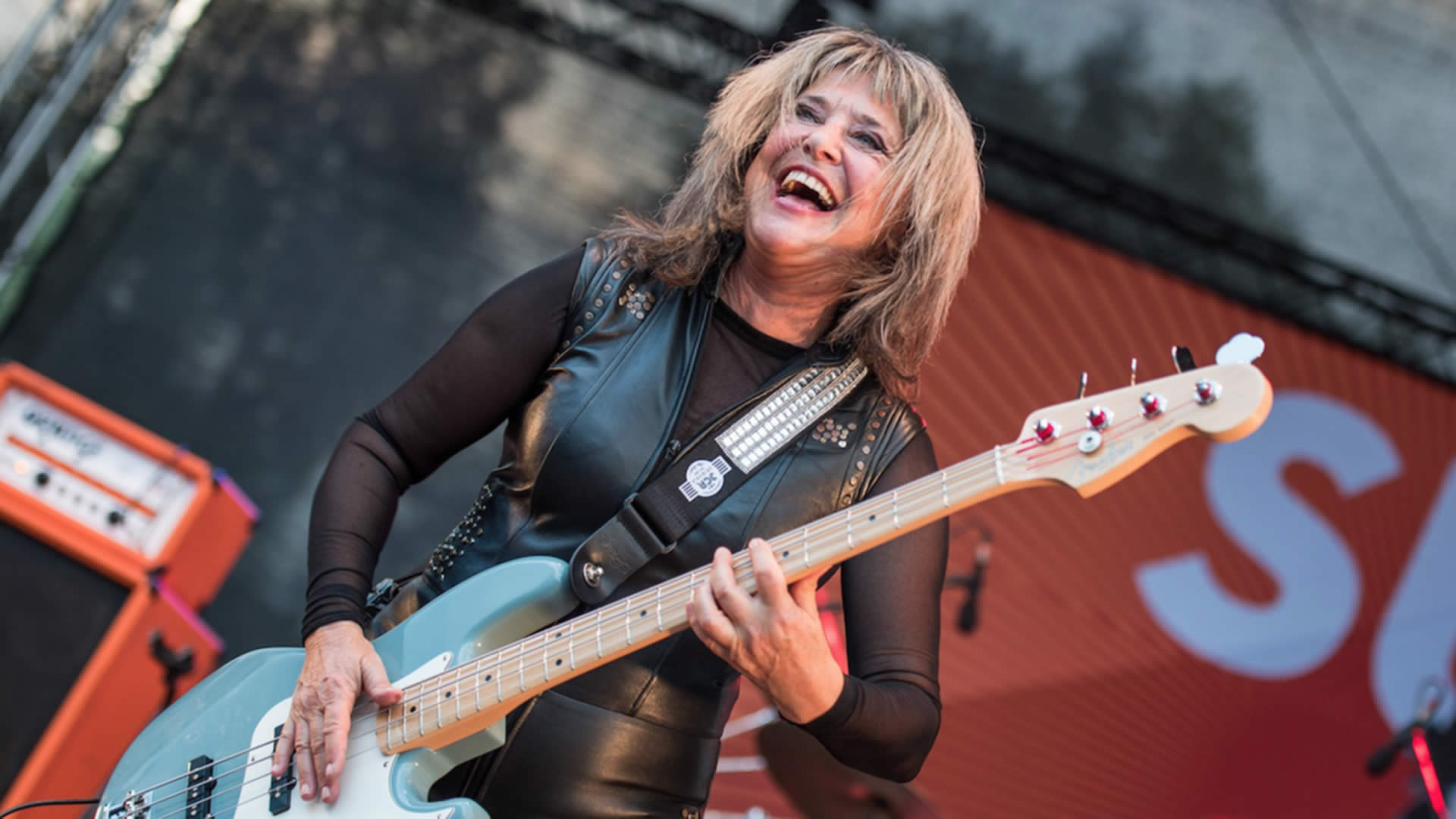
The bass is physical. The songs are direct. The performances have a sense of someone who arrived in rock music not to ask whether there was room for her, but to make her own space.
Suzi Quatro And The Making Of A Rock Identity
Quatro was born in Detroit in 1950, into a musical family where performing was part of everyday life.
At 14, she was already playing with her sister Patti in The Pleasure Seekers. It was an early indication of the path ahead, but the significance of what followed only became clear later. In the early 1970s, Quatro moved to Britain and began developing the distinctive musical identity that would make her internationally known.
The image was memorable, but the sound was more important.
Quatro played bass at a time when female musicians were still routinely expected to occupy different positions in popular music. She stood at the front of the stage with the instrument rather than behind it, combining the physical presence of rock with a voice that could be both sharp and surprisingly vulnerable.
In 1973, "Can the Can" became a worldwide number one hit.
"48 Crash" and "Devil Gate Drive" followed, while "Stumblin' In", her duet with Chris Norman, gave her another international success. Over the course of her career, she has sold more than 55 million records.
Those numbers tell part of the story.
The more interesting part is what her presence meant at the time.
The Woman With The Bass
Rock history has often been written around men with guitars.
Quatro disrupted that picture simply by standing in a different place.
The bass was not a prop. It was central to the sound and to her identity as a performer. Leather, long hair, boots and an instrument traditionally associated with the rhythm section became part of an image that was unmistakably hers.
But reducing Quatro's importance to fashion misses the point.
The music had weight.
Her songs were compact, muscular pieces of rock and roll, designed to move rather than sit politely in the background. The directness of that music helped her cross borders and audiences, while her visibility created an example for women who wanted to perform rock on their own terms.
Decades later, the significance of that moment is easier to see.
At the time, it was simply Quatro doing what she knew how to do.
That may be one of the reasons her career has lasted.
Suzi Quatro Has Never Stayed In One Place
Music is only one part of Quatro's story.
She has also worked as an actress, appearing as Leather Tuscadero in Happy Days, and performed in London's West End in Annie Get Your Gun. She has written books, appeared in the documentary Suzi Q and worked as a radio presenter, including programmes for BBC Radio 2.
There is a pattern in all of this.
Quatro has rarely behaved as though a successful identity needs to be protected from change.
For some performers, longevity means carefully maintaining the same version of themselves. Quatro's career has been more open-ended. Music led to television, television to theatre, broadcasting to writing and eventually back into the studio.
The result is a career that feels less like a straight line than a series of connected roads.
That makes the Down Under tour more interesting than a simple exercise in nostalgia.
A New Chapter With Freedom
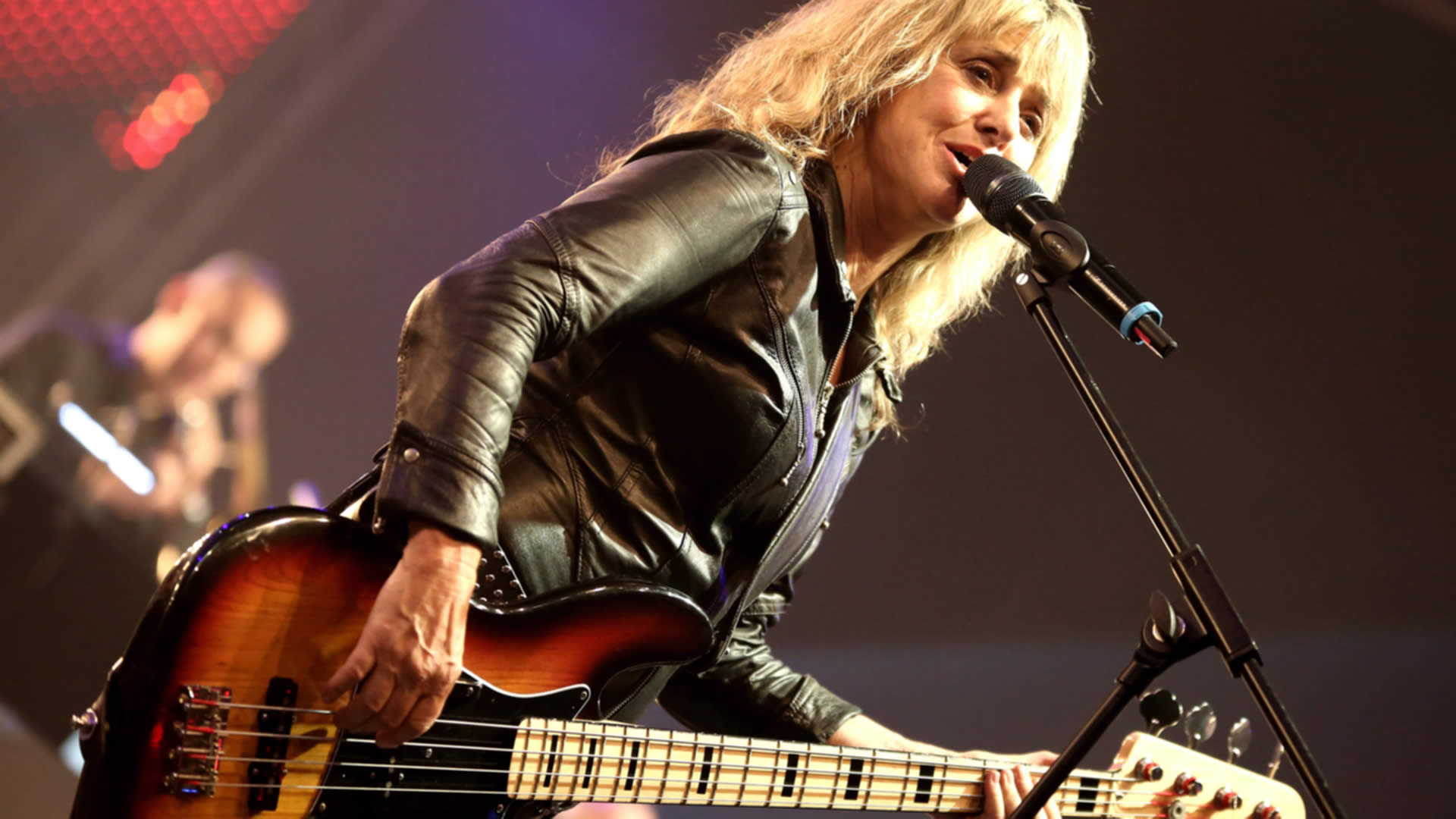
Quatro arrives in Australia with a new studio album, Freedom, released in 2026.
It is significant because new material changes the relationship between an established performer and an audience. The older songs carry memories that belong to the listener. New songs have not yet accumulated the same weight.
They are still becoming part of the story.
Freedom therefore places Quatro's current work alongside the songs that made her name. It offers a reminder that her career is still active rather than preserved in a particular decade.
That distinction matters when considering a concert such as this.
There will inevitably be songs that people know before they enter the theatre. There will also be moments that belong only to this particular tour, this particular band and this particular night.
The balance between those two things is where a long career becomes interesting.
Baby Animals Bring Another Australian Story
The pairing with Baby Animals gives the Sydney show another layer.
Where Quatro's story begins in Detroit and develops through the British rock scene of the 1970s, Baby Animals are deeply embedded in the Australian rock landscape.
Led by Suze DeMarchi, the band emerged in the early 1990s and became one of the defining Australian rock acts of that period. Their appearance with Quatro places two generations of women-fronted rock in the same room, without requiring either to be treated as a historical curiosity.
That is particularly appropriate for this tour.
Rock music has always been a conversation between generations. Songs pass from older listeners to younger ones, influences become absorbed and reshaped, and artists who once seemed like outsiders eventually become part of the musical vocabulary.
The Coliseum Theatre provides a sizeable room for that conversation.
Suzi Quatro Comes To Western Sydney
Rooty Hill is not the setting most visitors associate with major international rock acts, and that is precisely what makes the location interesting.
West HQ sits at the meeting point of several parts of Greater Western Sydney, close to the M7 and M4 and surrounded by residential suburbs, sporting facilities, restaurants and entertainment venues.
The Coliseum Theatre itself has become part of that western Sydney cultural landscape.
For an audience travelling from across Sydney, the journey is part of the evening. The city thins out as the kilometres pass, the road network becomes more prominent and the familiar concentration of the CBD gives way to the broader geography of Western Sydney.
Then comes the theatre.
With more than 2,000 free parking spaces available at West HQ, the venue is designed for audiences arriving from across the region. The best parking option for the theatre is P1, accessed via 33 Railway Street.
It is a practical setting for a performer whose music has always had a sense of physicality.
You do not need to imagine Quatro's rock and roll in some distant London club. On this night, it arrives in Western Sydney.
A Night Built Around The Songs
The temptation with an artist whose career stretches beyond five decades is to concentrate on milestones.
There will be the obvious ones.
"Can the Can". "48 Crash". "Devil Gate Drive". "Stumblin' In".
But songs rarely remain fixed in the circumstances that produced them.
Someone who heard "Can the Can" on the radio in the 1970s will hear it differently from someone encountering it decades later. A song that once represented something new can eventually become familiar, then nostalgic, then new again when heard in a different context.
That is one of the strange privileges of a long musical career.
The artist continues moving forward while the audience carries the past with them.
Quatro's current tour brings those two timelines together.
The new songs belong to the present. The classics belong to several generations at once.
What Makes A Rock Career Last
There is a difference between surviving in popular music and remaining relevant within it.
Survival can be achieved through recognition. Relevance requires something more.
Quatro's longevity is partly explained by her refusal to separate the different parts of her career. The actress, broadcaster, writer and musician are not competing versions of the same person. They are all expressions of the same willingness to keep working.
Her musical identity remains the centre, but it has never been the boundary.
That attitude is particularly visible in the decision to continue recording new music.
At an age when many performers are content to tour their established catalogue, Quatro continues to add to hers.
It changes the way the older songs are heard.
They become chapters rather than an ending.
An Evening In Rooty Hill
For audiences attending the Coliseum Theatre, the evening begins well before the first bass note.
Doors open at 6.45pm, with Baby Animals scheduled from 7.45pm to 8.30pm and Quatro from 9pm to 10.30pm. These running times are approximate and may change.
The performance is reserved seating, making the evening rather different from the crowded club rooms in which much of rock's history was formed.
There is something quietly appropriate about that.
Rock music may have started in places where the audience stood shoulder to shoulder, but its stories have travelled into theatres, arenas and concert halls. The form changes with the room, while the essential exchange remains.
Someone plays.
Someone listens.
The distance between them is filled by sound.
Suzi Quatro And The Long Road Home
Quatro's Australian visit is part of a much larger tour, with performances scheduled across the country from Rooty Hill and Sydney through to Melbourne, Fremantle and other stops. She will also appear on the Red Hot Summer Tour later in November and December with a different supporting line-up.
But the Rooty Hill performance has its own character.
It is not an outdoor festival or a huge arena show. It is a theatre performance in Western Sydney, with Baby Animals opening the evening and Quatro taking the stage later.
That setting allows the career to come into focus without needing to turn the night into a museum piece.
The songs remain the centre.
The bass remains the instrument that first made her presence so striking.
And the woman who began performing as a teenager in Detroit continues to step onto stages more than half a century later.
Event Details
Suzi Quatro performs at the Coliseum Theatre, West HQ, 33 Railway Street, Rooty Hill, NSW, on Saturday 14 November 2026. Doors open at 6.45pm and the show starts at 7.45pm. Baby Animals are scheduled to perform from 7.45pm to 8.30pm, followed by Suzi Quatro from 9pm to 10.30pm. Running times are approximate and subject to change.
The performance is part of the Down Under 2026 tour and is presented by Face To Face Touring. Quatro will perform alongside special guests Baby Animals.
For tickets and the latest event information, visit Ticketek Australia or the Coliseum Theatre event page.
By the end of the evening, the roads around Rooty Hill will be carrying people home through the November night.
For some, the songs will have been familiar for decades. For others, they may have arrived as something discovered rather than remembered.
That is perhaps the most fitting way to consider Suzi Quatro's career.
She began in a family band, became a teenage performer, crossed an ocean, changed the image of women in rock, sold millions of records, moved into television and theatre, found another life in radio and writing, and eventually returned again and again to the stage.
The history is impressive.
But history is not what will be standing beneath the lights at the Coliseum Theatre.
It will be a musician with a bass, a catalogue of songs and a new record to play.
The rest is still being written.