
Swan Lake returns to Sydney from 9 to 28 April 2027, as The Australian Ballet revisits a timeless story of love, betrayal and sacrifice at the Opera House.
On an autumn evening in Sydney, the harbour begins to change colour as the last daylight settles over Bennelong Point. Ferries move between Circular Quay and the northern shore, their lights reflected in the darkening water. Along the broad walkway towards the Sydney Opera House, visitors gather beneath the building's familiar white sails, preparing to leave the movement of the city behind.
Inside the theatre, another world awaits.
A moonlit lake, a young prince, a mysterious woman and a story shaped by love and betrayal form the setting for one of classical ballet's most enduring works.
From 9 to 28 April 2027, The Australian Ballet will present Swan Lake in Sydney, returning Anne Woolliams' celebrated production to the stage as the company marks 50 years since the work first entered its repertoire.
Accompanied by the Opera Australia Orchestra, the production will bring Tchaikovsky's music together with choreography rooted in the classical tradition, elaborate costumes and theatrical scenery.
For audiences familiar with the ballet, the season offers an opportunity to revisit a story that has remained part of the cultural imagination for generations. For those attending for the first time, it provides an introduction to a work that continues to define how many people understand classical dance.
The Sydney season is also an important chapter in The Australian Ballet's own history, bringing together five decades of artistic tradition and a production renewed for contemporary audiences.
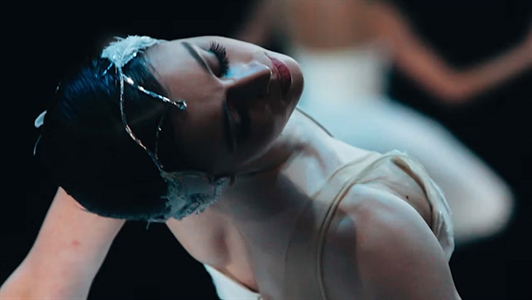
Swan Lake Returns to Sydney With a Rich Ballet Heritage
Few works occupy quite the same place in the history of classical ballet as Swan Lake.
Its familiar images have become part of popular culture: dancers moving in carefully coordinated lines, white costumes suggesting the delicate forms of swans, and a central figure caught between love and an enchantment she cannot escape.
Yet the ballet's continuing appeal reaches beyond its visual beauty.
At its heart is a story about longing, uncertainty and the consequences of deception.
The Australian Ballet's 2027 production draws on the version originally created by Anne Woolliams in 1977, with choreography rooted in the work of Marius Petipa.
Woolliams' interpretation became an important part of the company's artistic history, establishing a production that would be remembered and revisited across generations.
In 2023, Artistic Director David Hallberg oversaw a renewed staging, introducing updated technical elements while preserving the character of the earlier production.
The result connects the company's past with its present.
When Swan Lake returns to Sydney in April, audiences will encounter a production shaped by historical choreography, contemporary theatrical design and the accumulated experience of dancers who continue to reinterpret its demanding roles.
A Story of Love, Enchantment and Betrayal
The narrative of Swan Lake follows Prince Siegfried, a young man approaching a turning point in his life.
Expected to choose a bride, he finds himself drawn towards a mysterious woman named Odette, whose circumstances are far removed from the formal world of the royal court.
Odette has been placed under an enchantment that transforms her into a swan, allowing her to regain human form only under particular conditions.
Her fate is tied to the possibility of true love and the promise of fidelity.
Siegfried's encounter with Odette becomes the emotional centre of the story, introducing the hope that devotion might overcome the forces keeping her captive.
Yet the ballet also introduces deception through Odile, a figure whose resemblance to Odette creates the conditions for betrayal.
The contrast between the two women has become one of the work's most recognisable dramatic elements.
Traditionally, the roles of Odette and Odile are performed by the same ballerina, demanding not only technical versatility but also the ability to convey sharply different emotional qualities.
The story unfolds through movement rather than spoken dialogue, allowing music, gesture and choreography to communicate its central conflicts.
The Music That Gives Swan Lake Its Emotional Voice
Tchaikovsky's score is inseparable from the identity of Swan Lake.
Composed in the 1870s, the music moves between moments of grandeur, tenderness, tension and sorrow.
Its themes have become so familiar that even people who have never attended a ballet may recognise passages from the score.
Yet hearing the music within the complete theatrical work offers a different experience.
The melodies do not simply accompany the dancers. They help establish the emotional landscape, shaping the atmosphere of each scene and revealing changes in the characters' relationships.
The famous swan theme carries a sense of yearning, while the music of the court introduces a more formal and ceremonial world.
Rhythmic passages support intricate ensemble choreography, while quieter moments allow individual dancers to express vulnerability through movement.
For the Sydney season, the Opera Australia Orchestra will perform the score live.
The presence of an orchestra adds another dimension to the relationship between music and dance.
A conductor must coordinate the musicians with the performers on stage, allowing the movement to unfold with the necessary timing and expression.
The result is a collaboration in which the music remains alive and responsive throughout the performance.
The Physical Poetry of Classical Ballet
The apparent lightness of Swan Lake conceals extraordinary physical discipline.
Classical ballet requires dancers to maintain precise control over balance, posture and movement, often while creating an impression of complete effortlessness.
In the swan scenes, the choreography relies on coordinated movement among the ensemble.
Arms rise and fall in carefully shaped patterns, bodies move through repeated formations, and individual dancers become part of a larger visual composition.
The effect depends on consistency and attention to detail.
Small variations in timing can alter the appearance of an entire sequence.
For principal dancers, the demands are different but equally considerable.
The role of Odette requires expressive restraint and flowing movement, while Odile traditionally calls for a sharper, more commanding quality.
These contrasting characteristics make the dual role one of classical ballet's most demanding assignments.
Yet technique alone is not enough.
The emotional meaning of the story must remain visible through the dancers' movements, allowing the audience to understand the characters without words.
Swan Lake and Fifty Years of Australian Ballet History
The 2027 season carries particular significance for The Australian Ballet.
Anne Woolliams' production first entered the company's repertoire in 1977, making the new season a celebration of its 50-year history.
Woolliams was an influential figure in Australian ballet, contributing to the development of the company's artistic identity during an important period of growth.
Her staging of Swan Lake became part of that legacy.
Productions of classical ballets often evolve as they pass between generations.
Dancers bring different interpretations to established roles, while changes in theatrical technology allow designers to reconsider lighting, scenery and other visual elements.
The Australian Ballet's 2023 revival, directed by David Hallberg, reflects this process.
The updated production includes costume design by Mara Blumenfeld and set design by Daniel Ostling, with additional choreography by Ray Powell and Lucas Jervies.
These contributions support a staging that respects the original while allowing the work to remain visually and dramatically relevant.
The 2027 Sydney season therefore represents more than the return of a familiar title.
It also offers a chance to consider how an artistic company preserves its history through performance.
A Ballet That Continues to Cross Generations
The appeal of Swan Lake has endured through significant changes in theatre, music and popular culture.
Since its earliest performances in the nineteenth century, the ballet has been interpreted by companies around the world, each bringing its own artistic traditions and perspectives.
The work's themes remain accessible because they deal with emotions that are not confined to a particular period.
Love, trust, betrayal and sacrifice are familiar subjects, even when presented through the formal language of classical dance.
For some audiences, Swan Lake may be associated with childhood memories of ballet lessons or early visits to the theatre.
For others, it may be the first classical ballet they experience.
The work accommodates both perspectives.
Its choreography offers technical complexity for experienced viewers, while the music and visual storytelling provide an accessible introduction for newcomers.
This balance helps explain why Swan Lake continues to appear in major ballet seasons across the world.
Swan Lake at Sydney Opera House: A Distinctive Setting
The Sydney Opera House provides a natural home for a production of this scale.
Situated on Bennelong Point, the building has become central to Sydney's cultural identity, hosting performances that range from opera and orchestral music to contemporary dance and theatre.
For visitors, attending a ballet here often begins well before the curtain rises.
The walk from Circular Quay offers views across the harbour, with the Harbour Bridge to the west and the water opening towards the east.
As evening approaches, the changing light gives the precinct a quieter atmosphere.
Inside, the experience becomes more focused.
The movement of the audience towards the theatre, the sound of musicians preparing and the gradual dimming of the lights all contribute to the anticipation.
For Swan Lake, the contrast between the city outside and the imagined world on stage is particularly striking.
A contemporary Sydney landmark becomes the setting for a story rooted in European folklore and nineteenth-century musical tradition.
The Quiet Power of a Familiar Story
One of the most interesting qualities of Swan Lake is the way its emotional meaning can change for different audiences.
A younger viewer may be drawn towards the mystery of the enchanted swans and the drama of the royal court.
Someone returning to the ballet later in life may notice different aspects of the story, particularly its questions about trust, responsibility and the consequences of mistaken choices.
The choreography remains recognisable, yet the experience is never entirely identical.
Different dancers bring individual qualities to the principal roles, and the relationship between music and movement changes subtly from performance to performance.
This capacity for renewal is part of the reason classical ballet continues to attract audiences.
A work does not need to be unfamiliar to reveal something new.
Sometimes, returning to a story allows viewers to recognise details that were previously overlooked.
Planning Your Swan Lake Sydney Visit
The Australian Ballet will present Swan Lake in Sydney from Friday 9 April to Wednesday 28 April 2027.
The production runs for approximately two hours and 40 minutes, including two 20-minute intervals, although the duration is subject to change.
Performances will take place at the Sydney Opera House, with the Opera Australia Orchestra providing live musical accompaniment.
Individual performance times and ticket availability can be checked through The Australian Ballet's official website.
Visitors travelling by public transport can reach the Opera House on foot from Circular Quay, which is served by trains, buses, light rail and ferries.
Allowing time to walk along the harbour before the performance can make the visit part of a broader evening in the city.
For those unfamiliar with ballet, reading a short synopsis beforehand may help with following the story, although the music and choreography are designed to communicate much of its meaning without explanation.
The production offers an opportunity to experience a major classical work within one of Australia's most recognisable performing arts venues.
When the Final Notes Fade
At the end of Swan Lake, the audience returns from an imagined world of moonlit water, enchanted figures and difficult choices.
The dancers leave the stage, the orchestra falls silent, and the theatre gradually fills with the ordinary sounds of people preparing to depart.
Outside, Sydney Harbour continues its familiar evening rhythm.
Ferries cross the water, lights reflect against the shoreline, and the Opera House stands between the city and the darkening harbour.
The story of Odette and Siegfried belongs to another world, yet its emotional questions remain recognisable.
Perhaps that is why Swan Lake continues to return.
Across generations, changing productions and new audiences, its music and movement offer a way of considering love, uncertainty and sacrifice without relying on words.
For Sydney in April 2027, the ballet's return is both a celebration of artistic history and an opportunity to experience the enduring beauty of a story told through dance.
Event Details
Detail: Information
Event: Swan Lake
Company: The Australian Ballet
Sydney Dates: Friday 9 April to Wednesday 28 April 2027
Performance Times: Vary by date. Check the official schedule
Venue: Sydney Opera House
Address: Bennelong Point, Sydney NSW 2000
Duration: Approximately 2 hours and 40 minutes, including two 20-minute intervals
Music: Tchaikovsky, performed by the Opera Australia Orchestra
Production: Anne Woolliams' 1977 production, renewed under David Hallberg
Tickets: Prices and availability through The Australian Ballet
Official Website: The Australian Ballet – Swan Lake