
Sydney Festival 2027 brings theatre, music, dance and public art into the city’s summer, inviting audiences to experience familiar places anew.
Sydney in January moves to a different rhythm. The usual weekday rush softens, the harbour becomes a gathering place, and long evenings encourage people to stay outdoors a little longer. The city is still busy, but its energy feels more open, with visitors and locals finding their own ways through the summer streets.
It is a fitting setting for Sydney Festival, the annual celebration that brings artists, performers and audiences into theatres, galleries, public spaces and unexpected corners of the city. Each summer, the festival creates a broad programme of work across different art forms, offering opportunities to encounter established performers, new voices and productions that might otherwise pass beyond the usual cultural calendar.
For 2027, Sydney Festival returns in January, continuing a tradition that has helped shape the city’s cultural life for more than five decades. Its reach extends beyond a single venue or neighbourhood. Performances and events take place across central Sydney and surrounding areas, giving audiences reasons to move through the city and see familiar places from a different perspective.
The programme is not simply a sequence of shows. It is an invitation to spend time with the city in a more curious way: to step into a theatre, pause for an outdoor performance, discover an artist whose work is new to you or make an evening of an event in a part of Sydney you do not often visit.
Sydney Festival 2027 Looks Across The City
The 2027 programme will run from 7 to 25 January, with events extending from the harbour and inner city to western and south-western Sydney. That geographical spread is important to the festival’s character. Rather than asking audiences to gather in one cultural quarter, Sydney Festival encourages movement between neighbourhoods, venues and public spaces.
The programme will bring together theatre, contemporary dance, music, cabaret, visual art and family experiences. Some productions will take place in established venues such as the Sydney Opera House, Belvoir St Theatre and Carriageworks. Others will use outdoor locations and newer cultural spaces, including The Cutaway at Barangaroo and Powerhouse Parramatta.
For visitors, this offers a way to build a day around more than one event. A morning might begin with a free installation near the harbour, followed by lunch and an afternoon performance. Another evening might lead from a theatre in the city to a music venue or an outdoor gathering by the water.
The festival’s programme also places First Nations artists and storytelling at its centre. This is not simply a matter of including individual works. It reflects an ongoing commitment to recognising the oldest continuing storytelling culture and the many ways contemporary artists engage with Country, history, identity and community.
Sydney Festival And The Art Of Public Space
Some of the most accessible festival experiences will take place outside traditional performance venues. At the Sydney Opera House, Kite Choir will transform the Northern Broadwalk into a field of large, handmade kites carrying recorded wishes from children around the world. Running from 7 to 10 January, the free installation will invite visitors to move through the space, listen and look upwards as the kites shift in the harbour air.
The work offers a quieter kind of encounter than a conventional performance. It is something to discover while walking around the Opera House, rather than an event that requires a seat and a fixed start time. A related activity, Make a Kite and Record a Wish, will give families the chance to take part in the creative process.
At Bondi Pavilion, Waverider will bring physical theatre company Legs On The Wall to a giant inflatable wave. Running from 7 to 17 January, the free family experience will combine surf culture and acrobatic performance. The installation will also become a play space after the show, extending the experience beyond the performance itself.
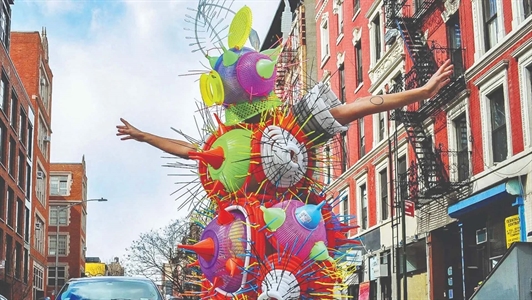
Another participatory project, Future Fiestas, will bring Filipino artist Leeroy New together with communities in Blacktown to transform discarded plastics into elaborate costumes. The project will culminate in a public parade at Darling Harbour, where recycled materials will become part of a colourful celebration of creativity and collective making.
These projects demonstrate one of the distinctive qualities of Sydney Festival: art does not always require a ticket or a formal introduction. It can appear along a waterfront promenade, in a public square or within a place people already know. The city becomes part of the work, and the audience becomes part of the atmosphere around it.
Dance That Moves Beyond The Familiar
Contemporary dance will have a substantial presence in the 2027 programme, including works that explore identity, resistance, memory and the possibilities of the moving body.
French choreographer Leïla Ka’s Maldonne will be presented at the Seymour Centre on 8 and 9 January. The work brings five dancers together with 40 dresses, using costume and movement to explore the stories, expectations and experiences carried by women. Its visual language is direct, but the subject matter reaches into questions of vulnerability, resilience and self-expression.
Portuguese choreographer Marco da Silva Ferreira will present *F*cking Future* at Powerhouse Parramatta from 15 to 17 January. The production places club culture alongside military drill, using movement to examine masculinity and political tension. Its physical intensity offers a different perspective on dance as a form of social commentary.
At Carriageworks, Marrugeku’s Ngurragabu will bring together Indigenous and settler-diasporic performers from Australia, South-East Asia and Melanesia. Running from 21 to 23 January, the work imagines a future shaped by environmental change and questions about survival. Dance, music and visual design will combine to create an expansive performance environment.
For audiences less familiar with contemporary dance, these works offer an opportunity to encounter the form beyond traditional expectations. There is no single style or language to learn. Each production develops its own relationship between movement, sound and space, asking the audience to observe closely and respond in their own way.
Music, Memory And New Voices
Music remains one of the most immediate ways into a festival. It can draw people together through a familiar song, introduce them to an unfamiliar sound or create a shared atmosphere that lasts beyond the performance.
Sydney Festival 2027 will bring international and Australian artists into venues across the city. At City Recital Hall on 8 January, Pakistani singer and composer Ali Sethi will bring together elements of Sufi music, pop and contemporary songwriting. His international profile has grown through the success of Pasoori, but his work reaches beyond a single hit, drawing on poetic traditions and musical influences that cross borders.
The Metro Theatre will host the festival’s Blak and Blues programme, connecting First Nations performers with the work of influential Black American musicians. Budjerah will perform music associated with Donny Hathaway on 17 January, placing his own contemporary soul sound in conversation with the American singer’s catalogue. SOLCHLD will turn to the music of Etta James, while MO'JU will reimagine the songs of Bill Withers.
These performances offer more than tribute. They create space for artists to engage with musical traditions that have shaped their own work, while bringing those traditions to audiences in a live setting.
Other music events will take the festival into different territory. The Double Bill at Bankstown Arts Centre will pair work by Corin Ileto and Maggie Tra, bringing together electronic composition, audiovisual performance and cultural memory. In Campbelltown, Marcus Whale’s Atopia will combine electronic music, choreography and opera in a work that moves between human and imagined worlds.
The range of venues is part of the experience. A concert in a recital hall has a different intimacy from a late-night set in a theatre or a large-scale work in an arts centre. Sydney Festival will use those differences to give each performance its own setting.
Theatre, Comedy And Stories From Elsewhere
Theatre will provide another important thread through the festival, with Australian premieres, new commissions and work from international companies. The programme will move between intimate stories and larger questions about the societies people inhabit.
At the Sydney Opera House, The Line will bring First Nations storytelling to the stage from 21 to 24 January. Co-presented with the festival, the production forms part of a wider programme that gives contemporary Indigenous voices a prominent place in the city’s summer arts calendar.
Hannah Gadsby will return to Sydney with a new show at Roslyn Packer Theatre. Her work has built an international audience through its combination of comedy, personal reflection and cultural observation. The festival setting gives Sydney audiences the chance to encounter her latest material as part of a broader programme of performance and conversation.
Cabaret will also feature, including He’s So Unusual at the Sydney Opera House from 15 to 24 January. Elsewhere, Redfern Renaissance at Belvoir St Theatre will bring artists and performers into a programme that reflects the creative energy of one of Sydney’s most culturally significant neighbourhoods.
The variety of work means that audiences can approach the festival in different ways. Some will plan around a particular performer or production. Others may browse the programme and choose something unfamiliar, allowing the festival to become a reason to take a chance on a new experience.
Barangaroo Becomes A Festival Meeting Place
Barangaroo will be one of the key outdoor gathering points during Sydney Festival 2027. Its combination of harbour views, public space and dining makes it a natural place to spend time between performances, and the festival will use the precinct for both programmed events and informal encounters.
The Yard will return as an outdoor festival hub at The Cutaway, bringing food, art and opportunities to gather into the same setting. It will provide a place to meet before an event, stay afterwards or simply spend time around the festival atmosphere.
At Barangaroo Reserve, waynapuni pools will transform old vehicles into plunge pools, hot tubs and saunas. The installation will invite visitors to think differently about discarded materials, public space and the relationship between art and everyday experience. The project will run from 8 to 24 January, with the wider Barangaroo programme continuing through the festival period.
The precinct is particularly suited to a summer visit. Paths follow the harbour edge, open lawns provide room to pause and the city skyline forms a changing backdrop as the light shifts through the afternoon. Visitors can arrive for a particular event and stay longer, allowing the place itself to become part of the day.
For those exploring the festival across several locations, Barangaroo also offers a useful point of connection between the central city and the harbour. It is close enough to the CBD to reach on foot, yet its open spaces create a noticeable change of pace.
Making A Day Of Sydney Festival
With events spread across Greater Sydney, a little planning will help audiences make the most of the programme. The festival’s online calendar allows visitors to search by date, venue and art form, making it easier to combine performances or find free experiences around other plans.
Public transport will be a practical option for many venues, particularly those in the city centre and along established train and light rail routes. For events in Parramatta, Bankstown and Campbelltown, it is worth allowing additional travel time and checking the best route before leaving.
The programme includes free installations and outdoor events alongside ticketed performances. This mix makes it possible to experience Sydney Festival without committing to a full day of shows. Visitors can choose one major performance and add a free public artwork, or spend time exploring the city’s festival spaces without a strict schedule.
Because performance times vary considerably, the individual event listing should always be checked before making arrangements. Some works run for several consecutive days, while others have only one or two scheduled performances. Outdoor installations may have their own access hours, and weather or operational conditions can affect public activities.
The festival also provides accessibility information for its venues and events. Visitors who require particular seating, companion arrangements or other assistance should check the relevant event page and contact the organiser or venue ahead of time.
A Summer That Belongs To The City
Sydney Festival has been part of the city’s cultural calendar since 1977. Over that time, it has grown into an event that reflects both the international reach of the arts and the particular character of Sydney. Its programme brings together established institutions and temporary spaces, major productions and smaller encounters, ticketed performances and work that anyone can experience while moving through the city.
The 2027 festival will continue that tradition from 7 to 25 January. It will ask audiences to cross familiar parts of Sydney, visit neighbourhoods beyond their usual routines and make room for work that challenges, entertains or simply catches the eye.
There will be performances to plan well ahead for, but some of the most memorable moments may happen without much planning at all: a field of kites moving above the harbour, an unexpected piece of music, a public artwork that changes the way a familiar place is seen.
That is the value of a city-wide festival. It gives Sydney a shared cultural season, while leaving room for each person to find their own way through it. In the height of summer, when the days are long and the city opens itself to the outdoors, Sydney Festival will offer another reason to step outside, look around and see what is happening.
Event Details
Dates: Thursday 7 January to Monday 25 January 2027
Location: Multiple venues and public spaces across Greater Sydney, including the Sydney Opera House, Barangaroo, The Cutaway, Bondi Pavilion, Belvoir St Theatre, Carriageworks, Powerhouse Parramatta, Bankstown Arts Centre and Campbelltown Arts Centre.
Times: Vary by event and performance. Check the individual programme listings for exact session times and running times.
Programme: Theatre, dance, music, cabaret, visual art, family events, outdoor installations and free public experiences.
Tickets: Prices vary. Some events and installations are free.
Official website and programme: https://www.sydneyfestival.org.au/