
Sydney Rare Book Fair returns to the State Library of NSW from 22–24 October 2026, bringing rare books, maps and paper treasures to life.
On a spring afternoon in Sydney, the reading rooms of the State Library of NSW offer a particular kind of quiet. Beyond the glass, the harbour moves, traffic passes through Macquarie Street and the city continues at its usual pace. Inside, however, time behaves differently.
A book can sit on a table for a century and still ask to be opened.
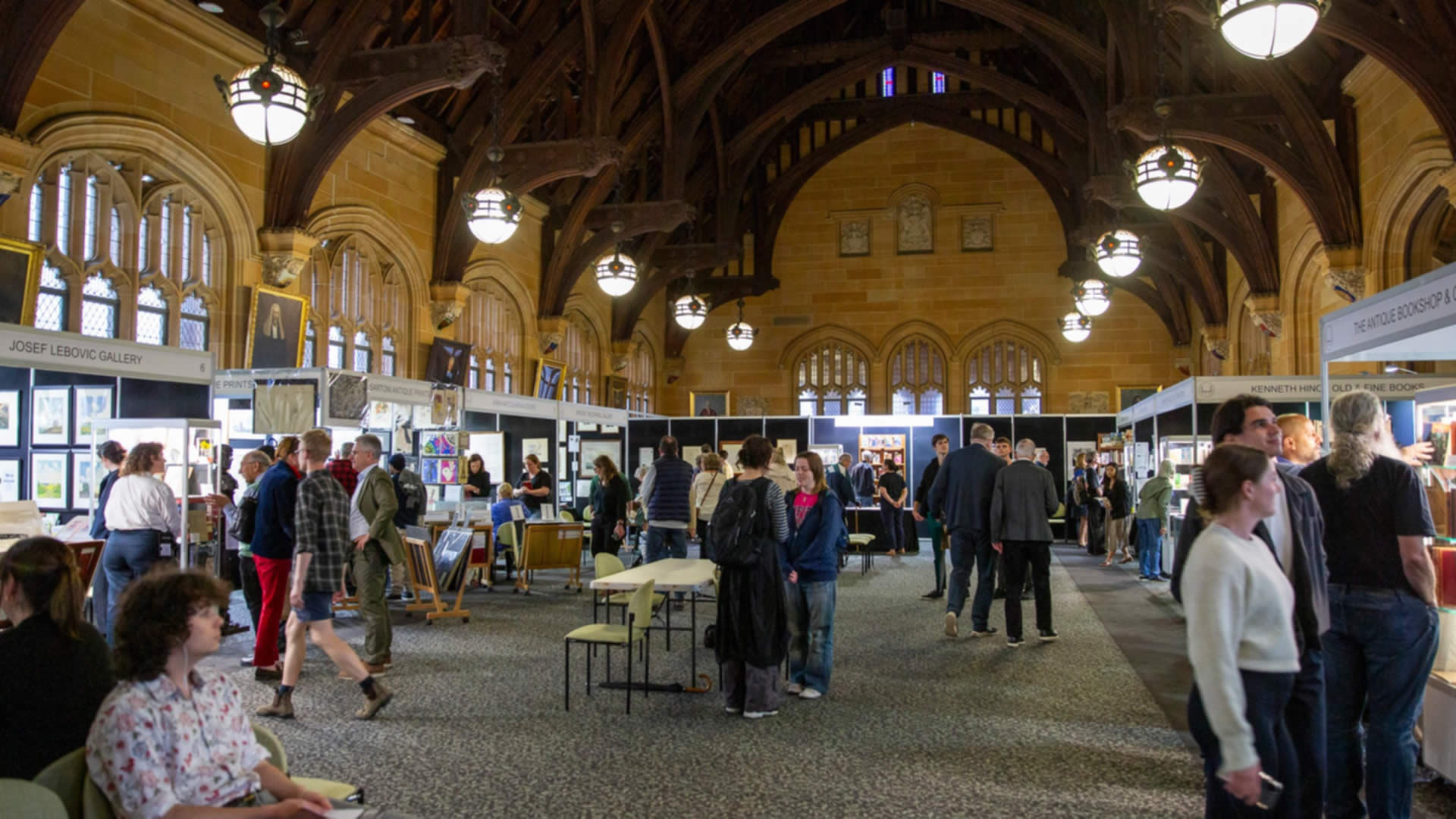
That sense of suspended time is at the heart of the Sydney Rare Book Fair, which returns to the Glasshouse at the State Library of NSW from Thursday 22 to Saturday 24 October 2026. Held as part of Sydney Rare Book Week, the fair brings booksellers, collectors and curious visitors together around objects whose value extends well beyond their age.
Some are rare because very few survive. Others matter because of who owned them, where they travelled, what they contain or the circumstances in which they were produced. There are books, certainly, but also maps, manuscripts, prints and other fragments of the past that reveal how people once recorded and understood the world.
For visitors, the appeal is not necessarily that they arrive looking for a particular first edition. It can be as simple as discovering that an old book is not really an old book at all, but a small piece of someone's life.
Sydney Rare Book Fair And The Quiet Art Of Looking
Rare books reward close attention.
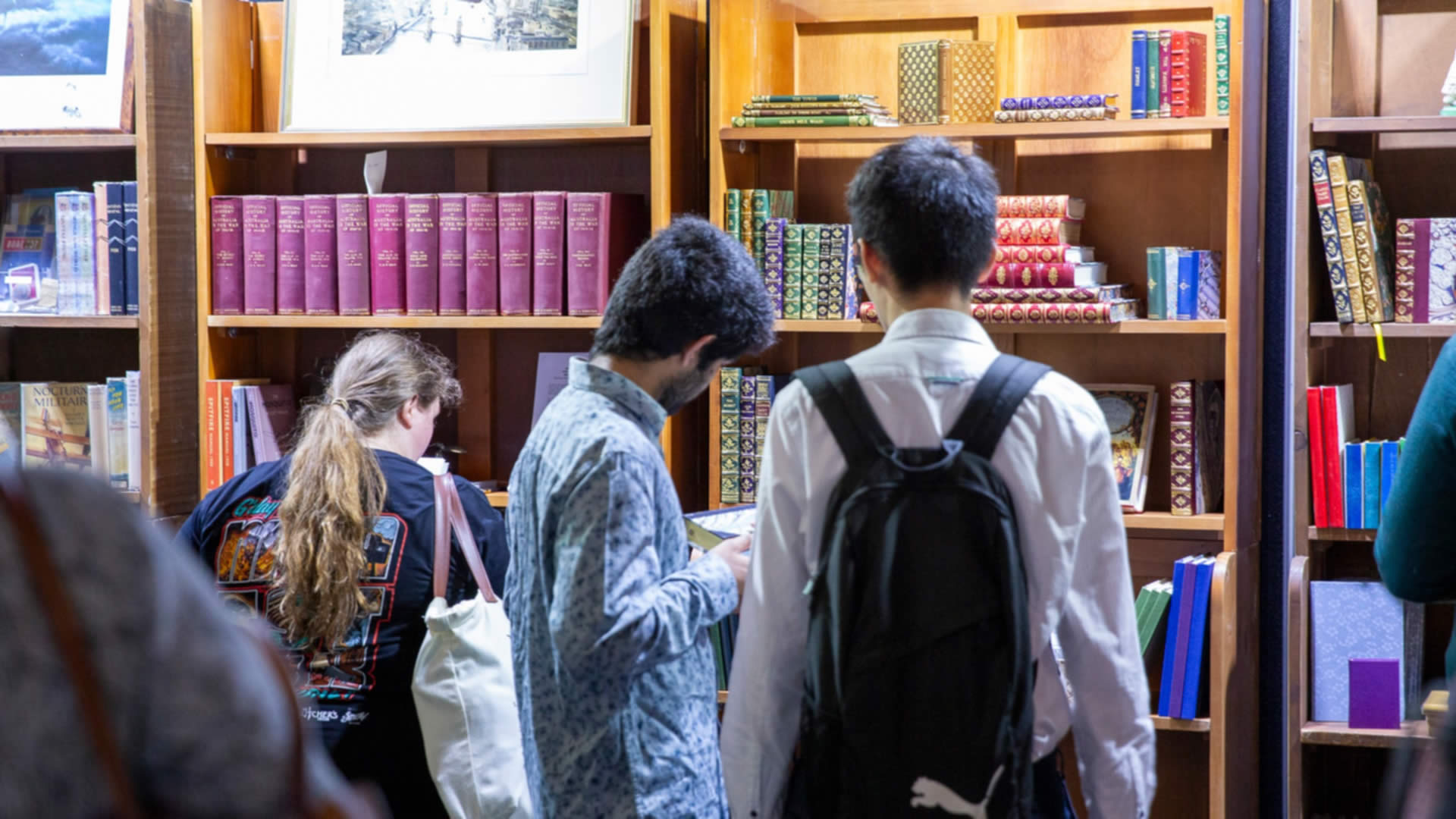
Their covers may be faded or worn. Their pages can carry the marks of previous owners, booksellers and readers. A handwritten note in the margin might reveal more about an object's journey than its publication date.
This is what makes a rare book fair different from an ordinary bookshop. The books are not arranged simply according to what is new, popular or easily read. They are objects with histories, and part of the experience comes from learning how to look at them.
At the Sydney Rare Book Fair, visitors can browse without necessarily knowing what they are looking for. A nineteenth-century travel account might sit near an illustrated children's book. An old map can provide a glimpse of a coastline before modern development reshaped it. A manuscript can reduce an apparently distant historical figure to handwriting on a page.
The fair creates room for these discoveries.
It also creates a rare opportunity to encounter specialists who have spent years learning the physical and historical details that distinguish one edition from another. Conversations about paper, bindings, illustrations, provenance and printing can become as interesting as the objects themselves.
A Fair Inside The State Library
The location matters.
The Glasshouse at the State Library of NSW places the fair within one of Sydney's most significant cultural settings, surrounded by collections that preserve Australia's documentary history.
The library itself is a fitting place for an event devoted to books and their survival. It sits at the edge of the Domain, close to the Royal Botanic Garden and within sight of Sydney Harbour. The city is never far away, but the building encourages a slower pace.
Visitors arriving at the fair therefore enter an environment already shaped around the idea of preservation.
The contrast is particularly noticeable in a city that changes quickly. Sydney's streetscape is constantly being rebuilt, renovated and repurposed, while books can carry the physical traces of places that no longer exist in quite the same form.
A rare book does not need to be spectacular to be revealing. Sometimes a modest volume can tell a surprisingly detailed story about the world in which it was printed.
Sydney Rare Book Fair And The History Of Everyday Life
The history preserved in books is not limited to famous names.
Old cookbooks reveal what people ate and how kitchens operated. Travel books show how destinations were described before mass tourism transformed them. Schoolbooks reveal what children were expected to learn. Sporting publications document clubs, players and competitions that may have disappeared from public memory.
Maps can be equally intimate.
A map records streets and boundaries, but it also captures ambition. New subdivisions, proposed railways, renamed places and changing coastlines all reveal how a city imagined itself at a particular moment.
This is one reason rare book collecting can appeal beyond traditional collectors. The objects provide another way of approaching history, one that begins with something tangible.
Instead of reading about a vanished neighbourhood, you might find it on a map. Instead of imagining how a book was produced, you can examine its paper and binding. Instead of seeing a historical figure only through a modern reproduction, you might encounter a contemporary account that once belonged to someone who was actually there.
The past becomes physical.
More Than A Collectors' Event
There is an assumption that rare book fairs are primarily for serious collectors, but the Sydney event has another quality that makes it accessible to the merely curious.
Browsing costs nothing.
That matters because it allows people to enter without a shopping list or specialist knowledge. A visitor can wander between displays, ask questions and discover why one edition is important while another, superficially similar, is not.
For younger visitors, it can also offer an unexpected introduction to the material side of reading.
Most contemporary books arrive through digital storefronts or as clean, mass-produced objects. Their words may be identical to those in an earlier edition, but the physical experience is very different. Paper has texture. Ink fades. Bindings wear. Illustrations change character with age.
The Sydney Rare Book Fair offers an opportunity to see books as crafted objects rather than simply containers for text.
That distinction is increasingly interesting in a digital age.
The People Behind The Pages
A rare book fair is ultimately as much about people as it is about books.
Booksellers bring expertise accumulated through years of handling and researching material. Collectors arrive with specialised interests that can range from Australian history and natural history to literature, exploration, art and children's books.
There is a social dimension to this world that is easy to miss from the outside.
A collector might recognise an edition immediately because it completes a sequence they have been building for years. A bookseller might know that an apparently insignificant volume has an unusual provenance. Another visitor may simply become fascinated by a nineteenth-century illustration.
The conversations that grow around these objects are part of the fair's value.
Rare books are often described in terms of scarcity, but scarcity alone does not explain their appeal. The deeper fascination lies in context. Why was this book made? Who read it? How did it survive? Where has it been?
Those questions can turn an old volume into something much more personal.
Sydney In The Pages
There is another reason the Sydney Rare Book Fair feels at home at the State Library.
Sydney itself has a long relationship with books, maps, publishing and collecting. The city has been recorded repeatedly by visitors, residents, naturalists, artists and historians, each leaving behind different versions of the same place.
For today's visitor, encountering those records can make the familiar landscape look different.
The harbour becomes a historical object. Streets that seem permanent reveal themselves as recent layers over older ones. Familiar suburbs appear under earlier names or in forms that have long since disappeared.
That is one of the quiet pleasures of historical material. It makes the present feel temporary.
A city can look fixed when viewed from the street. On paper, its changes become much easier to see.
A Weekend For The Curious
The Sydney Rare Book Fair runs across three days, giving visitors several opportunities to explore it at their own pace.
The opening evening takes place on Thursday 22 October from 6pm to 9pm, followed by full daytime sessions on Friday 23 October from 10am to 5pm and Saturday 24 October from 10am to 4pm.
Entry is free, which makes the fair particularly suited to an unplanned visit while exploring the State Library, Domain or nearby city precinct.
There is no requirement to arrive as a collector. You can come looking for something specific, or simply see what catches your eye.
The best discoveries at fairs such as this are often the unexpected ones.
Sydney Rare Book Fair 2026 Event Details
Sydney Rare Book Fair
Thursday 22 October to Saturday 24 October 2026
Location: Glasshouse, State Library of NSW, Sydney
Thursday 22 October: 6pm–9pm
Friday 23 October: 10am–5pm
Saturday 24 October: 10am–4pm
Entry: Free
The fair is part of Sydney Rare Book Week.
Official Website: Sydney Rare Book Fair
When The Page Becomes An Object
There is a particular pleasure in leaving a rare book fair empty-handed.
Perhaps something has caught your attention but not your budget. Perhaps you have discovered a subject you knew nothing about. Perhaps you have simply spent an hour moving slowly through a room where objects are allowed to speak for themselves.
That is part of the appeal.
Books are usually valued for what happens after they are opened. At the Sydney Rare Book Fair, the object itself becomes part of the story. The paper, binding, illustrations and marks of previous readers all matter.
Outside, Sydney will remain busy. Cars will move along Macquarie Street, ferries will cross the harbour and people will hurry towards their next appointment.
Inside the Glasshouse, a much older kind of time will remain visible on the shelves and tables.
A page will turn. A century might pass with it.