
The Cellists of TMO bring eight musicians to Balmain Town Hall on 25 October for an intimate concert spanning classical works, contemporary music and familiar melodies.
On a Sunday afternoon in Balmain, the pace of the Inner West seems well suited to a concert that asks its audience to slow down and listen. The streets around Darling Street carry the familiar rhythm of local life, with cafés, shops and historic buildings forming the backdrop to a neighbourhood that balances its past with a quietly evolving present. At Balmain Town Hall, a different kind of gathering takes shape as eight cellists from The Metropolitan Orchestra prepare to fill the room with music.
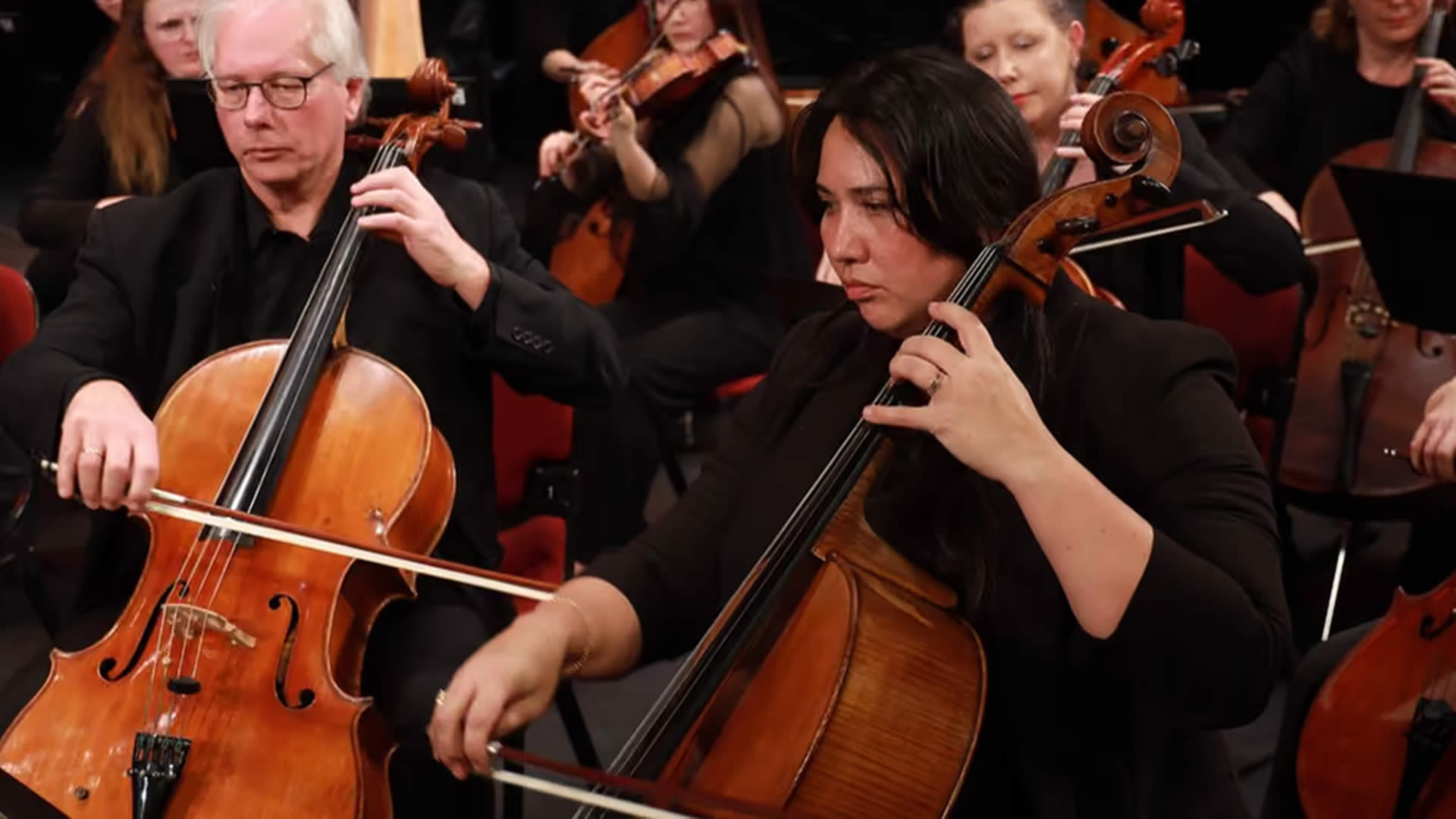
The Cellists of TMO arrives on Sunday, 25 October 2026, offering a one-hour performance that moves between classical masterworks, contemporary compositions and melodies familiar from film and folk traditions. Rather than presenting the cello within the conventional structure of a full orchestra, the concert places the instrument at the centre of the experience. Eight cellos create a distinctive musical landscape, drawing out the warmth, depth and range that make the instrument equally at home in reflective passages and more rhythmic arrangements.
Presented in the recently updated Balmain Town Hall, the performance offers an opportunity to experience chamber music in a setting that feels close to the musicians and the sound they produce. There is no interval, and the concert runs for approximately 60 minutes, making it a compact afternoon of live music without the demands of a longer evening performance.
For audiences familiar with The Metropolitan Orchestra, the gathering provides another perspective on the ensemble's musicians. For those who are less accustomed to classical concerts, the varied programme offers several points of entry, from the measured beauty of Baroque music to the sweeping atmosphere of a modern film score.
The Cellists Of TMO Bring A Different Sound To Balmain
The cello occupies a particular place in the orchestral world. Its range sits close to the human voice, moving from resonant low notes to a higher register capable of considerable delicacy. In a full orchestra, the instrument can anchor harmony, carry a melody or provide rhythmic movement beneath other sections. With eight cellists performing together, those roles become the focus.
The Cellists of TMO explores what happens when a single instrument family takes on the musical responsibilities usually shared across a much larger ensemble. Melodies can pass between players, harmonies gather in layers, and familiar arrangements acquire a different texture. Without the contrast of violins, woodwind, brass and percussion, the audience is invited to notice the individual qualities of the cello itself.
This does not mean the sound is limited to one mood. The cello can be restrained and introspective, but it can also be lively, rhythmic and direct. Its broad range allows composers and arrangers to move between contrasting musical worlds while retaining a sense of cohesion. The concert's programme reflects that flexibility, placing works from different periods and traditions alongside one another.
The format also changes the relationship between performers and audience. In an intimate hall, small details become easier to appreciate: the beginning of a phrase, the shift from one player to another, or the way several instruments settle into a shared rhythm. The music is not simply a collection of notes heard from a distance. It becomes a physical presence in the room, shaped by the instruments, the performers and the acoustics of the venue.
From Purcell To Arvo Pärt: A Programme Across Centuries
The programme begins its journey through musical history with works by Henry Purcell, whose compositions remain closely associated with the English Baroque tradition. The inclusion of Pavane and Chaconne brings an older musical language into a contemporary concert setting. Dance forms and repeating harmonic patterns have long provided composers with structures through which to explore variation, movement and restraint.
The programme then turns to 3 Spanish Songs by Brian Kelly, introducing a different character and musical influence. The sequence of works suggests a concert built around contrast rather than a single historical period. Instead of following one composer or style from beginning to end, the performance allows each piece to establish its own atmosphere before the next one changes the direction of the afternoon.
Arvo Pärt's Silouan's Song brings a more meditative sensibility. Pärt's music is often associated with simplicity, spaciousness and a careful attention to the relationship between notes and silence. In a cello ensemble, that approach offers room for the natural resonance of the instruments to emerge. The effect depends not on sheer volume or orchestral scale, but on the shape of the phrases and the spaces between them.
The inclusion of Red Is Not a Colour by Merdaad Jafari Raad adds a contemporary Australian dimension to the programme. The work is listed as an Australian premiere, giving the performance a connection to music being introduced to local audiences for the first time. While much of the programme draws on established works and familiar musical traditions, this premiere creates a place for a newer composition within the same afternoon.
Together, these pieces demonstrate how a cello ensemble can move between musical periods without losing its identity. The instrument remains constant, but its role changes with the composition, the phrasing and the musical world each work evokes.
The Cellists Of TMO Reimagine Familiar Music
Classical concerts do not always require an audience to arrive with a detailed knowledge of composers or musical forms. Some of the most accessible moments occur when a familiar melody appears in an unexpected setting. The Cellists of TMO makes room for that recognition through arrangements drawn from film, folk and contemporary popular culture.
One of the programme's recognisable selections is Time, composed by Hans Zimmer for the film Inception. The piece is associated with a gradually building musical atmosphere, using repetition and accumulating layers to create a sense of scale. Performed by eight cellos, it offers a chance to hear how a film composition can be reshaped when its sound world is concentrated within a single family of instruments.
The arrangement of Danny Boy for eight cellos draws on a different tradition. The melody has travelled well beyond its Irish origins, becoming familiar to audiences around the world through performances in a wide variety of settings. Its emotional character rests largely on the line itself, making it well suited to an ensemble capable of sustaining a melody while supporting it with rich harmonies.
Astor Piazzolla's Oblivion brings the programme into the world of Argentine tango. Piazzolla's music blends tango traditions with elements of classical composition and other influences, creating a style that can feel both intimate and restless. In a cello arrangement, the melody's expressive weight and rhythmic character can be explored without relying on the instrumentation of a traditional tango ensemble.
The programme also includes Misirlou, a Greek folk melody known to many listeners through its use in Pulp Fiction. Arranged for cello octet by James Barrelet, the piece offers a more energetic counterpoint to the quieter works. Its presence illustrates how arrangements can connect musical traditions with contemporary cultural memory, allowing a melody to carry several associations at once.
These selections are not simply popular additions to a classical programme. They demonstrate the adaptability of the cello and the ways music moves between settings. A melody written for a film, a folk song passed between generations and a composition shaped by tango can each take on a different character when performed by eight musicians working within the same instrumental palette.
Balmain Town Hall And The Appeal Of A Close Performance
Located at 370 Darling Street, Balmain Town Hall is a fitting setting for a performance that places musical detail at the centre of the experience. The historic suburb has a strong sense of local identity, shaped by its streetscape, waterfront setting and long-established community life. An afternoon concert offers a reason to explore the area at a slower pace, perhaps arriving early for a walk along Darling Street or allowing time afterwards to linger over a meal or coffee.
The town hall's recently updated interior provides the setting for the concert, bringing audiences into a shared space rather than a large-scale performance arena. In chamber music, the scale of the room can be part of the experience. The audience has an opportunity to observe the musicians' coordination and to hear the interplay between parts that might be less distinct in a larger ensemble.
The Cellists of TMO is scheduled for one performance only, from 3pm to 4pm on Sunday, 25 October. Seating is limited, and the organisers describe the event as an intimate afternoon performance. Its length also makes it suitable for a Sunday outing that can sit comfortably alongside other plans in the Inner West.
The concert is supported by Inner West Council, reflecting the role local venues and organisations play in keeping live performance connected to their communities. Such events offer a different way to encounter music outside the larger concert halls of the city, bringing professional musicians into a familiar neighbourhood setting.
A Sunday Concert For Curious Listeners
The range of music in The Cellists of TMO gives the performance several possible points of connection. Listeners drawn to the classical repertoire may recognise Purcell or Pärt. Film music enthusiasts may be interested in hearing Zimmer's Time in a new arrangement, while those with an affection for folk melodies or tango may find a familiar thread in Danny Boy, Misirlou and Oblivion.
The programme's variety is also an invitation to listen without needing to categorise every piece. A concert built around eight cellos can encourage attention to qualities that often pass unnoticed: the grain of a sustained note, the way a low line supports a higher melody, or the gradual change in mood created by a repeated phrase. These details are part of what makes live instrumental music different from hearing a recording.
The one-hour format provides a concentrated experience, with no interval to interrupt the flow. Each composition contributes to the wider movement of the afternoon, from older musical forms to newer works and recognisable melodies. The programme is subject to change before the performance, but its overall range offers a clear sense of the ensemble's intended breadth.
For people who attend orchestral concerts regularly, the event provides an opportunity to hear musicians outside the larger ensemble. For newcomers, it offers a welcoming way to explore the sound of chamber music through a programme that crosses boundaries of period and genre.
Letting The Music Fill The Room
There is something distinctive about hearing several instruments of the same kind perform together. Without the broad contrast of a full orchestra, attention settles on the variations within the group itself: the different registers, the movement of a melody between players and the balance between individual expression and collective sound.
The Cellists of TMO brings those qualities to Balmain for a single Sunday afternoon. Its programme moves from Baroque music and contemplative modern composition to film themes, folk melodies and tango, showing how one instrument can occupy a wide range of musical worlds. The concert is not built around spectacle, but around the possibilities that emerge when skilled musicians explore those worlds together.
As the final notes fade in Balmain Town Hall, the experience will continue in smaller ways: a melody recalled on the walk home, a new appreciation of a familiar film score, or the lingering impression of the cello's resonant voice. For an hour on a spring Sunday, the hall offers a place to pause, listen closely and hear familiar music anew.
Event Details
Event: The Cellists of TMO
Date: Sunday, 25 October 2026
Time: 3pm to 4pm AEDT
Duration: Approximately 60 minutes, no interval
Location: Balmain Town Hall, 370 Darling Street, Balmain NSW 2041
Presented by: The Metropolitan Orchestra
Ticket prices: General admission $36; concession, seniors and student tickets $30
Official website: https://www.metorchestra.com.au/
Tickets: Check the event listing from The Metropolitan Orchestra for booking details. The programme is subject to change before the performance.