
The Great Artist Market returns to Manly Wharf on 10 October, bringing more than 60 artists together for a free waterfront celebration of Australian creativity, craft and independent design.
On a Saturday morning at Manly Wharf, the harbour provides its own quiet spectacle. Ferries arrive across the water, people drift towards the beach, and the cafés begin to fill as the Northern Beaches settles into the weekend. On 10 October, another kind of gathering joins this familiar scene, as artists, makers and visitors come together for the return of The Great Artist Market.
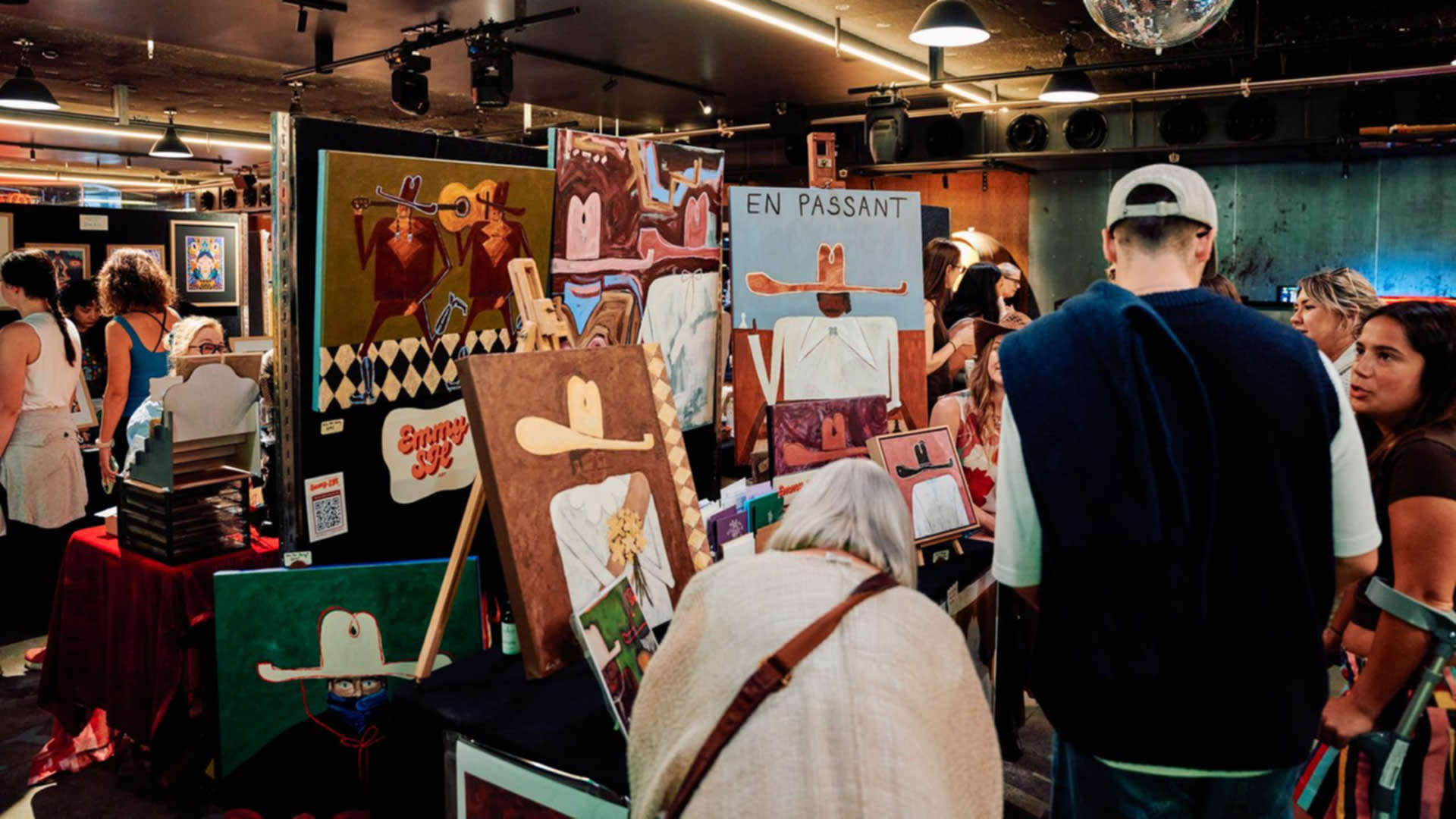
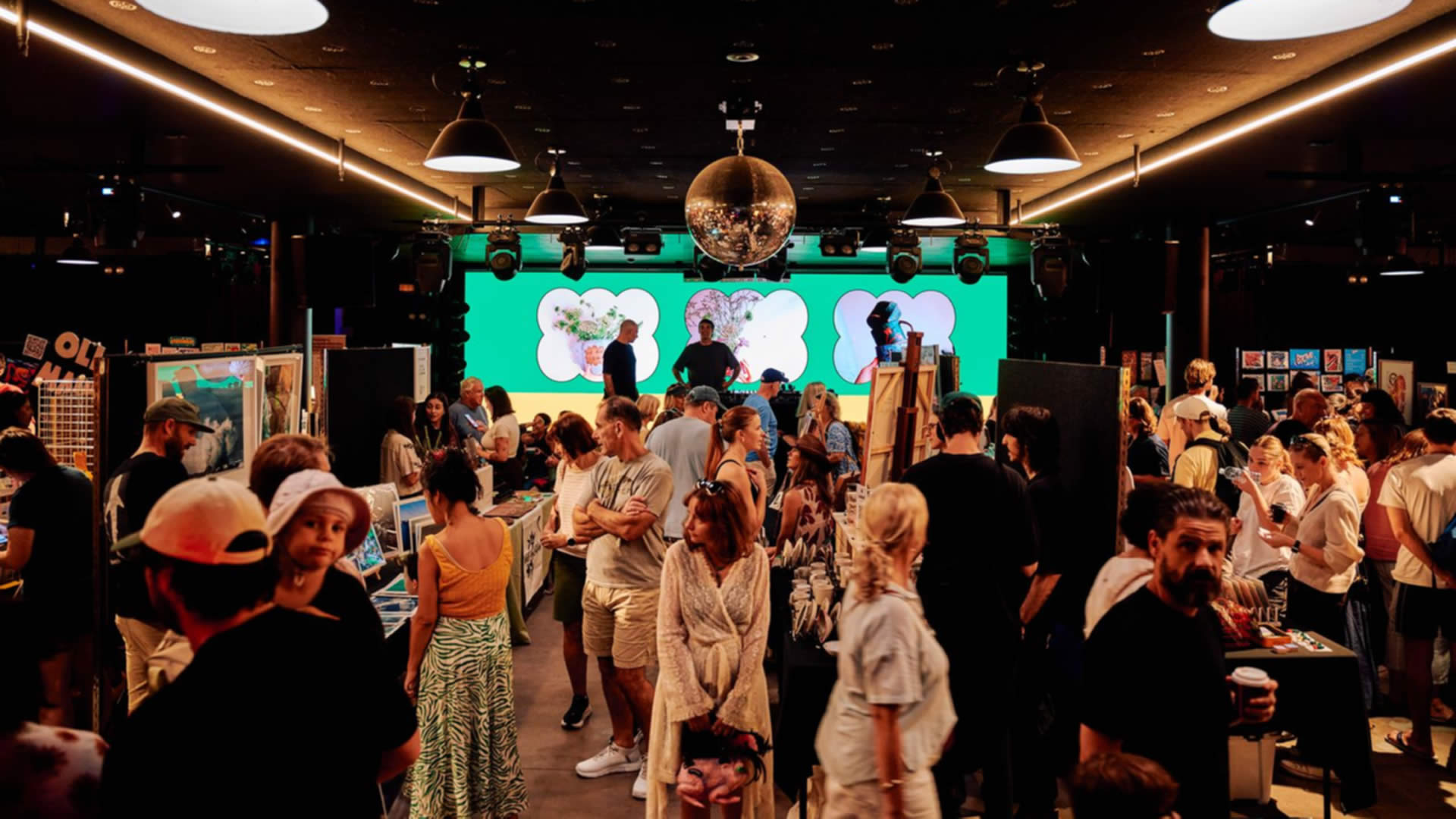
Following its Sydney debut in May, the market returns with a larger footprint and more than 60 independent artists and makers. For the second Sydney edition, the event expands beyond Felons Barrel Room into the upper-level event space at Manly Wharf, creating room for a broader collection of ceramics, illustration, photography, original artworks, homewares and handcrafted objects.
The setting is an important part of the experience. Manly Wharf is both a transport hub and a gateway to the coast, a place where visitors pass through on their way to the beach or pause to enjoy the harbour. Bringing an art market into this environment introduces a different pace to the waterfront, inviting people to look more closely at the objects and creative processes that often sit behind everyday things.
The Great Artist Market offers an opportunity to meet the people responsible for the work, ask questions about materials and techniques, and buy directly from independent creatives. It is also a reminder that art need not be encountered exclusively in galleries. Sometimes, it can be found on a market table beside a working harbour, ready to be handled, discussed and taken home.
The Great Artist Market Finds Its Place On The Waterfront
The return of The Great Artist Market reflects the response to its first Sydney event in May. The second edition expands across two spaces at Manly Wharf, allowing more artists to participate while retaining the accessible, informal character of a market.
Market curator and artist Claire Ritchie has described the expansion as a response to the enthusiasm shown by both visitors and participating artists. The additional space gives the event greater capacity to showcase local talent and brings more creative disciplines together under one roof, or, in this case, across two connected waterfront venues.
The decision to return to Manly also makes sense in the context of the suburb itself. The Northern Beaches has a strong relationship with visual culture, shaped by its coastal landscape, outdoor lifestyle and community of independent creatives. Artists working in the area often draw on the changing colours of the ocean, the textures of sandstone, the patterns of coastal vegetation and the movement of light across the water.
Yet the market is not limited to work inspired by the sea. Its wider selection of disciplines brings different artistic backgrounds and perspectives into the same space. Visitors may move from a sculptural ceramic vessel to a photograph of the coastline, then discover an illustration or a piece of homeware that has little in common with either.
That variety is part of the attraction. Rather than following a single theme, The Great Artist Market brings together individual practices, allowing the relationships between objects, makers and audiences to develop naturally as people browse.
A Market Built Around The People Who Make Things
At the centre of The Great Artist Market is a straightforward idea: independent artists benefit when they can present their work directly to the people who might buy it.
For a maker, the process of producing an object can involve far more than the visible act of creation. It includes sourcing materials, testing techniques, developing a recognisable style, managing a small business and finding ways to reach an audience. Markets offer an opportunity to bring these elements together in a public setting.
For visitors, meeting an artist can change how a piece is understood. A ceramic bowl becomes more than a useful object when its maker explains the process behind its form. A photograph may reveal a particular moment of patience, timing or familiarity with a landscape. A paper artwork can carry a different significance once the time required to cut, layer and assemble it becomes apparent.
These conversations are especially valuable for emerging creatives, whose work may not yet be represented in established galleries or widely stocked by retailers. A market provides a comparatively direct route to potential customers, without requiring visitors to navigate the formalities sometimes associated with art spaces.
The Great Artist Market places this exchange at the heart of its format. Visitors can browse the work, speak with the people behind it and make purchasing decisions with a clearer understanding of what they are taking home.
It also offers an alternative to mass-produced homewares and decorative objects. The emphasis on small-scale production, individual design and handcrafted work means that pieces can retain the marks of the process that created them. Slight variations in shape, surface or finish are not necessarily imperfections. They can be part of what makes a handmade object distinctive.
The Great Artist Market And The Appeal Of Handmade Design
Among the artists featured at the October event are makers working across ceramics, photography, painting and paper-based art. Their practices differ, but each offers a particular way of translating experience and observation into physical form.
All Day Clay, the practice of Sydney ceramic artist Tee McManus, produces hand-built, fluted vessels informed by design and Japanese minimalism. The work places emphasis on form and surface, demonstrating how a relatively restrained object can carry a strong visual identity through proportion, texture and careful construction.
At another stall, Gazal Ceramics brings the work of Iranian-Australian ceramic artist Ghazal Ebnalian, who creates small-batch handcrafted homewares from a Marrickville studio. The connection between a studio practice and a finished object becomes particularly tangible in ceramics, where the transformation of clay through shaping, drying and firing gives each piece a material history.
Grand Soft Day, created by Irish-Australian artist Katie Mooney-Sheppard, works with hand-built stoneware, ranging from functional ceramics to one-off sculptural pieces. The combination of utility and sculpture reflects a wider interest in objects that can occupy a home as both practical possessions and expressions of individual taste.
These practices demonstrate the range available within a single material. Ceramics can be minimal or expressive, functional or sculptural, designed for daily use or intended to be appreciated primarily for their form. At a market, those differences become easier to recognise because the objects can be seen together rather than encountered individually through photographs or online listings.
For visitors, the experience may also prompt a reconsideration of how objects are chosen for the home. Instead of buying something simply because it fits a space, there is an opportunity to consider how it was made, who made it and whether its character will remain appealing over time.
Art Shaped By The Australian Coastline
The relationship between place and creative work is particularly visible in the photography and painting represented at The Great Artist Market.
Northern Beaches photographer and cinematographer Darian Woods captures Sydney's coastline through underwater, aerial and shoreline photography. The subject offers a seemingly familiar landscape, but the choice of perspective can make it feel newly discovered. A shoreline viewed from above reveals patterns that are difficult to see from the sand, while underwater photography brings attention to a part of the coastal environment that often remains outside the everyday view.
Manly-based contemporary artist Hayley Biddulph works primarily with oil pastels, drawing inspiration from the Australian coastline and her travels. Oil pastel allows for direct, tactile mark-making, with colour and texture contributing to the character of a finished work. In coastal subjects, these qualities can suggest the brightness of the afternoon sun, the movement of water or the shifting tones of land and sky.
Such work carries a particular resonance in a place like Manly, where the ocean is not simply a distant view but part of the suburb's daily identity. Visitors may arrive after a walk along the waterfront or spend time at the beach before visiting the market. The artworks provide another way to engage with the surrounding landscape, whether through an interpretation of a familiar view or a perspective that changes how it is seen.
The appeal of local art does not depend on depicting a recognisable landmark. More often, it comes from the artist's familiarity with a place, expressed through colour, atmosphere, detail or the choice of subject. For visitors, these works can offer a lasting connection to a landscape that might otherwise remain a passing impression.
Paper, Illustration And The Imagination
Not all of the work at The Great Artist Market is rooted in landscape. Some of the featured artists draw on storytelling, folklore and imaginative traditions to create pieces that move beyond direct observation.
Studio Flos, the practice of artist Claire Cassidy, produces intricate paper works that are hand-cut and painted. Her work explores contemporary folklore, mythology and folk traditions, bringing together the physical precision of paper craft and the narrative possibilities of familiar stories.
Paper can appear unremarkable until it becomes the primary material of an artwork. Cut, layered, painted or assembled, it can create depth and shadow while retaining a sense of delicacy. The labour involved is often most apparent when a visitor has the opportunity to examine the work at close range.
This kind of practice also demonstrates why a market can be a useful setting for art that might otherwise be difficult to categorise. The work sits outside the conventional divisions between illustration, craft and fine art, allowing visitors to encounter it without needing to decide which label applies.
Across the market, that freedom to browse is important. Some visitors may arrive with a particular object in mind, while others will discover a new artist or medium simply by walking between stalls. The market format encourages curiosity, with one discovery leading naturally to another.
A Broader Creative Community At Manly Wharf
The Great Artist Market is presented in partnership with the setting and hospitality of Felons Brewing Co, whose Felons Barrel Room hosts the returning event alongside the newly added upper-level space.
Felons Brewing Co brand director Dean Romeo has described the market as a natural fit for the company's community-focused approach. The waterfront setting provides a shared environment in which art, food, drink and conversation can exist alongside one another.
For visitors, this makes the market easy to incorporate into a wider day out. Coffee, pastries and baked goods are part of the advertised offering, alongside Felons beers and live entertainment. Free face painting also adds a family-friendly element, giving younger visitors something to enjoy while adults browse the stalls.
The combination of art and hospitality reflects the way many people experience Sydney on weekends. A visit rarely consists of one activity alone. People might arrive by ferry, explore the market, stop for a drink and continue towards the beach or another part of the suburb.
The market adds a creative dimension to this familiar pattern without requiring a formal gallery visit or a ticketed exhibition. Its free entry removes one barrier to participation, making it possible for people to stop briefly, spend several hours browsing or simply see what the artists have brought along.
The expansion across two spaces should also give visitors more room to move between disciplines and makers. With more than 60 stallholders expected, the range of work will reward an unhurried visit rather than a quick circuit of the venue.
Planning A Visit To The Great Artist Market
The Great Artist Market takes place on Saturday, 10 October 2026, at Manly Wharf. Entry is free, and the event is scheduled to run from 8 am to 3 pm.
The market occupies Felons Barrel Room and the upper-level event space at Manly Wharf, with more than 60 artists and makers exhibiting work across art, illustration, ceramics, photography, homewares and handcrafted goods.
Manly Wharf is accessible by ferry and other public transport connections, making it possible to combine the market with a wider visit to the Northern Beaches. Visitors should allow time to browse both event spaces and check current transport information before travelling.
Event Details
- Event: The Great Artist Market
- Date: Saturday, 10 October 2026
- Time: 8 am to 3 pm
- Location: Felons Barrel Room and upper-level event space, Manly Wharf, Manly, Sydney
- Entry: Free
- Features: More than 60 artists and makers, ceramics, illustration, photography, original art, homewares, handcrafted goods, coffee, pastries, baked goods, Felons beers, live entertainment and free face painting
Official event information: Felons Brewing Co – The Great Artist Market Sydney
Further updates: The Great Artist Market on Instagram
Taking Home A Piece Of The Day
A market visit can leave a different impression from a gallery exhibition. There is less distance between the person who makes an object and the person who chooses to take it home. The work is encountered in an everyday setting, among conversations, coffee cups and the movement of people through a shared public space.
At Manly Wharf, that experience unfolds against the steady movement of the harbour. Ferries continue their journeys, visitors pass between the waterfront and the suburb, and the morning gradually gives way to the afternoon. Within the market, a collection of individual creative practices becomes part of that larger scene.
The Great Artist Market offers more than an opportunity to purchase handmade work. It creates a meeting place for independent artists and the people who want to support them, while making room for the unexpected discoveries that give a market its character.
By the time visitors leave, they may carry a ceramic vessel, a photograph, a paper artwork or simply a new appreciation for the people making things in their own city. In a place defined by movement and the changing light over the water, the market invites people to pause, look more closely and bring a little of that creative energy home.