
The Metropolitan Orchestra’s Fiesta closes the 2026 season with Márquez, Khachaturian and Rachmaninoff at Verbrugghen Hall on 26 September.
On a Saturday evening in late September, the city is beginning to feel the approach of spring.
The evenings are stretching out. The air is becoming a little softer, and around the eastern edge of the CBD, the grounds of the Sydney Conservatorium of Music begin to fill with people arriving for another night of music.
Inside Verbrugghen Hall, however, the outside world soon recedes.
The Metropolitan Orchestra will close its 18th season here on Saturday, 26 September 2026, with Fiesta, a 90-minute program built around rhythm, movement and the dramatic possibilities of the orchestra.
It is a program that travels considerable distance without ever leaving the room.
The opening work, Arturo Márquez's Danzón No. 2, draws on the dance traditions of Mexico and Cuba. Aram Khachaturian's Masquerade Suite follows with its theatrical atmosphere, waltzes and restless energy. The evening then moves towards the vast late-Romantic world of Sergei Rachmaninoff and his Symphonic Dances.
Together, the three works form a journey through very different musical landscapes.
There is something physical about all of them.
The music dances, turns, accelerates and gathers momentum. It can be graceful one moment and almost overwhelming the next. Rather than presenting the repertoire as a sequence of isolated works, Fiesta has been shaped to allow those contrasts to become part of the experience.
For The Metropolitan Orchestra, it is also a chance to end the 2026 season on a large musical canvas.
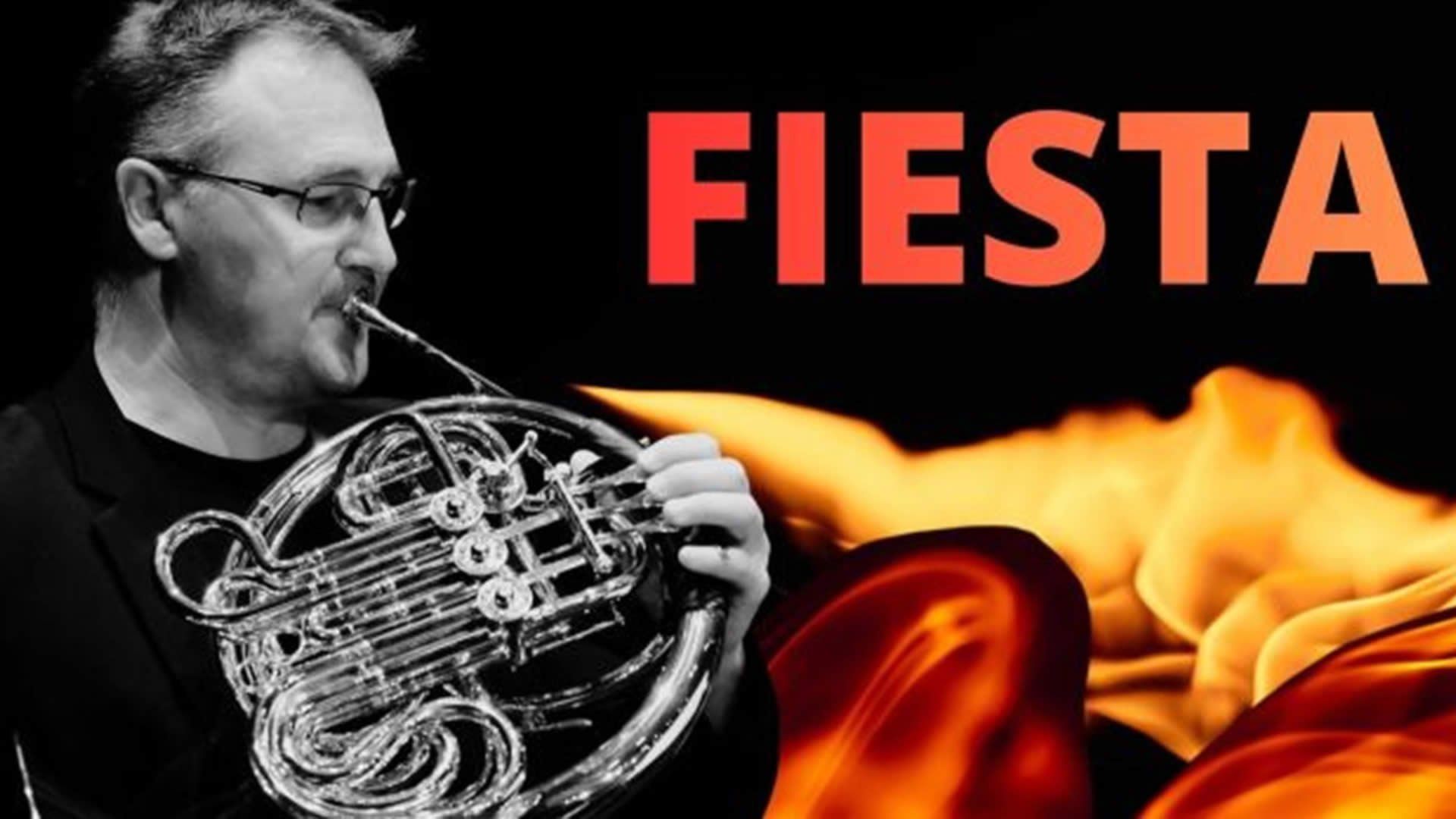
The Metropolitan Orchestra Finds Rhythm In The Concert Hall
Classical music is sometimes imagined as something static.
An orchestra sits in formation. The audience settles into its seats. A conductor raises a baton, and the performance begins.
But much of the repertoire chosen for Fiesta resists that stillness.
Márquez's Danzón No. 2 begins with a sense of restraint before gradually revealing its rhythmic character. The danzón tradition comes from the dance halls of Mexico and Cuba, and Márquez turns those influences into an orchestral work in which individual sections can emerge from the larger ensemble.
Strings, woodwinds, brass and percussion all have opportunities to shape the music.
The result is a piece that feels as though it is constantly moving.
That makes it an apt opening for a concert called Fiesta.
The word suggests celebration, but the evening is not simply about brightness or exuberance. The program is more interested in movement itself, and in how an orchestra can change character from one work to the next.
After the Latin American rhythms of Márquez, Khachaturian introduces a different kind of theatricality.
His Masquerade Suite carries the atmosphere of a stage performance. There are elegant waltzes, nocturnal passages and energetic dances, with the music moving between intimacy and spectacle.
The contrast is deliberate.
The first work draws its energy from the dance floor. The second feels closer to the theatre.
Then comes Rachmaninoff.
Fiesta Moves From Dance To Drama
Sergei Rachmaninoff's Symphonic Dances occupies a very different emotional world.
Written late in the composer's life, the work combines the sweeping melodic character associated with Rachmaninoff with an increasingly restless rhythmic language.
It is music of accumulation.
One idea leads into another. Sections appear, overlap and return. Colours build within the orchestra until what begins quietly can eventually become enormous.
For The Metropolitan Orchestra, the work forms the final statement of the 2026 season.
It is also the longest and most expansive work in the program.
The choice gives Fiesta a clear dramatic arc.
Márquez opens the evening with rhythm. Khachaturian brings theatrical colour. Rachmaninoff takes those ideas of movement and scale somewhere much larger.
The Symphonic Dances does not simply end the concert.
It closes the season.
That distinction gives the final moments additional weight. An audience hearing the work in September will know that this is the last concert in TMO's 18th season, adding a sense of occasion without requiring the music to become ceremonial.
The final pages belong entirely to the orchestra.
Sarah-Grace Williams Leads The Metropolitan Orchestra
At the centre of the evening will be Sarah-Grace Williams, TMO's Artistic Director and Chief Conductor.
Williams has described the program as a celebration of movement, passion and orchestral colour, qualities that are evident in the choice of repertoire.
Conducting these three works requires a considerable change of musical language.
Danzón No. 2 depends on rhythmic precision and an understanding of dance. Masquerade requires theatrical timing and elegance. Rachmaninoff demands patience, control and the ability to manage huge shifts in orchestral density.
The challenge is not simply to play the notes.
It is to make each work feel like it belongs to its own world.
Williams' role is particularly important in the transitions between those worlds.
An orchestra is a large collection of individual musicians, but a performance only begins to take shape when those individuals respond to the same musical direction. A conductor establishes that relationship, controlling tempo and balance while allowing the players enough freedom to give the music its character.
Williams has also spoken of the chemistry within the orchestra and the energy that develops when the musicians are comfortable enough with one another to take risks.
That chemistry should be particularly important in a program as rhythmically demanding as Fiesta.
The Setting At Verbrugghen Hall
The Sydney Conservatorium of Music occupies an unusual position within the city.
It sits beside the Royal Botanic Garden, close to the harbour and within walking distance of the CBD, yet its concert spaces offer a world removed from the traffic and movement outside.
Verbrugghen Hall is one of those spaces.
For an evening performance, the transition begins before the first note. Audiences leave the streets, enter the Conservatorium and gradually exchange the ordinary sounds of the city for the quieter anticipation of a concert hall.
By 7pm, the orchestra will be assembled and the audience seated.
Then Danzón No. 2 begins.
The hall's acoustic becomes part of the performance. Individual sounds that might disappear in a larger space can remain distinct, while the full ensemble can gather into a much larger sound.
This is especially significant for Rachmaninoff.
Symphonic Dances depends upon the relationship between sections of the orchestra. A melody may begin in one group of instruments and then be transformed by another. Percussion can suddenly alter the scale of a passage. Brass can bring an entirely different weight.
In a concert hall, those changes become physical.
You do not simply hear an orchestra getting louder.
You feel the room change around the sound.
A Different Kind Of Season Finale
The Metropolitan Orchestra has reached its 18th season by building programs that bring orchestral music into different contexts and to audiences across Sydney.
Fiesta provides a fitting conclusion because it does not rely on solemnity.
There is no need for a season finale to be quiet or reflective.
Sometimes the most natural ending is to gather momentum.
The three composers represented on the program each approach movement differently.
Márquez takes the rhythm of a dance and expands it into an orchestral work. Khachaturian uses music to evoke the atmosphere of a dramatic stage. Rachmaninoff transforms movement into a large-scale symphonic journey.
The connections become clearer as the evening progresses.
The works are separated by geography, style and historical context, but each understands music as something that moves through the body as much as the mind.
A waltz has physical rhythm.
A dance has a pulse.
A symphonic climax creates tension through expectation and release.
The Metropolitan Orchestra's decision to place these works together allows those connections to emerge without requiring explanation.
The audience can simply listen.
From Mexico To Soviet Russia
One of the pleasures of the program is its geographical range.
Márquez's Danzón No. 2 takes its inspiration from Mexico and Cuba. Khachaturian's Masquerade Suite comes from the theatrical world of Soviet Russia. Rachmaninoff's Symphonic Dances, composed after the composer had left Russia, carries with it the complexity of memory, distance and musical tradition.
The program therefore moves between places as much as musical styles.
Yet it would be misleading to treat the evening as a simple musical travelogue.
Each composer is doing something more complicated than representing a location.
Márquez reworks dance traditions through the language of the modern orchestra. Khachaturian creates an atmosphere associated with theatre and masquerade. Rachmaninoff combines his familiar lyricism with sharper rhythmic contrasts and unusual orchestral colours.
What connects them is not nationality.
It is motion.
That makes Fiesta less about travelling from one country to another and more about observing how composers transform movement into sound.
The Metropolitan Orchestra And The Art Of Contrast
Contrast is one of the defining features of the evening.
A sultry opening gives way to theatrical elegance. That elegance eventually yields to the enormous emotional sweep of Rachmaninoff.
The changes should make the concert feel almost cinematic.
There are quiet moments, bursts of energy and passages where individual instruments seem to step forward from the larger ensemble.
That variety can be especially welcome in a season finale.
Rather than asking an audience to maintain one emotional register for an entire evening, Fiesta continually changes the view.
The 90-minute running time, including an interval, also keeps the program focused.
There is enough space for each work to establish its own character without turning the concert into an endurance test.
For people familiar with orchestral repertoire, the program offers three substantial works by composers with distinctive voices.
For newer concertgoers, it provides a relatively direct introduction to the physical and dramatic possibilities of a symphony orchestra.
There is no requirement to understand every technical detail.
The rhythm is enough.
The changing textures are enough.
The feeling of a large ensemble moving together is enough.
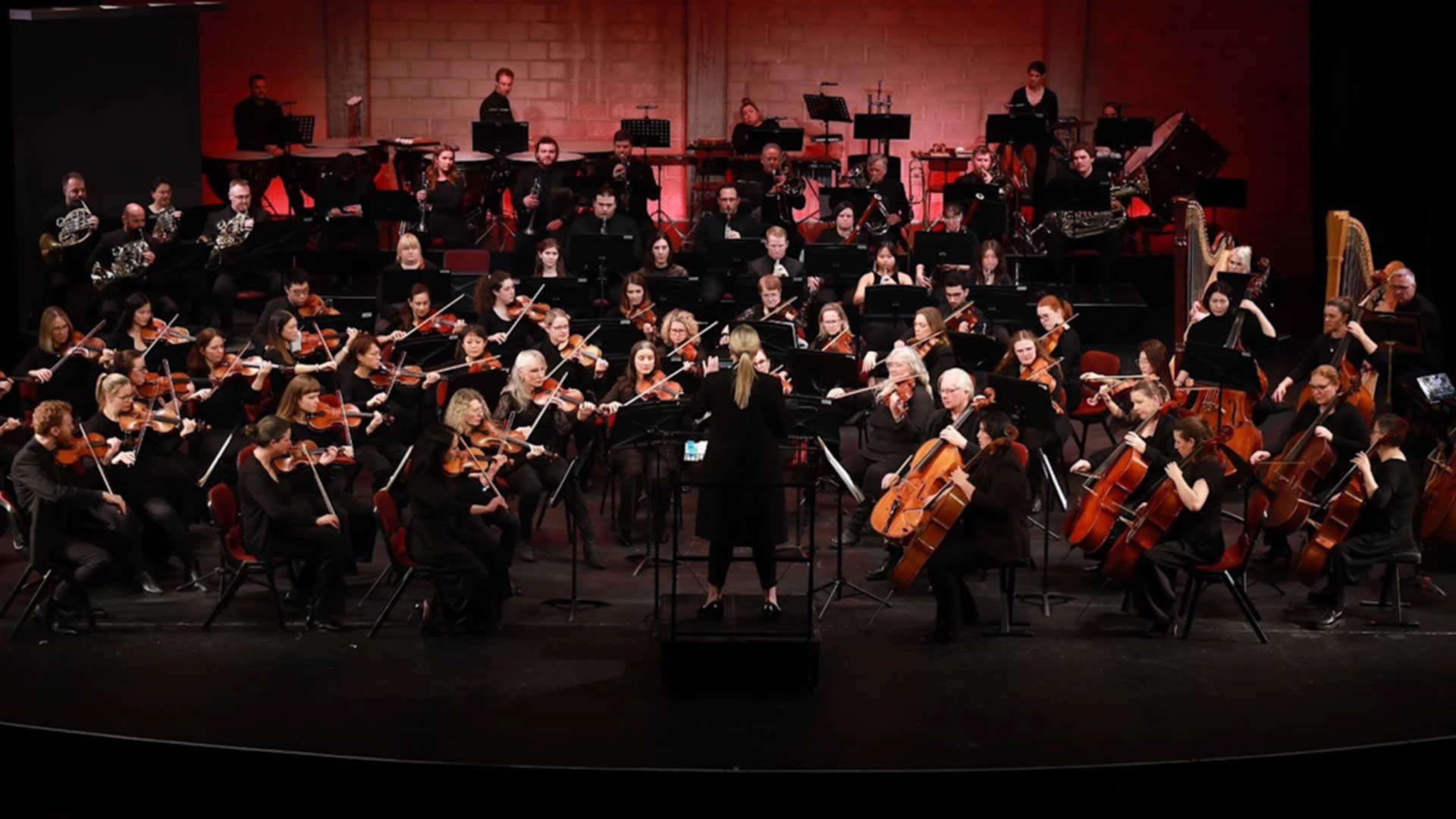
An Evening In Sydney At The End Of September
The timing of Fiesta places it neatly within Sydney's spring calendar.
Saturday evening, 26 September, will begin before the concert itself. Visitors can spend time in the city, walk through the Botanic Garden or along the harbour, have dinner nearby and then make their way towards the Conservatorium.
The location makes the concert part of a broader Sydney evening rather than an isolated destination.
At 7pm, the doors close around a different kind of city.
Inside Verbrugghen Hall, the rhythms of Márquez will provide the first movement.
The interval will offer a pause.
Then Khachaturian and Rachmaninoff will take the audience further into the evening.
By the time the Symphonic Dances reaches its final climax, it will be approaching the end of TMO's 18th season.
Outside, Sydney will still be moving.
Cars will pass through Macquarie Street. The gardens will be dark. The harbour will reflect the lights from the city.
Inside, hundreds of individual sounds will have been shaped into one final statement.
When The Last Note Fades
A season finale is always partly about endings.
There is the end of the particular program, of course, but there is also the knowledge that an orchestra will soon begin preparing for whatever comes next.
For audiences, the final note can feel surprisingly brief after the months of rehearsals, programming and preparation that make a season possible.
Fiesta chooses not to dwell on that sense of closure.
Instead, it leaves the audience with movement.
Márquez begins with the pulse of dance. Khachaturian turns towards the stage. Rachmaninoff gathers everything into a final, expansive surge.
It is an ending that looks outward rather than back.
When the applause finally fades, the audience will return to the foyer and then to the streets of Sydney. The Conservatorium will become quiet again. The gardens beyond it will remain in darkness.
But some trace of the evening will travel with people.
Perhaps it will be the rhythm of Danzón No. 2. Perhaps a waltz from Masquerade. Perhaps the enormous final movement of Rachmaninoff, still resonating somewhere in the memory.
For The Metropolitan Orchestra, the 18th season will have reached its final bar.
For the audience, the music will continue a little longer.
Event Details
Event: The Metropolitan Orchestra's Fiesta Season Finale
Date: Saturday, 26 September 2026
Time: 7.00pm
Duration: Approximately 90 minutes, including interval
Venue: Verbrugghen Hall, Sydney Conservatorium of Music
Address: 1 Conservatorium Road, Sydney NSW 2000
Program: Arturo Márquez, Danzón No. 2; Aram Khachaturian, Masquerade Suite; Sergei Rachmaninoff, Symphonic Dances
Conductor: Sarah-Grace Williams
Tickets: $59 General Admission; $45 Senior/Concession; $30 Student/Child 14 and under, plus booking fees
Accessibility: Dedicated wheelchair seating is available
Official Information And Tickets: https://www.metorchestra.com.au/event/met-concert-fiesta/