
The Wind in the Willows will bring Kenneth Grahame’s beloved riverbank adventure to the Royal Botanic Garden Sydney, with outdoor theatre, music and family storytelling this January.
There is something particularly appealing about spending a summer morning outdoors in Sydney, where the shade of old trees offers a welcome escape from the warmth of the day and the city's familiar landmarks seem to take on a quieter character. In the Royal Botanic Garden, lawns stretch towards the harbour, waterbirds move across sheltered ponds and the sound of the city gradually gives way to birdsong and rustling leaves.
It is an appropriate setting for a story that has always belonged to the natural world.
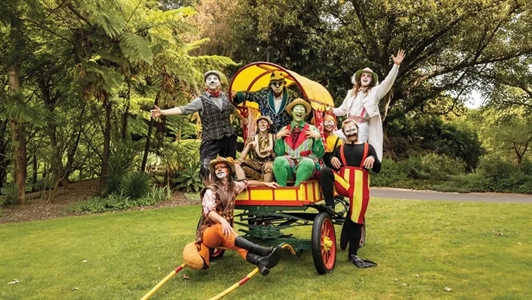
This January, the familiar characters of Kenneth Grahame’s The Wind in the Willows will return to the Royal Botanic Garden Sydney, bringing an outdoor theatrical production to one of the city's most recognisable green spaces. Ratty, Mole, Badger and the irrepressible Mr Toad will take to the stage for a summer season that will invite audiences into a world of riverbank friendships, woodland adventures and occasional mischief.
Presented by the Australian Shakespeare Company, the production will run from 6 to 24 January 2027, with performances staged near the Main Pond. It will offer a different way to spend a summer day in the city, combining live theatre with the relaxed atmosphere of a garden picnic.
For families, it will be an opportunity to introduce younger audiences to a classic literary story. For adults who remember the book from childhood, it will offer the pleasure of revisiting a world where friendship, curiosity and the simple business of enjoying the outdoors remain central.
And for anyone who has spent time wandering through Sydney's gardens, the setting will feel particularly fitting.
The Enduring Appeal of Kenneth Grahame’s Story
First published in 1908, Kenneth Grahame’s The Wind in the Willows has remained one of the most enduring works of children's literature. Its world is built around the quiet pleasures of the English countryside, where riverside picnics, changing seasons and long afternoons outdoors form the backdrop to a series of adventures.
At its centre are four very different characters.
Mole is curious and occasionally uncertain, discovering the wider world beyond his underground home. Ratty, whose full name is Water Rat, is sociable and happiest near the river. Badger is dependable, reserved and quietly protective of his friends. Then there is Mr Toad, whose enthusiasm for new interests frequently exceeds his good judgement.
Their personalities create the gentle humour and occasional chaos that have made the story so appealing across generations.
Yet the enduring attraction of The Wind in the Willows is not simply its collection of memorable characters. Beneath the comedy is a story about belonging, loyalty and the comfort of familiar places. The riverbank becomes a refuge, a meeting point and a reminder that adventure does not always require travelling very far.
That combination has helped the book move beyond its original pages into theatre, television and countless adaptations.
The Australian Shakespeare Company's outdoor production will bring this familiar world into a distinctly Australian summer setting. Although the story retains its English countryside origins, its themes of friendship and outdoor discovery translate naturally to Sydney's botanical surroundings.
Bringing the Riverbank to Life in Sydney
The Royal Botanic Garden Sydney provides an unusual backdrop for a theatrical performance. Rather than entering a conventional theatre with enclosed walls, fixed seating and artificial lighting, audiences will gather on the grass, surrounded by established trees and the changing atmosphere of the garden.
The performance area will be located near the Main Pond, placing the production within a landscape that already has a natural connection to the story's riverside setting.
There is a certain logic to presenting The Wind in the Willows here. Water, greenery and open space are integral to Grahame's original world, and the garden offers a setting in which those elements will be part of the wider experience rather than simply painted scenery.
The Australian Shakespeare Company has developed a long association with outdoor theatre, presenting accessible productions in gardens and other open-air settings. Its approach places audiences close to the action, allowing families to enjoy a theatrical experience without the formality of a traditional auditorium.
The Sydney season will also continue a longstanding relationship between the production and the city's botanical gardens. The company describes The Wind in the Willows as a family theatre tradition that has been presented at the Royal Botanic Garden Sydney for more than 20 years.
For a production rooted in nostalgia and familiar storytelling, that continuity is significant. It gives the performance a place within Sydney's summer cultural calendar, where outdoor theatre has become a welcome alternative to spending the warmer months entirely indoors.
An Interactive Adventure for Younger Audiences
One of the distinguishing features of The Wind in the Willows will be its interactive approach to storytelling.
Rather than asking younger audience members to remain entirely passive observers, the production will encourage them to become involved in the action. Children will be invited to join the adventure, respond to the characters, sing along and participate in moments that bring the fictional riverbank closer to the audience.
The Head Chief Rabbit will even transform members of the audience into rabbits, with a waggle of the ears and a wiggle of the nose.
It is an uncomplicated idea, but one that captures something important about family theatre. For younger children, the distinction between watching a story and becoming part of it can be surprisingly small. A familiar character addressing the audience or an invitation to join in can make the experience feel personal and immediate.
Music, songs, comedy and theatrical surprises will help carry the story, while the recognisable personalities of the central characters will provide plenty of opportunities for humour.
Mr Toad, in particular, has always been an entertaining source of trouble. His appetite for excitement and tendency to act before thinking provide much of the story's comic energy, while Ratty, Mole and Badger offer a more measured counterbalance.
The production is designed for a broad family audience, with the official age guidance extending from three to 103 years. Its 90-minute running time will also give families a substantial theatrical experience without requiring an entire day indoors.
For parents and grandparents, there is an additional pleasure in seeing a familiar story introduced to a new generation. The details may be remembered differently by each person, but the underlying appeal remains much the same.
The Pleasure of Picnic Theatre
Part of the appeal of The Wind in the Willows will come from the way audiences experience it.
The Australian Shakespeare Company's outdoor family productions follow a picnic theatre format, allowing visitors to bring food, drinks and picnic rugs into the performance area. Rather than arriving, taking a seat and waiting for the curtain to rise, families can settle into the grass and make an occasion of the visit.
It is a style of theatre that suits the Sydney summer particularly well.
A picnic rug, a few sandwiches and something cool to drink can turn a performance into a relaxed outing, especially for families with younger children. There is room to enjoy the surroundings before the show begins, and the open-air setting offers a welcome change from the enclosed spaces that dominate much of the city's entertainment calendar.
Visitors are welcome to bring standard-height picnic chairs, although these must be positioned towards the back of the audience area so that they do not obstruct the view of people seated on rugs or lower chairs.
Chairs are not supplied for family theatre performances, so bringing suitable seating is worth considering for anyone who prefers not to sit directly on the grass.
The performance area will open one hour before each show, giving audiences time to find a comfortable spot and arrange their picnic before the story begins.
There is also a practical consideration when choosing what to pack. The production's own description suggests keeping an eye on picnic supplies, as Rabbit and Weasel may have their own ideas about the contents of a hamper.
It is a small detail that feels entirely in keeping with the mischievous spirit of the story.
A Different Way to Spend a Summer Day in the Botanic Garden
The setting is likely to be as much a part of the occasion as the performance itself.
The Royal Botanic Garden occupies a remarkable position beside Sydney Harbour, close to the Opera House and the central city. Despite its location in the heart of Sydney, its winding paths, mature trees and sheltered lawns provide a sense of separation from the surrounding streets.
Visitors can arrive early and spend some time exploring before making their way to the Main Pond. The garden offers plenty of opportunities to slow down, whether that means following a shaded pathway, watching the waterbirds or finding a quiet place to sit.
For those visiting with children, the outing need not begin and end with the theatre. The surrounding gardens provide an opportunity to turn the performance into a broader day out, with time for a picnic and a leisurely wander through the grounds.
The location also makes the event relatively easy to incorporate into a day in the city. The nearby harbour foreshore, Circular Quay and the historic streets around Macquarie Street offer plenty to explore before or after the performance.
There is no need to travel far to find a change of scenery. The garden's position allows visitors to move between the city's cultural landmarks and a much quieter natural environment within a short walk.
In this respect, The Wind in the Willows will be an event that makes good use of its surroundings. Its setting will provide a natural extension of the story, while the performance itself will offer families a reason to experience a familiar part of Sydney in a slightly different way.
A Summer Tradition With Room for New Memories
Outdoor theatre has a particular quality that is difficult to recreate indoors. The surroundings remain present throughout the performance, and small changes in the environment become part of the occasion.
A breeze through the trees, the distant sound of birds or the changing light across the garden can all add to the atmosphere. Unlike a conventional theatre, where the outside world disappears once the lights go down, an outdoor performance remains connected to its setting.
That connection seems especially appropriate for The Wind in the Willows.
Grahame's original story celebrates a slower relationship with the natural world. Its characters find happiness in simple routines, shared meals and the company of friends. Their adventures may become complicated, but the riverbank is always there as a place to return to.
The Sydney production will bring those ideas into a contemporary summer setting, where families can enjoy the combination of storytelling and time spent outdoors.
For children encountering the characters for the first time, it may be the beginning of an interest in a story that has entertained readers for more than a century. For adults, it may be a chance to reconnect with something remembered from childhood.
And for everyone in between, it will provide a pleasant reason to spend a few hours beneath the trees.
As Sydney moves through the summer holidays, the Royal Botanic Garden will once again become a gathering place for families, theatre lovers and visitors looking for something a little different from the usual city itinerary.
The riverbank may be fictional, but the pleasures at the heart of the story are familiar enough. Good company, a shared picnic and an afternoon outdoors remain difficult things to improve upon.
Event Details
Event: The Wind in the Willows
Presented by: Australian Shakespeare Company
Dates: Wednesday, 6 January to Sunday, 24 January 2027
Location: Royal Botanic Garden Sydney, near the Main Pond, Sydney NSW
Running Time: Approximately 90 minutes
Age Suitability: 3 to 103 years
Ticket Prices: From $25, with prices varying by date and performance
Performance Times:
- Wednesday, 6 January: 6pm
- Thursday, 7 January: 10.30am and 6pm
- Friday, 8 January: 10.30am and 6pm
- Saturday, 9 January: 10.30am and 6pm
- Sunday, 10 January: 11am
- Wednesday, 13 January: 6pm
- Thursday, 14 January: 10.30am and 6pm
- Friday, 15 January: 10.30am and 6pm
- Saturday, 16 January: 10.30am and 6pm
- Sunday, 17 January: 11am
- Wednesday, 20 January: 6pm
- Thursday, 21 January: 10.30am and 6pm
- Friday, 22 January: 10.30am and 6pm
- Saturday, 23 January: 10.30am and 6pm
- Sunday, 24 January: 11am
Picnic Theatre: Visitors are welcome to bring picnic rugs, food and drinks. Standard-height picnic chairs are permitted towards the back of the audience area. The performance area opens one hour before the show.
Weather: Performances are outdoors and may be affected by weather. Cancellation notifications are sent by text and email.
Official Website and Bookings: https://shakespeareaustralia.com.au/productions/the-wind-in-the-willows-2027-sydney
Performance times, ticket availability and prices should be checked with the Australian Shakespeare Company before attending.