
Yerma brings Federico García Lorca’s haunting tragedy to Rozelle, where a new translation explores longing, social pressure and the cost of unfulfilled desire.
There are some stories in which the quietest moments carry the greatest weight. A conversation that stops too soon, a question left unanswered, the pressure of expectations that no one quite knows how to challenge. In Federico García Lorca’s Yerma, these silences gather around a woman whose longing for a child gradually becomes the defining force of her life.
This October and November, the Spanish playwright’s tragedy comes to the Genesian Theatre in Rozelle in a new translation and direction by Barry Nielsen. The production brings a work shaped by desire, repression and the consequences of unfulfilled hope into an intimate Sydney theatre setting, where the distance between performer and audience can make a private struggle feel immediate.
Running from 23 October to 14 November 2026, Yerma forms the final part of Nielsen’s theatrical trilogy following his interpretations of Lorca’s The House of Bernarda Alba and Blood Wedding. Together, the works offer different ways into the playwright’s world, where personal lives are shaped by social codes, family expectations and the difficult boundary between what people want and what their communities permit.
For audiences, Yerma offers an encounter with a classic drama that remains unsettling because its central questions are not confined to another place or time. What happens when a private desire becomes an obligation? How does a person live when the future they imagined remains out of reach? And what happens when the expectations surrounding a life become as powerful as the life itself?
Yerma And The Weight Of An Unfulfilled Dream
At the centre of the play is Yerma, a woman whose yearning for a child becomes an all-consuming obsession. Her longing is personal, but it does not remain private. It grows within a social world that attaches meaning to marriage, motherhood and a woman's place in the community.
The tragedy lies partly in the way these expectations close around her. A desire that might otherwise be held with tenderness or uncertainty becomes entangled with identity, reputation and the judgement of others. The more Yerma struggles to reconcile her hopes with the life she inhabits, the more difficult it becomes to separate what she wants from what she believes she must become.
Lorca's writing gives this conflict a poetic intensity. Rather than treating longing as a simple emotional state, the play explores how it can reshape a person's perception of the world. Ordinary exchanges acquire a sharper edge. Other people's lives become reminders of what remains absent. The future begins to feel less like a possibility than a verdict.
The story also resists easy answers. Yerma is not simply a figure to be pitied, nor is her determination presented as a straightforward act of strength. Her predicament asks audiences to consider how social pressure can influence a person's choices, and how a deeply held desire can become destructive when it is denied space to change.
That complexity gives the play its enduring force. Its emotional landscape is intensely specific, yet the questions it raises about belonging, expectation and the need to shape one's own life remain recognisable.
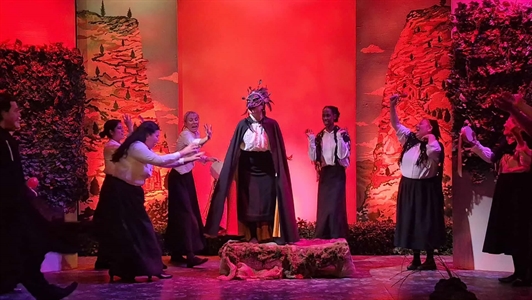
A Spanish Classic Finds A Home In Rozelle
Lorca's plays are closely associated with the social and cultural world of Spain, where family honour, religious influence, gender expectations and rural traditions often form the pressures beneath the action. His work draws on a vivid sense of place, but its dramatic concerns travel well beyond its original setting.
In Yerma, the community is more than a backdrop. It helps define the boundaries of acceptable behaviour, shaping how characters understand themselves and each other. Private feeling is constantly exposed to public judgement, and individual choices carry consequences that extend into relationships and reputation.
Presenting the play in Sydney gives local audiences an opportunity to encounter those tensions from a different cultural and historical perspective. Contemporary life may offer different language for discussing parenthood, gender and personal fulfilment, but social expectations continue to influence how people imagine a successful life and how they respond when reality departs from that image.
The Genesian Theatre's setting adds another dimension to the experience. The company has relocated to the St Joseph's Church precinct at 2B Gordon Street, Rozelle, bringing its work into a venue with a strong sense of place. The theatre's intimate environment offers a setting suited to a story in which the emotional pressure often builds through exchanges, pauses and what remains unsaid.
A visit to a small theatre also changes the pace of an evening. Away from the scale of a large auditorium, audiences can find themselves more closely attuned to a character's expression, the rhythm of a conversation or a shift in the atmosphere. In a drama such as Yerma, those details are central to the experience.
Barry Nielsen's Continuing Conversation With Lorca
The Rozelle production is directed by Barry Nielsen, who also provides the translation. It completes a trilogy of Lorca works that includes The House of Bernarda Alba and Blood Wedding.
The three plays approach different circumstances, but they share an interest in the forces that press upon private lives. In Lorca's dramatic world, desire rarely exists in isolation. It is shaped by family, custom, reputation and the limits imposed by a community's sense of what is proper.
Returning to a playwright across several productions allows a director to explore these recurring concerns from different angles. Each work has its own characters and conflicts, yet patterns begin to emerge: the tension between individual freedom and social expectation, the role of women within restrictive systems, and the way unspoken rules can determine the course of a life.
For Yerma, translation is particularly important. Lorca's writing carries a strong poetic quality, and the language must communicate both the characters' immediate circumstances and the deeper emotional currents moving beneath them. A new translation offers a particular interpretation of that balance, finding a way for the play's intensity to speak clearly to a contemporary audience.
The production's creative team includes assistant director Liz Grindley, production designers Barry Nielsen and Tom Fahy, costume designers Susan Carveth and Helen Kohlhagen, sound designer Michael Schell, lighting designer Ethan Chan and musical director Helen Howe. Scenic artist Richard Paterson and set builder Tom Fahy also contribute to the world created for the stage.
These elements help establish the environment in which the drama unfolds. In a play driven by psychological and social pressure, design can shape the atmosphere without overwhelming the people at its centre. Light, sound, costume and space all influence how an audience reads the relationships and tensions on stage.
Yerma And The Pressures Of Community
One of the play's enduring concerns is the relationship between an individual and the community around them. Yerma's longing does not develop in a vacuum. It is surrounded by beliefs about marriage and motherhood, and by the assumptions through which other people interpret her life.
Communities can offer belonging, continuity and support. They can also create expectations that become difficult to question, particularly when a person's private circumstances do not fit a widely accepted ideal. In Lorca's tragedy, the social world around Yerma makes her desire more complicated, not less. The presence of others intensifies the distance between the life she has and the one she believes she should have.
That tension remains relevant to audiences today, although the language and circumstances surrounding family life have changed. Parenthood can carry deep personal meaning, but it can also become a measure by which people feel judged, whether those expectations come from relatives, partners, cultural traditions or wider society.
The play invites audiences to look beyond easy assumptions about fulfilment. A person's deepest hopes may not be visible to others, and the reasons behind a life that differs from expectation can be more complex than they appear. Lorca's tragedy asks what happens when there is little room for uncertainty, compromise or a different understanding of what a meaningful life might be.
It is a difficult subject, and the play does not soften its implications. Its emotional force comes from watching the gap between desire and reality grow, while the surrounding social world offers no simple way through.
The Cast And The People Within The Tragedy
Norah Masige plays Yerma, with Michael Sebastian as Juan and Monique Pueblos as Maria. The wider cast includes Billy Allagiannis as Victor, Sandra Bass as Dolores and Celeste Anchique as the Daughter of Dolores and the Masked Woman.
Other performers take on the villagers and washerwomen who help give the play its communal dimension. The cast also includes Tayra Araujo, Alex Castello, Binh Doan, Jennifer Cutler, Jenny Jacobs, Brendan Layton, Angie P. and Danielle Stein, alongside Andrej Stevanovic.
These surrounding characters matter because Yerma's story is inseparable from the world in which she lives. The community watches, speaks, judges and provides the social context against which her private struggle becomes increasingly exposed. Even when attention rests on the central character, the people around her help define the limits of her choices.
The production's ensemble therefore contributes to more than the movement of the plot. It creates a wider human landscape, one in which individual hopes meet the expectations and assumptions of others.
For audiences, that interplay can make the tragedy feel less like an isolated account of one woman's suffering and more like a study of the relationships that shape a life. The characters occupy different positions within the same social world, yet each helps reveal something about the rules governing it.
An Intimate Theatre Experience
The Genesian Theatre's move to the St Joseph's Church precinct marks a new chapter for a company with a long history in Sydney's theatre community. Its Rozelle address places the production within an established inner-west neighbourhood, where an evening at the theatre can become part of a broader night out.
The practical details matter when planning a visit, but the setting also offers a reason to approach the performance at a measured pace. Arriving early allows time to find the venue and settle before the play begins. The company asks visitors to consider its neighbours and use public transport where possible, an important consideration in a residential precinct.
For a tragedy such as Yerma, the experience begins before the first line is spoken. The audience enters a shared space, the room grows quieter, and attention gradually shifts away from the routines outside. Theatre depends on that collective act of listening. Unlike a story consumed alone, a live performance unfolds in real time, with each pause and exchange experienced alongside other people.
The intimacy of the setting can make that shared attention particularly powerful. A difficult moment on stage may be followed by a silence that seems to extend beyond the characters. A line can linger because there is no option to skip ahead or step outside the story's rhythm. The audience remains present as the drama develops.
This is one of theatre's enduring strengths: it gives complicated human experiences a physical and temporal shape, allowing audiences to sit with uncertainty rather than resolve it immediately.
Planning A Visit To Yerma
The Genesian Theatre Company's production of Yerma runs from Friday 23 October to Saturday 14 November 2026, with a preview on 23 October, opening night on 24 October and closing night on 14 November.
Event Details
Event: Yerma
Written by: Federico García Lorca, translated by Barry Nielsen
Director: Barry Nielsen
Dates: 23 October to 14 November 2026
Fridays and Saturdays: 7.30 pm
Sundays: 4.30 pm
Location: Genesian Theatre, St Joseph's Church precinct, 2B Gordon Street, Rozelle, NSW
Running time: Approximately 105 minutes of performance, with a 20-minute interval
Box office: 1300 237 217
Official information and bookings: https://genesiantheatre.com.au/events/yerma/
Tickets are listed at $38 for adults and $33 for concession, though visitors should confirm current prices and availability through the official booking page before attending. The theatre recommends public transport and asks patrons to be considerate of nearby residents.
The Questions That Remain After The Curtain
The most enduring tragedies rarely offer the comfort of a clean conclusion. Instead, they leave audiences with questions that continue beyond the theatre, following them into the journey home and the ordinary conversations that resume afterwards.
Yerma places a deeply personal longing within a world of social expectations, asking how desire changes when it becomes inseparable from identity and judgement. Its tragedy emerges not only from what the central character cannot achieve, but from the narrowing space in which she is able to imagine a different future.
Lorca's play belongs to a particular cultural world, yet its tensions remain recognisable wherever people struggle to reconcile private hopes with public expectations. Its journey to Rozelle provides Sydney audiences with a chance to encounter those questions through live performance, shaped by Nielsen's translation and the work of the Genesian Theatre Company.
When the lights return and the audience steps back into the streets of Rozelle, the story's world will fall away. Its questions may take longer to leave. Some dramas end with the final line; others continue quietly in the mind, asking us to consider the pressures we inherit, the desires we carry and the room we make for lives that do not follow the expected path.