
AFTERGLOW arrives on Australian stages with an intimate, clear-eyed exploration of love, desire, and trust, unfolding in close theatrical spaces.
The street outside Eternity Playhouse settles early in the evening. Darlinghurst traffic thins, conversations soften, and the last light slips behind terraces and fig trees. Inside, the theatre feels contained and deliberate — a room designed for listening. AFTERGLOW begins not with spectacle, but with the suggestion that something private is about to be shared.
Three men enter a space that feels less like a stage than a bedroom borrowed for the night. There is nowhere to hide. The audience sits close enough to register breath, pauses, the weight of what is not said. AFTERGLOW understands that intimacy does not need amplification. It needs attention.
AFTERGLOW And The Geometry Of A Relationship
At its core, AFTERGLOW traces the shifting lines between Josh, Alex, and Darius — a married couple and the man they invite into their relationship. What begins as a single night expands into something more complicated, less containable.
The play resists easy categorisation. It is not a thesis on polyamory, nor a cautionary tale. Instead, AFTERGLOW observes how language strains under emotional pressure. Words like “trust” and “commitment” are spoken often, yet never settle into fixed meaning.
The structure mirrors this instability. Scenes move fluidly between confession and confrontation, humour and vulnerability. Time feels elastic, shaped by memory and desire rather than chronology.
A Room That Holds Everything
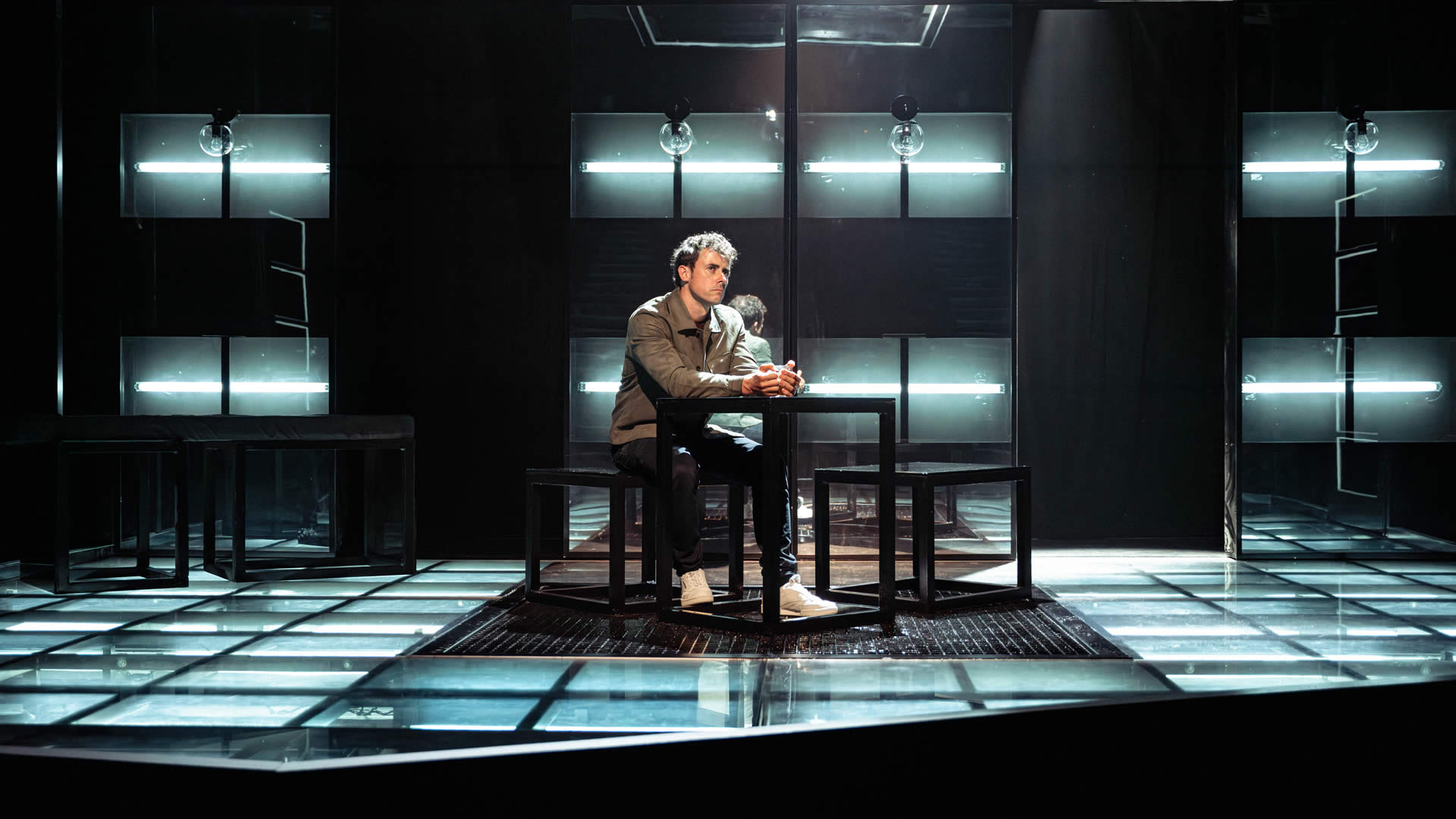
Both Chapel off Chapel in Melbourne and Sydney’s Eternity Playhouse lend AFTERGLOW a crucial sense of enclosure. These are theatres that reward proximity. The audience is not asked to imagine closeness; they are placed inside it.
Lighting remains spare, shifting gently to mark emotional transitions rather than locations. The design avoids distraction, allowing the focus to remain on bodies in space — how they approach, retreat, hesitate.
In Sydney especially, where theatre often competes with the city’s pace, AFTERGLOW feels deliberately still. It asks viewers to slow down, to notice the accumulation of small moments that define intimacy more accurately than declarations ever could.
AFTERGLOW And Performance Without Distance
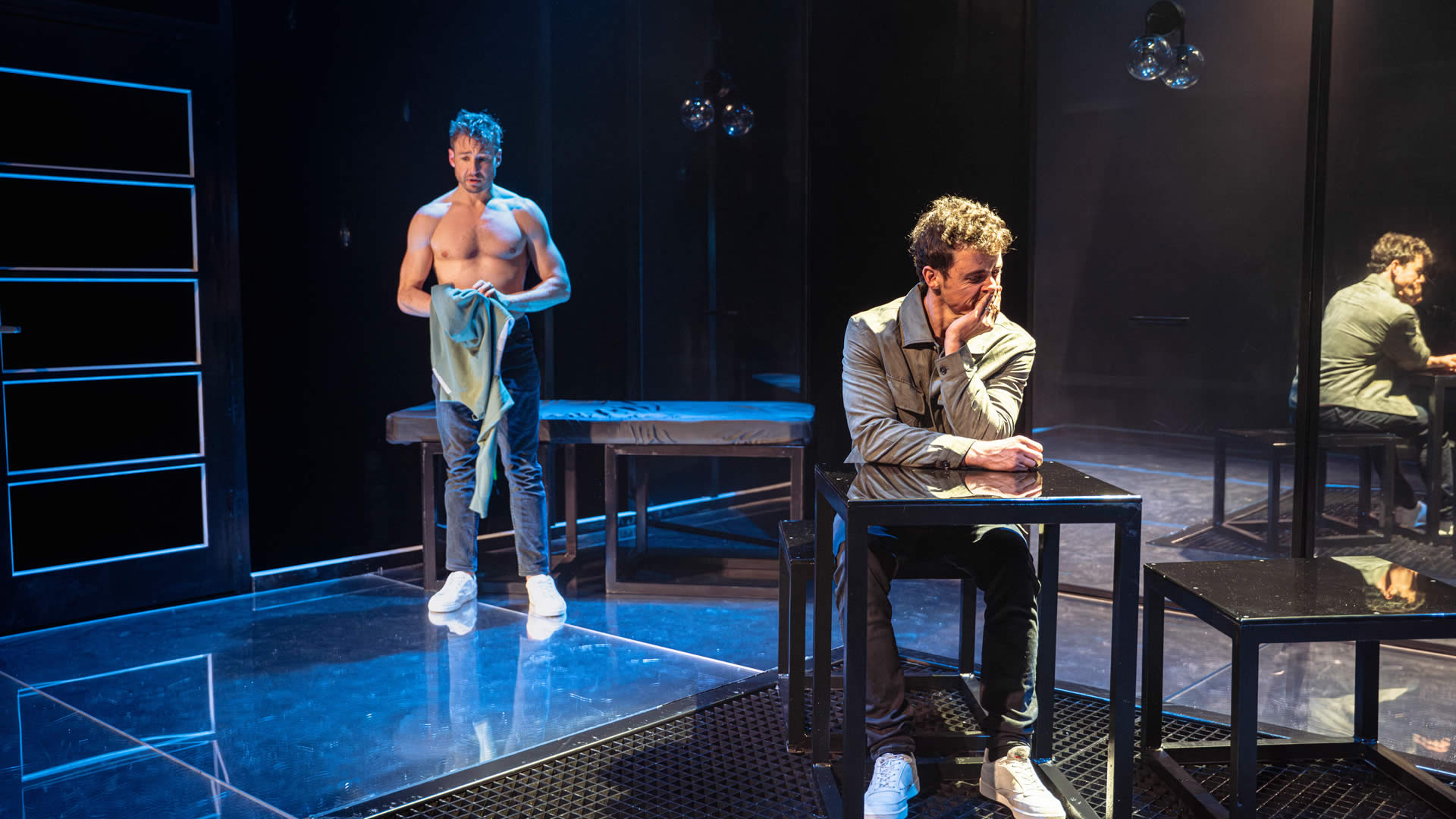
The cast of AFTERGLOW carries the play with restraint. Julian Curtis, Matthew Mitcham, and Matthew Predny approach their roles without performance bravado. There is a sense that each character is discovering their limits in real time.
Mitcham’s stage presence is notably unguarded, bringing a physical awareness shaped by discipline rather than display. Curtis and Predny balance this with emotional specificity, allowing humour to surface naturally before giving way to discomfort.
What binds them is listening. Conversations unfold as exchanges rather than speeches. Silences are allowed to sit. In AFTERGLOW, reaction matters as much as action.
Desire Without Ornament
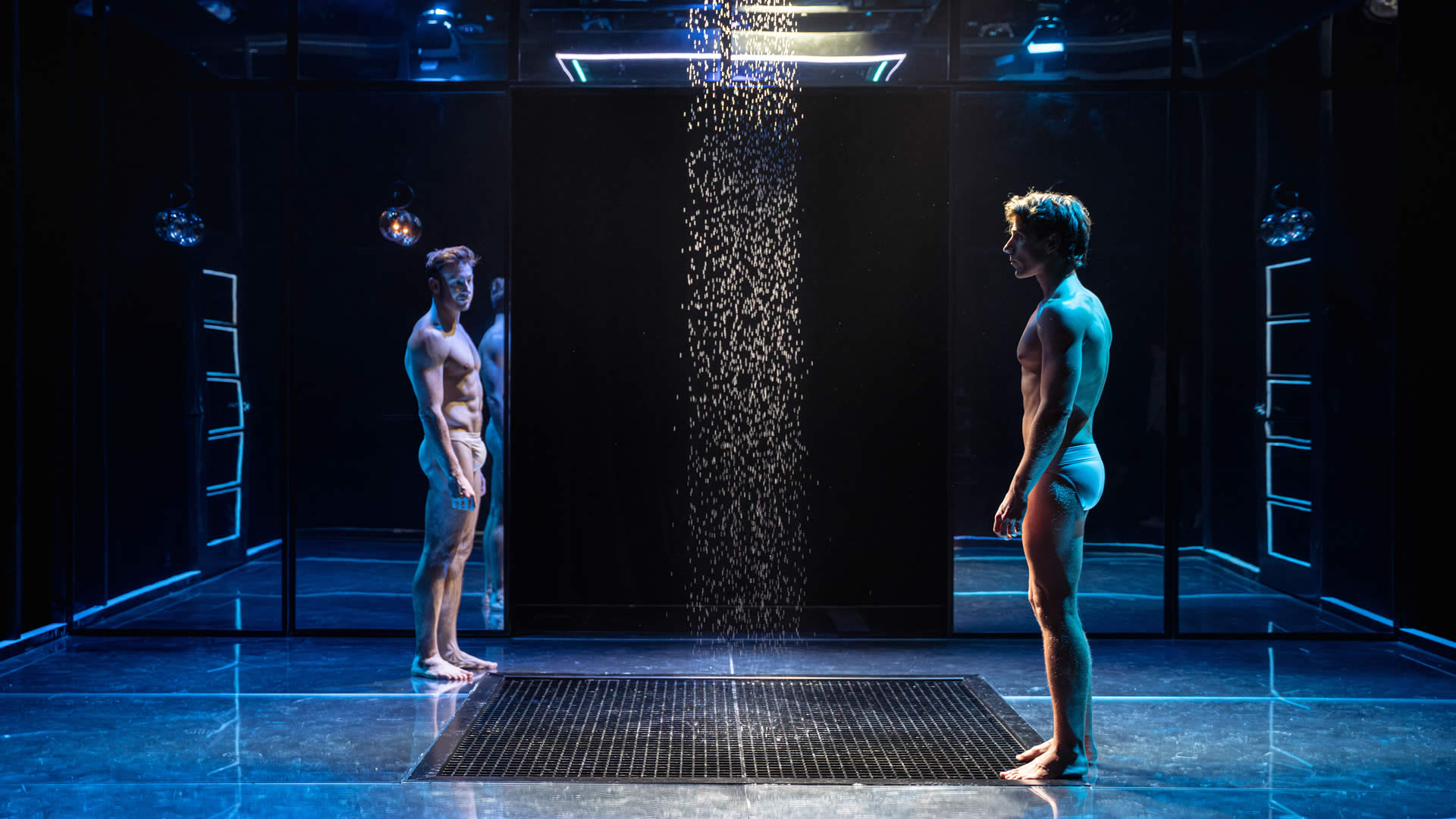
Sexuality in AFTERGLOW is treated neither coyly nor sensationally. Desire is present, but it is not romanticised. Instead, it is shown as something that carries consequence — pleasurable, destabilising, often contradictory.
The play’s frankness feels contemporary without striving to be topical. Sydney audiences, accustomed to conversations about openness and identity, will recognise the tension between progressive language and unresolved emotion.
What AFTERGLOW captures particularly well is how honesty can both clarify and complicate. Truth, once spoken, does not necessarily simplify a relationship. Sometimes it deepens the mess.
AFTERGLOW As A Question, Not An Answer
Writer and director S. Asher Gelman has described AFTERGLOW as a work that asks questions rather than providing solutions. That restraint is evident throughout. The play resists moral framing. No character is positioned as correct or cautionary.
Instead, the audience is left to sit with discomfort. Loyalties shift. Expectations are renegotiated. What felt generous in one moment feels fragile in the next.
This openness allows AFTERGLOW to resonate beyond its specific circumstances. While the relationship structure may be unfamiliar to some, the emotional dynamics are not. Longing, jealousy, fear of loss — these are recognisable currencies.
The Weight Of What Lingers
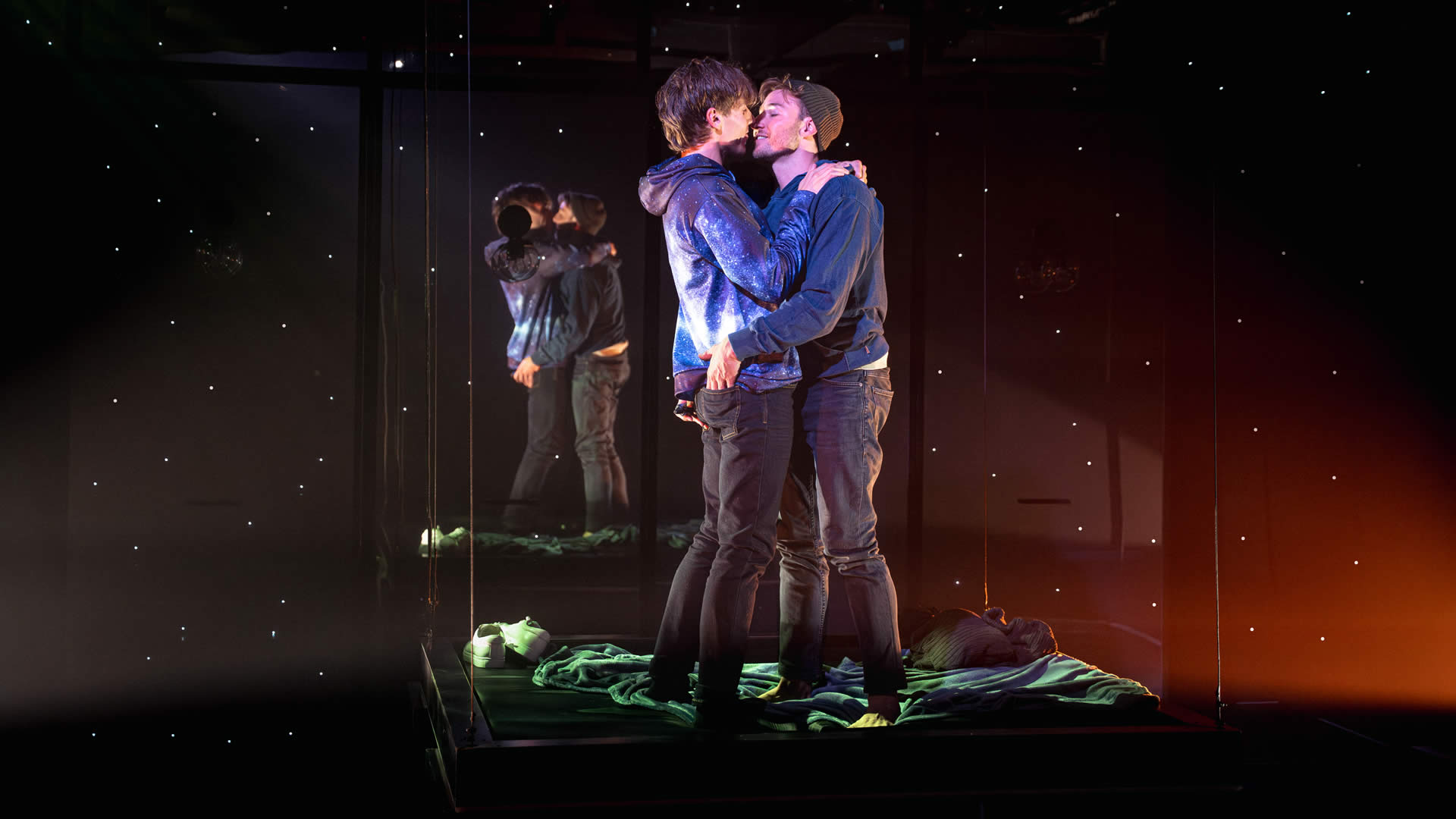
As AFTERGLOW moves toward its conclusion, the energy subtly changes. Conversations slow. The stakes feel heavier, not because something dramatic occurs, but because choices have accumulated.
The ending resists closure. Instead, it leaves a quiet space — the emotional equivalent of sitting alone after guests have gone, replaying conversations, reconsidering assumptions.
Walking back onto Darlinghurst streets, the play’s title feels precise. An afterglow is not brightness itself, but what remains once the heat has passed. AFTERGLOW lingers in that space, where clarity is partial and feelings are unresolved.
For Sydney audiences, the experience feels less like witnessing a story than being entrusted with one. It is theatre that does not chase reaction, but reflection — and in doing so, leaves its mark quietly, steadily, and long after the lights have dimmed.