
A review of Bette & Joan at Ensemble Theatre, exploring the legendary rivalry between Bette Davis and Joan Crawford and the enduring power of celebrity culture.
Since the very birth of theatre, humans have been fascinated with stories about the great and the powerful. Aeschylus wrote about Agamemnon. Euripides gave us Medea.
Elizabethan theatre was replete with tragedies about royals and mythic figures – King Lear, Hamlet, and more King Henrys than you could shake a stick at.
In the twentieth century we lowered our gaze somewhat, but theatre still gravitated toward larger-than-life figures: Galileo Galilei, Thomas More, and Wolfgang Amadeus Mozart.
The Cult Of Exceptionalism
This preoccupation became the lifeblood of Hollywood, reflecting and reinforcing a culture of exceptionalism and individualism that continues today.
Characters do not even have to be positive role models – only exceptional in some way. Figures such as Bonnie Parker and Clyde Barrow, or the legendary outlaw Jesse James, remain endlessly compelling because of the scale of their notoriety.
Eating Its Own Tale
We have long reached the point where Hollywood, in its voracious hunger for stories, is eating its own tail – perhaps its own tale.
Films about films and film stars are now a genre unto themselves: Frances, Gods and Monsters, and Mommie Dearest.
Which neatly brings us to the topic at hand: Bette & Joan, a stage work by British playwright Anton Burge.
Whatever Happened To…
Burge has carved out a niche crafting plays about celebrated women of the nineteenth and twentieth centuries, including Lady Mosley’s Suite and Storm in a Flower Vase, about renowned florist Constance Spry.
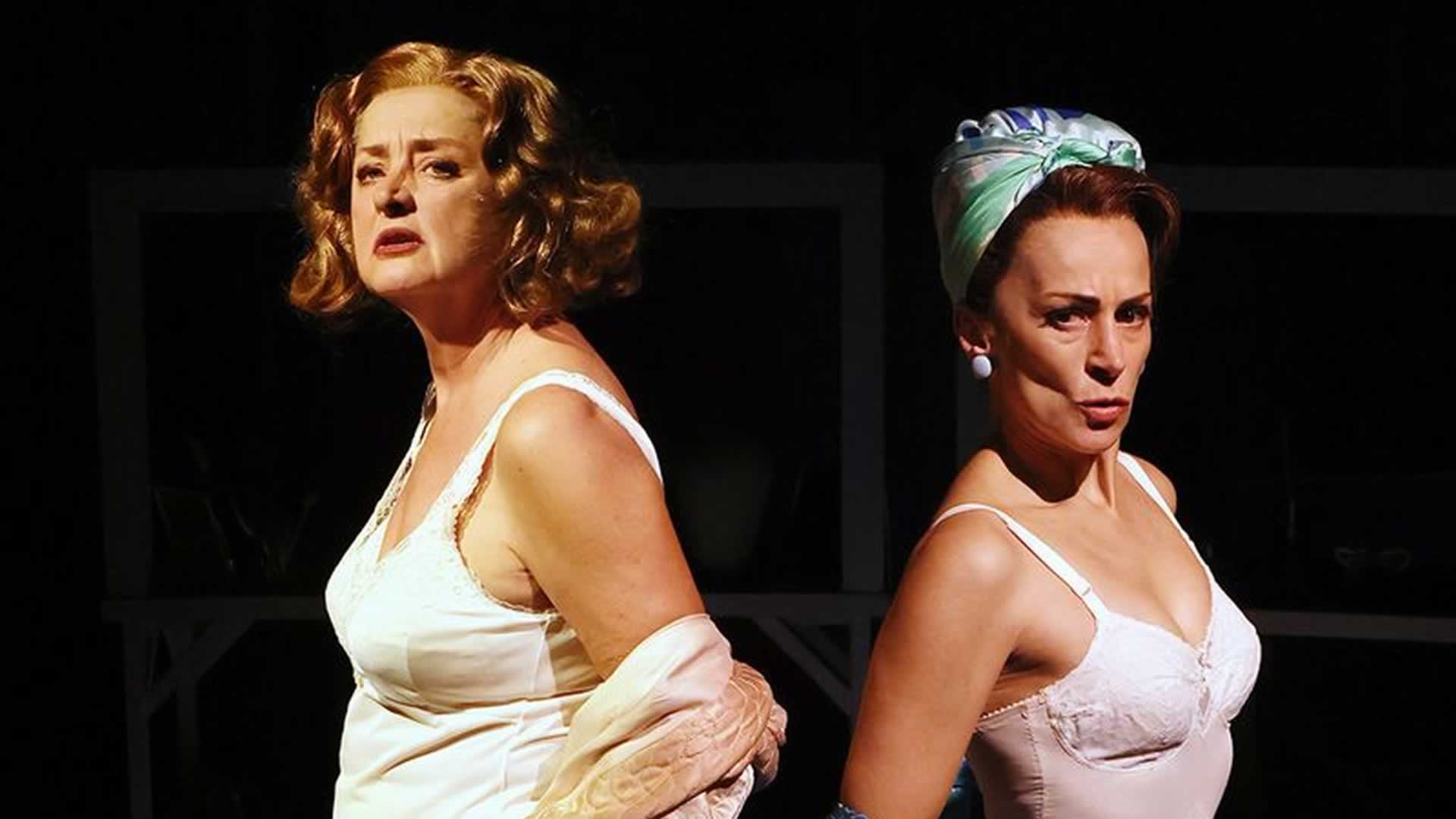
Bette & Joan focuses on the notorious feud between Bette Davis and Joan Crawford, two titans of Hollywood’s Golden Age.
For years the pair existed beneath the shadow of intense professional rivalry – whether genuine or amplified by the media. In the twilight of their careers they were cast together in the iconic horror-drama What Ever Happened to Baby Jane?.
In that film they played sisters trapped together out of necessity, locked in a brutal cycle of manipulation, cruelty and control.
Burge’s play invites the audience behind the curtain, imagining Davis and Crawford as they prepare to shoot a scene from the film.
For audiences of a certain generation, their names carry the same cultural weight that figures like Lady Gaga or Margot Robbie might hold for younger viewers today. Ask many people under twenty-five about Davis or Crawford, however, and you are likely to receive a blank stare.
So much for fame.
Fame As Commodity
On the surface, the play appears to be a straightforward biographical drama – a stage equivalent of the many biopics Hollywood currently produces.
Yet Burge attempts something more ambitious. Through this rivalry he explores themes of celebrity culture, legacy and the sacrifices demanded of artists – particularly women – in the pursuit of relevance and success.
Actors, no matter how great, are ultimately products to be marketed and sold.
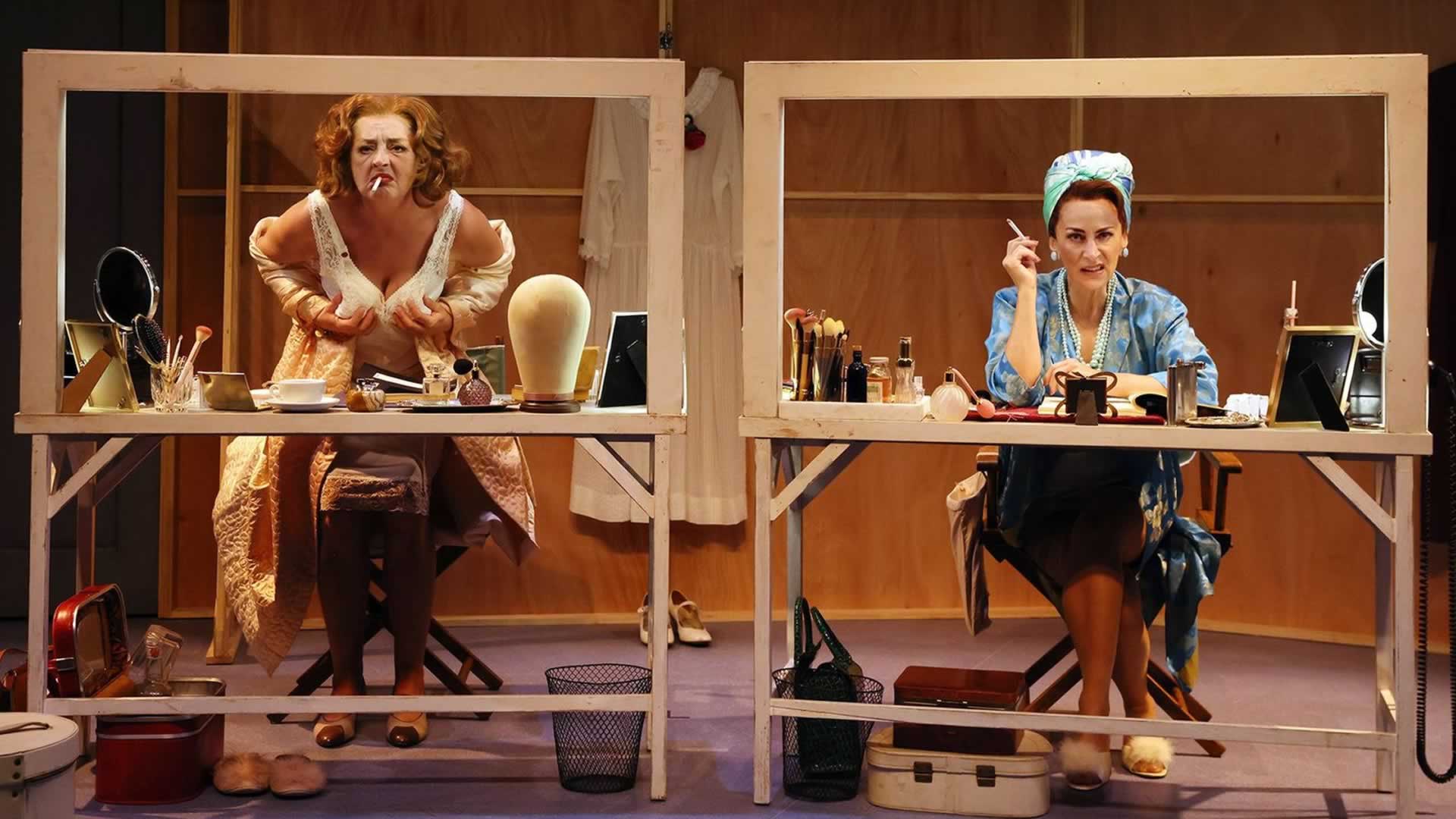
The commodification of stardom is cleverly symbolised through Crawford’s continual sipping of vodka-laced Pepsi-Cola throughout the play.
The reference is not accidental. Crawford was once married to Alfred Steele and became closely associated with the brand during the 1950s and 60s. Even after his death she remained on the company’s board and actively promoted the drink – reportedly installing a Pepsi vending machine on the soundstage while filming Baby Jane.
Confessions Of A Mask
It is a compelling premise, and increasingly relevant in today’s social-media dominated culture where celebrity can be both currency and burden.
Yet the script rarely rises above its source material. Much of the dialogue carries a slightly leaden quality – contrived and oddly bloodless despite a steady stream of wisecracks and one-liners, few of which land with the punch they promise.
Only midway through the second act does the play truly find emotional traction. During an awkward phone conversation between Davis and her mother, the carefully maintained mask slips.
For the first time we see the lonely, vulnerable woman beneath the legend.
It is a quietly heartbreaking moment.
Ironically, it is only when the play steps away from the mythology and begins to treat its subjects as human beings that we truly begin to care.
Through A Glass… Barely
The production itself presents some challenges, particularly in the staging and direction.
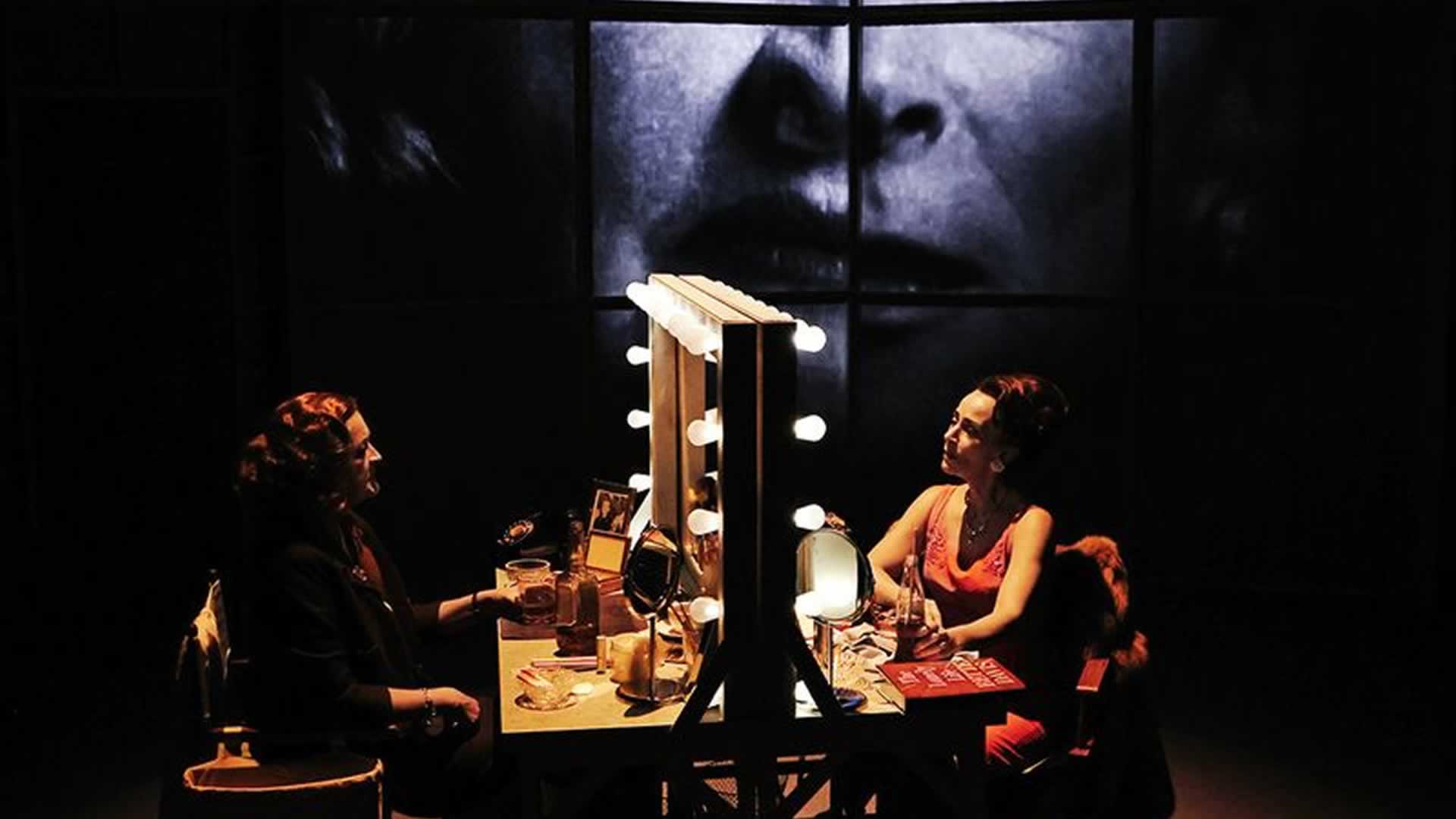
Make-up tables were placed in positions that obscured the actors’ faces for sections of the audience. At times the performers were positioned so far downstage that viewers seated along the sides of the thrust stage saw little more than their backs.
Video projections were used to compensate, displaying close-ups on the back wall of the set. While this occasionally improved visibility, it also created an unintended distraction. Audiences were left unsure where to focus – on the projected image or the actor standing before them.
The device, particularly prominent in the second act, felt overused and occasionally undermined the intimacy of the performance.
The Power Of Performance
Yet theatre, like cinema, sometimes finds salvation in performance.
Just as the films of Davis and Crawford were often elevated by their sheer presence, this production is ultimately carried by its actors.
Jeanette Cronin and Lucia Mastrantone deliver intelligent and emotionally layered portrayals that transcend the limitations of the script.
Their command of the stage – sharp, poised and occasionally vulnerable – reminds us why stories about great performers continue to fascinate audiences.
Stars, after all, are defined not by the material they inherit, but by their ability to burn brighter than it.
Rating: ***
Bette & Joan is playing at the Ensemble Theatre until 25 April.
Review By: Nick Bennett