
Recently I attended the City Recital Hall for Sydney Chamber Choir's performance of Carl Orff's masterwork Carmina Burana, accompanied by three shorter choral works: Invocation & Dance by David Conte, Dharriwaa – Narran Lakes Dreaming by Nardi Simpson, and I Am Martuwarra by Paul Stanhope. These pieces served as stepping stones, introducing ideas, textures and rhythmic gestures that would later resonate through the evening’s main work.
Invocation & Dance
David Conte has composed more than 200 works, including operas and many choral pieces, often engaging with social and moral themes.
Invocation & Dance, commissioned by the San Francisco Gay Men’s Chorus and first performed in 1986, draws inspiration from Walt Whitman’s poem When Lilacs Last at the Dooryard Bloom’d, written after the assassination of Abraham Lincoln. In Whitman’s poem, grief gradually gives way to acceptance, recognising death as part of life’s natural cycle.
Conte translates this idea into music through the imagined song of a bird – a symbol of nature’s continuity. With jazzy rhythms and buoyant choral textures, the piece unfolds as something joyous and unexpectedly uplifting, its melodic lines direct and invigorating.
Dharriwaa – Narran Lakes Dreaming
Nardi Simpson, a Yuwaalaraay storyteller and performer, has built a career across music, literature and education and currently teaches at the Sydney Conservatorium of Music.
Dharriwaa – Narran Lakes Dreaming is a musical homage to the Narran Lakes of north-western New South Wales. As Simpson has described it, Dharriwaa sits “at the heart of the Yuwaalaraay people, teaching us about kinship, our old people, our knowledge, language and all of creation.”
One of the most evocative moments arrives through the voices of Simpson’s nieces and nephew speaking in language, recounting the creation story of the Narran Lakes. The interplay of choir and percussion captures the atmosphere of this sacred landscape – wind, water and memory layered through sound. The affection for place is unmistakable.
I Am Martuwarra
Paul Stanhope is a multi-award-winning composer whose work has been performed internationally.
Martuwarra is the Bunuba name for Western Australia’s Fitzroy River, and Stanhope’s composition takes inspiration from a poem by Steve Hawke. The text traces the river’s journey through Country and through the lands of three Aboriginal nations.
Stanhope divides the choir into distinct groups representing different aspects of landscape and narrative. As the river grows in strength, the music mirrors that momentum through larger choral passages and expanding textures.
A particularly striking moment occurs when the Children’s Choir strike small stones together, producing the delicate sound of rain falling on water and the croaking of frogs. It is a simple gesture, yet it transforms the atmosphere and lifts the piece to an almost meditative plane.
Carmina Burana: From The Sublime To The Ridiculous
Few pieces of classical music begin with an opening as recognisable as Carl Orff’s Carmina Burana. Beethoven’s Fifth Symphony may rival it, and Richard Strauss’s Also Sprach Zarathustra certainly gained fame through Stanley Kubrick’s 2001: A Space Odyssey. Yet in terms of sheer cultural exposure, little matches the impact of Orff’s explosive “O Fortuna”.
The work has appeared everywhere: films such as Excalibur, Glory and Waterworld, countless television commercials, and even episodes of The Simpsons. In truth, it is primarily that four-minute opening that has entered public consciousness. Much of the remaining cantata often remains unfamiliar even to those who recognise its famous beginning.
Origin Story
Orff based the work on a medieval manuscript discovered in a Bavarian monastery in 1803. The texts – written by wandering scholars and clerics – explore themes of fortune, love, drinking and the unpredictability of life.
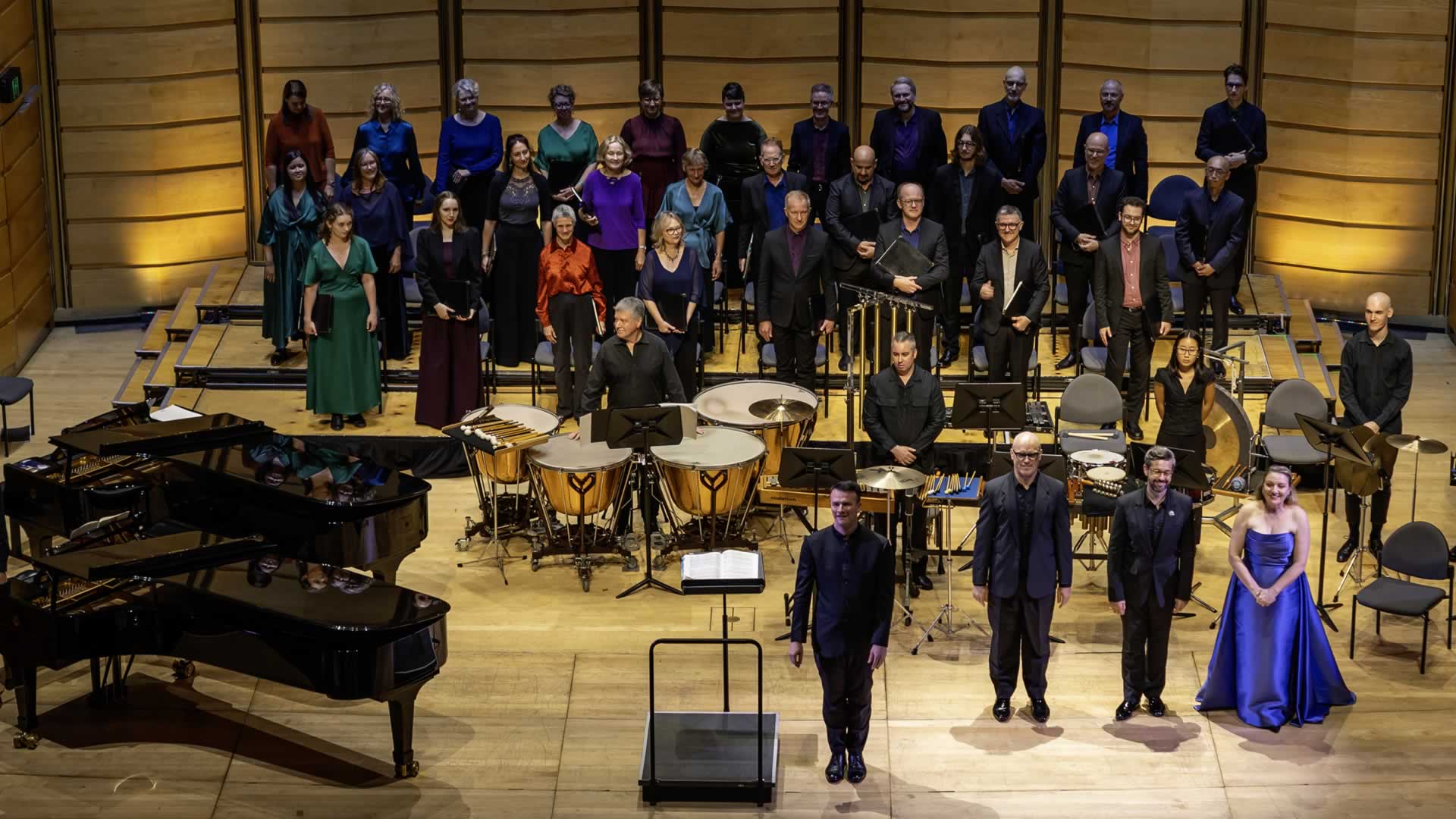
The performance at City Recital Hall followed Wilhelm Killmayer’s authorised chamber version, which emphasises percussion, voices and two pianos. The more intimate setting reveals the central importance of percussion in Orff’s musical design.
The Beat Of A Different Drum
The five percussionists – Jess Ciampa, Grace Lee, Chiron Meller, Brian Nixon and Bryn Wood – carried enormous physical and technical demands, moving constantly between instruments with precision and energy.
Percussion in Carmina Burana is far from incidental. Every drumbeat, chime and xylophone note contributes to the music’s emotional texture, and imagining the work without percussion is almost impossible.
Brush Up Your Latin
The cantata unfolds across three main sections: Spring, In the Tavern, and The Court of Love. Across its 25 movements the music swings wildly between moods – playful, raucous, sensual and reflective.
The lyrics themselves can be surprisingly earthy, though modern audiences are spared embarrassment by the languages used: Latin, medieval German and occasional French.
Nothing Succeeds Like Excess
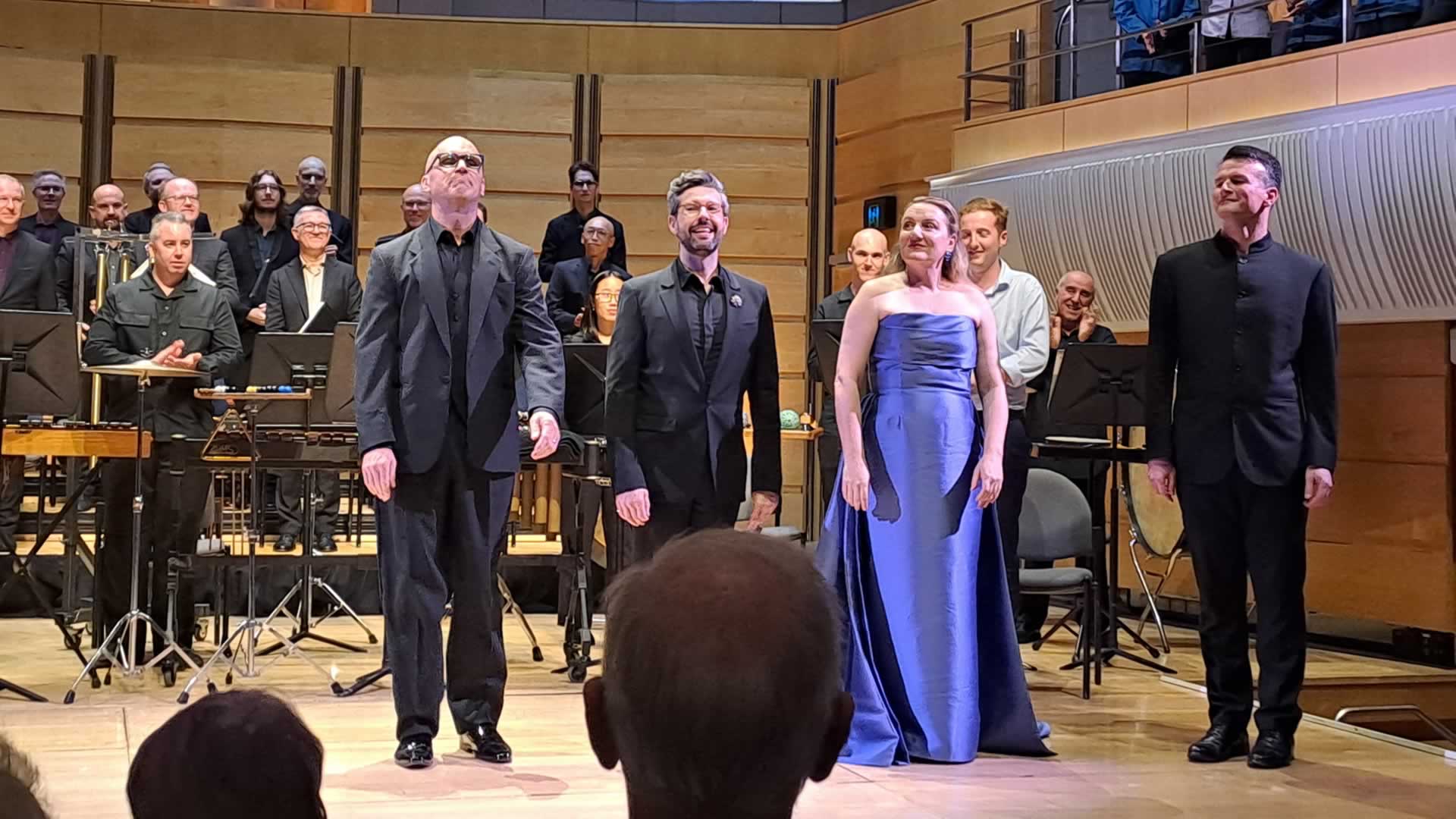
Three opera soloists anchored the performance: soprano Celeste Lazarenko, counter-tenor Russell Harcourt and baritone Simon Meadows.
Meadows navigated formidable vocal ranges, while Harcourt’s counter-tenor passages brought moments of haunting beauty. Lazarenko’s soprano soared to astonishing heights that seemed almost beyond human capability.
The Sydney Children’s Choir added another dimension. Positioned in galleries above the stage, the young singers created both a visual and sonic counterpoint to the adult choir, their enthusiasm infectious.
The Wheel Of Fortune
At its heart, Carmina Burana is a spectacle.
“O Fortuna” frames the work at both beginning and end, a reminder of life’s unpredictable cycles. Pounding rhythms, repeated refrains and sudden dynamic shifts create a visceral experience. The interplay between tension and release – sharp staccato passages followed by sustained lines – generates moments of catharsis.
Human beings respond instinctively to synchronised voices and rhythmic repetition. Orff understood this deeply, and the result is music that feels almost ritualistic in its communal power.
Last But Not Least
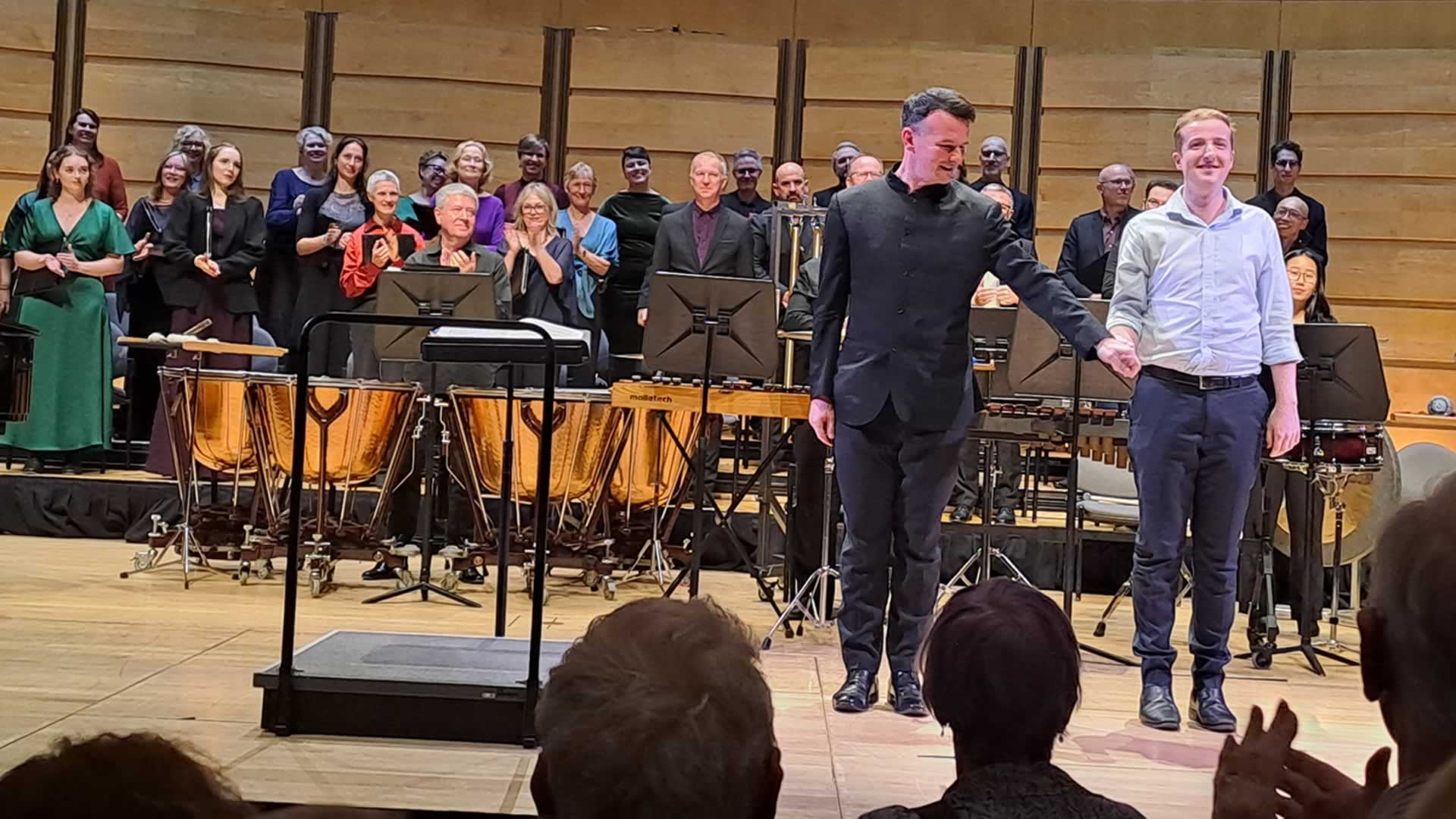
Finally, recognition must go to pianists Luke Byrne and Jem Harding, as well as conductor Sam Allchurch.
Allchurch conducted with visible joy and commitment, clearly sharing a deep connection with both the music and the performers.
The evening concluded with a sustained standing ovation from an appreciative audience – a fitting response to a performance of remarkable energy and scale.
Review By: Nick Bennett
Photos By: Chalice Paiva