
Crowds Celebrate Lunar New Year 2026 in Hurstville as 45,000 gather for dragon dances, lanterns, and community ritual in southern Sydney’s cultural heart.
On a bright Saturday afternoon, the footpaths around Forest Road filled early. Families arrived in loose clusters, pausing at the edges of temporary stages and food stalls as the air thickened with drumbeats. By mid-afternoon, more than 45,000 people had gathered in Hurstville, drawn by a festival that has grown steadily over two decades into one of southern Sydney’s most recognisable communal rituals.
The Year of the Horse arrived not as spectacle alone but as something more grounded — a shared rhythm of movement and sound, carried across generations. Children clutched paper lanterns, elders found shade along the shopfronts, and the pulse of percussion echoed off glass and concrete. In a place defined by migration and exchange, the celebration unfolded with an ease that suggested it belonged here.
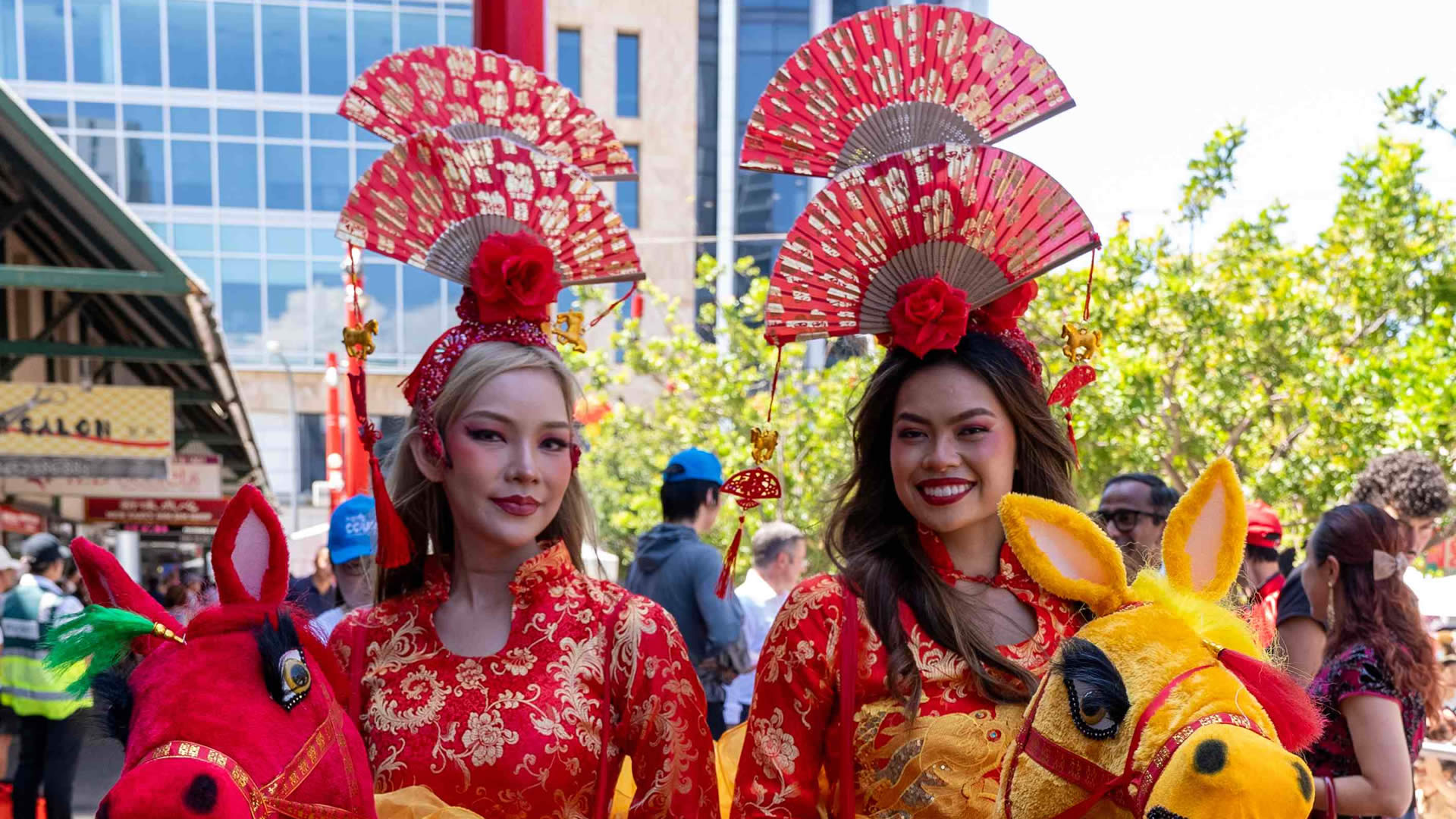
A Neighbourhood Gathers: Crowds Celebrate Lunar New Year 2026 In Hurstville
Presented by Georges River Council, the 2026 festival marked its 23rd year in the district. The formal opening began with the traditional eye-dotting ceremony — a moment both symbolic and intimate. Brushes touched painted forms, and with them the dragons were given sight, animating the procession that followed.
Deputy Mayor Sam Stratikopoulos welcomed attendees beneath a wash of red banners and lantern strings. The temperature climbed, yet the crowd remained unhurried. What drew people here was less a programme than a feeling: the recognition of shared celebration across language and background.
The dragon and lion dancers moved in deliberate arcs through the square, weaving between spectators who leaned forward instinctively, as though drawn into the choreography. Each drumbeat seemed to travel through the pavement itself. The movements were precise, almost meditative — energy contained within ritual form.
Ritual And Performance In Motion
Performance here did not remain on stage. Roving acts drifted through the streets, blurring the boundary between audience and performer. At intervals, the God of Wealth appeared, distributing red envelopes that passed from hand to hand with quiet delight. Children held them carefully, aware of their symbolism even before fully understanding it.
Nearby, the Little Lanterns zone introduced a softer tempo. Designed for younger participants, the space carried its own atmosphere — part playground, part workshop. A K-Pop dance session gathered teenagers into spontaneous synchrony, while paper weaving tables offered slower concentration. Intergenerational line dancing unfolded without announcement, elders guiding younger participants through steps that required patience rather than speed.
Food remained an anchoring presence. Demonstrations by Heather Jeong drew steady crowds, her preparation of familiar regional dishes creating moments of quiet attention amid the movement. Aromas drifted outward, mingling with incense and summer heat, grounding celebration in everyday sensory experience.
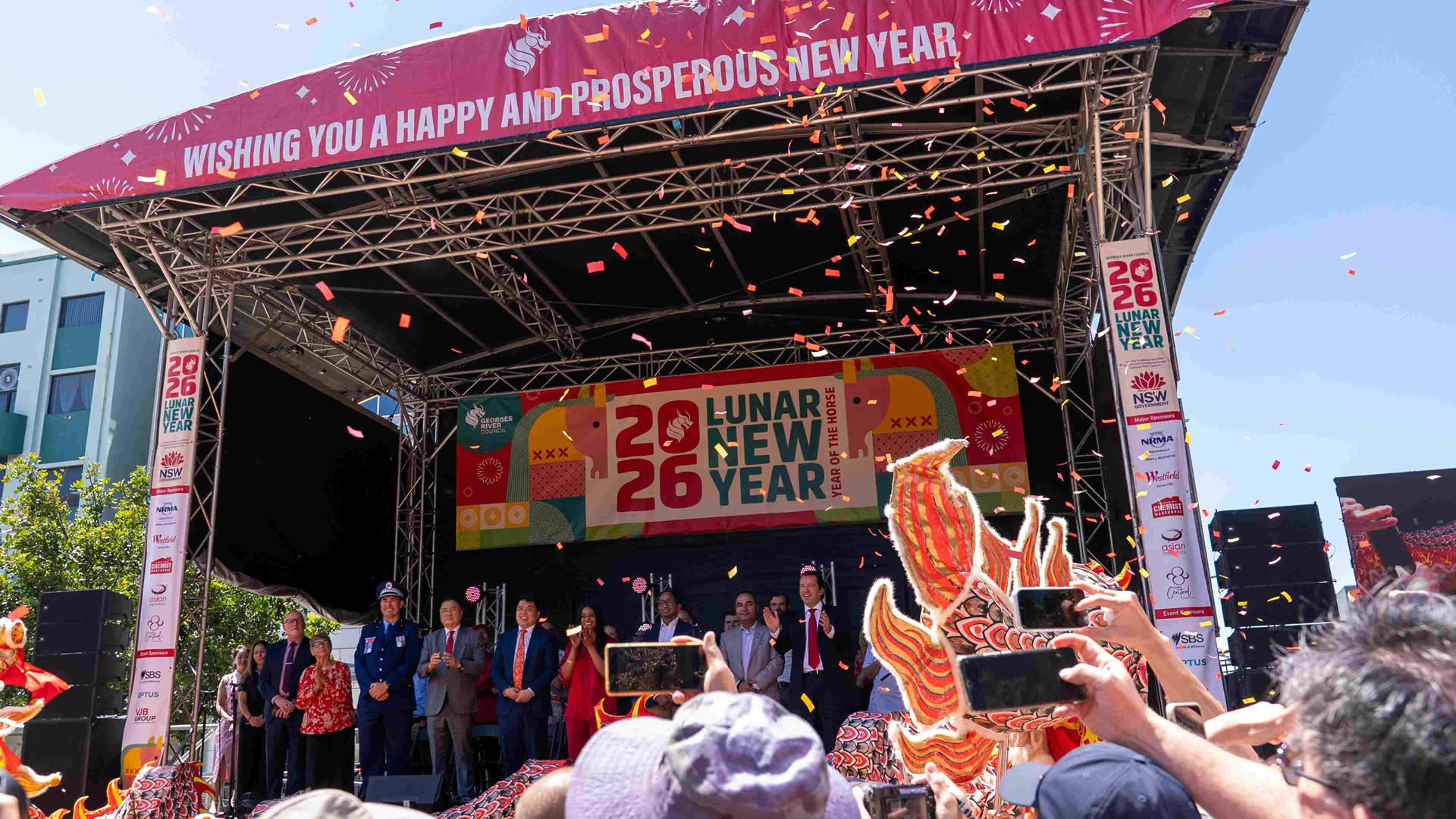
Art And Symbol: Crowds Celebrate Lunar New Year 2026 In Hurstville Through Public Expression
Visual storytelling shaped the festival as much as performance. Local artist Bryan Mew unveiled the 2026 mural Kumquat Blessings & The Fire Horse, first created at Westfield Hurstville before its presentation to the public. The work will soon find a permanent home in Interchange Park, extending the festival’s presence beyond a single day.
The mural’s imagery — bright kumquats clustered against sweeping lines of flame — reflected both prosperity and motion. Observers lingered, photographing details or simply standing before it. In this setting, art functioned less as display than as continuity, connecting the ephemeral energy of the festival with the everyday landscape of the suburb.
Mayor Elise Borg described the event as a highlight of the community calendar, a sentiment that felt less ceremonial than descriptive. The gathering reflected not only cultural tradition but the practical reality of a district shaped by long-standing Asian Australian communities.
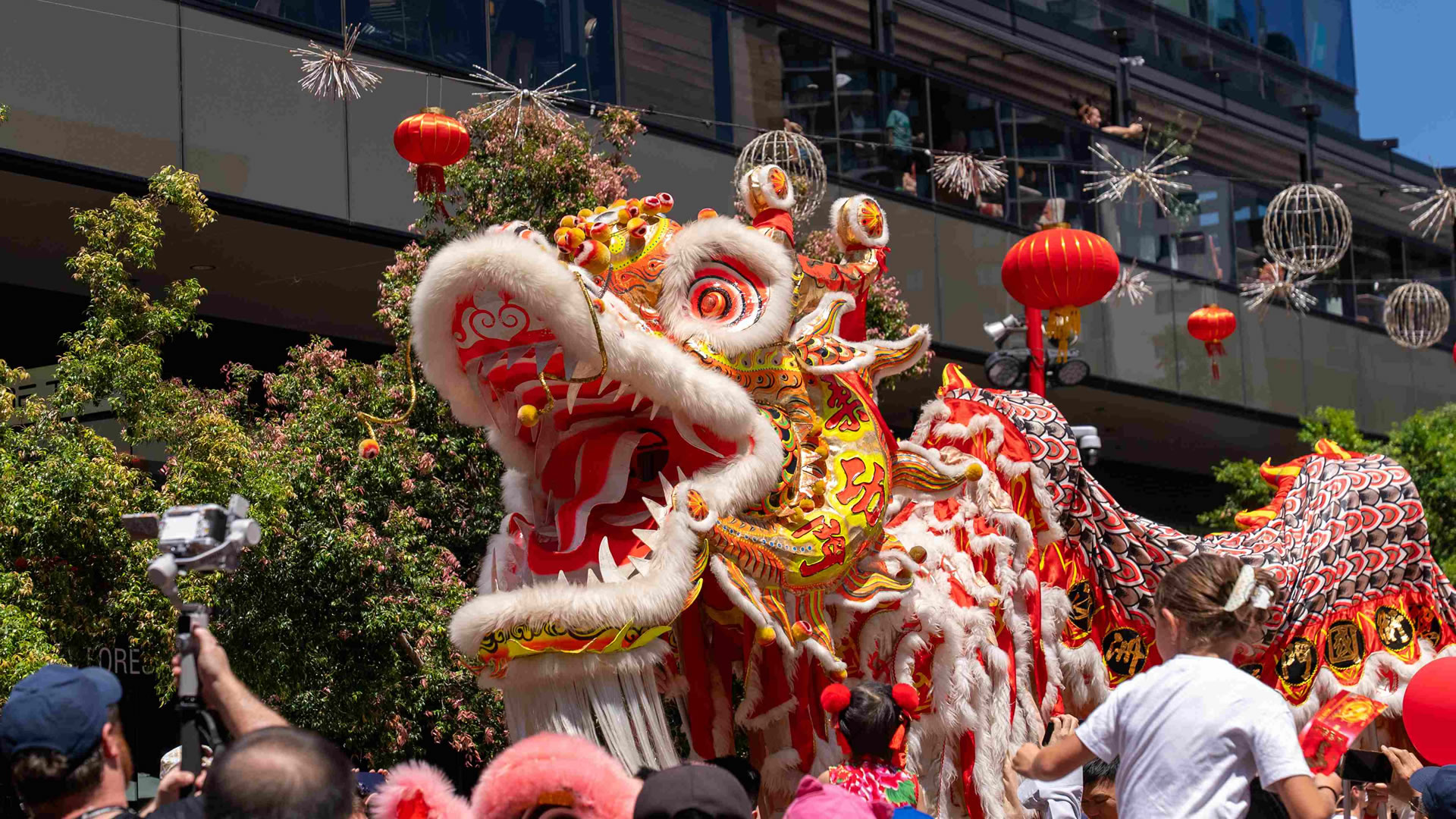
The Festival Within The City
Support from partners including SBS and the NSW Government underscored the scale of the occasion. Yet the experience remained grounded in locality — in the familiar rhythm of suburban streets briefly transformed.
As evening approached, the light softened across shopfront signs and temporary structures. Performances continued, though the energy shifted from exuberant to reflective. Families began their slow departures, carrying lanterns and small keepsakes. The streets returned gradually to their usual cadence.
What lingered was not spectacle but atmosphere: the memory of sound echoing through a shared space, of strangers standing shoulder to shoulder without urgency. In this corner of Sydney, celebration felt less like an event than an expression of continuity — a yearly reaffirmation that culture lives most fully when practised together.