
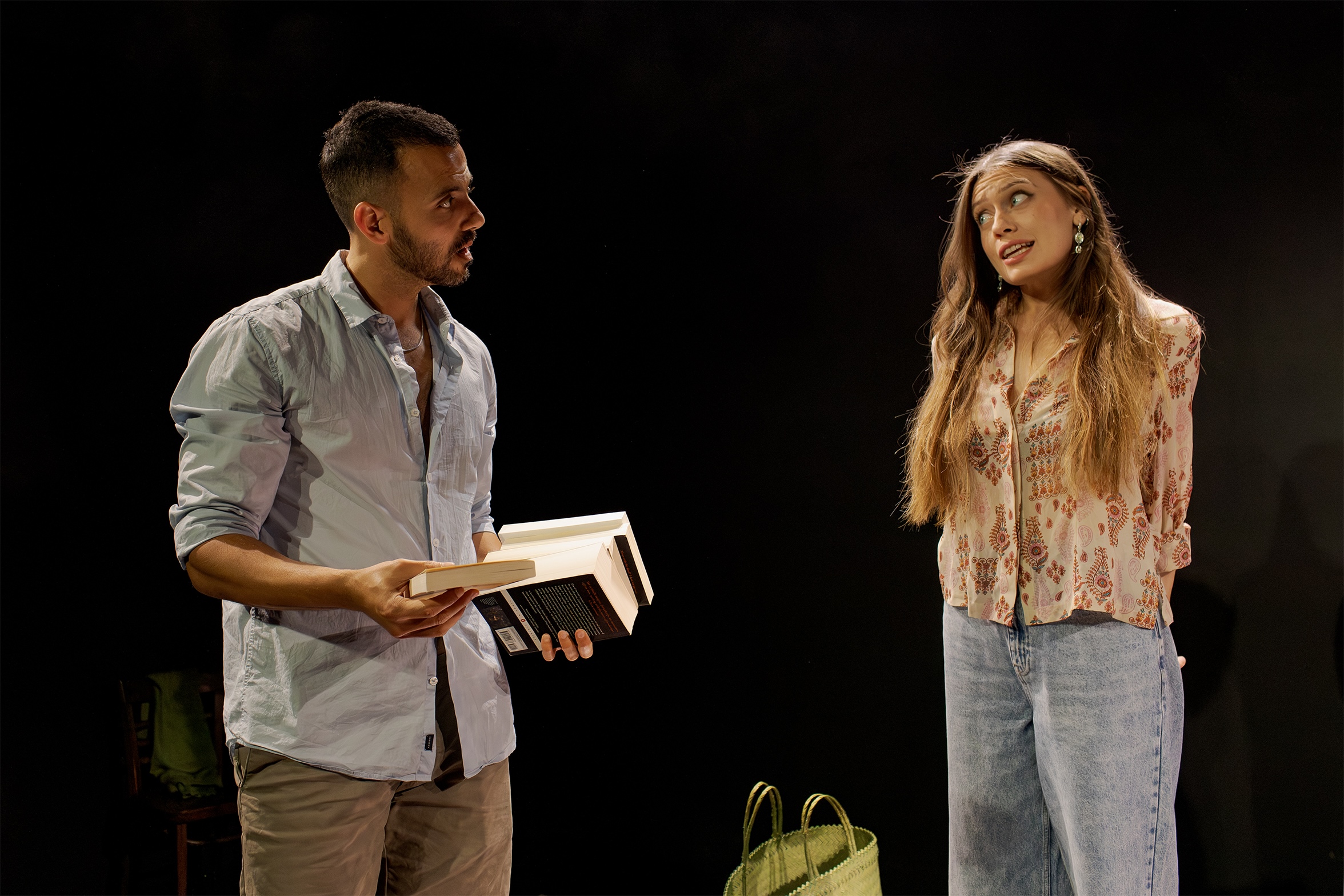
A man and a woman meet in a bookshop in an unknown city. They exchange a few words - about books. They go on a date - and talk about books and pop culture. They start courting and eventually marry. All the while we see them talking about books, grammar and reality TV. We presume the action is taking place somewhere in Australia. Christopher is from Brazil, but we don't know why he landed here. After ten years the 'spark' has gone out of their marriage. There are no children, and the topic of children never arises. Nor is there any mention of friends, or social activity of any kind. It's as if they live in a bubble.
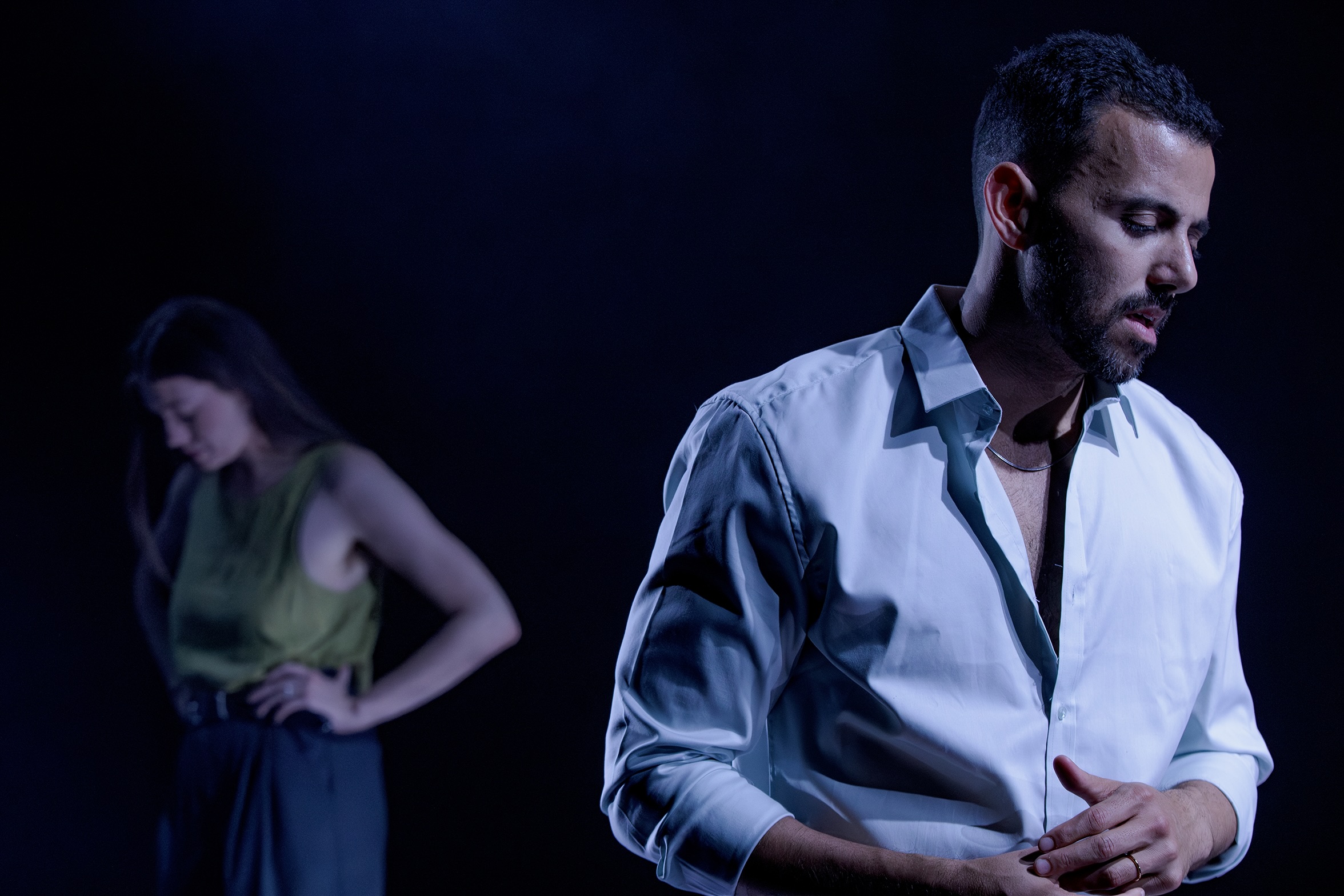
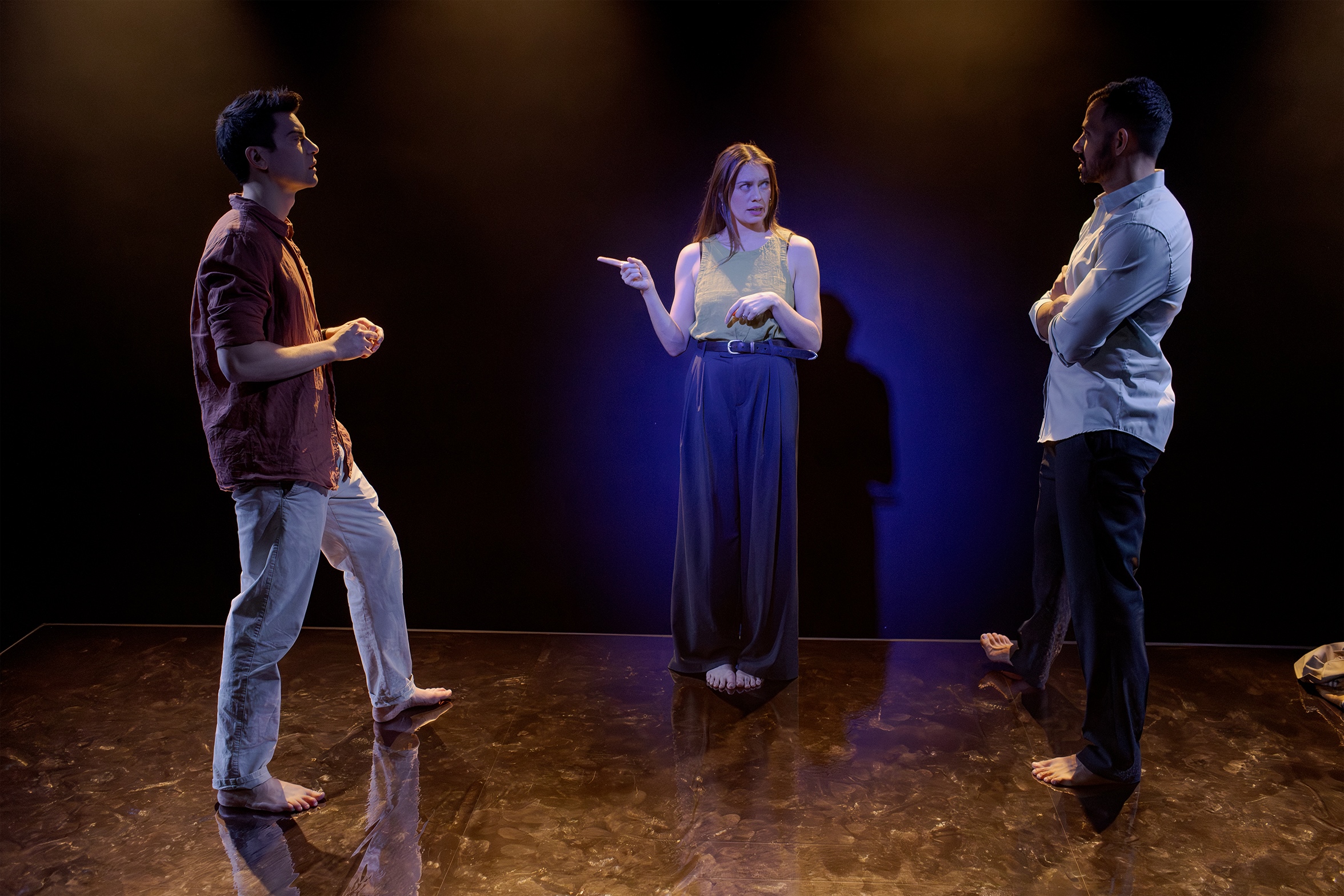
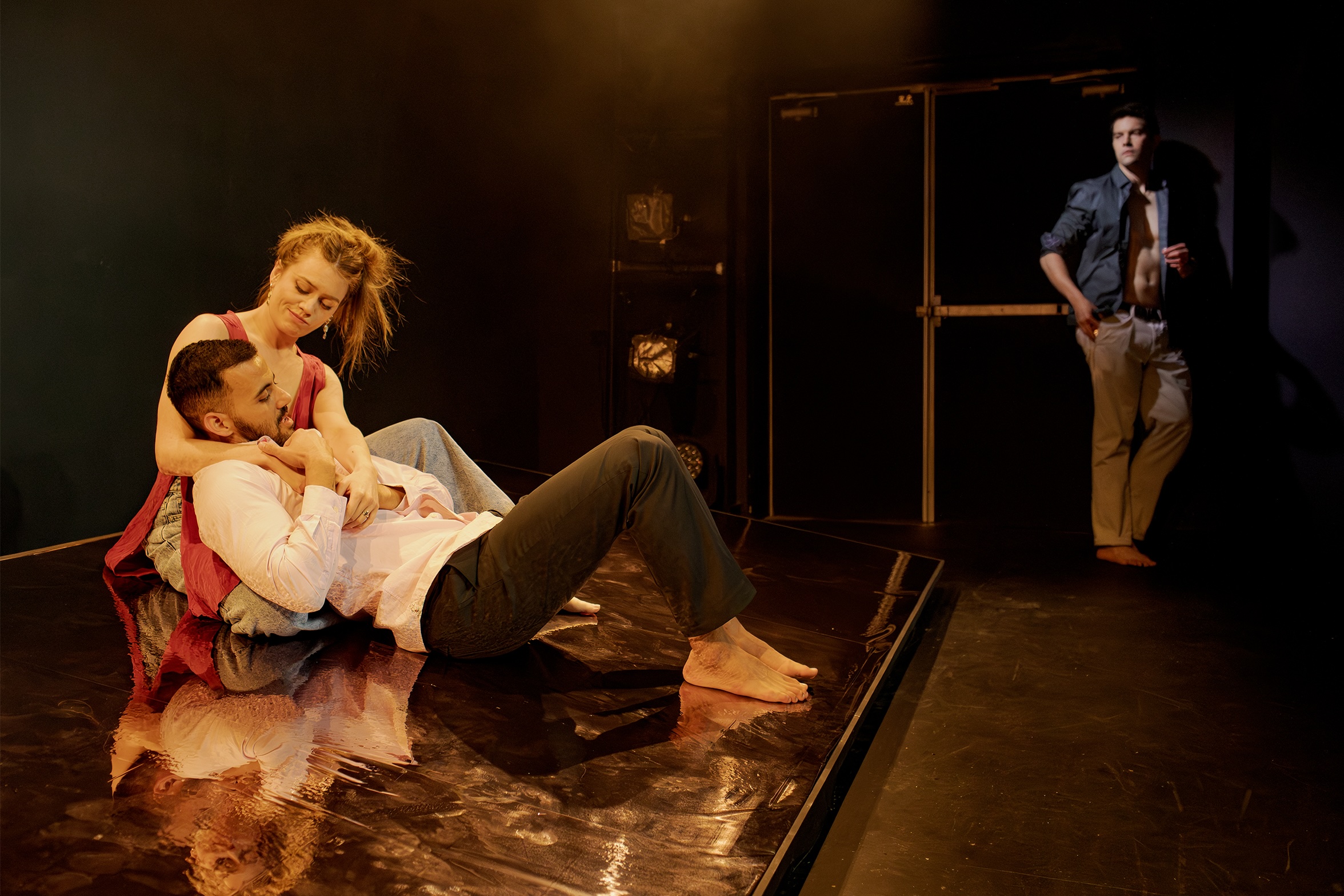
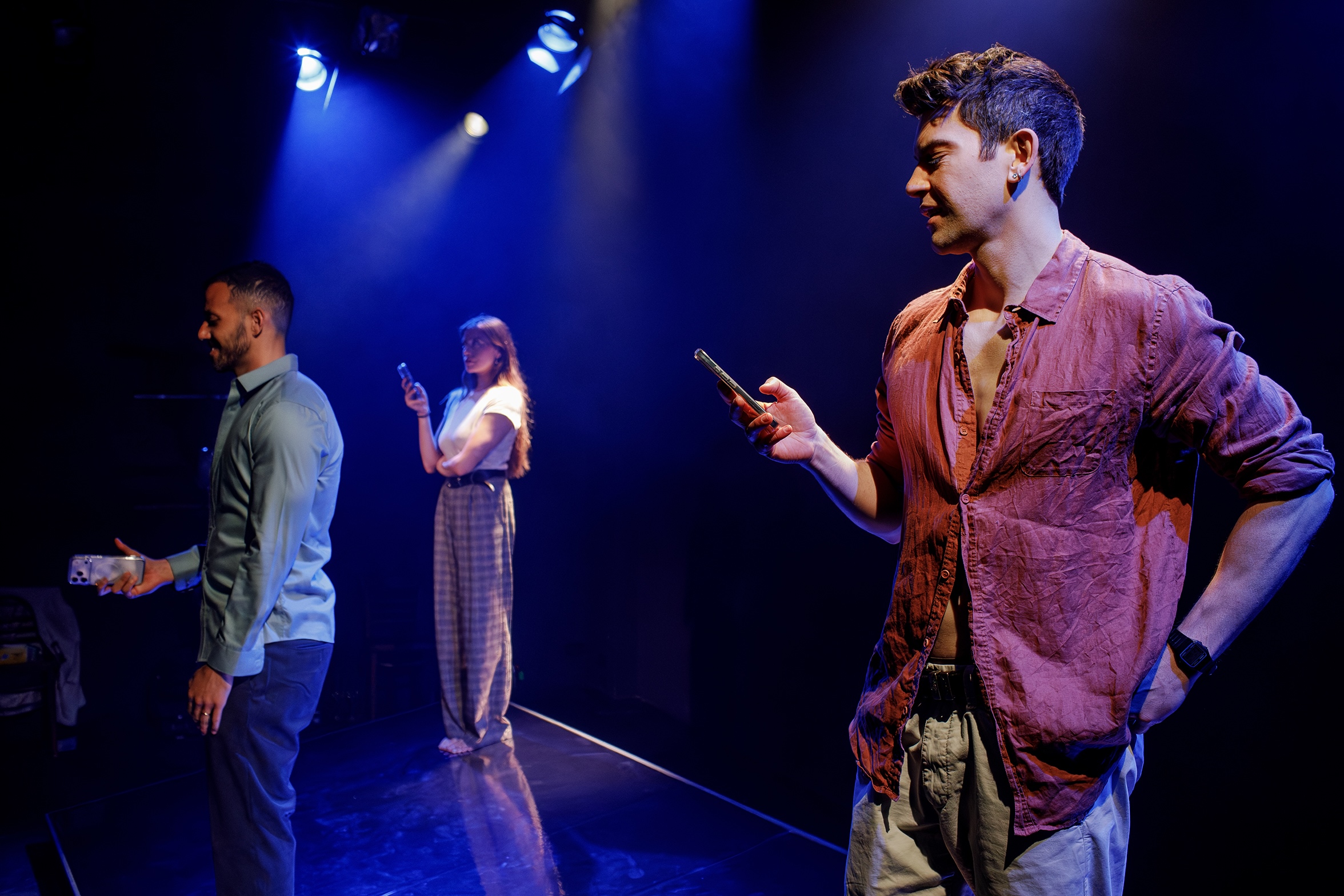
One day, while on a business trip to the city, Christopher (Wesley Senna) meets David (Drew Wilson) in a bar - and everything changes. Actually, on the surface, nothing changes, though Christopher's wife Heather (Annabelle Kablean) senses something is different - his attitude to her, as if he's not really there, even when he's in the same room. It may be a cliche, but in the real world, the vast majority of women would automatically assume that their husband was having an affair, and in most cases they'd be right. But despite Christopher's behaviour which screams unambiguously, "I don't love you any more, in that way, and I'm cheating on you", Heather refuses to, or is incapable of joining the dots. This refusal to confront the truth is not hers alone - Christopher even more so.

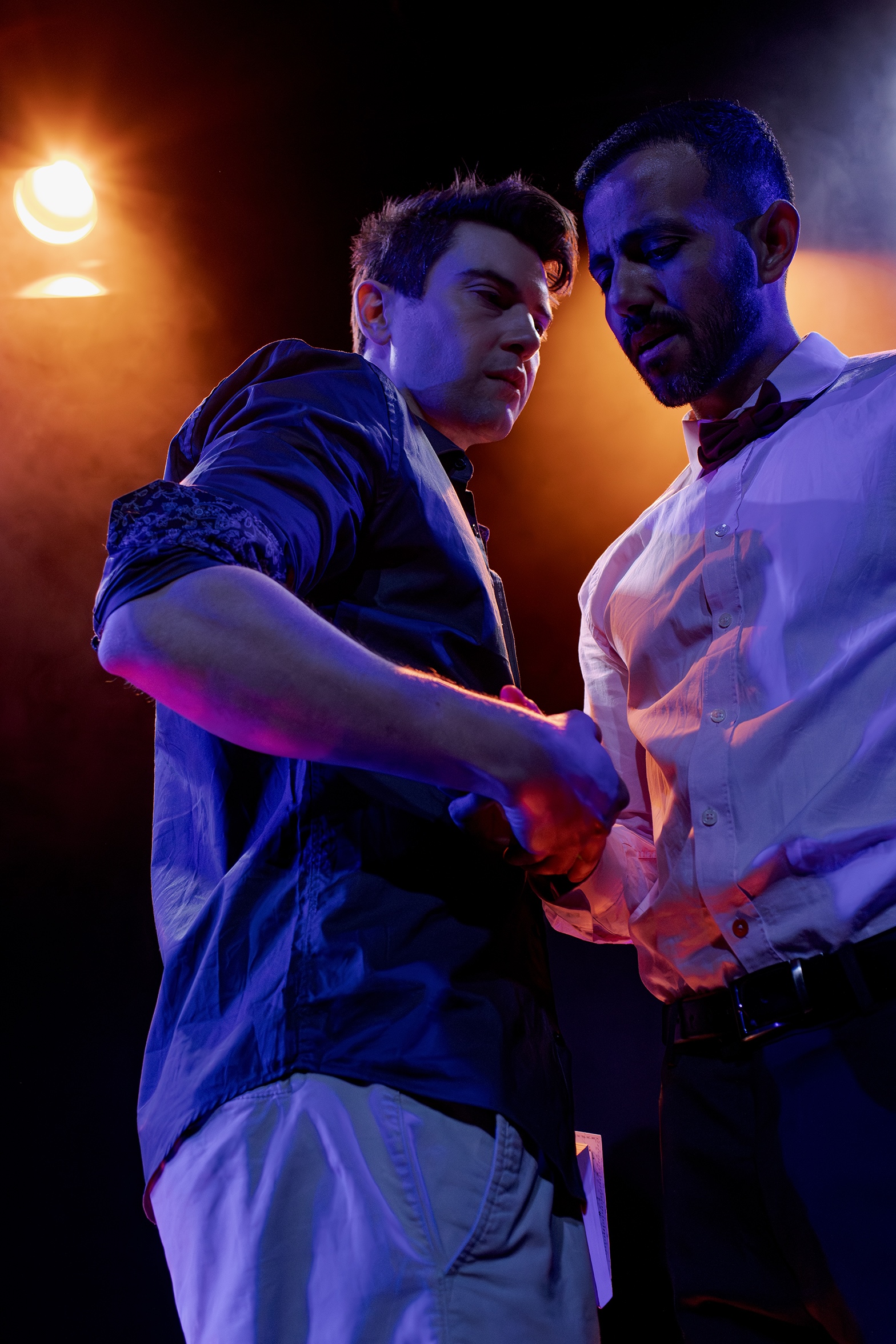
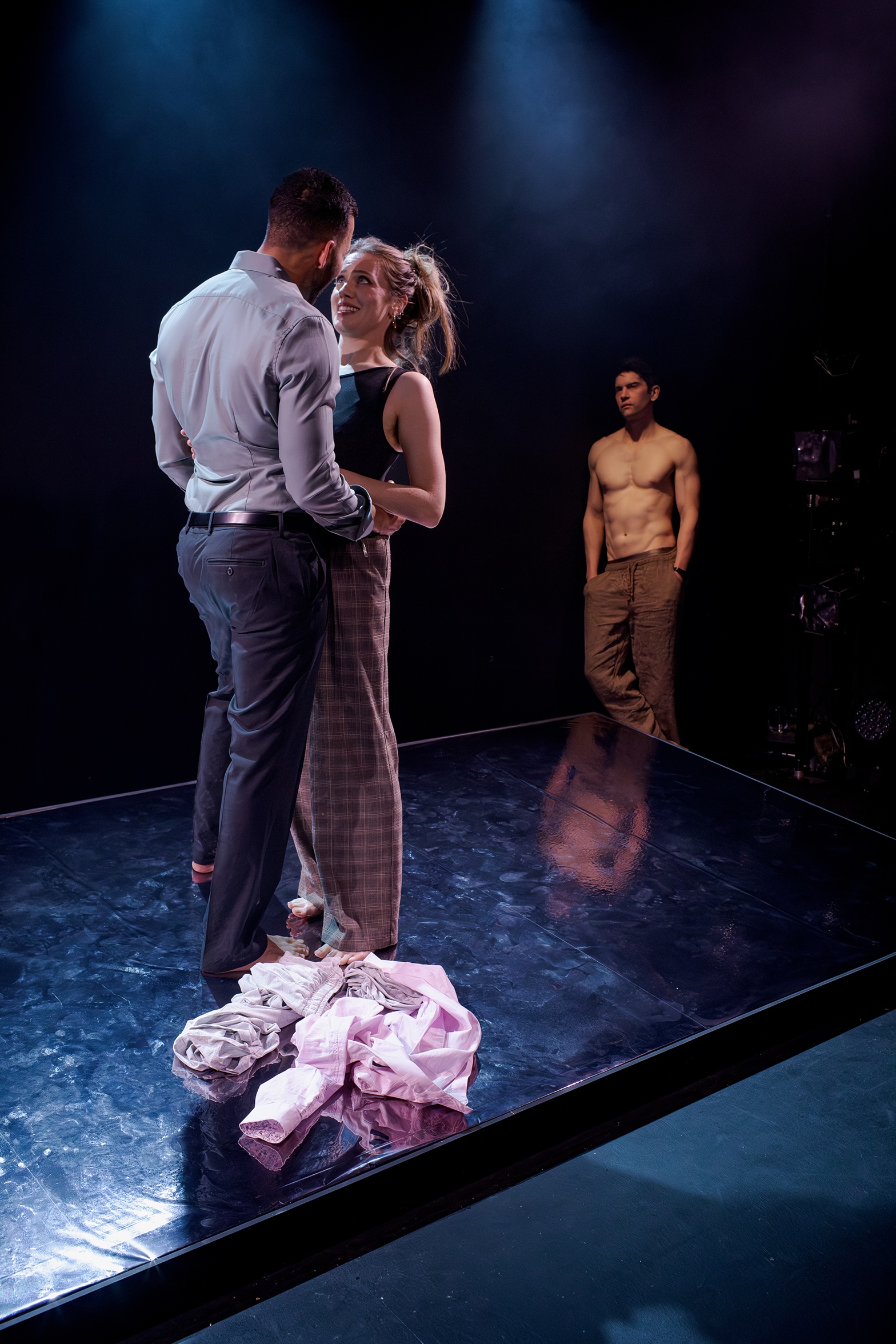
The play is entitled GRAVITY, but a more fitting title might be LIMINAL, for this word sums up the theme, style, mood, the design - everything about the play. Liminal describes states, times, spaces that exist at a point of change, that are in-between, transitional, at a metaphorical or sensory threshold. Christopher is certainly that; not sure if he still loves Heather, although he insists he does; not sure about his feelings for David; unsure of David's feelings for him. All the connections seem tentative, and there is a decidedly tentative quality to Wesley Senna's portrayal of Christopher, so much so that for large parts of the play he seems uncommitted to any course of action, which undoubtedly his character is. However, this doesn't make for engaging theatre. The glacial pacing doesn't help. It is slow to the point of funereal ... and then it stops. Initially I enjoyed the bravery, the daring of the director's willingness to embrace stillness and silence, but the oft repeated stillnesses ultimately became a source of diminishing returns. Emerging out of action that was so slow to begin with, the stillness had much less impact.

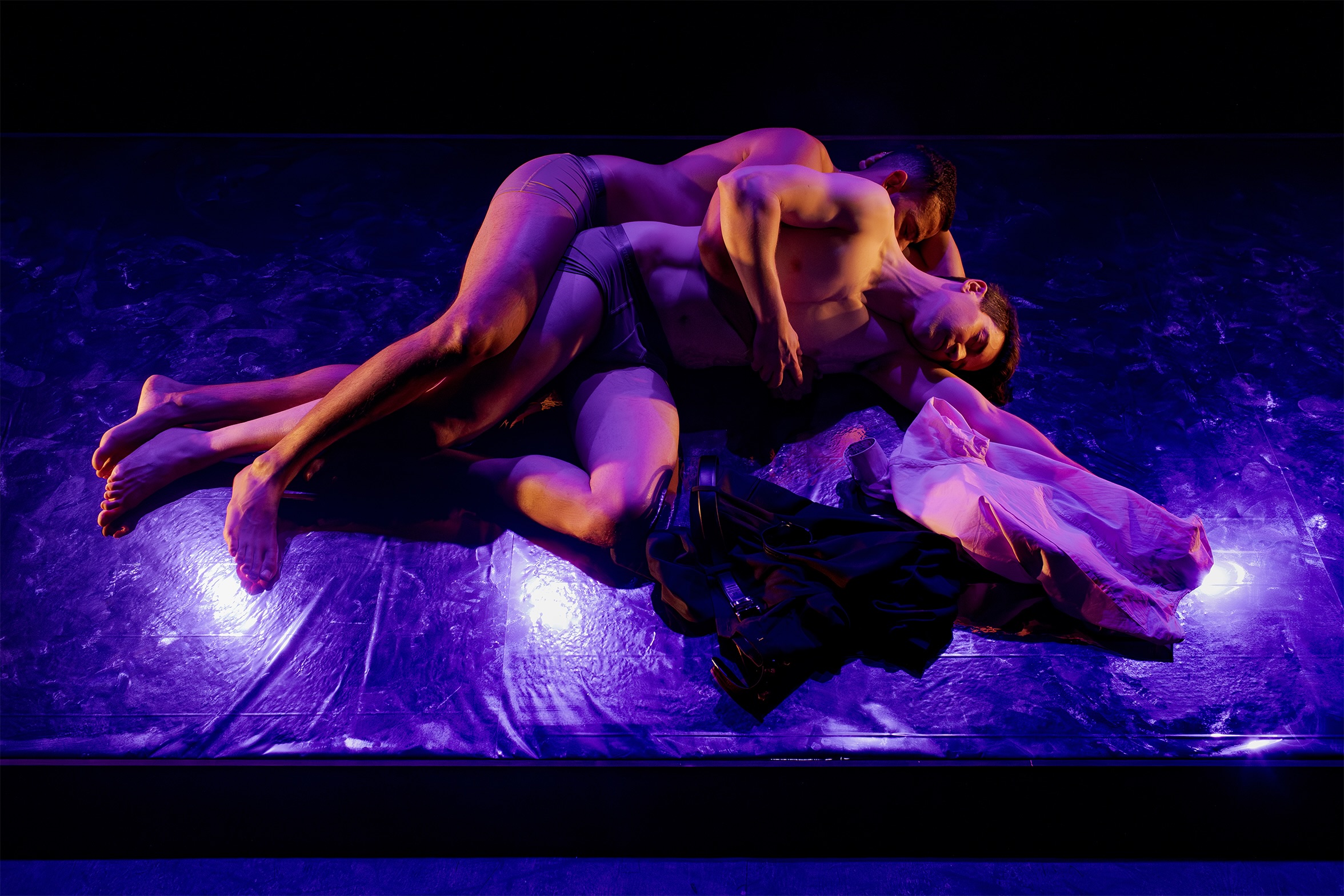

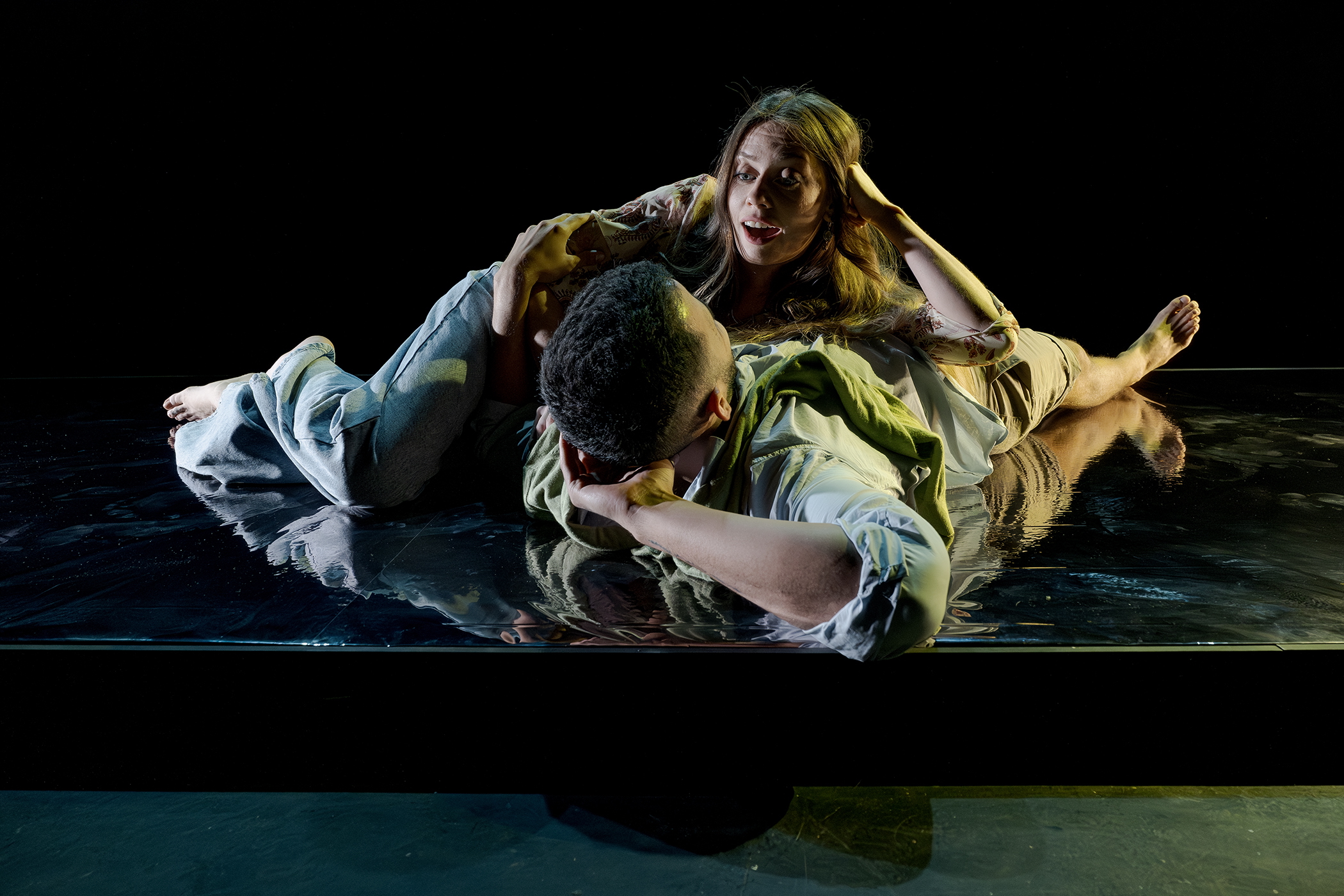
When, eventually, someone, David, raised their voice in anger, it was a blessed relief, although I felt his anger, while technically legitimate, erupted out of nothing; there was no wellspring of frustration or conflict from which it sprang. But this emotional void brings us back to the notion of a 'liminal space' - an empty zone denying comfort, either physical or psychological; a state that feels hard, cold, devoid of life, where nothing can take root. And this is a perfect description of Anthony Scuse's set design - a shiny black dias, slightly tilted towards the audience, as hard and blank as the monolith in "2001: A Space Odyssey". We have seen this sort of stage before from Scuse, but never before has it been so eloquent in its minimalist severity - a space barely capable of eliciting a response, and yet so powerful and at one with the text. Its power is complemented, if not excelled by the hauntingly beautiful, noirish lighting design by James Wallis, which illuminates the souls, as much as the bodies, of the three actors.
In the end, not knowing very much about these characters - their who, why, or wherefore, I was left unmoved. I wasn't invested in their drama, as they never came alive, became flesh & blood. The variation on the familiar trope was novel, but the implications were not rigorously investigated, and the ending seemed too glib and rushed - surprising considering this 70 minute play ran for over 90 minutes the night I saw it. 3 stars.
GRAVITY by Bradford Elmore. Directed by Anthony Scuse at The Loading Dock, Qtopia.
Reviewed by: Nick Bennet