
Holy Hell will bring audiences into a haunting world where faith, identity and survival collide. Discover what to expect, event details and official booking information.
“How do you discern the truth when you don’t know what you believe?”
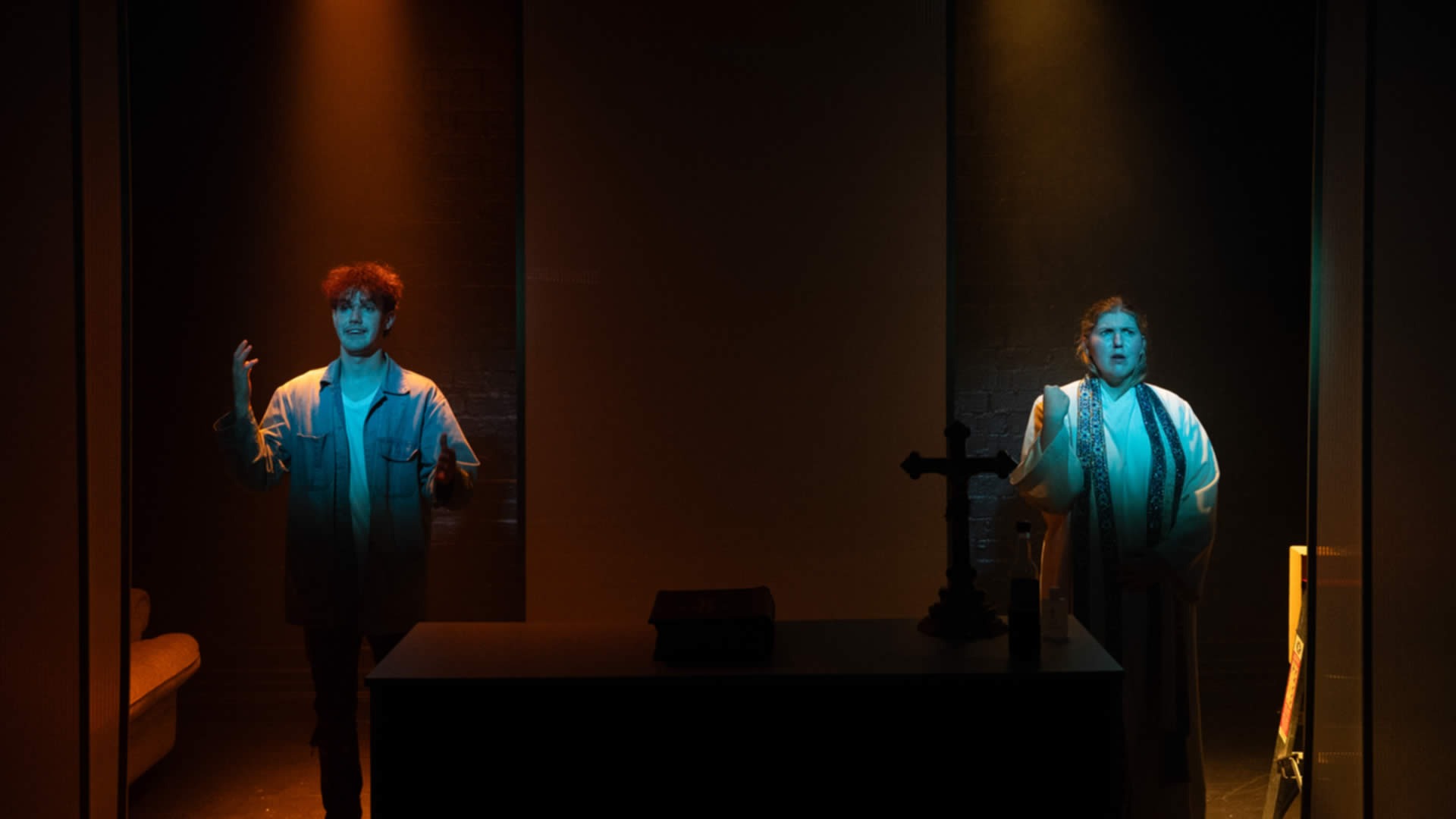
That is the haunting question posed by Bianca Watkins’ debut play Holy Hell. This question lingered in the air throughout my Saturday night as characters Cat and Mish navigated the boundaries between the sacred and the surreal, the internal and the external, the respected and the unrecognized.
The Performance of Survival
The characters’ struggles to navigate their own realities in the face of an institution’s expectations is not just theatrical - it is the literal, messy work of survival. Cat essentially has to ‘pretend to believe’ in Catholicism to maintain her scholarship position, masking her inner reality that questions the faith. This creates an identity conflict, which is perceived by Mish. Pasting on a smile when you are disappearing gets difficult to disguise. There is an almost inevitable implosion when a person’s ‘face’ doesn’t align with their own truths.
The Illusion of Truth and Power
Holy Hell observes how humans’ function within systems. The systems in power demand we conform to their version of the truth, no matter how absurd or illogical, even if our own reality unequivocally evidences an incongruent story. Our own personal realities are being threatened by a higher force, or some “Big Man”.
Individuals we are taught to trust are not always concerned with the truth. The truth isn’t just obscured; it is often silenced by a desperate need to perform the “right” kind of reality. Admitting to one’s own struggle feels more dangerous than the safety of the performative lie. Cat obscured the truth for the priest and the Catholic college, falsifying her faith. People manufacture their own “truths”, or align with established power structures, if they are fearful of the chaos that would ensue if they acknowledged true reality.
Sensory Overload: The Haze of the Hymns
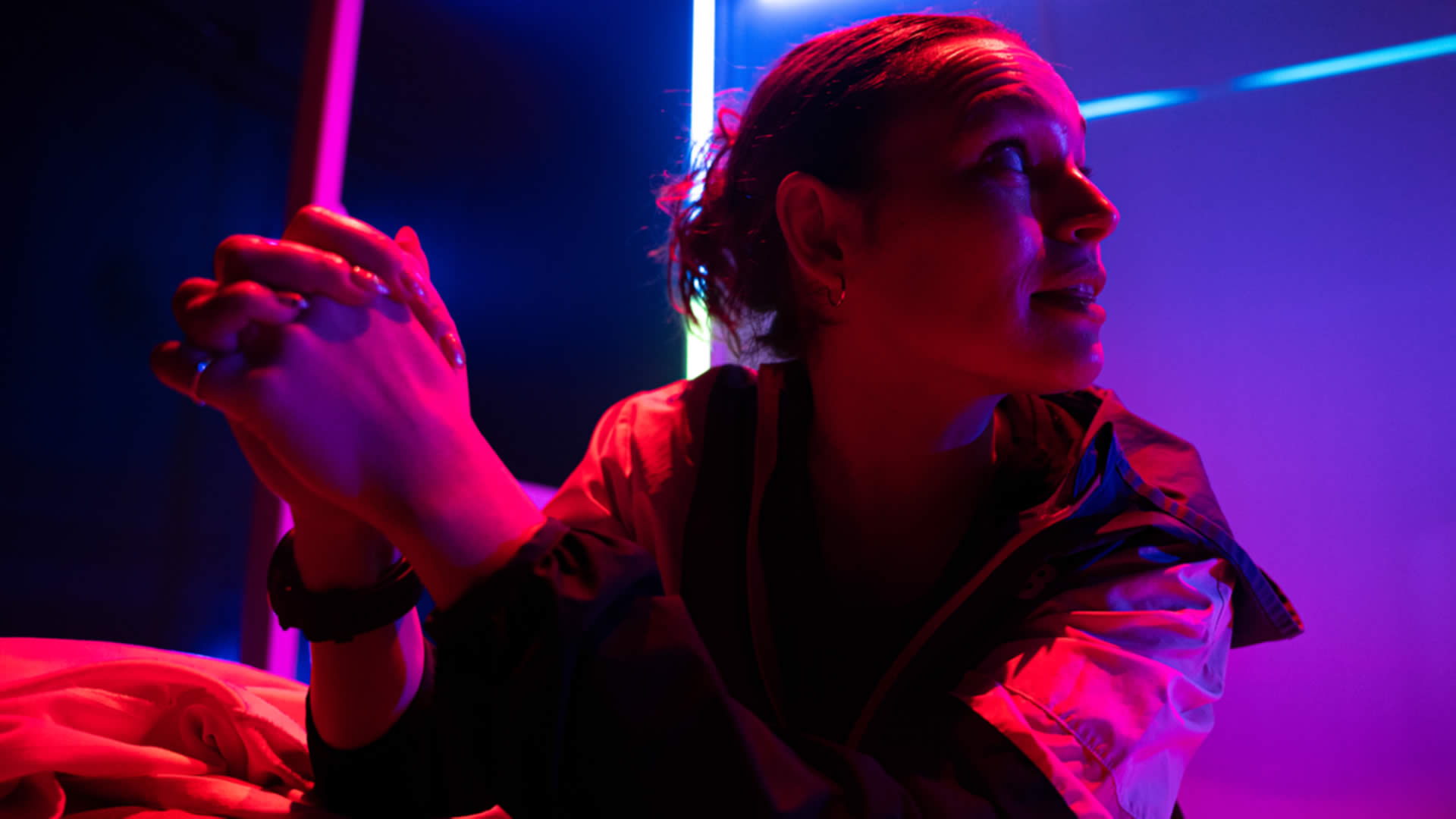
Holy Hell is coated with symbolism that converts the chapel into a place of illusory ritualism. Beyond the religious iconography, the stage feels thick with a smoke-like haze and dim candlelight contrasted with red strobes, creating a paranoid air that suggests an auric air that is sacred but also smoulderingly unsettling. The hypnotic rhythm vibes Princess Chelsea’s ‘Cigarette Duet’. The characters’ navigation of their existential ‘trip’ appeared simple and inconsequential, as might one single cigarette.
If a particular environment or structure forces deception, and a person’s state of mind is altered, is it possible to distinguish reality?
Along with being an atmospheric choice, the environment is also a dynamic, destabilizing force. I witnessed this through the alluded to character Daisy, who is forced to drop out after her drink is spiked. In a space that should have felt safe and sacred, the reality of being drugged, and the subsequent loss of agency, serves as the ultimate, chilling example of what happens when an individual is vulnerable to a system they cannot control. It turns the play’s ‘existential trip’ into a stark, physical reality. When one’s own body is compromised by the environment, the performance of ‘certainty’ becomes an impossible, and dangerous, illusion.
The Power of “I Do Not Know”
Watching the characters in Holy Hell grapple with the pressures of their changing beliefs, I was reminded of my own spiritual journey. Having grown up an educated Catholic, then questioning everything due to my own existential crisis, Agnostic/Atheist at 20, recent self-described ‘spiritual’. Whatever the Holy Hell that means!
There is a profound, albeit terrifying wisdom in the space between belief and disbelief. When we stop trying to force our reality into the narratives that systems demand of us, we open the door to true honesty and curiosity. The door was never locked; we just had to be brave enough to notice and try it.
Holy Hell dares to ask how we survive when we stop performing, when we finally admit that we don’t know who we are or what is true, and instead begin to pray to “the Universe or whatever the f*** this is!”
True sight begins only when you stop performing a reality that is killing you, drop the mask, and dare to admit to whoever is still here listening that, in actual reality: “I do not know”.
Ultimately, Holy Hell left me reflecting on the core conflict - how to discern truth when you are coerced into a performance of certainty and inevitable deception. The characters are trapped in a cycle where they must ‘perform’ a version of the truth to survive their environment and circumstances.
The tragedy of institutionalization is the erosion of the self. We are forced to dismantle our own minds and reconstruct them into shapes the system demands, effectively serving the very power that is destroying us.
Reviewed by: Odette McCarthy
Photos by: Nick Warrand