
In Erskineville, Stephen Sondheim's Into The Woods will bring familiar fairy tales into a darker, more complicated world, with CODA's production continuing at PACT Centre for Emerging Artists until August 22.
Full Disclosure
Straight up I have to admit that musicals are not really my cup of tea. Of course there are exceptions: 'Chicago', 'Cabaret', 'Les Mis', and 'West Side Story', to name a few. Sondheim's musicals are the other notable exception, in part because they address themes that more conventional examples of the genre ignore - those darker aspects of the human condition. His music and lyrics are characterised by complexity, sophistication, and their moral and intellectual ambivalence.
Grimm By Name, Grim By Nature
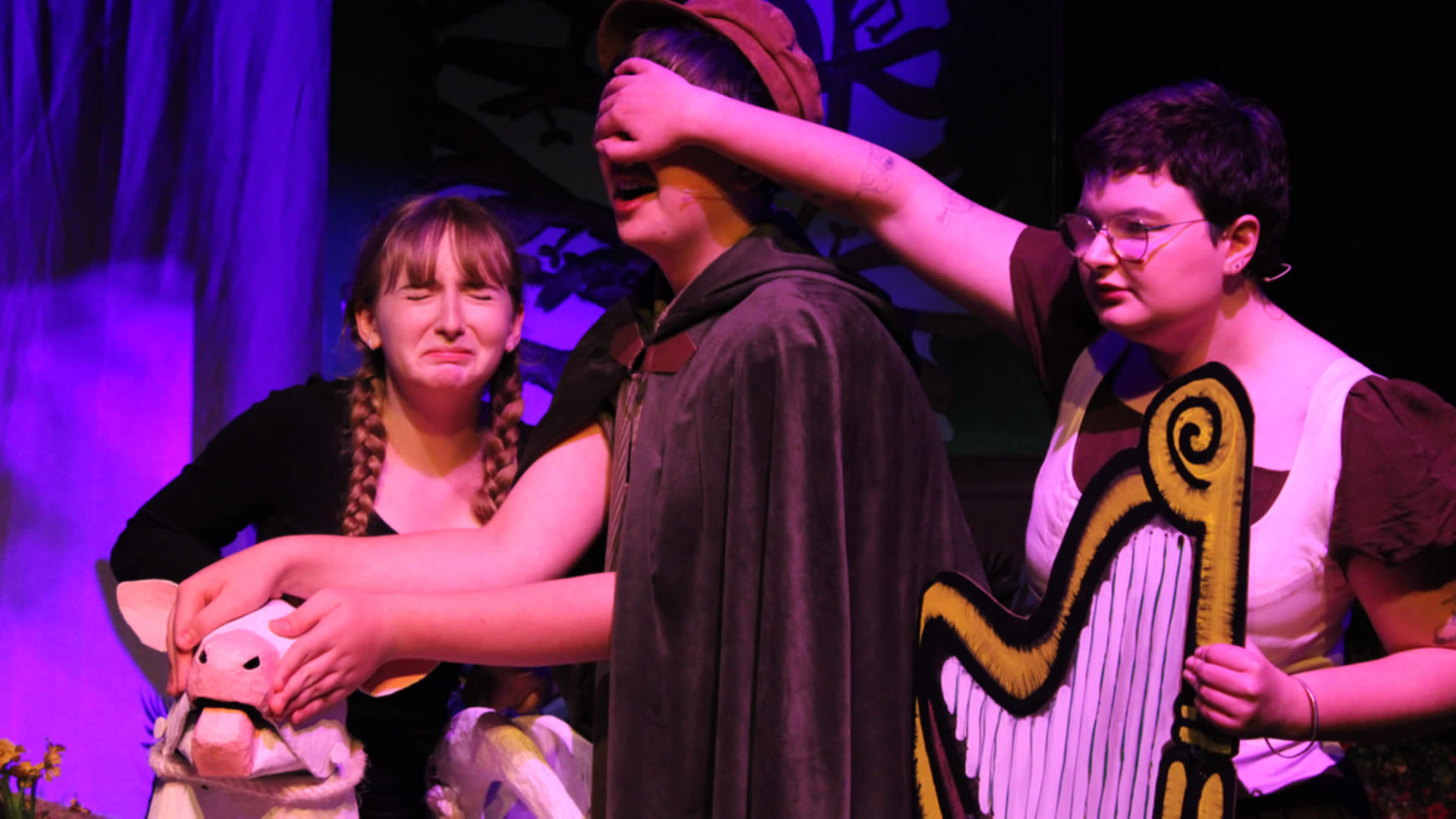
'Into The Woods' is a multi-Tony Award winning musical, with music and lyrics by Stephen Sondheim and book by James Lapine. To use a modern expression, it is a 'mash-up' of several fairy tales by the Brothers Grimm - Little Red Riding Hood, Jack and the Beanstalk, Cinderella, and Rapunzel, with walk-on parts for Snow White & Sleeping Beauty. It is tied together by the story of a baker and his wife and their desire to have a child. Unfortunately, they have been cursed with childlessness by a local witch as punishment for something the baker's father did many years ago. To lift the curse, the witch sends them on a quest, during which they encounter the characters from the other fairy stories as they all journey through the woods, each with their own quest.
"Once Upon A Time"
The plot in its entirety is far too complicated to relate here, but part of the pleasure of ITW is watching Lapine, who won a Tony Award for the book, weave all these strands together, plus invent some of his own. It explores themes of moral responsibility, the parent/child relationship, honesty & betrayal, the nature of love, war, and dealing with the consequences of one's actions when wishes come true. In Lapine & Sondheim's world there is no such thing as living "happily ever after". The characters, and we the audience by implication, are enjoined to look beyond the obvious, the cliched tropes, and to see people, be they bakers, princes, witches, giants, even wolves, for what they truly are. As the Witch sings at one point, "Not all giants are evil, and not all witches are ugly", or words to that effect. In this world nobody is either good or bad, but both - at different times, in different situations.
"Be careful what you wish for - you might get it"
Where 'Into The Woods' is truly original, and subversive, is in the way it upends the convention of the happy ending that characterises so much of Western pop culture - film, television, musicals, where the baddies are punished and the goodies live happily ever after. At the end of the first half this appears to be the case - everybody has got what they wished for, however, from the start of the second half it is clear that success has not brought happiness. Soon everything starts to go wrong, and the characters turn on each other trying to apportion blame for the calamity that has befallen them. In killing the Giant, Jack has unleashed the vengeance of his wife, who is now destroying their world and killing its inhabitants. Lapine and Sondheim do not specify what the Giantess symbolises, leaving it deliberately vague though hinting at various possibilities, including War. Where in the first half the woods stand for adventure and man's ability to triumph over nature, by the second half the woods are presented as a more hostile, sinister space, the locus of malevolent forces, traditionally personified by 'The Witch'.
Which Witch is Which?
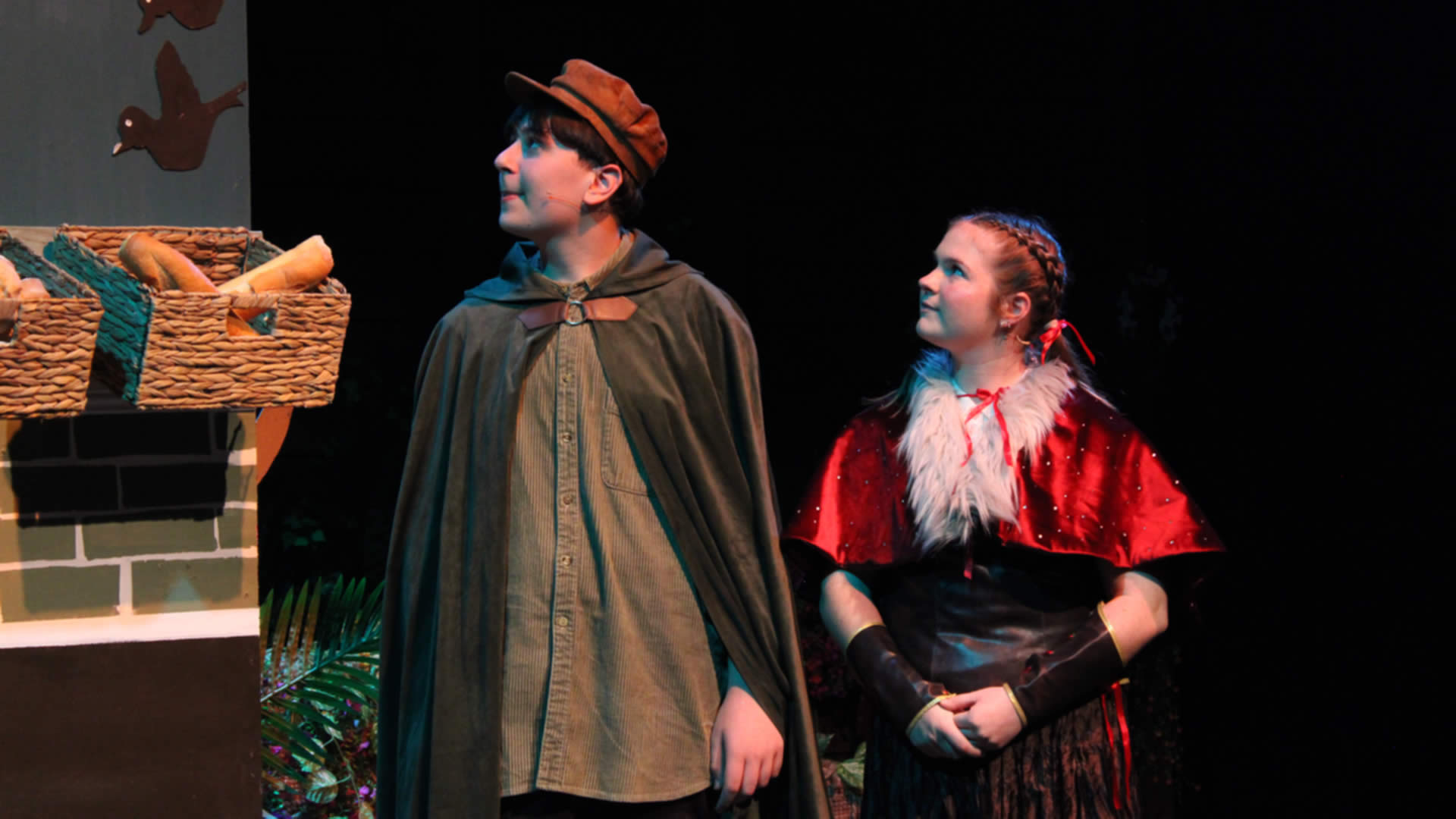
Beneath the darkness and fantasy something very human and relatable sits at the heart of this magical production. Damien Walsh's skillful and intelligent direction has been ably supported by not only the talent of Kathryn Smith, whose wonderful pop-up story book style set captures the ambiguous nature of the wood, a note perfect 12 piece band, and a passionate young cast of 21 members. The depth of talent in this ensemble is inspiring, especially considering their youth. While some opening night nerves were evident in a couple of performers at the beginning of Act 1, these soon evaporated like woodland mist in the noonday sun, and the exceptional singing skills of the cast shone through. It would be impossible to list by name all the performers who impressed me, but a few of particular note included Chris Rutter (baker), Talia Allen (Cinderella), Max Kendrick (Cinderella's prince), Hudson Perry (Rapunzel's prince), Alexander Miech (Jack), and Piper Ellis (Little Red). But it was Claire Garment as the Witch and Tessa Marsden as the baker's wife who were the stars of the night, in my opinion. Both demonstrated levels of emotional depth and complexity combined with vocal power, range and skill that was truly impressive.
Smooth Operators
This is an ambitious production with an ensemble of 60 creatives,, and the results, across the board, are excellent. Productions with numerous scene changes often get bogged down in the mechanics of change, but the stage crew in this case were so efficient and fast that it was a pleasure to watch them go through their paces. Yes, there was a slight dip in the energy each time the set was rearranged, but the ingenious set design and the skill of the crew made these moments bizarrely entertaining in their own right.
CODA (Company of Dramatic Arts) is currently performing 'Into The Woods' at the PACT Theatre in Erskineville till August 22. 4 stars
Review by: Nick Bennett
Photos by: Izzy Sergi