
Putting It Together unfolds at Sydney’s Foundry Theatre as an intimate after-hours musical, where wit, longing, and Sondheim’s songs meet.
The walk along Pirrama Road after dark has a particular stillness. Office lights fade, the harbour settles, and the Foundry Theatre glows softly against the night. Inside, the room feels expectant rather than grand. Tables are dressed as if for a private gathering. Glassware catches the light. This is Putting It Together, and it begins as many Sydney evenings do – quietly, with the promise of conversation.
The audience settles close to the stage, aware that distance will not protect them here. Performers enter not with announcement but with presence, as though they’ve been part of the room all along. The effect is immediate. Putting It Together does not build toward intimacy; it assumes it.
Putting It Together And The Architecture Of A Party
Set entirely at a black-tie cocktail party, Putting It Together uses its single setting with discipline. There are no scene changes to distract from the real movement of the night: glances exchanged, alliances formed, disappointments masked by humour. The Foundry Theatre, compact and deliberately understated, becomes an extension of the story.
This closeness matters. The show’s structure – a revue of Stephen Sondheim’s songs woven into a loose narrative – depends on nuance. Facial expressions register. A pause lands. The audience becomes another guest at the party, listening in.
Sydney, a city adept at social performance, recognises this environment instinctively. The tension between appearance and reality, success and longing, feels familiar.
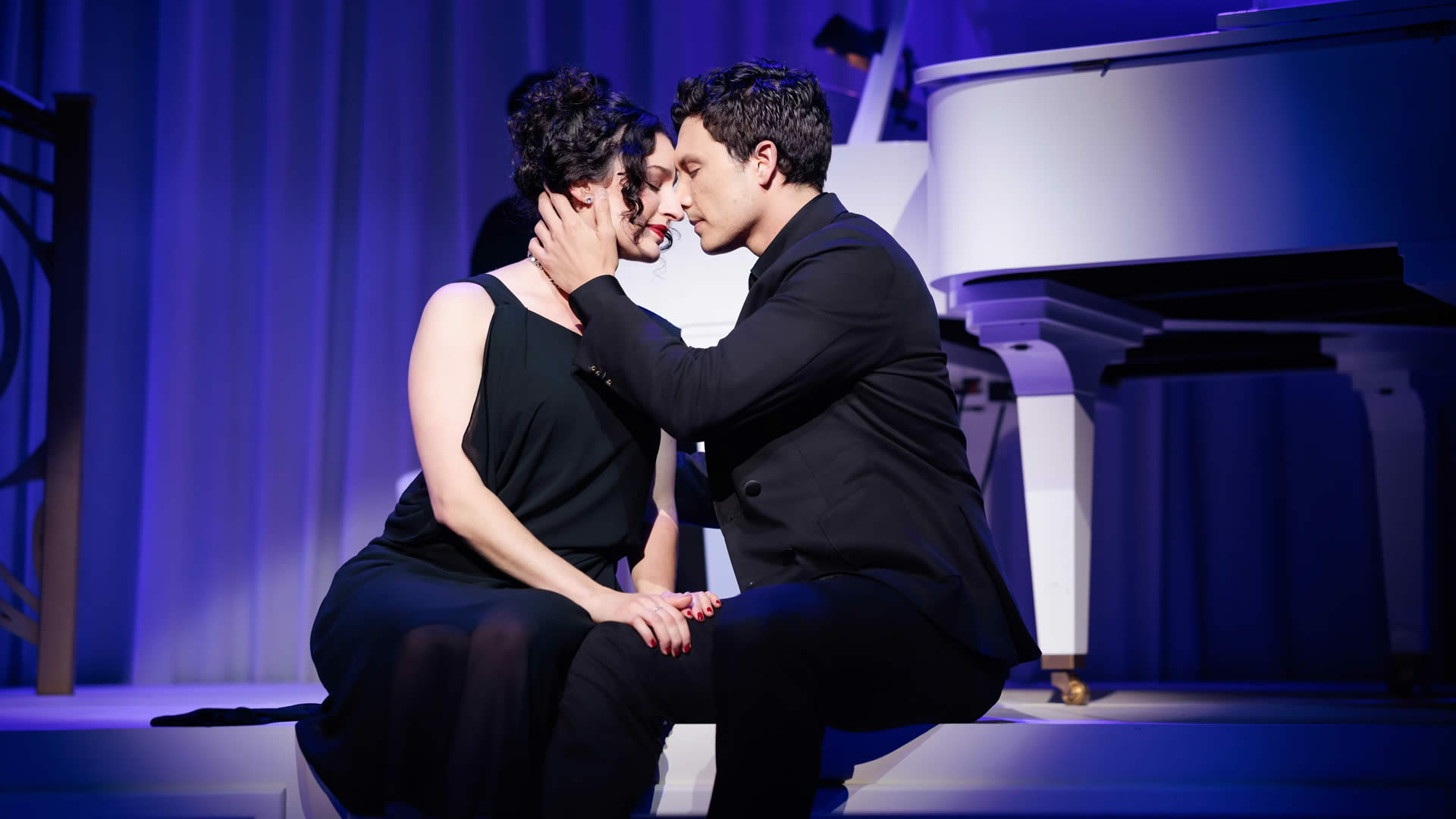
Sondheim’s Songs In New Light
The songs in Putting It Together span decades of Stephen Sondheim’s work, but here they are stripped of spectacle. Without elaborate sets or orchestral flourish, lyrics rise to the surface. Their precision becomes unmistakable.
Sondheim’s writing has always been less about resolution than recognition. In Putting It Together, that quality sharpens. A song about ambition brushes against one about regret. Wit slips easily into melancholy. Nothing is overstated.
The arrangements are clean, attentive to the room. Music fills the space without overwhelming it, allowing the audience to sit inside the words rather than be carried away by them.
Putting It Together And The Weight Of Experience
The cast brings a collective history that deepens the material. These are performers who have lived with Sondheim’s work, not merely mastered it. Caroline O’Connor’s presence anchors the room – assured, playful, edged with something harder to name. Michael Cormick, Bert LaBonté, Nigel Huckle, and Stefanie Caccamo move fluidly between roles, sometimes confessional, sometimes guarded.
What emerges is not character-driven drama but emotional layering. Each performer seems to carry an unspoken backstory, lending gravity to even the lightest moments. In Putting It Together, experience is not displayed; it is felt.
The chemistry between performers feels earned rather than engineered. Their exchanges suggest familiarity, rivalry, affection – the shifting dynamics of people who have known each other too long and not long enough.
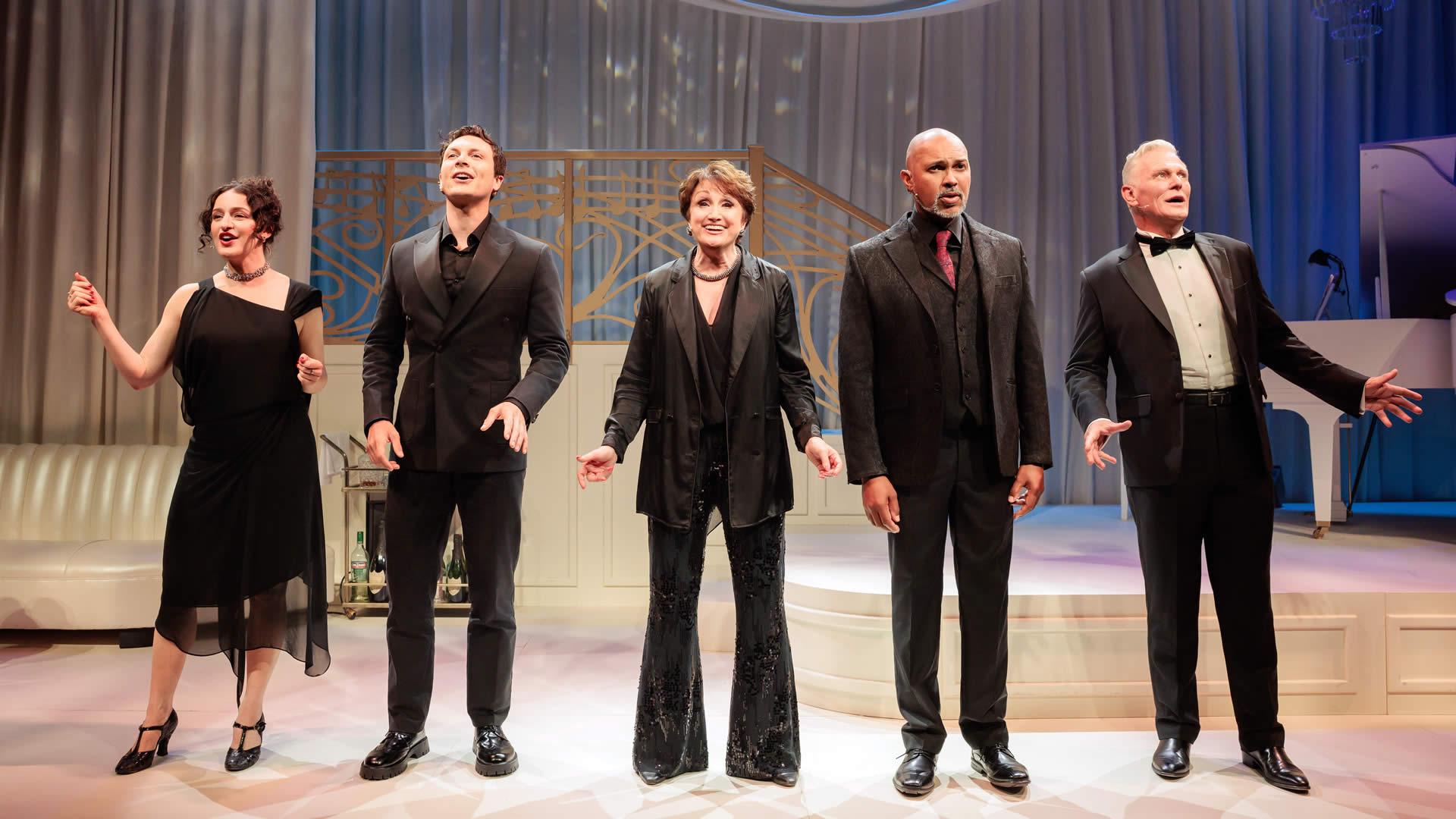
The Foundry Theatre After Hours
There is something distinctly Sydney about this production’s timing and tone. Putting It Together feels like a show meant for the end of the day, when defences are lowered and listening becomes easier.
The Foundry Theatre, tucked away from the city’s main stages, supports this mood. Its intimacy discourages grand gestures. Instead, it rewards attention. The audience listens closely, laughs quietly, recognises themselves more often than expected.
Outside, the city continues – ferries moving, traffic flowing – but inside, time bends slightly. The party stretches on, as such gatherings often do, until honesty slips through the cracks.
Putting It Together As Reflection Rather Than Revival
Though Putting It Together has a long international history, this production resists nostalgia. There is no attempt to recreate past glories or lean on reputation. Instead, the material is treated as living text.
Themes of desire, compromise, and the cost of success feel particularly resonant now. In a city where ambition is often worn lightly but felt deeply, these songs land with quiet force.
Rather than presenting Sondheim as monument, Putting It Together frames him as observer – sharp, compassionate, unsparing. The revue format allows contradictions to coexist without resolution, mirroring real conversations more than theatrical arcs.
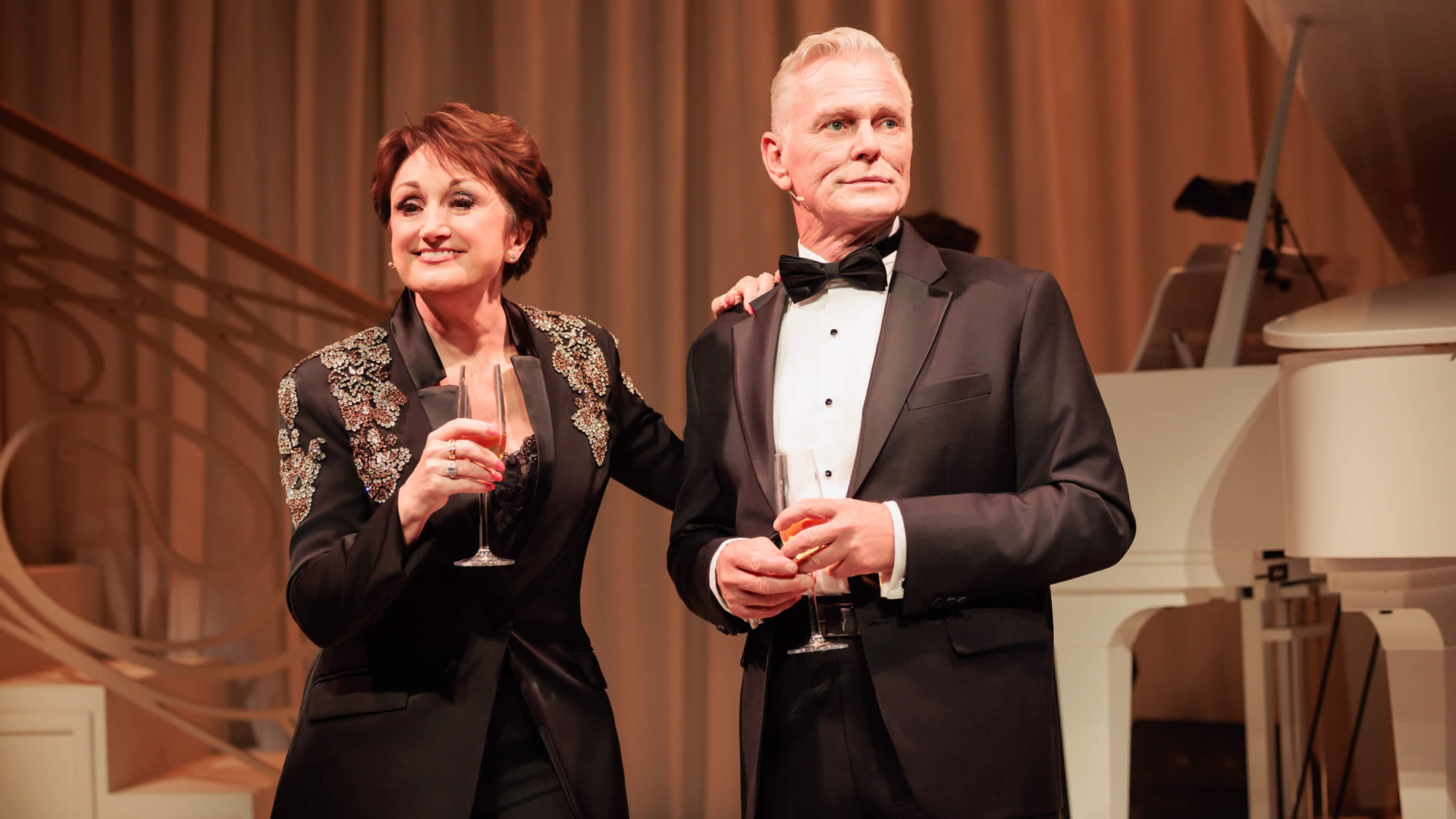
The Party Winds Down
As the evening draws toward its close, the mood shifts almost imperceptibly. Laughter softens. Songs feel more reflective. The party does not end with a flourish; it tapers, as real nights do.
In the final moments of Putting It Together, there is a sense of having shared something fleeting. Not revelation, exactly, but recognition. The performers remain on stage just long enough for the room to absorb the silence that follows the last note.
Leaving the theatre, Pyrmont feels unusually calm. The harbour air carries sound gently. Lines from songs resurface uninvited, not as melodies but as thoughts.
Putting It Together does not insist on memory. It lingers anyway – a reminder that sometimes the most revealing stories are told sideways, over drinks, long after the workday ends.