
THE FACE OF JIZO by Hisashi Inoue; translated by Roger Pulvers; directed by Shingo Usami & David Lynch; set - Tobhiyah Stone Feller; lighting - Matt Cox; Sound design - Me-Lee Hay.
At 8.15am on the 6th August 1945, the American's dropped an atomic bomb on the city of Hiroshima killing between 90,000-166,000 people, mainly civilians. Roughly half died on the first day, and for months afterward thousands of people continued to die from their burns and the effects of radiation sickness. The temperature of the Sun is 6,000 degrees; the temperature of the A-bomb explosion was 12,000 degrees. It doesn't take much effort to imagine the effects on the city's population. So it is a bit surprising to find oneself laughing constantly throughout the first half of this play.
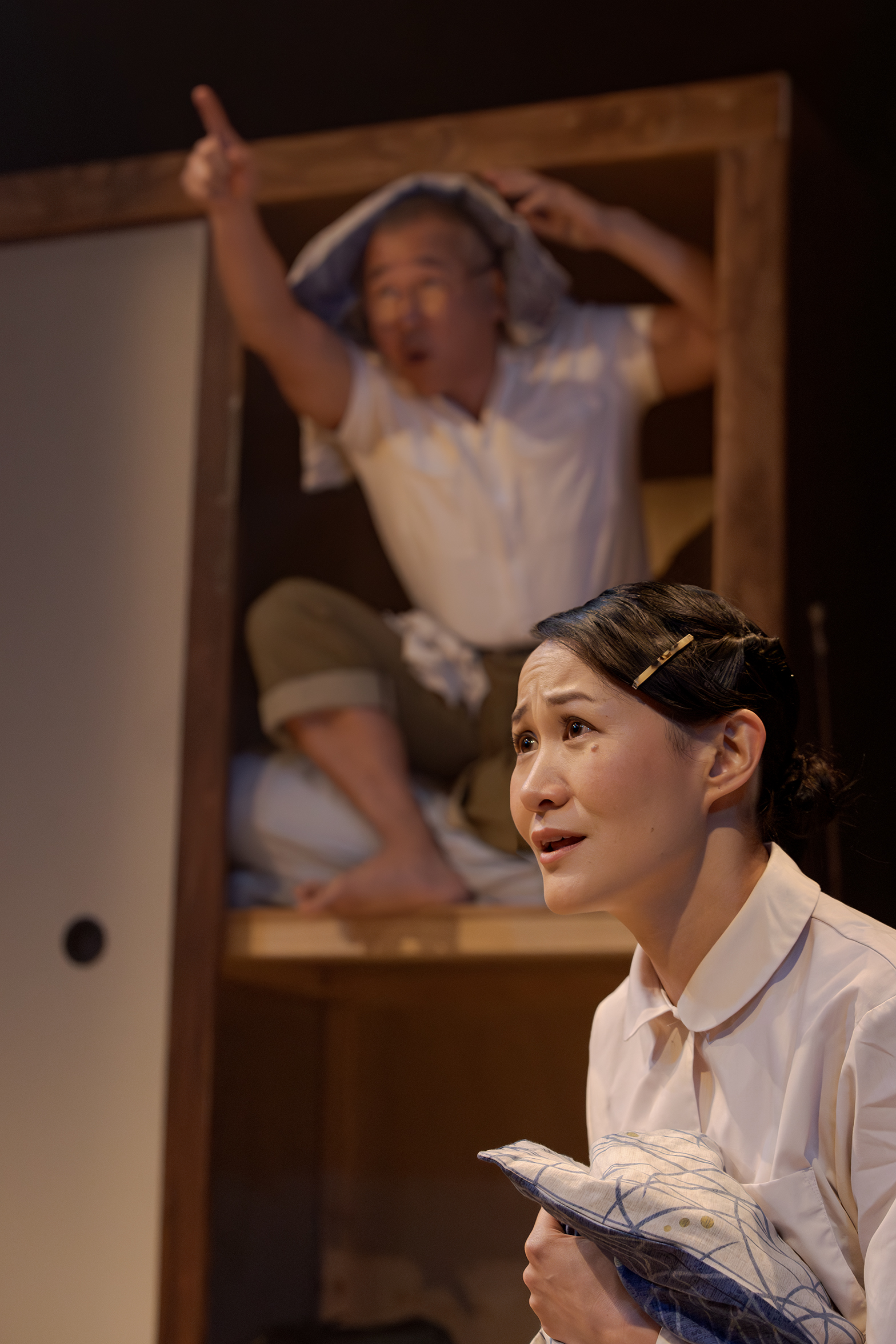
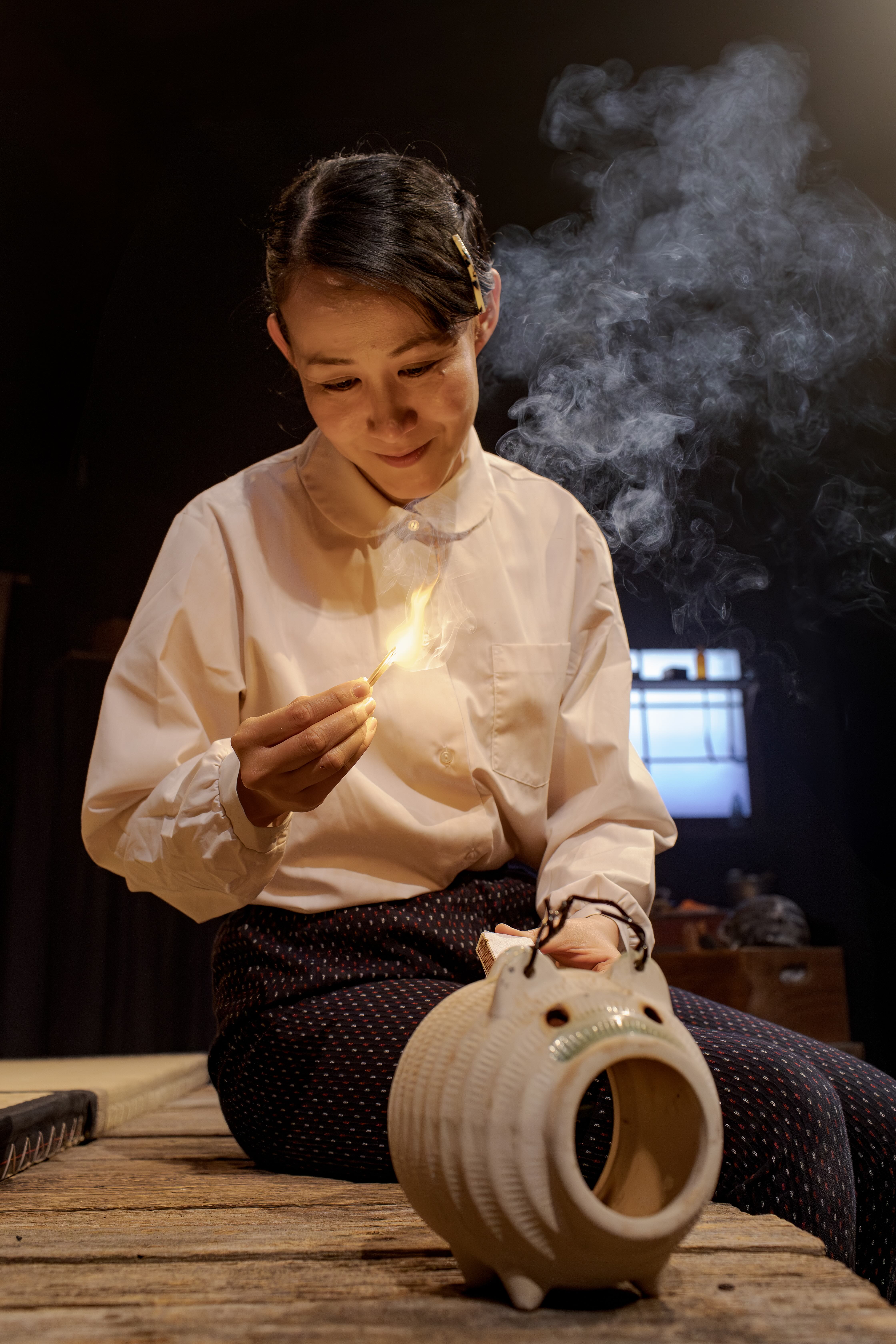
But "The Face of Jizo", by Hisashi Inoue & translated by Roger Pulver, is quite funny; in fact Inoue first came to prominence as a comedy writer. The comedy here serves many functions - it is a gateway, enabling us to see these characters as real people, not the enemy. Here is a father - Takezo, played by Shingo Usami, and daughter - Mitsue, played by Mayu Iwasaki, going about the daily rituals of making tea, running a bath, preparing dinner. The sharing of a sweet bean jam bun becomes an opportunity to explore the relationship between father and daughter, and the value of truly appreciating little things, not taking anything for granted. The comedy is also the calm before the storm, making the horror to come seem far more horrible by contrast.
Mitsue, a young librarian, returns home after a challenging day, where she has had to deal with the discreet romantic attentions of a young man who is researching the effects of the bomb on the surviving population. Outside a storm is about to break. There is a loud bang, a flash of light. Mitsue screams and recoils. Suddenly the door of her closet is flung open and her father, whom she hasn't seen for three years, pops out. At this point we realise that reality has shifted. What follows is a tenderly waged conflict between the two, as he strives to convince her to lower her defences and allow herself to respond to her young suitor's overtures, while she comes up with excuse after excuse denying his assertion. Is her father, killed in the explosion, a ghost, or the projection of Mitsue's guilt-ridden mind? Humour slowly gives way to sorrow, anger, shame, and the truth behind her denied emotions - the guilt of the survivor. In a heart-breaking speech, the emotional climax of the play, Mitsue reveals to Takezo, through graphic descriptions of the suffering she witnessed, the cause of her guilt. She describes, not images of an incomprehensible apocalypse, but intimate cases of personal horror - the death and dying of friends and neighbours. Her horror is real, and becomes so for us. Eventually, unable to continue, she returns to the kitchen to continue preparing the evening meal, slowly and methodically, in silence. Never was the chopping of a carrot so eloquent.
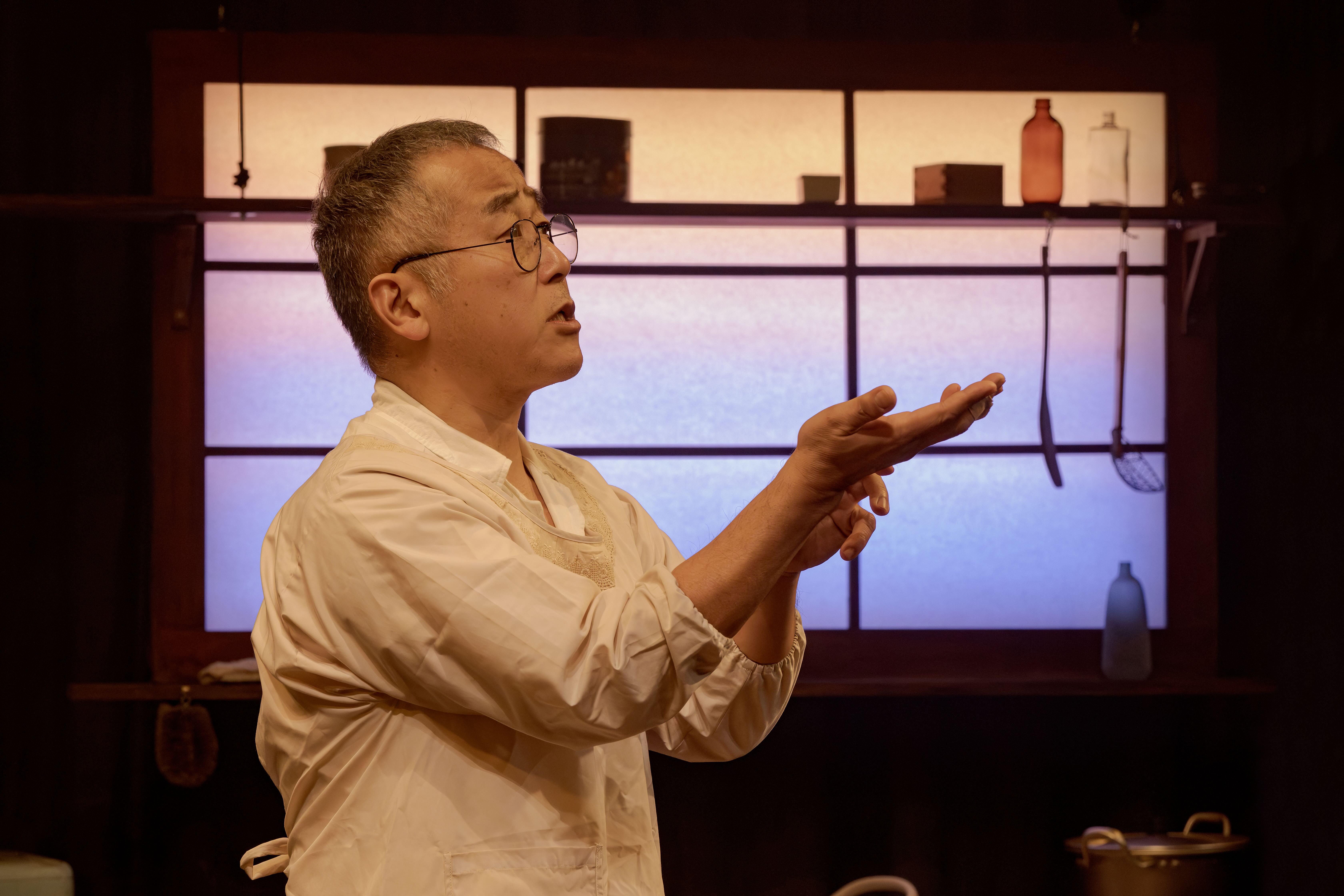
Throughout the play the naturalistic delivery of lines vies with the precise, almost ritualistic movement of the actors, especially Mitsue's. It is not the stylised movement of Noh or Kabuki, but movement that is constrained by emotional restraint, investing even the simplest action, the slicing of a carrot or the making of tea, with significance. This tension between what is said and what is done adds to the emotional power of the play and compels the audience to come forward, as it were, to meet the actors' energy in an active participation. In other words, we enter into their world - a world of resilience, love, acceptance and forgiveness. Despite the subtlety of the set, lighting and sound design, which echoes to the actors' beautifully nuanced performances, this is a play of enormous power and heart. 4.5 stars.
Playing at the Reginald Theatre on August 21 - September 6, 2025
https://www.seymourcentre.com/event/the-face-of-jizo/
Reviewed by: Garreth Cruikshank