
The Jungle and the Sea returns to Belvoir with an epic story of family, war and resilience, exploring the human cost of Sri Lanka's civil conflict.
The Calm Before The Storm
The time is 1995; the place, northern Sri Lanka - Tamil Eelam. A woman in a sari enters the bare, dimly lit stage and begins to slowly dance. No music, just the deliberate, stately, hypnotic movements of a traditional Sri Lankan dance. A man enters and says, "They've found the bodies". Lights down.The stage is now swarming with young people - students on their way to the beach. There is colour and noise, movement and joy, but all of that is about to change. There are growing intimations of the approaching war. Villagers are advised to take shelter in the church for safety, ultimately to no avail. The Sinhalese dominated government forces bomb the church, and thus begins the decades long nightmare of displacement, cruelty, betrayal, war and despair that is "The Jungle and the Sea".
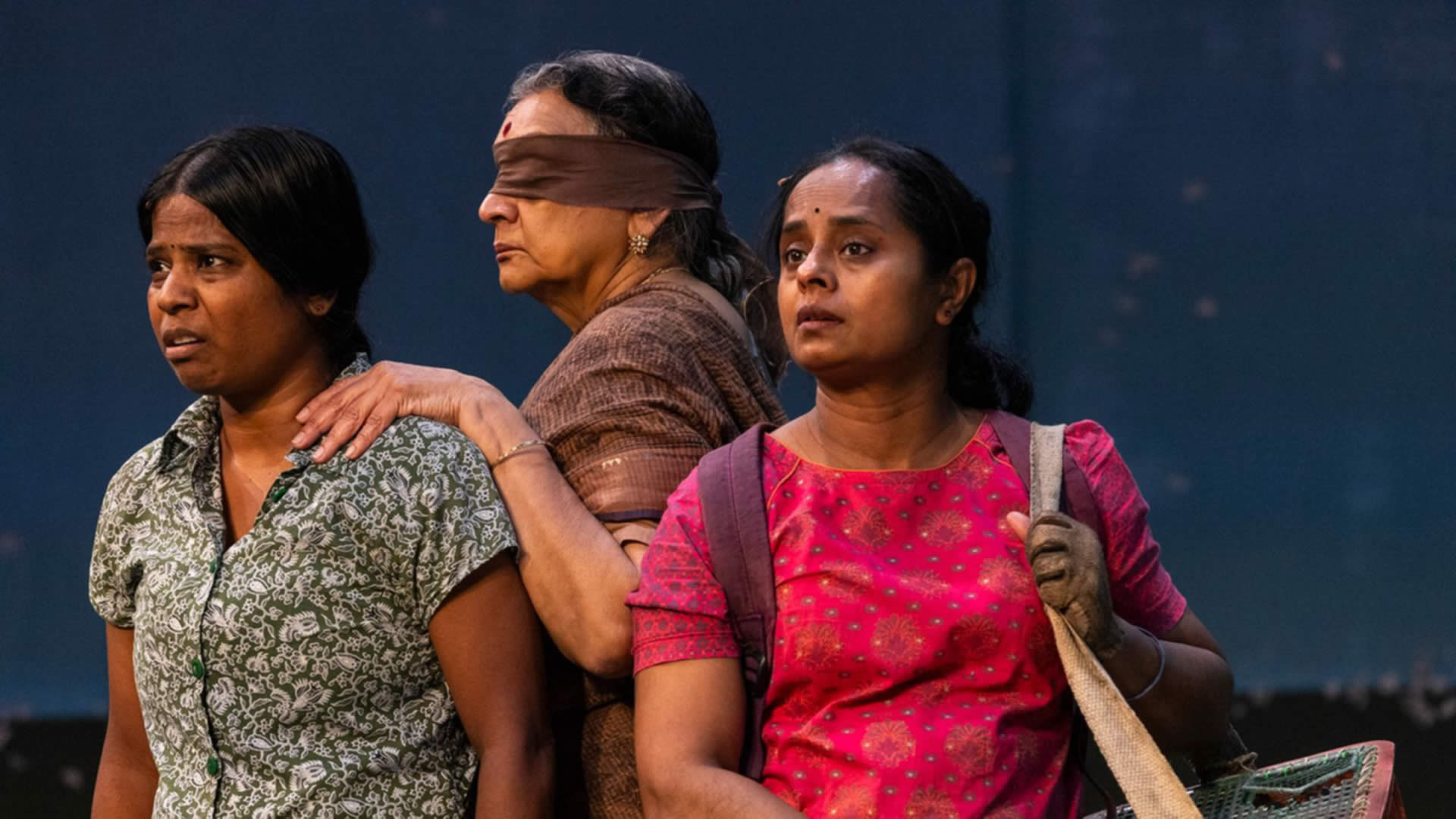
Act 1 - Paradise Lost
The play, written and directed by S. Shakthidharan & Eamon Flack, was first staged at Belvoir in 2022, and has been reprised due to popular demand. It is an epic play in every sense, dealing with the complexities of the 26 year Sri Lankan Civil War, and covering two countries, with a running time of nearly three hours, including two intervals. Given the scope and scale of the tragedy the play needs a canvas of this size to do justice to its many themes. This is undeniably a political play about a certain time and place, but what gives it universality is that it chooses not to dwell on the specifics of the civil war, but how they affect the personal lives of this family.
It is a common feature of political theatre that we can only fully appreciate the significance of major historical events through the prism of their impact on the individual. Here, throughout the three discrete acts, the lense is constantly narrowing and widening its focus. Act 1 introduces us to the family and the impact that the war has on them, with the matriarch, Gowrie, sending her wounded husband Siva and daughter Lakshmi to Australia for safety, while she and the rest of the family stay to search for her son who has joined the Tamil Tigers. Act 1 ends with a scene of father and daughter in Sydney, celebrating her graduation over dinner. It is funny, charming and presents an example of life as it could and should be, in contrast to the danger and hardship of life in their homeland. It is also a much needed respite from the unremitting darkness of the rest of the play. The clever and witty use of props in this act is another element which introduces an almost "Playskool" quality of lightness, and illustrates the unfettered imaginative boldness of the direction.
Act 2 - The Searchers
Act 2 primarily deals with the search for the brother, and the need to stay ahead of the government forces, who remorselessly attack the nominated 'safe areas', driving the Tamils closer and closer to the sea. Their constant process of settling down, only to be up-rooted by the betrayal of the government forces becomes the template of their lives. The huge, constantly revolving stage floor truly comes into its own in these scenes, as actors are compelled to walk without stopping. This perpetual spinning reinforces the sense of the family's Sisyphus-like curse of ceaseless wandering. On a practical level, the revolving stage also makes for fluid, quick transitions from scene to scene, where the action appears to never stop. Stripped to the bare essentials, Dale Ferguson's set makes a powerful impact on our perception of the play, and the revolving stage is a supreme example of that.
Act 3 - Law & Order
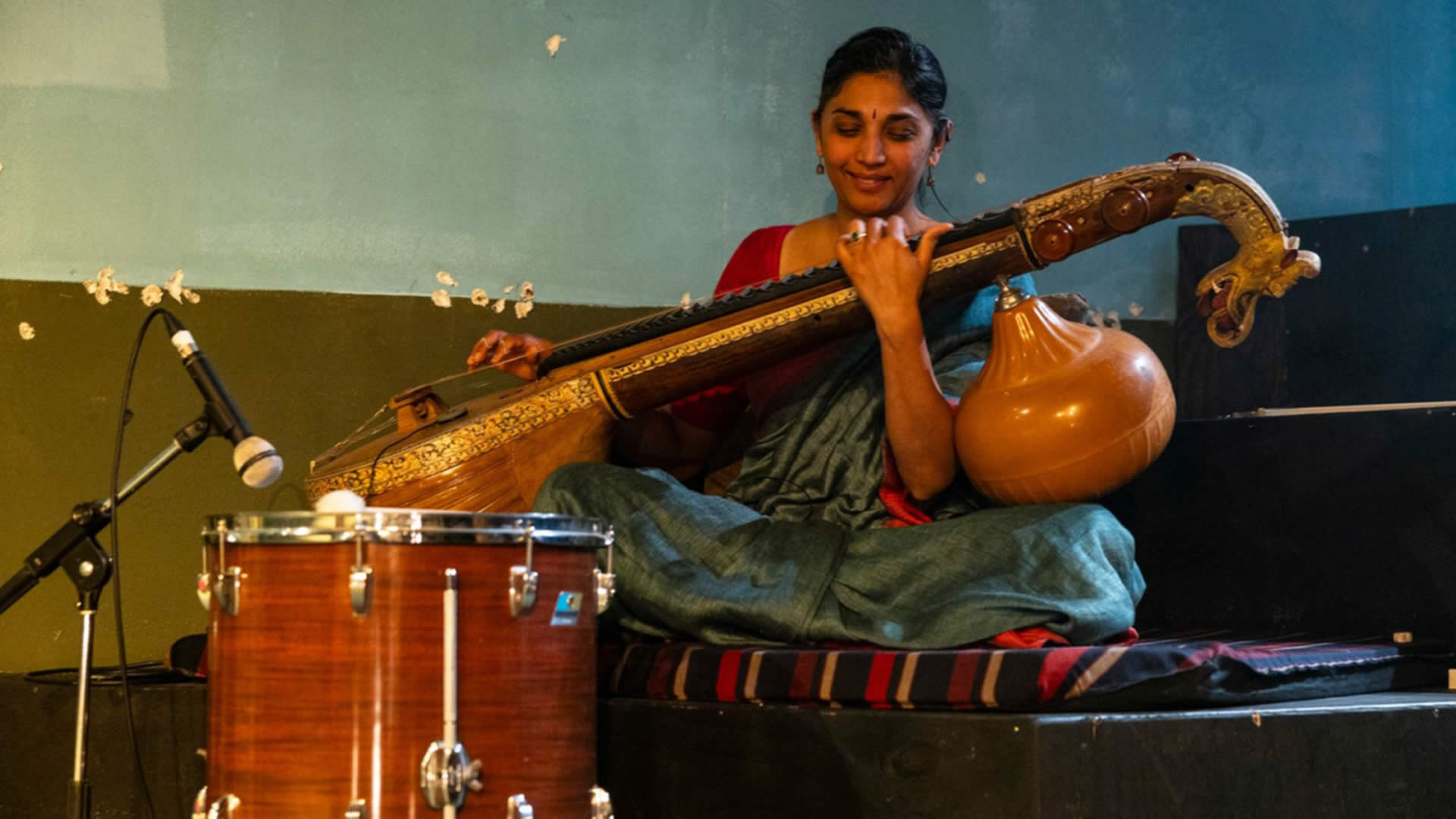
Though drawn from true stories of suffering and survival of the civil war, the play borrows heavily, in parts, from the "Mahabharata" and Sophocles' "Antigone", notably in Act 3, which was the most didactic of the three, as the conflict between moral obligation and adherence to the letter of the law is furiously argued. However, this conflict, which should have had the emotional and intellectual heft of "Antigone", or Bernard Shaw's "St. Joan", becomes repetitive and strident, which is not to say it is devoid of dramatic impact. The depiction of the murder of the Tamil Tigers and the daughters of Gowrie, the matriarch, who has struggled throughout the years of strife to keep her family safe and united, was heartbreaking, the more so because of the simplicity with which it was presented - a flash of light, a drum beat/gun shot, and the victim would walk off stage. The use of live music, composed by Arjunan Puveendran and performed by him and Indu Balachandran, lends authenticity and emotional immediacy to the production. The use of drum beats to indicate rifle fire and bombs is both aurally effective and sonically consistent with the play's pared back aesthetic and Steve Francis's sound design.
Cast a Giant Shadow
No matter how clever the directing, set design, lighting or music, a three hour play stands or falls on the performances of the cast, and this cast manages to captivate our attention and sympathies throughout. While there are moments during Acts 2 & 3 where the energy flags, this has more to do with the script, which could afford to be about 30 minutes shorter. Nevertheless, the cast are consistently good, with standout performances from Prakash Belawadi as the blind father Siva (and Father Joseph, the Catholic priest), and Emma Harvey as the daughter Lakshmi. But unquestionably, the star of the show is Anandavalli, the mother, who brings a gravitas and profound humanity to the role, despite her lack of lines.
It is plays of this stature and artistic sophistication which give the lie to such notions as 'monoculture'. The "Jungle and the Sea" is about a piece of history that is little known to the majority of Australians, but in it we can clearly recognize our shared humanity. It is a great play; not perfect, but truly epic. 4 stars.
"The Jungle and the Sea" is playing at the Belvoir St Theatre till August 2.
Review by: Nick Bennett
Photos by: Brett Boardman