
Water Mirror at Glen Street Theatre on 5 June 7.30pm fuses Taiko percussion, dance and projection in an immersive Sydney stage experience.
As evening settles over the Northern Beaches, Belrose moves at its familiar pace – quiet streets, pockets of light, the low hum of a suburb easing into night. Glen Street Theatre sits slightly apart from this rhythm, tucked near the bush edge where the city loosens its hold.
Inside, the foyer gathers a soft mix of anticipation and conversation. People arrive in pairs and small groups, some still carrying the residue of the day. The air feels still but attentive, as if the building itself is waiting for something precise to begin.
On this night, that beginning is Water Mirror. The title is already suggestive before a single sound is heard – an image of reflection, distortion, and movement suspended just beneath the surface.
As doors open and seating fills, Water Mirror begins to exist not as a performance yet, but as a shared expectation shaping the room.
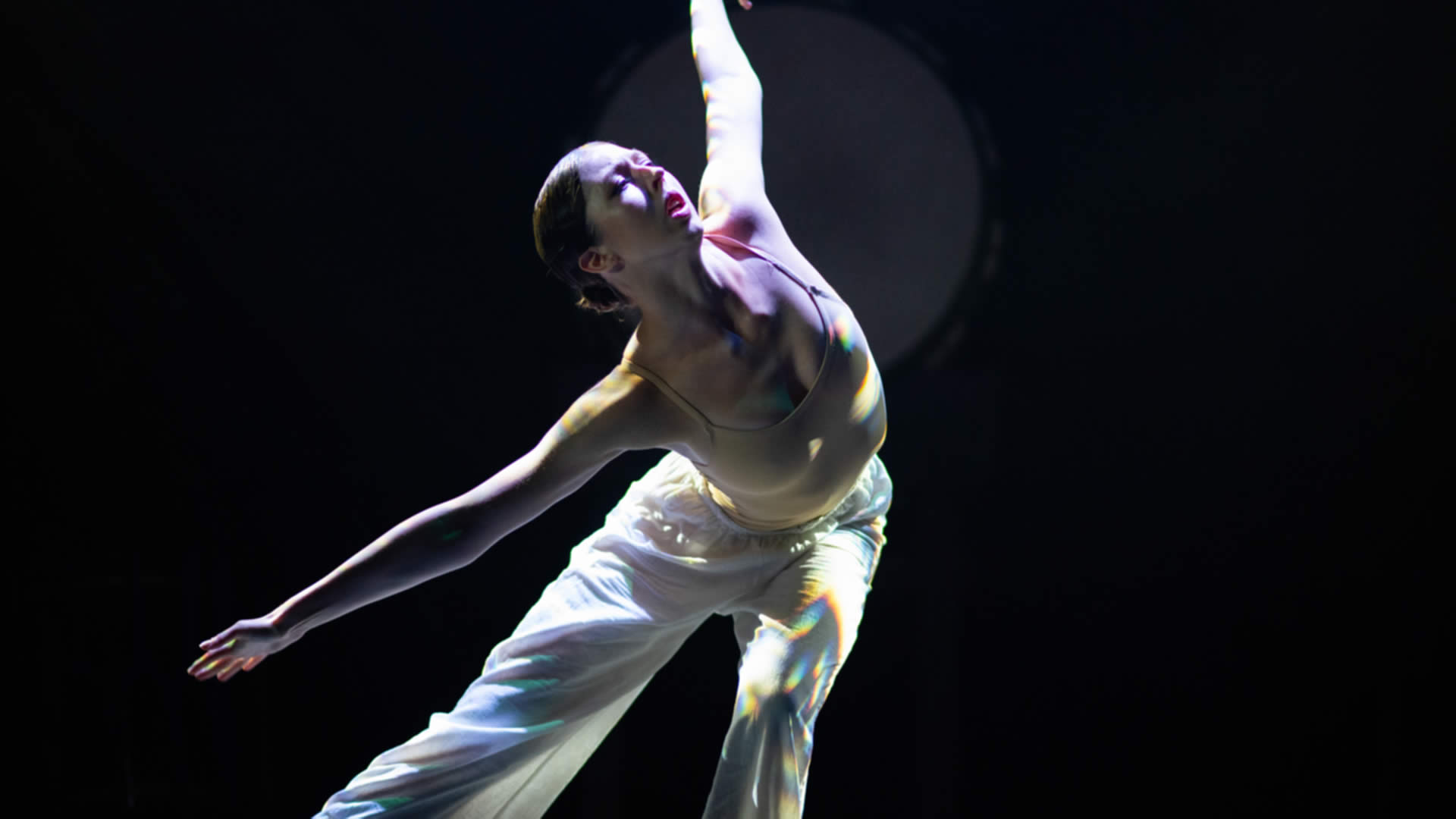
Arrival And The First Pulse Of Water Mirror
The stage is not immediately readable. Shadows sit across it in layered gradients, interrupted by the faint geometry of percussion instruments and set pieces that seem both deliberate and abstract.
When the first sound arrives, it is not melodic but structural. Taiko drums – deep, resonant, physical – establish a pulse that feels less like rhythm and more like geography. In this opening, Water Mirror asserts itself through vibration rather than image.
The dancers enter not as interruption but continuation. Movement responds to sound rather than follows it, as though both were part of a single unfolding system. The stage becomes less a surface than a field of forces – sound pressing into movement, movement shaping silence in return.
In these early moments, Water Mirror feels grounded in elemental contrast: weight and suspension, impact and echo.
Water Mirror And The Architecture Of Rhythm
As the work develops, Water Mirror reveals its central language: rhythm as architecture. The Taiko percussion does not sit beneath the choreography; it constructs the environment in which movement occurs.
Each strike seems to redraw spatial boundaries. Dancers respond with athletic precision, their motion carrying both force and control. Acrobatic elements appear not as spectacle but as extensions of rhythm – bodies translating sound into visible form.
The audience does not watch so much as track patterns. Repetition becomes variation, and variation becomes structure. In this way, Water Mirror resists linear narrative. It moves instead through cycles of intensity and release.
There are moments where silence holds its own weight. In those pauses, the theatre feels almost architectural again – walls, air, and seated bodies forming a temporary geometry around absence.
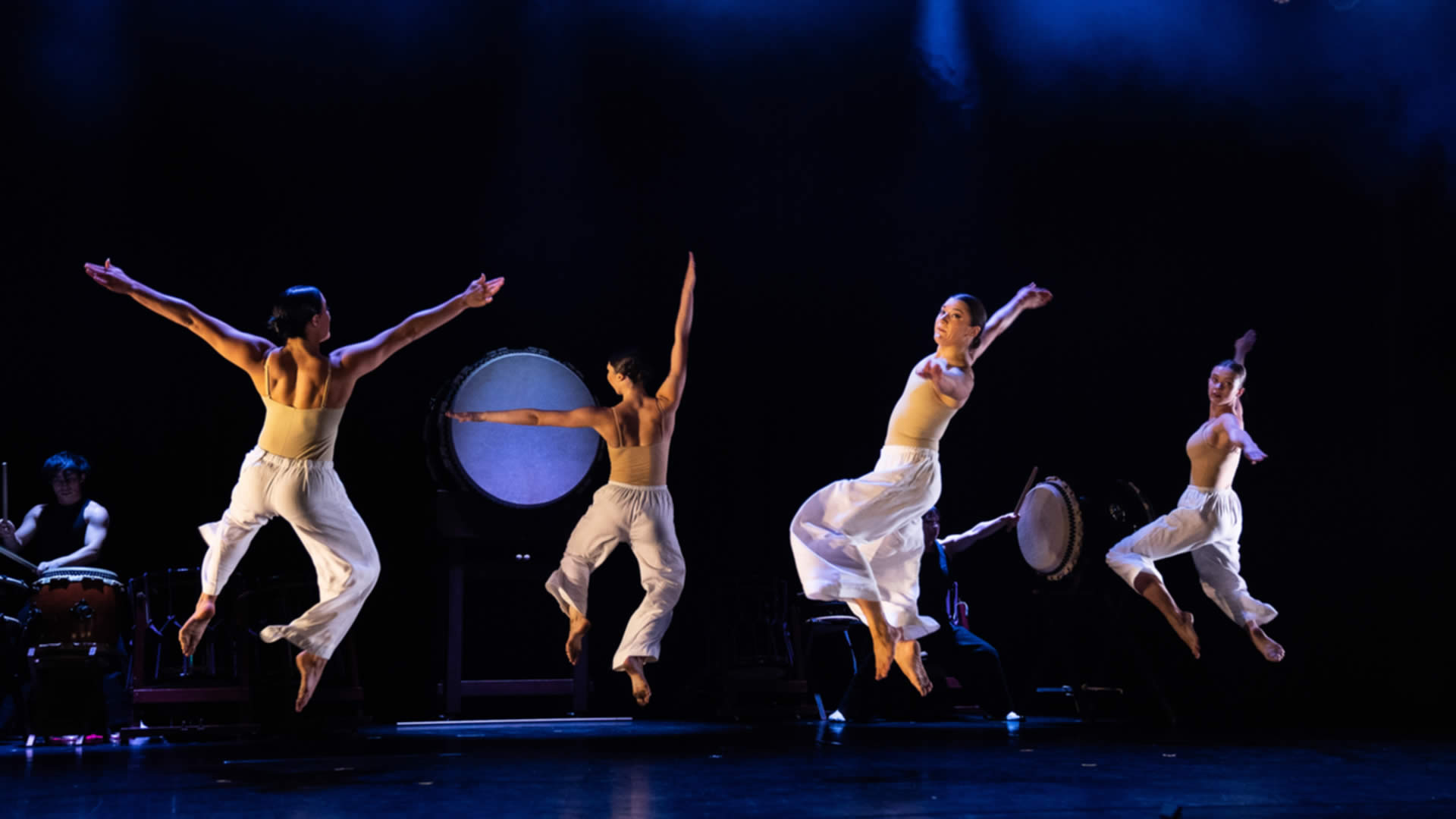
Water Mirror: Light, Projection And Shifting Surfaces
Midway through the performance, Water Mirror shifts its focus from physical rhythm to visual transformation. Projection design begins to alter the perception of depth on stage. Surfaces that once felt fixed now appear fluid, responsive.
Light becomes an active participant. It fractures across bodies, pools across the floor, then withdraws. The dancers move through these shifting conditions as though navigating weather rather than stage design.
What emerges is not illusion, but layered perception. Water Mirror uses projection not to replace reality, but to complicate it. The stage becomes a place where images do not settle – they pass through.
The title begins to feel increasingly literal. Reflections appear and dissolve. Forms double, fragment, then return to singularity. Nothing holds still for long, yet nothing feels unstable.
Water Mirror And The Discipline Of Collaboration
Behind the visible precision of Water Mirror lies an evident discipline of collaboration. The integration of choreography, composition, lighting, and projection does not feel additive. It feels interdependent.
Taiko percussionists, dancers, and technical design operate within a shared structure that allows individual expression without fragmentation. The result is a work that breathes as a single organism, even when its parts are visibly distinct.
There is a sense that Water Mirror has been shaped through sustained negotiation – between sound and movement, between visual density and negative space. Nothing appears accidental, yet nothing feels rigid.
This balance gives the performance its calm intensity. Even at moments of high physical demand, there is clarity in how each element holds its place within the whole.
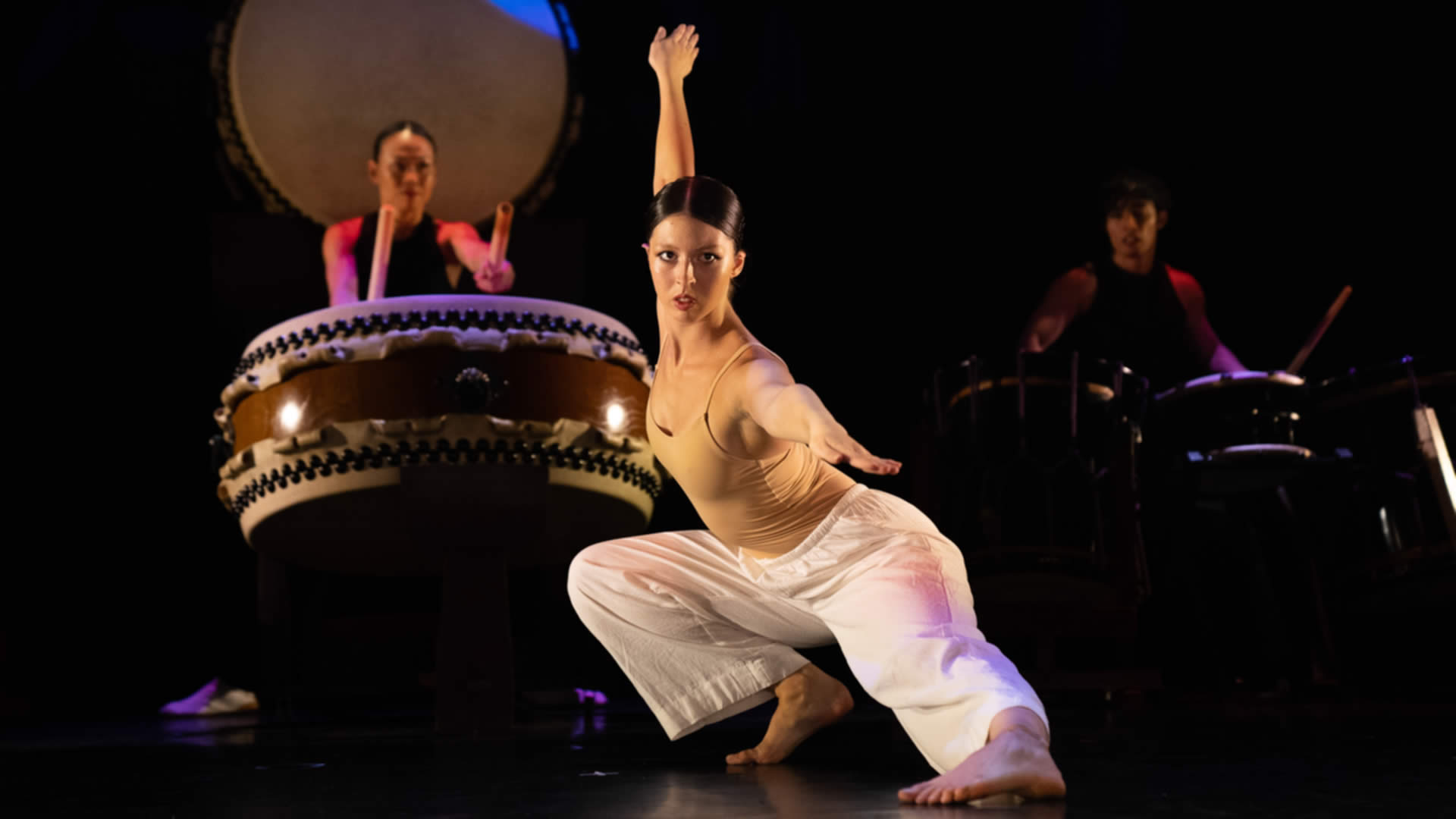
Water Mirror And The Audience In Stillness
By the final section, Water Mirror has established its own internal logic. The audience, having adjusted to its shifting registers, now watches with a kind of settled attention.
What began as spectacle has become environment. The theatre no longer feels like a container for performance, but a shared field of perception shaped by sound, light, and movement.
There are brief instants where everything aligns – drum, motion, projection – before dispersing again. These moments are not climaxes so much as recognitions: points where the system reveals itself before continuing.
In these intervals, Water Mirror feels closest to its name. Reflection is not passive here; it is active, unstable, and always in motion.
Water Mirror And The Afterimage Of Movement
When the performance concludes, there is no immediate rupture. Instead, Water Mirror leaves behind a kind of afterimage – less visual than sensory.
People remain seated for a moment longer than expected. The transition back to everyday sound feels gradual: footsteps, soft conversation, the reopening of doors into night air.
Outside Glen Street Theatre, the bush line is dark and still. The city feels distant, though not absent. What lingers is not a single image from Water Mirror, but a sequence of impressions – rhythm, reflection, and the sense of bodies moving through shared time.
The work does not insist on interpretation. It allows experience to settle without definition.
Event Details
Performance: Water Mirror
Venue: Glen Street Theatre, Belrose NSW
Date: Friday 5 June 2026
Time: 7:30pm
Duration: 60 minutes (no interval)
Ticket Price: $35 / $70
Age Suitability: All ages
Notes: Theatrical haze and loud Taiko percussion
Official Website: https://www.glenstreet.com.au