
The 31st Greek Film Festival brings new Greek cinema, restored classics and stories of identity to Sydney from 13 to 25 October.
There is a particular feeling to a cinema foyer just before a festival screening. The ordinary business of going to the movies becomes slightly more social. Conversations carry across the room, programmes are folded into bags, and people who may not know one another begin comparing the films they have come to see.
In Sydney, that atmosphere settles over Leichhardt and Moore Park this October as the 31st Greek Film Festival brings two weeks of Greek cinema to Palace Norton Street and Palace Moore Park.
The festival arrives with films that have travelled well beyond Greece before reaching Sydney. Some come directly from the international festival circuit. Others look backwards, opening a window onto earlier generations of Greek filmmaking. Together, they offer something more expansive than a collection of screenings. They create a moving portrait of a country through its people, places, anxieties, memories and sense of humour.
For audiences familiar with Greece through summer holidays, family connections, food and the familiar images of islands and whitewashed villages, the cinema offers another route into the country.
This Greece is more complicated.
It includes crowded cities, difficult choices, family obligations, economic pressure, migration, faith, desire and questions about belonging. It also includes comedy, absurdity, history and the small recognisable moments in which people reveal themselves.
That mixture is at the heart of the 31st Greek Film Festival.
The 31st Greek Film Festival Begins With Friendship
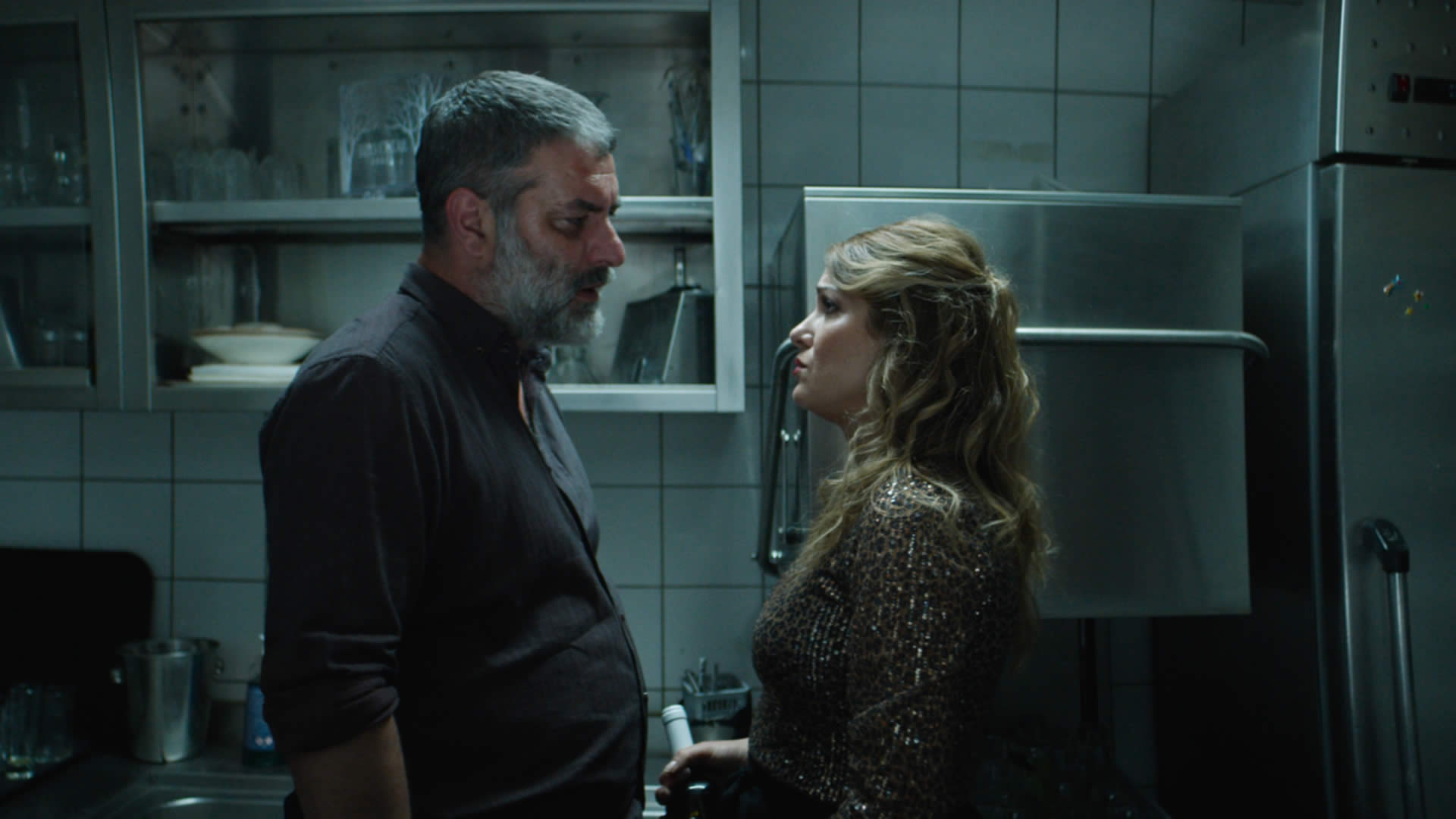
The festival opens in Sydney on Tuesday 13 October with Best Friends Forever, a contemporary Greek comedy directed by Konstantinos Mousoulis.
The story begins with a wedding that does not go according to plan. A well-intentioned favour leads to a journey to Crete, where misunderstandings, family tensions and a growing chain of complications put friendships under pressure.
It is an appropriate way to begin a festival devoted to cinema from a culture in which family and friendship are often closely intertwined.
Best Friends Forever uses comedy to explore the trouble that can follow when people try to help one another. Its characters become caught in situations that are increasingly difficult to control, while the original intentions behind their actions remain recognisable.
The Sydney opening night takes place at Palace Norton Street in Leichhardt at 7.30pm. The film returns during the festival at both Norton Street and Moore Park, giving audiences several opportunities to see it.
From the beginning, the festival establishes one of its central ideas. Greek cinema does not need to be distant or unfamiliar to tell specifically Greek stories. The emotions are often recognisable even when the circumstances are not.
Greek Cinema Looks Beyond The Postcard
Travel writing has a tendency to reduce places to their most recognisable images.
Cinema can do the opposite.
A film can linger inside an apartment, follow someone through an ordinary street, sit at a kitchen table or spend time with a person who has nowhere particularly interesting to go. In those moments, a place becomes less like a destination and more like a lived environment.
That is one of the pleasures of the Greek Film Festival.
The 2026 program moves through comedy, drama, documentary, romance, historical stories and films concerned with contemporary social questions. Titles such as Elena's Shift, Beachcomber, Female, Winter Sea and Don't Laugh, They'll See You approach Greece from very different directions.
Elena's Shift, for example, follows a Romanian single mother living in Athens whose dismissal from work brings her into conflict with a society in which she has long struggled to find a sense of belonging. The story moves through questions of work, family, justice and identity, while also making space for the possibility of love.
Beachcomber takes a different path, following Elias as he tries to build a boat from scrap metal while confronting the mythology surrounding his sailor father.
These are stories of people trying to make sense of the lives they have inherited and the lives they might still create.
The 31st Greek Film Festival Looks Back To Eva
Among the festival's most significant screenings is Eva, Maria Plyta's 1953 drama.
More than seven decades after its original release, the film arrives in Sydney in a newly restored version following its selection for Cannes Classics in 2026. Plyta occupies an important place in Greek cinema history as the first woman to direct a feature film in Greece.
The film follows a married woman who meets a younger man during a summer holiday on a Greek island. What begins as a fleeting romance becomes entangled with jealousy, social expectations and the judgement of a close-knit community.
Seen today, the premise carries a particular resonance. The island setting may initially suggest the familiar mythology of Greece as a place of escape, sunshine and freedom. Yet within the story, the community itself becomes a force of scrutiny.
The restoration also reveals another important connection to Greek cultural history. Eva features the first film score composed by Mikis Theodorakis, adding another layer to its significance.
In Sydney, Eva screens at Palace Norton Street on Saturday 17 October at 3.30pm, with a second screening at Palace Moore Park on Sunday 25 October at 6.30pm.
The first screening forms part of a special presentation, giving audiences an opportunity to consider not only the film itself but the place of Maria Plyta within the history of European cinema.
A Saturday At Palace Norton Street
Saturday 17 October offers a particularly concentrated glimpse of what the festival is about.
At Palace Norton Street, the day begins with Geloioi Erotes at 11am, followed by Elena's Shift at 1pm. Eva arrives at 3.30pm, Broken Vein at 6pm and Hen at 8.45pm.
It is possible to spend much of the day moving through different versions of Greece without leaving Leichhardt.
The rhythm is familiar to anyone who has spent a day at a film festival. There is the walk between screenings, the quick discussion afterwards, the decision about whether to stay for another film or step outside for something to eat. The cinema becomes a temporary meeting place.
Leichhardt is particularly suited to this kind of gathering.
Norton Street has long been associated with Sydney's Greek community, with restaurants, bakeries, cafes and shops forming part of the everyday life of the area. During the festival, cinema and neighbourhood culture sit naturally beside one another.
The experience is not simply about watching films from Greece. It is also about watching them in a part of Sydney where Greek culture has an established presence.
The 31st Greek Film Festival Brings Cannes Home
If Eva represents the festival's connection with cinema history, Broken Vein represents its engagement with the present.
Directed by Yannis Economides, the crime drama follows a businessman trying to keep his home out of the hands of a loan shark. A plan that initially appears carefully constructed begins to unravel, moving towards an increasingly devastating family crisis.
The film is Greece's official submission for Best International Feature Film consideration at the 99th Academy Awards, placing it within a broader international conversation about contemporary Greek cinema.
In Sydney, Broken Vein screens at Palace Norton Street at 6pm on Saturday 17 October, with another screening at Palace Moore Park at 6pm on Thursday 22 October.
Its presence alongside a 1953 restoration makes the breadth of the festival especially clear.
Greek cinema is not being presented as a single style or historical period. It is a conversation between generations.
From Athens To Islands And Beyond
The program continues to move between locations and ideas.
Kapodistrias turns towards history through the life of Ioannis Kapodistrias, the diplomat who became the first governor of modern Greece. Saint Paisios explores the early life and spiritual journey of the Greek monk Paisios. A Spartan Dream takes a more playful approach, following a Greek-American history enthusiast whose romantic ambitions become tangled with an imagined revival of the Peloponnesian War.
Elsewhere, Acropolis Cats and Other Wondrous Animals moves away from conventional human drama to examine the lives of stray cats in Athens and the complicated relationship between people and animals.
The range matters.
A film festival devoted to a national cinema can easily become an exercise in cultural shorthand. This program instead suggests a Greece that contains contradiction. There is ancient history and contemporary urban life, faith and scepticism, comedy and hardship, local identity and diaspora experience.
Even the locations resist a single definition.
There is Athens, but also islands, villages and imagined versions of Greece. There is the Greece remembered by people who have left and the Greece experienced by those who remain.
Stories Of Greek Identity In Sydney
A Greek film festival in Sydney inevitably carries another layer of meaning.
For audiences with Greek family backgrounds, a screening can be more than an encounter with another country's cinema. A name, landscape, expression or family dynamic can trigger memories that have little to do with the plot.
For audiences without that connection, the films provide another kind of access.
Cinema allows people to enter a culture without reducing it to explanation. A character does not need to announce where they come from. Their relationships, arguments, habits and surroundings often reveal it gradually.
The presence of English subtitles also changes the experience in an interesting way. Greek remains the language of the characters, while the audience follows through the rhythm of the translated words. Something of the original sound remains in the room.
That distance can be useful.
It asks the viewer to listen differently, paying attention not only to what is said but to pauses, gestures and expressions that do not require translation.
When The Cinema Becomes A Meeting Place
By the final weekend, the festival has the rhythm of a temporary neighbourhood.
People return to the cinemas. Some have planned their screenings carefully, while others choose another film after hearing a conversation in the foyer. A documentary leads to a drama. A historical film is followed by a comedy.
The program is large enough to reward curiosity.
On Saturday 24 October, for example, Palace Norton Street hosts Wishbone, Winter Sea, A Spartan Dream, Best Friends Forever and Greece 3.0, while Palace Moore Park presents Maricel, Female, Best Friends Forever and The Birthday Party. The following day brings the festival to a close with further screenings, including Eva and A Spartan Dream.
There is no single way to experience the 31st Greek Film Festival.
It can be approached as a celebration of Greek culture, a survey of contemporary filmmaking, a chance to rediscover older cinema or simply a reason to spend an autumn afternoon in Leichhardt or Moore Park.
Perhaps its greatest value lies in allowing all those things to happen at once.
The 31st Greek Film Festival Ends Where Stories Continue
A cinema festival is temporary by nature.
For less than two weeks, these films occupy screens at Palace Norton Street and Palace Moore Park. Then the lights come back up, the programmes disappear from foyer tables and the regular cinema schedule resumes.
The stories, however, travel differently.
A restored film from 1953 finds a new audience. A contemporary drama about debt arrives with questions about pressures that are hardly confined to one country. A comedy about friendship reminds its audience that good intentions can have complicated consequences.
Outside the cinema, Sydney continues to move.
On Norton Street, the evening traffic passes beneath the shopfront lights. People stop for dinner. Conversations continue long after the credits have finished. In Moore Park, the city opens out again, with the familiar streets and buildings replacing whatever landscape a film has briefly created.
That is the quiet strength of a film festival.
For a few hours, a cinema can become another place. Not a substitute for travelling, but another way of paying attention to somewhere you may know, somewhere you have visited, or somewhere you have never been.
The 31st Greek Film Festival offers that invitation in many forms. Sometimes it arrives through laughter. Sometimes through history, music, family or loss.
And sometimes it is simply the moment when the lights go down, the Greek language fills the room, and Sydney becomes very still for the next two hours.