
Art at the Royal returns to Sydney in October, bringing selected works from the Combined Art Societies of Sydney to the historic Royal Art Society in Lavender Bay.
There is a particular kind of Sydney afternoon when the harbour seems less like a landmark and more like part of the neighbourhood.
Walk down towards Lavender Bay and the city begins to change. The traffic noise softens around Walker Street, the harbour appears between buildings, and the sweep of water opens out beyond the rooftops. There is a long tradition of artists being drawn to this part of Sydney, where boats, bridges, sandstone, trees and changing light provide an endless supply of subjects.
Inside the Royal Art Society of New South Wales, the view is different again.
Here, the harbour becomes something that artists carry with them rather than something they simply look at. A landscape might be translated into paint. A familiar figure becomes a study in colour and gesture. A still life can turn a handful of ordinary objects into something worth lingering over.
This October, the Combined Art Societies of Sydney returns to the Lavender Bay gallery with Art at the Royal, an exhibition bringing together works by artists represented through CASS and its member societies.
The exhibition continues a relationship between two longstanding parts of Sydney's art community. CASS provides a network of local art societies and their artists, while the Royal Art Society provides a gallery with a long connection to teaching, exhibiting and supporting Australian artists.
Together, they offer a glimpse of the city's broader artistic life beyond the major institutions.
Art At The Royal Begins With Sydney's Art Societies
Sydney's visual arts scene is often described through its major galleries and museums.
Yet much of the city's artistic life takes place elsewhere.
It happens in community halls, suburban studios, art society rooms and weekend workshops. Artists meet through local societies, enter annual competitions, attend demonstrations and continue painting long after an exhibition has closed.
The Combined Art Societies of Sydney brings many of those communities together. CASS currently represents 12 member societies, creating a network that stretches across different parts of metropolitan Sydney.
Its annual Art of Sydney Awards Exhibition provides one of the central points in that calendar. Artists enter work across a range of categories, with landscapes, marine subjects, still life, flora and fauna, figurative work, abstract painting, smaller works and miniatures represented among the sections used in recent exhibitions.
Art at the Royal follows that process by bringing selected winners and finalists to the Royal Art Society's gallery in Lavender Bay.
It changes the experience slightly.
An award exhibition is about judging and recognition. A gallery exhibition allows the work to settle into a different rhythm. Paintings sit alongside one another. Viewers move at their own pace. A work that might have caught the eye briefly in a larger awards display can acquire a different presence when encountered in the quieter surroundings of a gallery.
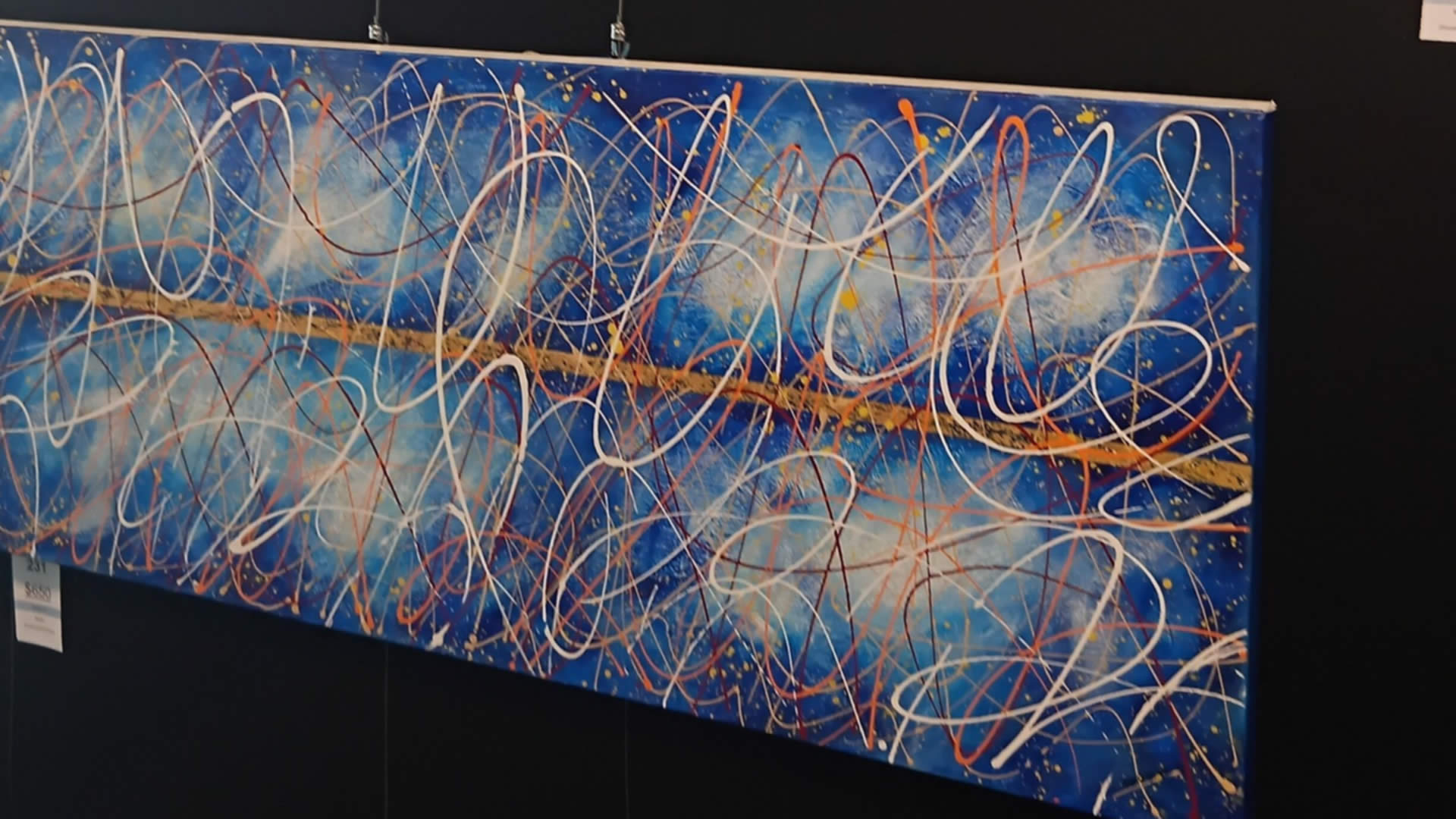
Art At The Royal And The Art Of Looking Closely
Painting asks for time.
That can be easy to forget in a city where most things are encountered while moving. Sydney is experienced through trains, buses, ferries, traffic lights and footpaths. Even its most famous views are often glimpsed through a windscreen or captured quickly on a phone.
A gallery asks for the opposite.
You stop.
A landscape painting might initially appear familiar, particularly when the subject is recognisably Australian. But the longer a viewer looks, the more decisions become apparent. Where has the artist placed the horizon? How much sky has been allowed into the composition? Is the light warm or cool? Has the scene been observed directly or reconstructed from memory?
These small choices are where much of the character of a painting resides.
Recent CASS exhibitions have shown just how broad that conversation can be. The 2026 Art of Sydney Awards included subjects ranging from Circular Quay and the outback to beaches, flowers, portraits and abstract compositions. The winners and highly commended works demonstrated the variety of approaches used by artists working within the CASS network.
Art at the Royal takes some of that variety and places it in a more intimate setting.
From The Harbour To The Australian Landscape
Lavender Bay has a natural relationship with landscape painting.
From the gallery, Sydney Harbour is not an abstract idea. It is physically present. The water changes with the weather, boats alter the composition of the view and the city skyline takes on different colours as the day moves towards evening.
For artists, that constant movement provides both subject and challenge.
A painting of Sydney does not have to be a postcard. It can be about atmosphere rather than recognition. A harbour scene can become an exercise in reflected light. A city view can be reduced to a few shapes. A familiar stretch of coastline can be transformed by the choice of season, weather or time of day.
This is one reason exhibitions such as Art at the Royal remain relevant.
They provide a place for artists to interpret their surroundings without necessarily having to chase novelty. A painter can return to the same landscape repeatedly and find something different in it.
The resulting work becomes less about documenting Sydney than paying attention to it.
A Gallery With A Long Memory
The Royal Art Society of New South Wales occupies an unusual place in Sydney's cultural landscape.
The society's history stretches back to the nineteenth century, and its Lavender Bay premises continue to combine exhibition space with art education. The gallery is located at 25–27 Walker Street, close to the harbour and within walking distance of North Sydney.
That history gives Art at the Royal a particular setting.
The exhibition is not arriving in an anonymous contemporary gallery. It is entering a building and organisation associated with generations of Australian artists and students.
There is something fitting about that continuity.
Art societies are often sustained by people who paint after work, teach classes, organise exhibitions, volunteer at events and keep returning to their easels. The work can be intensely personal, but the practice itself is communal.
That community is one of the less visible parts of an exhibition.
Behind every framed work is time spent mixing colour, sharpening pencils, cleaning brushes, trying again, changing a composition or deciding that a painting is finally finished.
A gallery wall makes the final decision visible. It does not show the hours that came before it.
Art At The Royal Gives Finalists Another Life
There is also an interesting second chapter to the work selected for Art at the Royal.
Artists entering a competition are often working towards a particular deadline. The painting is completed, framed and submitted. It is judged, displayed and then, eventually, returned to the studio.
For those selected for Art at the Royal, the story continues.
The exhibition gives winning and finalist works another setting and another audience. A painting that has already been considered by a judge is now encountered without the same competitive framework.
That distinction changes how a viewer might respond.
There is no need to compare one landscape with another or decide which portrait is most accomplished. Instead, visitors can simply spend time with the individual works.
The variety of mediums and subjects also becomes part of the experience. Water-based painting behaves differently from oil. Drawing and mixed media create different kinds of surfaces. Small and miniature works demand another sort of attention, particularly when the viewer moves closer to examine the detail.
In an age of enormous digital images, there is something quietly satisfying about standing in front of a physical work and seeing the evidence of the artist's hand.
The Local Art Community On The Wall
One of the pleasures of a community-based exhibition is recognising the places within it.
Sydney artists often paint the same city that everyone else inhabits, but they do not necessarily see it in the same way.
A beach becomes a study in changing weather. A suburban garden becomes a composition of leaves and shadow. A familiar harbour view becomes a question of colour. A portrait becomes an investigation of character rather than simply likeness.
The city is full of these overlooked visual moments.
Art societies provide a structure through which artists can pursue them. They also create an audience that understands the slow work behind the finished image.
For visitors, this can make an exhibition feel less distant.
You are not necessarily looking at an artist whose work has travelled across the world. You may be looking at someone's interpretation of a place you passed last weekend, a person they know, a landscape they return to or an object that has been sitting in their studio for years.
That sense of proximity is part of the appeal.
A Sydney Exhibition In A Sydney Setting
October is a natural month for an exhibition in Lavender Bay.
Spring brings longer afternoons and clearer opportunities to walk through North Sydney before or after visiting the gallery. The harbour is beginning to take on the brighter quality associated with the warmer months, while the city remains busy enough to provide a contrast with the quiet concentration inside the exhibition space.
A visit can easily become part of a longer Sydney afternoon.
The gallery is close to the harbour, with the surrounding streets offering views towards the water and city. Visitors arriving by public transport can make the short journey from North Sydney and continue down towards the waterfront afterwards.
There is no need to make the exhibition an isolated destination.
That is perhaps especially appropriate for Art at the Royal.
The work comes from a network of artists who are part of Sydney's everyday cultural life, and the gallery itself sits within one of the city's most visually distinctive neighbourhoods.
Why Art At The Royal Matters
Small exhibitions rarely make much noise.
They do not necessarily attract the crowds associated with major international shows, and their names may not appear on every list of things to do in Sydney.
But cultural life is not made only from major exhibitions.
It is also made from people continuing to paint, draw, exhibit, teach and look.
The Combined Art Societies of Sydney is part of that quieter infrastructure. Its member societies give artists places to meet and exhibit, while competitions such as the Art of Sydney Awards provide a moment of recognition.
Art at the Royal then offers another stage.
The works leave the context in which they were judged and enter a gallery overlooking one of Sydney's oldest and most familiar landscapes.
For visitors, the experience is simple.
Walk into the gallery. Take the time to look. Notice which works hold your attention and which ones change as you spend longer with them. Then step outside and see how differently the harbour appears after an hour spent looking at someone else's interpretation of the world.
That may be the most lasting part of Art at the Royal.
Not a particular painting, prize or category, but the small shift that occurs when familiar surroundings are seen through another person's eyes.
Event Details
Art at the Royal is presented by the Combined Art Societies of Sydney during October 2026 at the Royal Art Society of New South Wales, Lavender Bay Gallery, 25–27 Walker Street, Lavender Bay, North Sydney.
CASS has not yet published the 2026 exhibition's final opening and closing dates or daily gallery hours on its current public exhibition information. The organisation's previous Art at the Royal exhibition ran at the same Lavender Bay gallery, with weekday and weekend viewing hours published separately.
Visitors should check the Combined Art Societies of Sydney website for the confirmed 2026 dates, opening hours and exhibition information before making the trip.
The afternoon light will be moving across the harbour outside.
Inside, paintings will hold still.
For a while, Sydney can be seen without having to rush past it.