
Australian Native Food Festival brings First Nations chefs, native ingredients, workshops and stories to Carriageworks across one Sydney spring weekend.
On a Saturday morning in Eveleigh, the old railway buildings at Carriageworks begin to fill with a different kind of energy.
The farmers market is already familiar territory for many Sydneysiders. There are baskets of produce, the smell of bread and coffee, conversations between growers and shoppers. But this weekend, the conversation around food extends much further, into questions of Country, knowledge, culture and the long history of ingredients that have sustained Aboriginal communities for tens of thousands of years.
The Australian Native Food Festival returns to Carriageworks on Saturday 26 and Sunday 27 September, bringing together First Nations chefs, food businesses, producers, knowledge holders and audiences for two days centred on native Australian ingredients and Indigenous food culture.
General admission is free, although registration is required, while the chef demonstrations and workshops are separately ticketed. The public festival runs from 9am to 5pm on Saturday and 9am to 4pm on Sunday.
It is a fitting setting.
Carriageworks occupies the former Eveleigh railway workshops, a place shaped by manufacturing, movement and labour. Its industrial spaces have since become one of Sydney's important cultural venues. For the Australian Native Food Festival, those old workshops provide somewhere to bring together stories that are ancient and a food culture that continues to evolve.
The result is not simply a food market.
It is an opportunity to consider what Australia eats, where those ingredients come from and whose knowledge has carried them across generations.
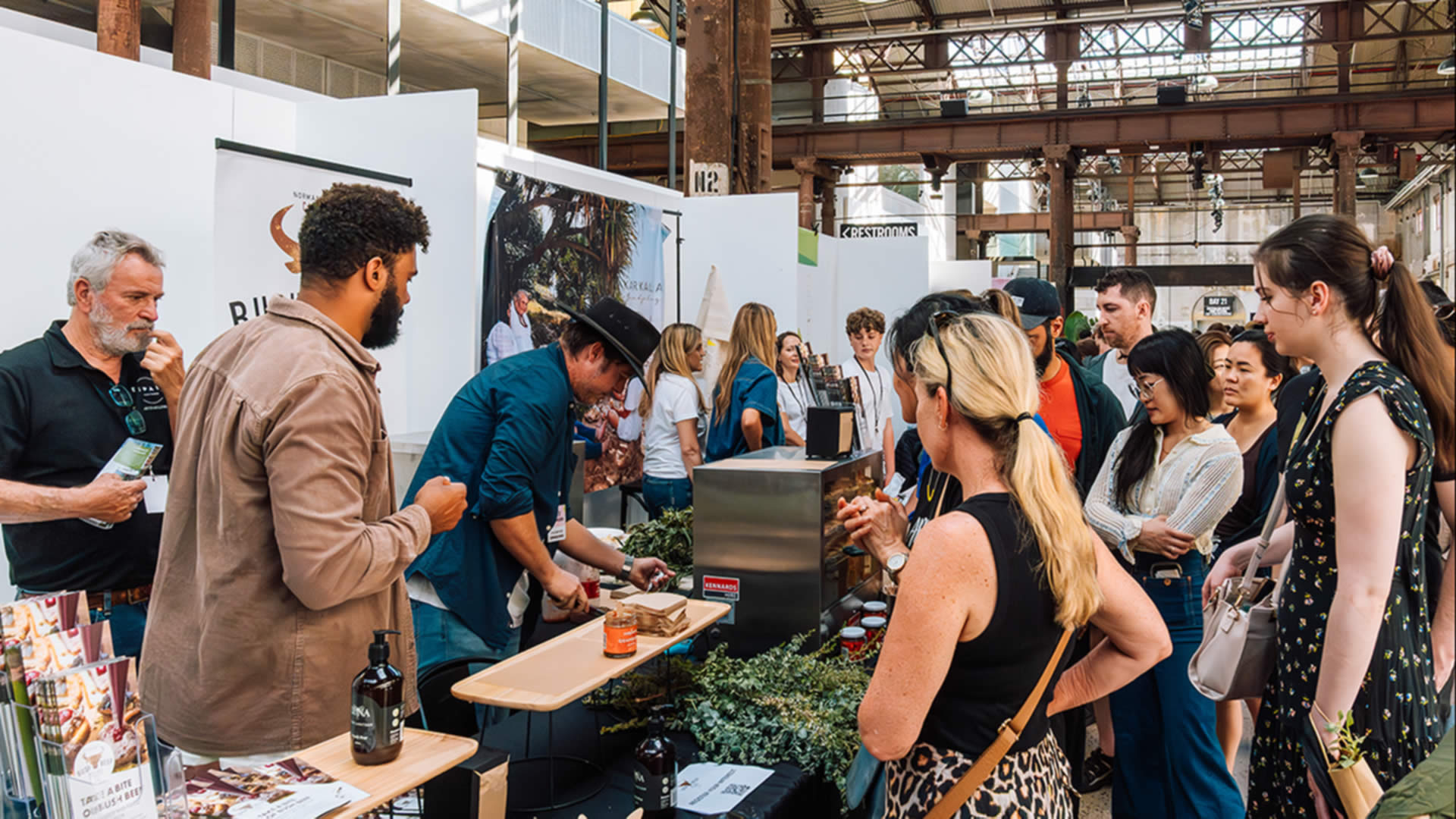
Australian Native Food Festival And The Stories Behind Ingredients
The idea of native Australian food can sometimes be reduced to a list of unusual ingredients.
Wattleseed. Finger lime. Lemon myrtle. Saltbush. Native pepper. Macadamia. Quandong.
But ingredients do not exist independently of the places where they grow or the people who understand them.
That is one of the central ideas running through the Australian Native Food Festival. Curated by Sharon Winsor, a Weilwan woman from north western New South Wales and founder of Indigiearth, the festival places native foods within a much broader conversation about Indigenous culture, knowledge and food sovereignty.
For Winsor, native food is connected to culture and identity rather than simply culinary novelty.
That distinction gives the festival a different character.
Visitors may arrive interested in trying an ingredient they have never tasted before, but the programme repeatedly leads back to the stories behind those ingredients. Who grows them? Who harvests them? What knowledge is required to use them? How have Aboriginal communities understood food, Country and seasonality over thousands of years?
The questions are as important as the flavours.
A Festival Built Around First Nations Knowledge
The 2026 programme brings together an unusually broad group of chefs and food advocates.
There are familiar names from Australian food television and restaurants, including Nat Thaipun, Kylie Kwong, Colin Fassnidge, Jason Roberts and Adam Liaw. Alongside them are First Nations chefs, elders, growers and knowledge holders whose work is directly connected to the cultivation, harvesting and use of native foods.
That mixture creates opportunities for conversations across different culinary traditions.
On Saturday morning, Nat Thaipun explores the relationship between her Thai culinary heritage and Australian native ingredients. Later, Kylie Kwong joins Gamilaroi Elder Aunty Beryl Van-Oploo OAM for a cooking demonstration that brings together Aunty Beryl's recipes and Kwong's Australian Cantonese approach.
There is also a conversation between Karima Hazim and Rayleen Brown about Aboriginal and Lebanese food traditions, including their shared respect for seasonal ingredients and the stories carried through food.
The programme continues through the afternoon with Jason Roberts and Zach Green exploring native foods through seafood, followed by author and agricultural thinker Bruce Pascoe with Bundjalung chef Mindy Woods discussing native grains and Aboriginal bread making traditions.
The variety is significant.
Rather than presenting native food as a single cuisine with a fixed set of rules, the festival allows different people to approach Australian ingredients through their own culinary histories and experiences.
Australian Native Food Festival Looks To The Kitchen
For many visitors, the most immediate connection will happen through cooking.
Food can make an idea tangible in a way that a lecture sometimes cannot. A native ingredient placed on a plate becomes something that can be smelled, tasted and remembered.
The chef demonstrations are designed around that sensory connection.
On Sunday, Lucy Tweed joins Bininj man and Kakadu Kitchen founder Ben Tyler to discuss the ethical sourcing of native ingredients and ways they might be approached in everyday cooking.
Colin Fassnidge joins Sharon Winsor for a conversation about replacing familiar ingredients with Australian native alternatives. Later, Amber Doig and Gomeroi and Guumbraay woman Kerrie Saunders explore connections between native foods and Mexican cuisine.
The final demonstration brings together Adam Liaw, Jennifer Wong and Sharon Winsor for a conversation about food, culture and identity.
There is an everyday practicality to some of these sessions.
Native ingredients have increasingly found their way onto restaurant menus, but the more interesting question is what happens when they move beyond restaurants and into ordinary kitchens.
What does it mean to cook with a native grain at home? How might a familiar dish change when an Australian ingredient replaces a more conventional one? And how can people buy and use these products in ways that respect the communities and knowledge systems behind them?
The festival leaves room for those questions.
From Market Stall To Kitchen Table
The market component gives the Australian Native Food Festival another dimension.
More than 30 First Nations owned and run businesses are represented across the weekend, with products ranging from native spices and wild teas to chocolate, bush foods, beauty and wellness products and handcrafted weaving.
This is where the subject becomes particularly tangible.
A cooking demonstration can introduce an ingredient. A stall allows someone to take it home.
That shift matters because a native food culture cannot exist only on restaurant menus or festival stages. It needs producers, growers, harvesters, businesses and customers. It needs people who can build sustainable enterprises around native ingredients while maintaining the cultural knowledge connected to them.
The market therefore becomes more than a place to browse.
It offers a glimpse of an emerging Australian food economy in which Indigenous owned businesses are increasingly visible and able to tell their own stories.
There is also something familiar about the simple act of wandering through a market.
People pick up packets, ask questions, taste something unfamiliar and discuss what they might cook later. Food culture becomes less abstract and more domestic.
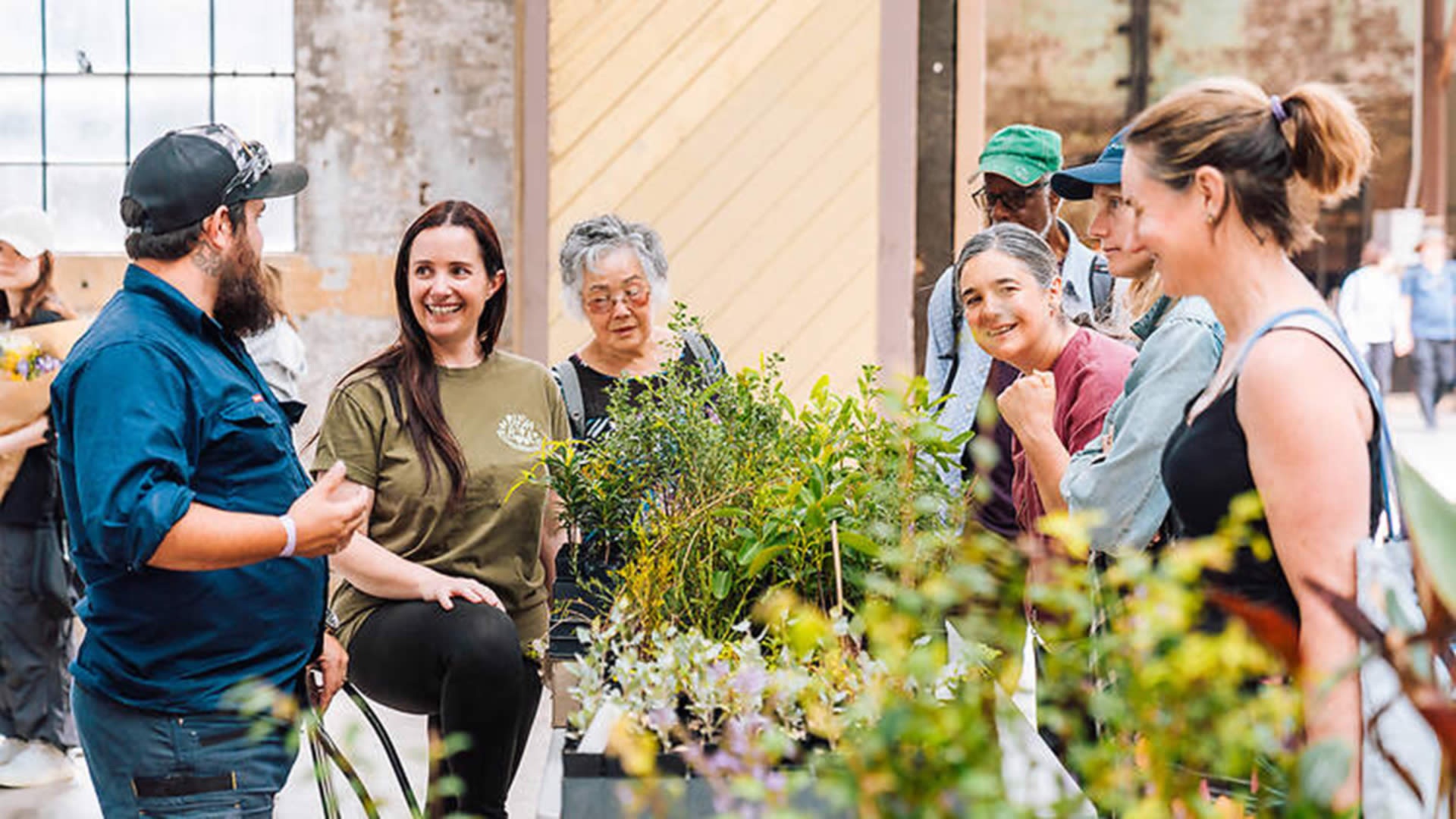
Weaving, Healing And Knowledge Beyond The Plate
The Australian Native Food Festival does not confine its idea of culture to eating.
Workshops broaden the programme into other forms of Indigenous knowledge and practice.
Ngumpie Weaving presents hands-on workshops across both days, where participants learn traditional Aboriginal weaving techniques from master basket weavers and knowledge holders. The sessions provide materials and allow participants to make their own piece.
There are also Ngangkari healing treatment sessions with Debbie Watson, a Pitjantjatjara healer from a long family lineage of traditional healers.
These experiences change the pace of the festival.
After the noise and movement of the market floor, a weaving workshop asks for concentration. Hands work with material. Patterns take shape slowly. Conversation becomes quieter.
That contrast is useful.
It reminds visitors that Indigenous knowledge is not contained within food alone. Cooking, weaving, healing, harvesting and storytelling can all be understood as parts of broader relationships with Country and community.
Australian Native Food Festival And The Idea Of Food Sovereignty
Food sovereignty can sound like a large and distant political phrase.
At Carriageworks, it becomes easier to understand through individual people and practices.
It is about who has access to land and resources. It is about who gets to cultivate and sell food. It is about protecting knowledge from being separated from the communities that hold it. It is also about ensuring Indigenous producers have a meaningful role in shaping the future of Australia's food culture.
The Australian Native Food Festival places those questions alongside the pleasure of eating.
That combination is important.
Food is one of the most accessible ways into a cultural conversation because everyone has a relationship with it. Everyone eats. Everyone has memories associated with particular smells, ingredients and meals.
The festival uses that common ground to introduce a much older Australian food story.
The Industrial Setting Of Carriageworks
There is a particular atmosphere to Carriageworks that suits the occasion.
The former railway workshops are substantial, weathered spaces, built for industry rather than hospitality. Steel, brick and timber create an environment where traces of Sydney's working history remain visible.
Inside those spaces, the Australian Native Food Festival creates a different kind of activity.
Market stalls replace machinery. Cooking demonstrations replace industrial production. Conversations move between tables rather than railway workshops.
Yet there is an underlying connection.
Both places are concerned with making things.
The railway workshops once depended on practical knowledge passed between workers. The festival brings together knowledge passed between generations in kitchens, on Country, through harvesting and through cultural practice.
The building therefore becomes more than a backdrop.
It provides a reminder that Sydney's cultural history has always been layered, with one generation's working landscape becoming another generation's cultural space.
A Weekend For Curiosity
The Australian Native Food Festival does not require specialist knowledge.
Someone who already cooks with native ingredients will find plenty to explore. Someone encountering wattleseed or native grains for the first time can simply begin with a conversation at a market stall.
The programme is broad enough to accommodate both.
There is the casual visitor who wanders through the free festival, tastes something unfamiliar and continues on towards another part of Eveleigh.
There is the dedicated food lover who books several chef demonstrations.
There is the person interested in weaving, the person curious about native plants, the person drawn to the cultural conversations and the person who simply wants to understand more about Australian ingredients.
That openness is one of the festival's strengths.
It does not insist that everyone arrive with the same level of knowledge. Instead, it creates multiple points of entry.
Beyond The Familiar Australian Menu
For a long time, Australian food identity has been described through borrowed culinary traditions.
British baking. Italian pasta. Greek and Lebanese food. Chinese and Vietnamese restaurants. French technique. Japanese influence.
All of these have become part of contemporary Australian eating.
But beneath that layered modern cuisine is an older food history.
The Australian Native Food Festival offers one way of placing that history back into the centre of the conversation.
Not as a museum piece, and not as a collection of exotic ingredients, but as a living body of knowledge being used by contemporary chefs, producers and communities.
That distinction is perhaps the most important thing to take away from the weekend.
The food is not simply ancient.
It is current.
It is being harvested, cooked, sold, discussed and reinterpreted now.
An Australian Food Story Still Being Written
The Australian Native Food Festival runs at Carriageworks, 245 Wilson Street, Eveleigh, on Saturday 26 September from 9am to 5pm and Sunday 27 September from 9am to 4pm.
General admission is free, with registration required. Chef demonstrations and workshops are separately ticketed, with the 2026 programme including cooking demonstrations, weaving workshops and Ngangkari healing sessions.
The festival is presented by Indigiearth and hosted by Carriageworks, with Sharon Winsor curating the programme.
Official information and bookings are available through Carriageworks.
For Sydney, the timing feels appropriate.
Spring is a season of movement and renewal, and a food festival built around native ingredients inevitably brings attention back to the landscape beyond the city. The plants, grains, fruits, spices and botanicals being discussed at Carriageworks do not begin on a market table. They begin in Country.
By late afternoon, the industrial spaces of Carriageworks will have taken on the smells of cooking, tea, spices and warm food. Conversations will continue around market stalls. Someone will be carrying home an ingredient they did not know existed that morning.
Outside, the city will continue as usual.
Trains will pass through Redfern. Traffic will move along Wilson Street. The old railway buildings will remain where they have always stood.
But for a couple of days, inside those walls, another Australian food story will be particularly easy to hear.
It will be in the taste of something unfamiliar, the rhythm of a weaving pattern, the explanation of a chef or the memory attached to an ingredient.
And perhaps that is the most lasting invitation of the Australian Native Food Festival: not simply to eat something new, but to pay closer attention to where food comes from, who carries its knowledge and what might be possible when an older Australian story is given room at the table.