
Cirque du Soleil brings KOOZA to Sydney’s Entertainment Quarter from October 17, combining acrobatics, clowning, live music and traditional circus craft.
On a spring evening in Moore Park, the familiar outline of Sydney begins to give way to something less permanent. The roads still carry their usual traffic, runners move through the park and people drift towards the restaurants and cinemas of The Entertainment Quarter. But beyond the everyday rhythm of the precinct, a very large circus tent is beginning to change the landscape.
Under the Big Top, Cirque du Soleil is preparing to bring KOOZA to Sydney.
The production opens at The Entertainment Quarter on October 17, marking the final Australian stop of its 2026 tour after seasons in Melbourne and Brisbane. The Sydney engagement continues into January, giving audiences a long summer window in which to step away from the city and into a deliberately constructed world of colour, music, physical risk and theatrical invention.
KOOZA is one of the Cirque du Soleil productions that looks back towards the traditional circus while retaining the company's distinctive scale. Its central ingredients are acrobatics and clowning, but around them sits an elaborate world of costumes, characters, live music and visual theatre.
For Sydney, the setting is part of the story. The Big Top rises within The Entertainment Quarter, surrounded by the open spaces of Moore Park. It is a very different kind of theatrical arrival from walking into a city auditorium. The tent is visible before the performance begins, a temporary piece of architecture announcing itself against the familiar surroundings.
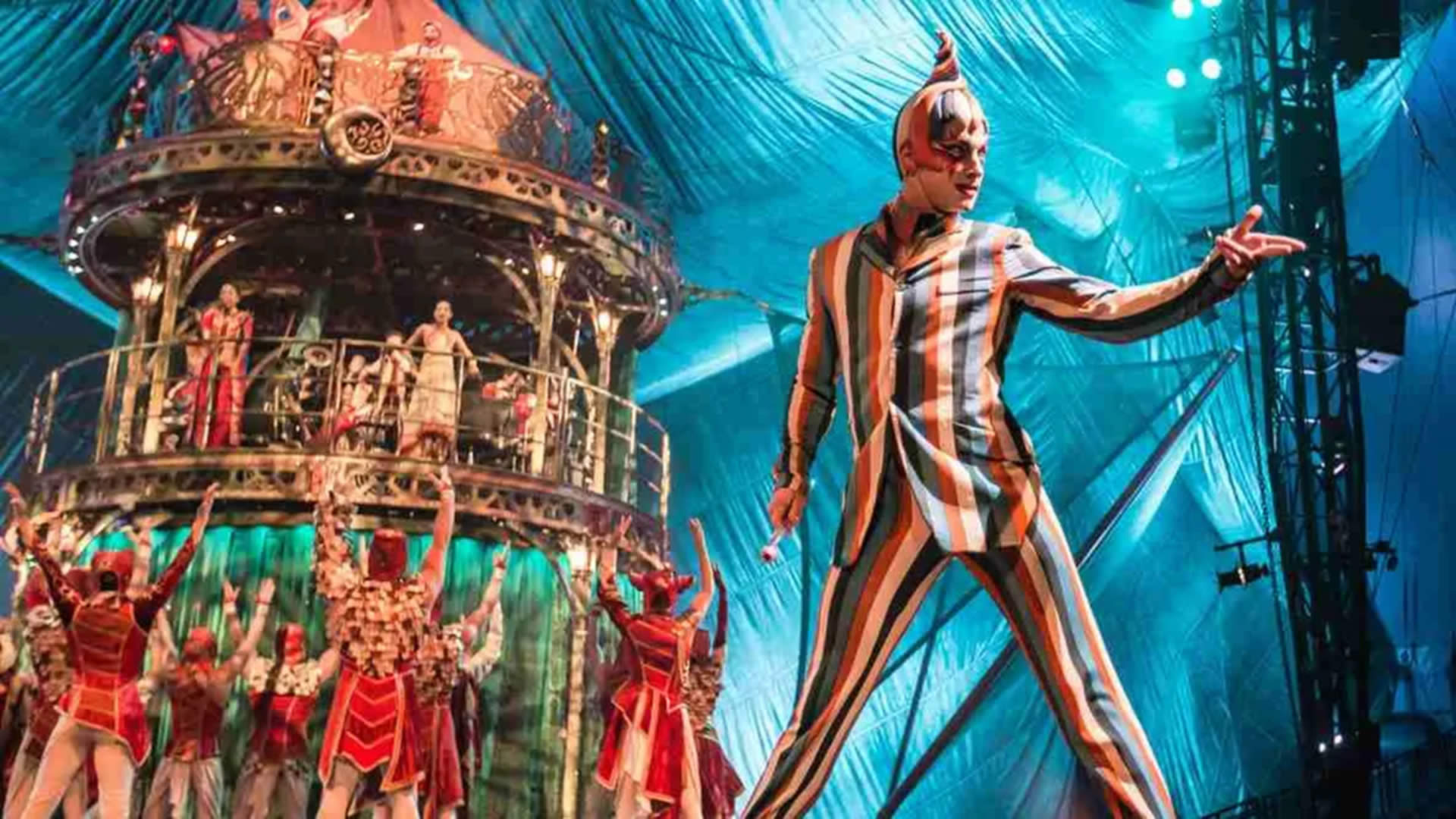
Cirque Du Soleil And The Return Of The Big Top
There is something particularly evocative about a circus arriving by road.
Unlike a permanent theatre, the Big Top suggests movement even when it is standing still. It belongs to the touring life of the show, arriving with its performers, technicians, musicians, costumes, equipment and the many practical systems required to turn an empty site into a functioning theatre.
KOOZA has been doing this for years.
The production premiered in Montreal in 2007 and has since travelled through dozens of cities and countries. More than 10 million people have seen it across more than 5,500 performances, making it one of the long-running productions in the Cirque du Soleil repertoire.
Its name comes from the Sanskrit word koza, associated with a box, chest or treasure. The idea of a circus in a box becomes a useful way of understanding the production. Everything is contained within the travelling world of the Big Top, from the stage and seating to the performers and the visual language surrounding them.
For Sydney audiences, that sense of entering another enclosed world begins before the lights go down.
Inside The World Of KOOZA
At the centre of KOOZA is The Innocent, a solitary and curious character whose journey begins with the arrival of a mysterious package. From there, the story moves into a strange kingdom populated by characters including the Trickster, the King, the Obnoxious Tourist and the Bad Dog.
The narrative gives the physical performances a loose dramatic framework.
Fear, identity, recognition and power sit beneath the more obvious spectacle, while the production repeatedly moves between contrasting ideas. Strength is placed beside fragility. Comedy interrupts tension. Moments of apparent chaos give way to precision.
This is where Cirque du Soleil's approach to circus becomes distinctive. The acrobatic acts are not simply presented as isolated feats. They belong to a theatrical environment in which characters, music, costumes and movement work together.
The result is a production that can shift quickly from broad comedy to genuine physical tension.
There is also an intentional connection to older circus traditions. KOOZA brings together acrobatic performance and clowning, two forms that have been central to circus for generations. Rather than replacing those traditions with technology, the production puts the human body back at the centre.
That means the audience watches people balancing, climbing, flying, tumbling and holding positions that appear to leave very little room for error.
Cirque Du Soleil Puts Human Skill At The Centre
For all the colour surrounding it, KOOZA ultimately depends on something remarkably simple.
A person has to do the thing.
That distinction matters in an age when so much entertainment can be extended or altered digitally. Circus retains a particular immediacy because the audience sees a physical action happening in real time. A performer is high above the stage. Another is balancing on a narrow structure. A group moves together with almost mechanical timing.
There is no need to explain the risk.
The tension is visible.
KOOZA's cast brings together performers from many countries, reflecting the international character of Cirque du Soleil itself. The production includes live musicians and singers, meaning that the soundtrack is created in the room rather than simply played back.
The music draws from 1970s funk, orchestral arrangements and traditional Indian influences. It provides another layer to the production, sometimes driving the action and sometimes allowing the quieter theatrical moments to breathe.
That mixture of musical traditions reflects the broader character of KOOZA. It does not attempt to reproduce a single historical circus. Instead, it gathers familiar elements and places them inside a highly designed contemporary environment.
The Big Top Changes The Entertainment Quarter
The Entertainment Quarter is already a place built around movement between experiences.
On an ordinary day, visitors come for food, markets, cinemas, sport and entertainment. The surrounding streets and open spaces make it possible to arrive early, eat before a performance and linger afterwards.
When Cirque du Soleil arrives, the precinct takes on another rhythm.
The Big Top occupies The Showring, creating a temporary destination within the larger Moore Park precinct. For visitors, the evening can begin well before the performance itself, with the surrounding restaurants and bars providing an easy place to meet before heading towards the tent.
There is something pleasingly old-fashioned about that arrangement.
The circus does not simply appear inside an existing building. It changes the character of the place around it. People carrying tickets begin moving in the same direction. Families arrive together. Groups pause outside. The shape of the tent becomes a point of orientation.
The experience starts to resemble a small event town, gathered around one enormous temporary structure.
For Sydney, where so much cultural life takes place inside established theatres, galleries and concert halls, the Big Top provides a different relationship between audience and performance.
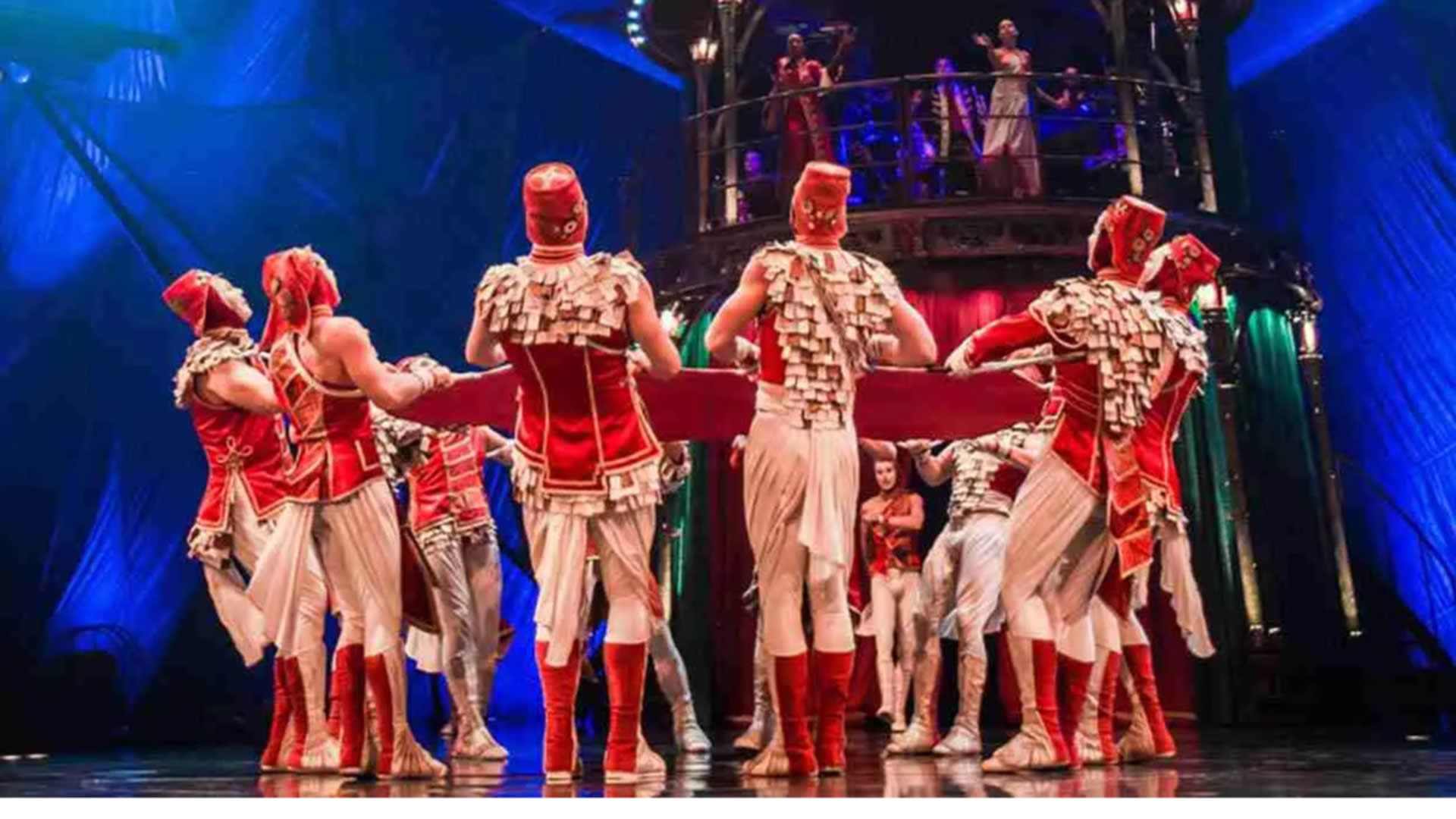
Cirque Du Soleil On A Summer Night
The timing of the Sydney season gives KOOZA a natural connection with the city's warmer months.
By late afternoon, the light begins to soften across Moore Park. The air can still hold the warmth of the day, while the movement of people through the Entertainment Quarter becomes more noticeable. Dinner, drinks and a performance become part of the same evening rather than separate activities.
Inside the Big Top, the outside world gradually disappears.
The lighting changes. The audience settles. The sounds of conversation give way to music and movement.
KOOZA runs for approximately 125 minutes including an interval, allowing the performance to unfold as a full evening rather than a brief theatrical encounter. The controlled environment of the Big Top also allows the production to maintain its atmosphere regardless of what is happening beyond the canvas walls.
For a city accustomed to outdoor summer performances, this creates an interesting balance. Sydney is still close enough to the surrounding parklands and open spaces to feel present, but the tent creates a self-contained world once the show begins.
A Circus Built To Travel
One of the less visible aspects of Cirque du Soleil is the enormous amount of work required to move a production from one city to another.
The KOOZA site covers approximately 17,000 square metres, with the Big Top itself rising around 56 feet and extending roughly 164 feet across. The tent accommodates around 2,500 people.
It takes about seven days to build the site and three days to dismantle it.
That process is repeated as the production moves between cities.
Behind the performers is a touring workforce of more than 120 people, including technical staff, production personnel and specialists responsible for the health and safety of the performers. There is even a full touring kitchen, reflecting the practical reality of moving a large international company from place to place.
Then there are the costumes.
KOOZA uses more than 175 costumes and 160 hats, with more than 1,200 individual costume pieces produced in Cirque du Soleil's Montreal workshop. One costume alone contains hundreds of individually sewn metallic flaps designed to suggest armour.
These details rarely occupy the audience's attention during a performance. They are part of the machinery that allows the illusion to work.
That is one of the pleasures of circus. The more effortless something looks from the seats, the more preparation may be hidden behind it.
Cirque Du Soleil Leaves Sydney With A Sense Of Movement
KOOZA arrives in Sydney as the final Australian stop of its 2026 journey, following seasons in Melbourne and Brisbane.
That gives the Sydney season a slightly different character. It is not simply another stop on an international tour. It is the point at which the production's Australian journey comes to a close before the touring company moves on.
For audiences, however, the experience remains immediate.
The tent stands in Moore Park. The musicians are there. The performers walk onto the stage. The lights change. Somewhere above the audience, a human being begins an act that depends on balance, strength and trust.
Then, when the evening is over, the doors open and Sydney returns.
Outside, the city continues at its own pace. Cars move along Lang Road. The park is darker than it was when visitors arrived. Conversations spill out into the night as people make their way towards dinner, public transport or the walk home.
For a few hours, though, a piece of the travelling circus has taken root in Moore Park.
That is perhaps what Cirque du Soleil does particularly well. It creates a world that is elaborate enough to feel far removed from ordinary life, while remaining grounded in something completely human.
A body in motion. A room full of people watching. Music in the dark.
And, above it all, the great canvas roof of the Big Top.