
From 21 to 24 October, Parramatta Lanes turns the CBD into a four-night journey through food, music and art after dark.
By late afternoon, Parramatta begins to change.
The working day is winding down, commuters are moving towards the station and the streets still have the familiar rhythm of a Western Sydney city centre. Then, gradually, another sound begins to emerge. Music carries between buildings. The smell of grilled food settles into the evening air. Lights appear in places that are usually passed without a second thought.
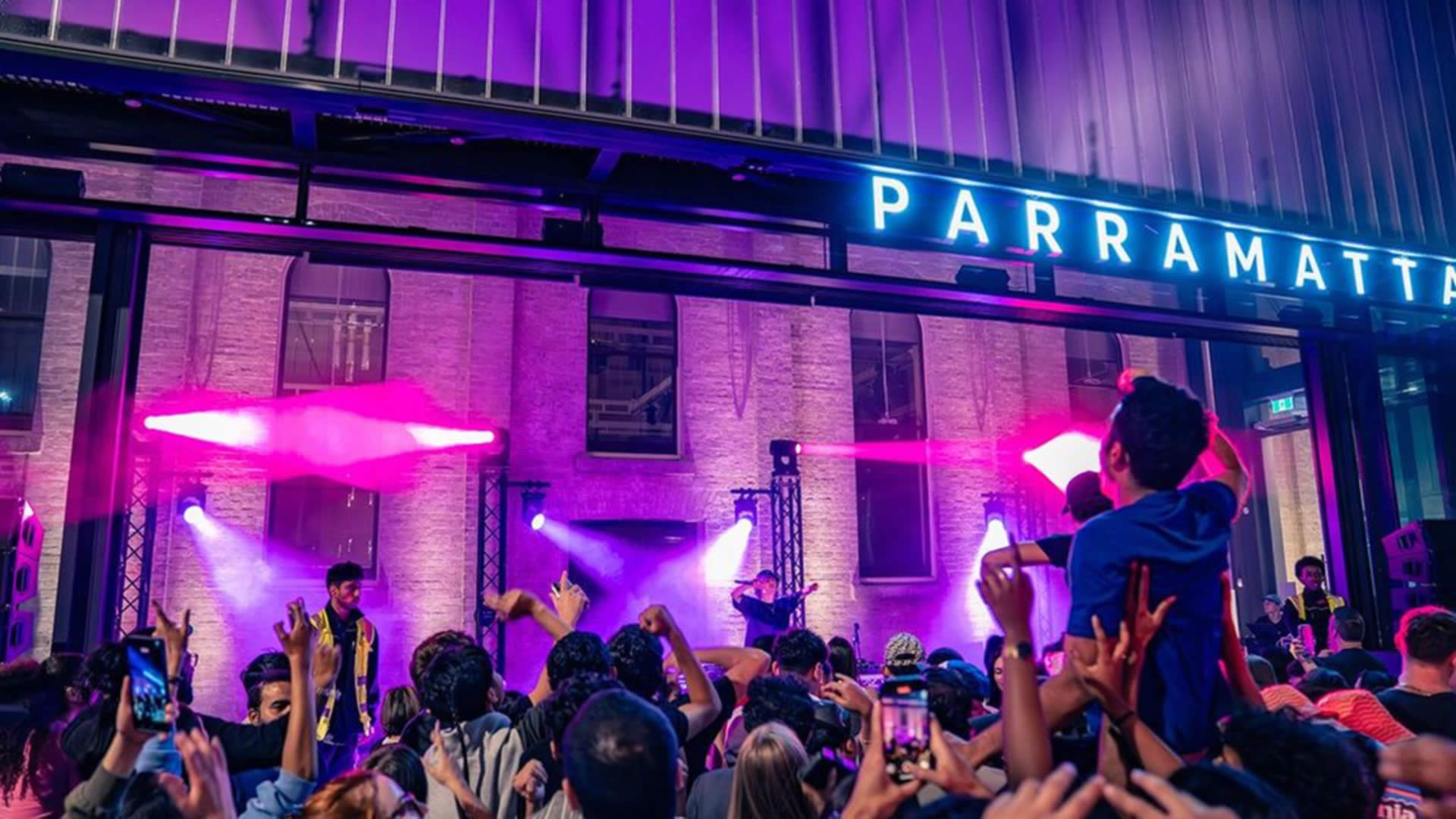
A car park becomes a gathering place. A laneway becomes a stage. A public square becomes somewhere to linger rather than simply walk through.
This is Parramatta Lanes, which returns from Wednesday 21 to Saturday 24 October 2026 for four nights of food, music, art and performances across the Parramatta CBD.
Now in its 15th year, the free festival spreads across more than 20 sites, creating an experience that is less about arriving at one destination than moving through the city itself. The 2026 program brings together more than 400 artists and more than 70 food vendors, alongside large-scale installations, skateboarding, pop-up bars and performances.
For four evenings, Parramatta feels less like a place to pass through and more like a city to explore on foot.
Parramatta Lanes And The City After Dark
There is a particular logic to staging a festival in Parramatta this way.
The city centre has never been defined by a single cultural precinct. Its identity comes from layers. Historic buildings sit alongside new towers. Restaurants and small businesses occupy the same streets as major civic spaces. The river is close by, while Parramatta Square represents a newer centre of gravity for the city.
Parramatta Lanes works with that mixture rather than trying to contain it.
There is no single entrance where the experience begins, and no obvious route that everyone follows. Instead, visitors move between different parts of the CBD, following music, lights, food and whatever catches their attention.
The festival's expanded precincts include the Latin Quarter and Concrete Plaza, while familiar parts of the city take on temporary identities of their own.
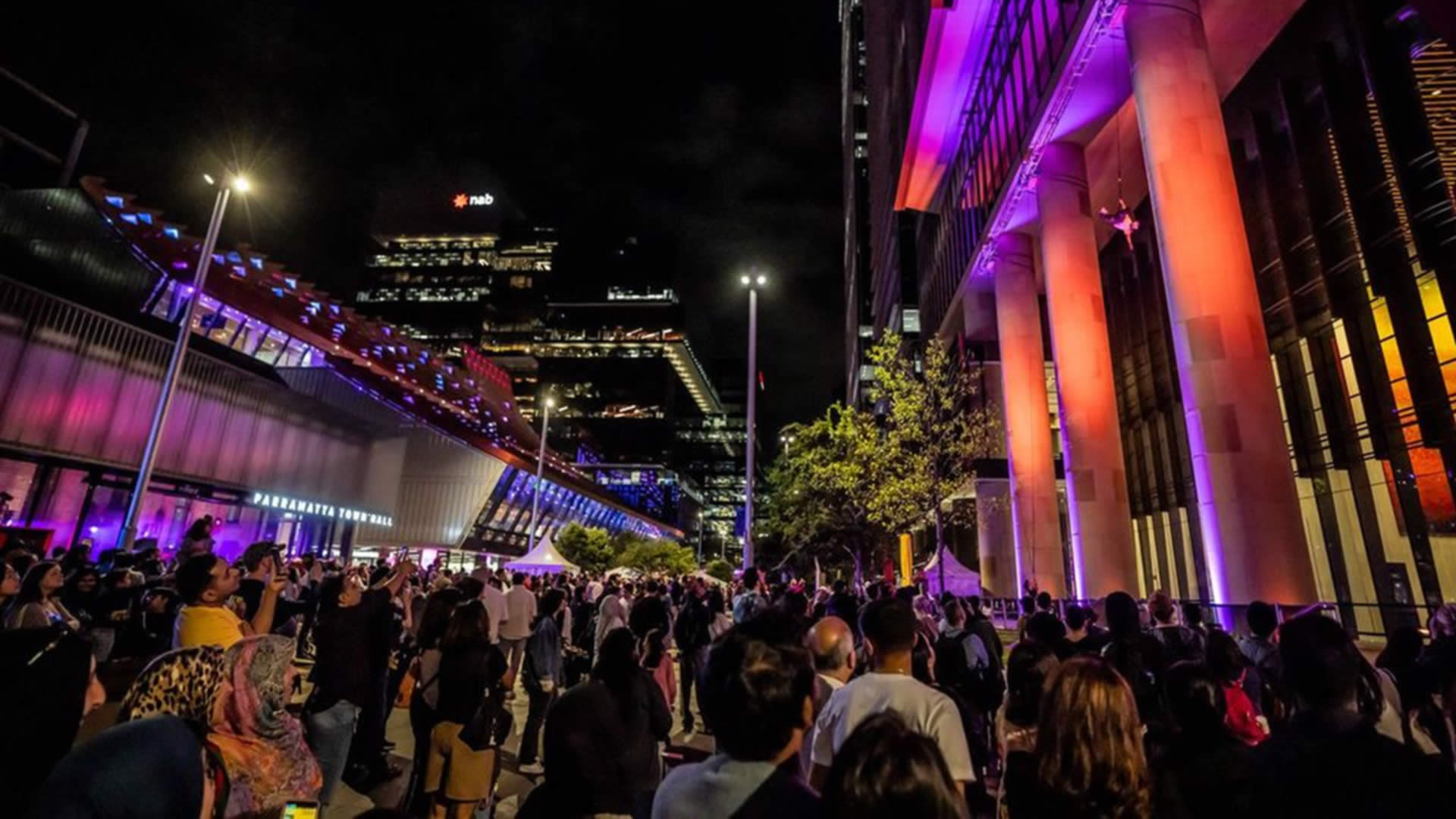
George Street closes to vehicles within the festival boundaries, creating room for people to move through the city differently. Elsewhere, Eat Street Car Park becomes part of the festival landscape, while Civic Link, public squares, laneways and other spaces are given new purposes.
It is a temporary rearrangement of the city, and that is part of its appeal.
Four Nights, More Than 20 Places
Parramatta Lanes runs from 5pm to 10pm on Wednesday 21 and Thursday 22 October, then continues until 10.30pm on Friday 23 and Saturday 24 October.
The timing matters. At 5pm, there is still daylight around the edges of the city. By the end of the evening, the same streets are illuminated by temporary lighting, installations and the glow of food stalls.
The festival therefore changes character as the night progresses.
Early arrivals may find families, workers finishing their day and people meeting for dinner. Later, the crowds become denser around the music stages and food precincts. A visitor who arrives intending to stay for an hour can easily find themselves still wandering the streets several hours later.
There is no need to attempt the entire program in one visit. With so many locations operating simultaneously, Parramatta Lanes rewards curiosity more than efficiency.
One evening might be spent around the music stages. Another could become an informal food trail. A third might be shaped around the public artworks and performances.
The city provides the connecting thread.
Parramatta Lanes Puts Food On The Street
Food has always been one of the easiest ways to understand a city, and Parramatta's food culture is unusually well suited to a festival that encourages movement.
This year's program brings together flavours from across the world, reflecting the cultural diversity of Western Sydney rather than treating it as a side note.
Among the announced food offerings are crispy honey chicken and Flying Bowl Noodles from Dumpling King, dumpling cups from Dragon Express, and colourful tanghulu and Dragon's Breath treats from Fruity Poppin.
Elsewhere, visitors encounter woodfired pizza, burgers, Malaysian hawker food, charcoal-grilled skewers, satay, pasta, desserts and street food from across Asia, Europe and Latin America.
Some of Parramatta's established food names also take part. Bianco brings its pasta finished inside a wheel of Grana Padano, while Burger Head, May's Malaysian Hawker, Satay Brothers, Tokyo Taco, Antico Woodfire Pizza and KOI Dessert Bar are among the familiar names appearing across the festival.
Dim Sim Lim is also making its festival debut.
Rather than creating a separate food festival within the larger event, Parramatta Lanes allows eating to become part of the journey. You might pick something up in one precinct, carry it towards a stage, then continue walking after the last bite.
It is an informal way of experiencing the city, and one that suits the scale of the event.
Music Moves Through Parramatta
The soundscape is equally broad.
This year's program brings international performers together with Australian and Western Sydney artists, with music ranging across hip-hop, electronic sounds, jazz, R&B, alternative music and spoken word.
ARIA Award-winning artist Genesis Owusu leads the announced line-up, joined by US poet and performer Aja Monet and American bassist Nik West. Japanese dance music duo Stereo Champ, indie artist Esha Tewari, genre-defying collective Shady Nasty and Luritja singer-songwriter Keanu Nelson are also part of the program.
The variety means that Parramatta Lanes does not have one musical identity.
Instead, the sound changes from one part of the CBD to another.
At Riverside Live at PHIVE, the atmosphere shifts towards jazz, with ensembles from the Sydney Conservatorium of Music performing alongside established and emerging artists. Across the festival footprint, other stages bring DJs, live bands and performers into streets and public spaces.
The Latin Quarter adds another rhythm altogether, combining music, dance, food and community activity.
For those who prefer something more competitive, Red Bull Turn It Up brings DJ battles to George Street, while Bodega Collective hosts the Pass the Mic Grand Final.
The result is not a festival where one stage dominates the evening. The music becomes a kind of map, helping visitors decide where to go next.
Art Changes The Familiar City
If the food and music draw people through Parramatta, the art gives them reasons to stop.
The 2026 program includes large-scale installations and interactive works designed specifically for public spaces.
Benjamin Akuila's PurseZilla is an illuminated sculpture inspired by culture, identity and community, while Mechelle Bounpraseuth's Ma ma ma turns familiar fruit and condiments into exaggerated, colourful forms.
There is something fitting about encountering these works outside the conventional gallery environment.
A public artwork in a gallery asks visitors to enter a particular space and look. A work in the middle of a city asks a different question. What happens when something unexpected appears along a route that people normally take without thinking?
That sense of interruption is central to Parramatta Lanes.
Visitors may encounter art while looking for dinner, hear a performance while crossing a street, or come across a large illuminated structure simply because they have taken a different turn.
Other installations and performances include Samuel Kim and Lawrence Liang's OURO, Rosie Deacon's The Great Putty Pop-Up: Art Mini Golf and the roaming work of Snuff Puppets.
The city becomes the exhibition space.
From Skateboarding To Street Spectacle
The festival also extends beyond the traditional combination of food, music and visual art.
Concrete Plaza introduces skateboarding activations across the festival, bringing ramps, demonstrations and skating into the Parramatta Square area. It gives the event a more physical dimension and adds another audience to the mix.
Sound Off by Low and Slow takes a different approach, using vehicles fitted with sound systems alongside large-scale video projections.
There is a deliberate sense of collision between the ordinary and the temporary.
A car park remains a car park, but for one night it can also become a performance space. A street remains a street, but the absence of traffic changes how people occupy it. A civic square becomes somewhere to watch, listen, eat and stay.
That transformation is arguably what Parramatta Lanes does best.
A Different Way To See Parramatta
The most interesting thing about Parramatta Lanes may be what happens between the scheduled moments.
The festival encourages people to walk.
That sounds simple, but it changes the experience of a city. Instead of moving directly between station, restaurant, home or venue, visitors begin noticing the spaces in between.
A familiar building is suddenly framed by lights. A side street becomes busy. Music drifts from somewhere ahead. People pause in places where they would normally keep moving.
For visitors who know Parramatta well, the festival offers a temporary alternative version of a familiar city. For those arriving from elsewhere in Sydney, it provides an opportunity to experience the CBD through its streets rather than from a single venue.
This is particularly appropriate for Parramatta, a city whose identity has long been shaped by movement, exchange and layers of culture.
The festival does not attempt to erase that complexity. Instead, it makes it visible.
When The Lights Go Out
By Saturday night, the festival has been running for four evenings.
The food stalls are still busy, music continues across the CBD and the temporary installations remain illuminated. The streets have become something different from what they were earlier in the week.
Then, eventually, the night ends.
The stages will come down. The artworks will disappear. George Street will return to its usual traffic. Car parks will once again become car parks.
That temporary quality is important.
Parramatta Lanes is not trying to permanently change the city. For four nights, it simply reveals another possibility.
After dark, Parramatta becomes a place where the destination is often the walk itself. You follow the music, stop when something catches your eye, find something to eat, continue around another corner and discover that the city has changed again.
For a few spring evenings, the ordinary geography of Parramatta becomes fluid.
The streets are brighter, the night is louder and the spaces between destinations become destinations in their own right.
Parramatta Lanes 2026 Event Details
Parramatta Lanes runs from Wednesday 21 October to Saturday 24 October 2026.
Wednesday 21 October: 5pm to 10pm
Thursday 22 October: 5pm to 10pm
Friday 23 October: 5pm to 10.30pm
Saturday 24 October: 5pm to 10.30pm
Location: Parramatta CBD, Parramatta, NSW
Entry: Free
The festival takes place across more than 20 locations throughout the Parramatta CBD, including Parramatta Square, George Street, Civic Link, Centenary Square, Eat Street Car Park, PHIVE and other laneways and public spaces.
For the latest program, individual performance times and event information, visit the official Parramatta Lanes 2026 website.
As the festival spreads across the CBD rather than occupying one enclosed venue, comfortable walking shoes are useful, particularly for anyone planning to explore several precincts during the evening.
And perhaps that is the best way to approach it. Arrive with somewhere to begin, but leave enough room for the city to decide where you go next.