
Pole Theatre 2026 brings Sydney and international competitors together for an evening where movement, theatre and athletic discipline share one stage.
On a Sunday afternoon in October, the lights will come up inside Marrickville's Factory Theatre on a very different kind of sporting arena.
There will be no running track, no painted court and no conventional boundary between athlete and performer. Instead, a single vertical pole will become the centre of a performance language built from strength, balance, choreography and timing.
Pole Theatre 2026 will bring together Pole Theatre Sydney's professional division and Pole Theatre World's international competitors for a combined event at the Factory Theatre on Sunday 11 October. The programme begins with Sydney's professional performers before moving into the Pole Theatre World semi-professional and professional competition, bringing competitors from different stages of the international pole community onto the same stage.
Doors open at 4.30pm, with general admission seated tickets listed at $70 for guests aged 18 and over. The Factory Theatre sits at 105 Victoria Road, Marrickville, in the industrially textured Inner West, where old warehouses, rehearsal rooms, breweries and performance spaces have become part of the neighbourhood's cultural fabric.
For an audience unfamiliar with competitive pole, the evening offers a useful reminder that the discipline has long since moved beyond the narrow assumptions that once surrounded it. At its most theatrical, pole is a form of storytelling. At its most technical, it is an extraordinary demonstration of physical control. And somewhere between those two things is the space where Pole Theatre has made its home.
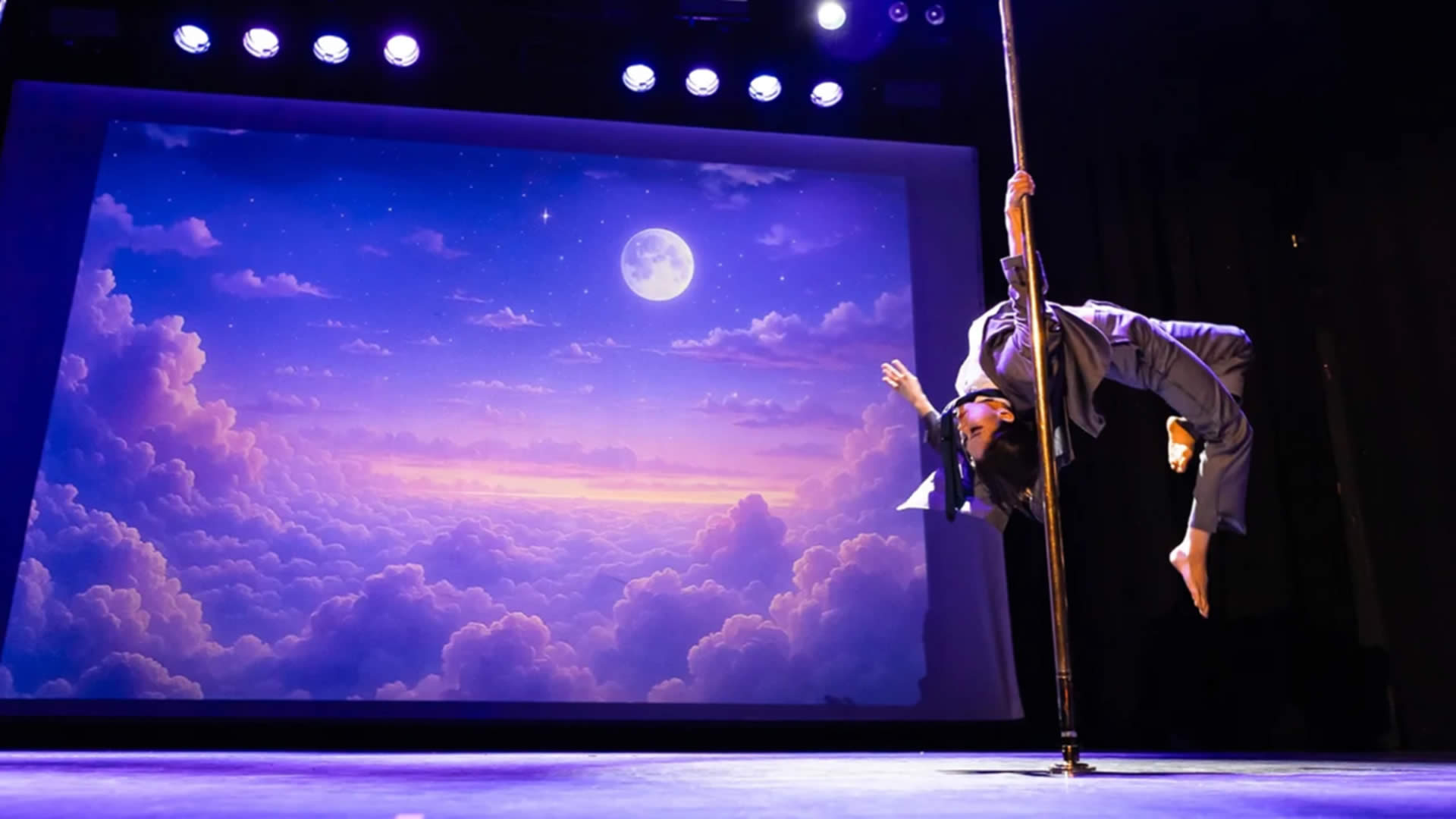
Pole Theatre 2026 Changes The Stage
The unusual thing about a pole competition is that the equipment is fixed while almost everything else is in motion.
The pole does not move. The performer does.
From the floor, that distinction can be easy to underestimate. A competitor may appear to simply climb, spin or suspend themselves, but each movement depends on a combination of grip, momentum, flexibility, muscular endurance and spatial awareness. The body becomes both the instrument and the choreography.
Pole Theatre places another layer over that physical foundation. Its competitions are structured around performance and storytelling, rather than treating technical movement as an end in itself. The result is closer in spirit to a theatrical production than a conventional demonstration of athletic ability.
The Sydney event reflects that approach. The opening professional division gives local performers their own stage before the international competition follows, allowing the evening to move from the city's established pole community towards a broader global field.
The programme's structure also reflects how the discipline has developed. Pole Theatre recognises amateur, semi-professional and professional levels, although the Sydney 2026 competition is being presented as a professional division only. Pole Theatre World will then bring semi-professional and professional competitors together for the international component.
Where Dance Meets Athletic Discipline
The language of dance can sometimes obscure just how demanding pole is physically.
A dancer works with the floor. A pole performer works against gravity.
That changes the geometry of movement. A simple-looking transition can require considerable strength through the shoulders, back, abdomen and legs. Holding a position several metres above the stage demands not only power but confidence in a body that must remain controlled while suspended.
Yet raw strength alone does not explain why the performances belong in a theatre.
The audience sees the finished movement, not the repetitions behind it. The falls that did not happen. The bruises, conditioning and rehearsals. The small corrections required to make a sequence appear effortless.
This is one of the quiet tensions at the heart of Pole Theatre 2026. The competitors are demonstrating physical capabilities that are difficult to acquire while simultaneously trying to make those capabilities disappear into performance.
A successful piece does not necessarily announce how difficult it is.
Instead, the movement may appear to float.
The Story Inside The Movement
Pole Theatre's theatrical character comes from the idea that movement can carry narrative.
That opens the door to very different kinds of performance. A routine can suggest a character, a relationship, a conflict or an emotional transformation without relying on spoken dialogue. Music, costume, gesture and choreography become part of the same vocabulary.
The pole itself can change meaning according to how it is used.
It can be a vertical line through the stage. It can become a partner, an obstacle or a point of escape. It can frame the performer or disappear entirely as the movement takes over.
This makes the event particularly suited to a theatre such as the Factory, where audiences are accustomed to performances that resist neat categorisation.
The Factory Theatre is one of Marrickville's long-established live entertainment venues, presenting music, comedy, theatre, cabaret and other performance forms across its programme. Its setting on Victoria Road adds to the sense that this is not an event separated from the city but part of the Inner West's broader culture of independent performance.
Pole Theatre 2026 Comes To Marrickville
By October, Marrickville will be moving into the warmer stretch of Sydney's year.
The afternoon light will linger longer along Victoria Road, while the streets around the Factory begin their familiar transition from daytime traffic to evening activity. On Sundays, the Inner West can feel slightly less hurried. Cafes wind down, restaurants prepare for dinner and people move between the area's parks, shops, studios and venues.
Inside the Factory Theatre, the atmosphere will be different.
The venue's performance space gives the competition a concentrated setting. Rather than watching from the distant seats of a large arena, the audience will remain close to the stage and the physical detail of the performances.
That proximity matters with a discipline like pole.
A turn is not merely a shape in space when viewed from nearby. There is the sound of a landing, the change of breath between movements, the grip of a hand and the moment in which a performer commits their weight to a single point of contact.
These details are easy to lose in a large-scale spectacle. In a theatre environment, they become part of the experience.
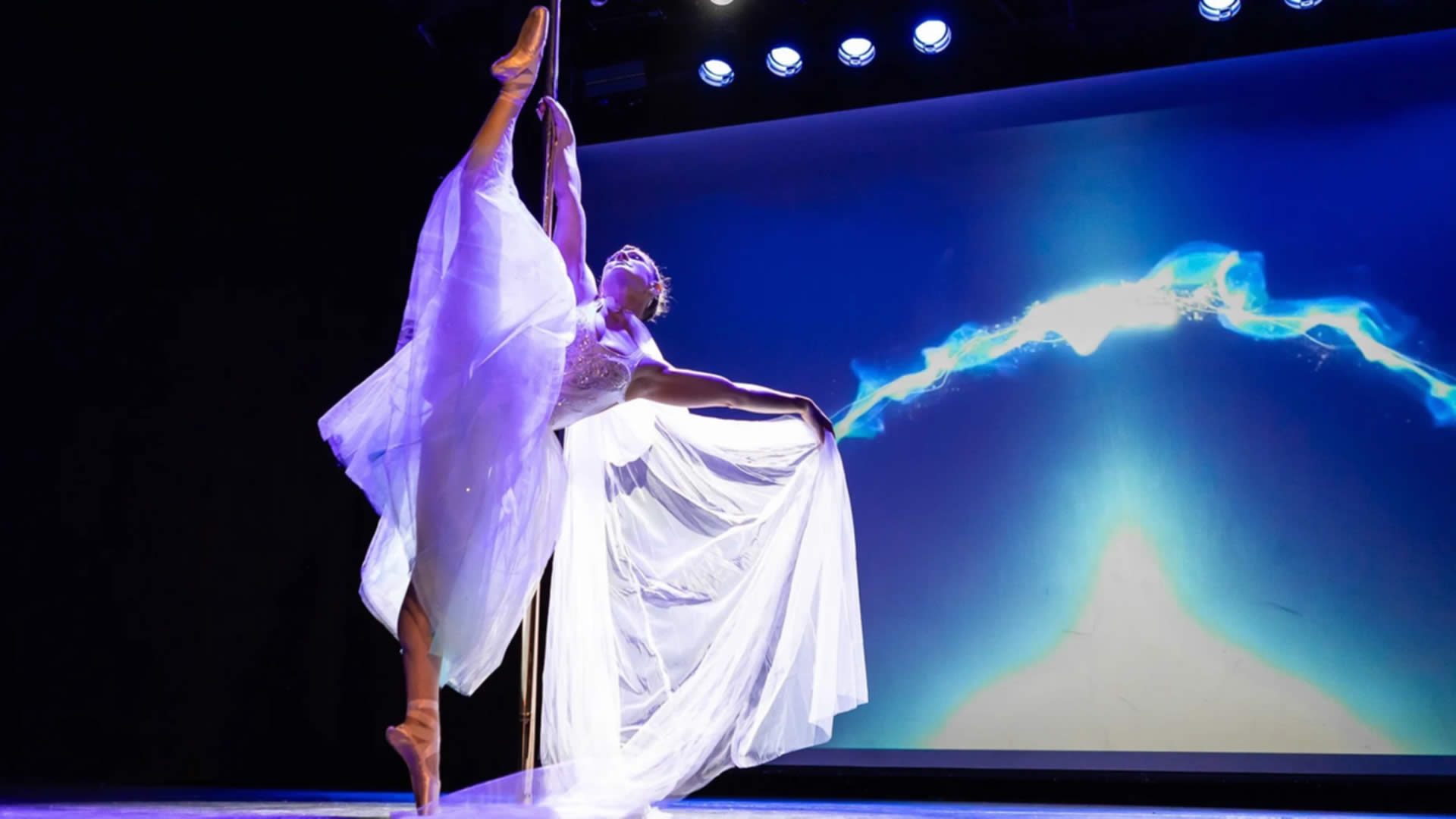
A Sydney Scene With An International Reach
Although the event has an international dimension, its starting point is distinctly local.
Pole Theatre Sydney's professional division places Sydney performers at the beginning of the evening before Pole Theatre World takes over. The combination creates a bridge between the city's own community and competitors arriving from elsewhere.
That connection is characteristic of the way Sydney's performance culture often works.
The city is large enough to attract international artists and competitions, but many of its most interesting cultural experiences still grow from specialist communities that rehearse quietly in studios scattered across the suburbs.
Pole is one of those communities.
Studios are places of training, social connection and experimentation. They are where beginners learn their first climb and experienced performers refine sequences repeatedly until movement becomes instinctive. By the time a performer reaches a professional stage, the audience sees only the polished surface of a much longer process.
Pole Theatre 2026 brings that process into public view.
For those already familiar with the discipline, the event offers a meeting point for a community that extends well beyond Sydney. For newcomers, it provides an introduction to a performance form in which athleticism and theatrical expression are deliberately intertwined.
The International Competition
The arrival of Pole Theatre World gives the evening a wider dimension.
According to the event organisers, the combined 2026 programme is intended to bring Pole Theatre Sydney and Pole Theatre World together for the first time in this format, placing Sydney professional finalists alongside international competitors on the same stage.
The emphasis on international competition also changes the atmosphere.
Competitors are no longer performing solely within the context of their local scene. Their work sits alongside different interpretations of the same discipline, shaped by different training environments, performance traditions and creative influences.
That variety is part of what makes competition interesting without reducing the evening to a simple question of who wins.
Each performer brings a different understanding of what pole can communicate.
Some may emphasise precision. Others may lean towards theatrical character, musicality, flexibility or dramatic movement. The common thread is the requirement to make a physically demanding discipline readable as performance.
The audience becomes part of that translation.
They are not simply watching bodies execute difficult tricks. They are watching performers construct meaning from movement.
Beyond The Stereotypes
For much of its public history, pole has been understood through a narrow set of images.
Theatre competitions such as Pole Theatre have helped broaden that conversation by placing the discipline within a context shared by dance, circus, theatre and competitive sport.
The shift is visible in the vocabulary used around the event itself: storytelling, artistry, athleticism and performance sit alongside one another.
None of those descriptions cancels out the others.
The physical challenge remains. So does the theatrical element.
That combination makes pole difficult to classify neatly, which may be precisely why it works so naturally within contemporary performance spaces.
For Sydney audiences, Pole Theatre 2026 offers a chance to encounter that intersection without needing to approach the discipline through assumptions formed outside the theatre.
The performers will simply have the stage.
An Evening Built Around Movement
As the event approaches, there is something appealing about the simplicity of its central image.
One stage.
One pole.
A performer steps forward and begins.
Everything else comes from what they can do with that space.
For an audience accustomed to increasingly elaborate concert productions and large-scale entertainment, there is a certain clarity in a performance whose essential architecture remains visible. There is nowhere for the movement to hide. Strength, timing and balance have to carry the moment.
The theatre changes the experience again.
The audience watches collectively. A successful sequence can create the particular silence that occurs when a room realises it is watching something difficult happen in real time. A landing can produce a shared release of breath. Music can change the mood of an entire performance within seconds.
Those are old theatrical sensations, even when the physical language is contemporary.
What Pole Theatre 2026 Leaves Behind
By the end of the evening, the poles will still stand where they were placed.
The stage will be cleared. Costumes will be packed away. Performers will leave the Factory Theatre and return to the streets of Marrickville, carrying the memory of what happened on stage and, perhaps, the knowledge of movements that worked differently under competition conditions.
For the audience, the lasting impression may be less about individual tricks than about the transformation of the stage itself.
A familiar theatre becomes a vertical landscape.
The body becomes choreography.
A piece of apparatus becomes a storytelling device.
And a discipline once understood through a limited set of associations reveals a broader vocabulary of physical expression.
That is perhaps the most interesting thing about Pole Theatre 2026. It does not ask audiences to choose between sport and performance, strength and artistry, competition and theatre.
For one October evening in Marrickville, all of those things occupy the same stage.
Event Details
Pole Theatre 2026
Date: Sunday 11 October 2026
Doors: 4.30pm
Venue: The Factory Theatre
Address: 105 Victoria Road, Marrickville NSW 2204
Admission: General Admission Seated, 18+
Listed ticket price: $70
Programme: Pole Theatre Sydney Professional Division followed by Pole Theatre World Semi-Pro and Pro competition
Official event information: Factory Theatre – Pole Theatre 2026
Pole Theatre information: Pole Theatre Sydney
The event details and programme have been confirmed against the Factory Theatre and Pole Theatre Sydney listings.