
Sophocles' Electra arrives in Sydney as a dark, modern drama, bringing an ancient story of grief, justice and revenge to Palace Norton Street.
There are stories that seem to belong to a particular age, preserved in marble, translated in classrooms and repeated in theatres for centuries. Then there are stories that keep finding their way back because something in them remains unresolved.
Sophocles' Electra belongs firmly to the second category.
On Sunday 25 October, Sydney audiences will encounter a contemporary adaptation of one of ancient Greek theatre's most enduring tragedies as part of the 2026 Greek Film Festival. Presented at Palace Norton Street in Leichhardt, the production brings the story of Electra into a modern indoor setting, where the familiar architecture of Greek tragedy is recast through noir imagery and what its creators describe as a dark cabaret world. The screening runs for 100 minutes, is performed in Greek with English subtitles and carries an MA15+ classification.
Directed by Dimitris Tarlow, the production first premiered at the ancient theatre of Epidaurus in 2025 before travelling through Greece and Cyprus. Its arrival in Sydney places an ancient Mediterranean story within a very different urban landscape, a few kilometres from the centre of Sydney and amid the restaurants, cafes and evening traffic of Norton Street.
It is a fitting setting for a work concerned with memory, family and the consequences of what refuses to disappear.
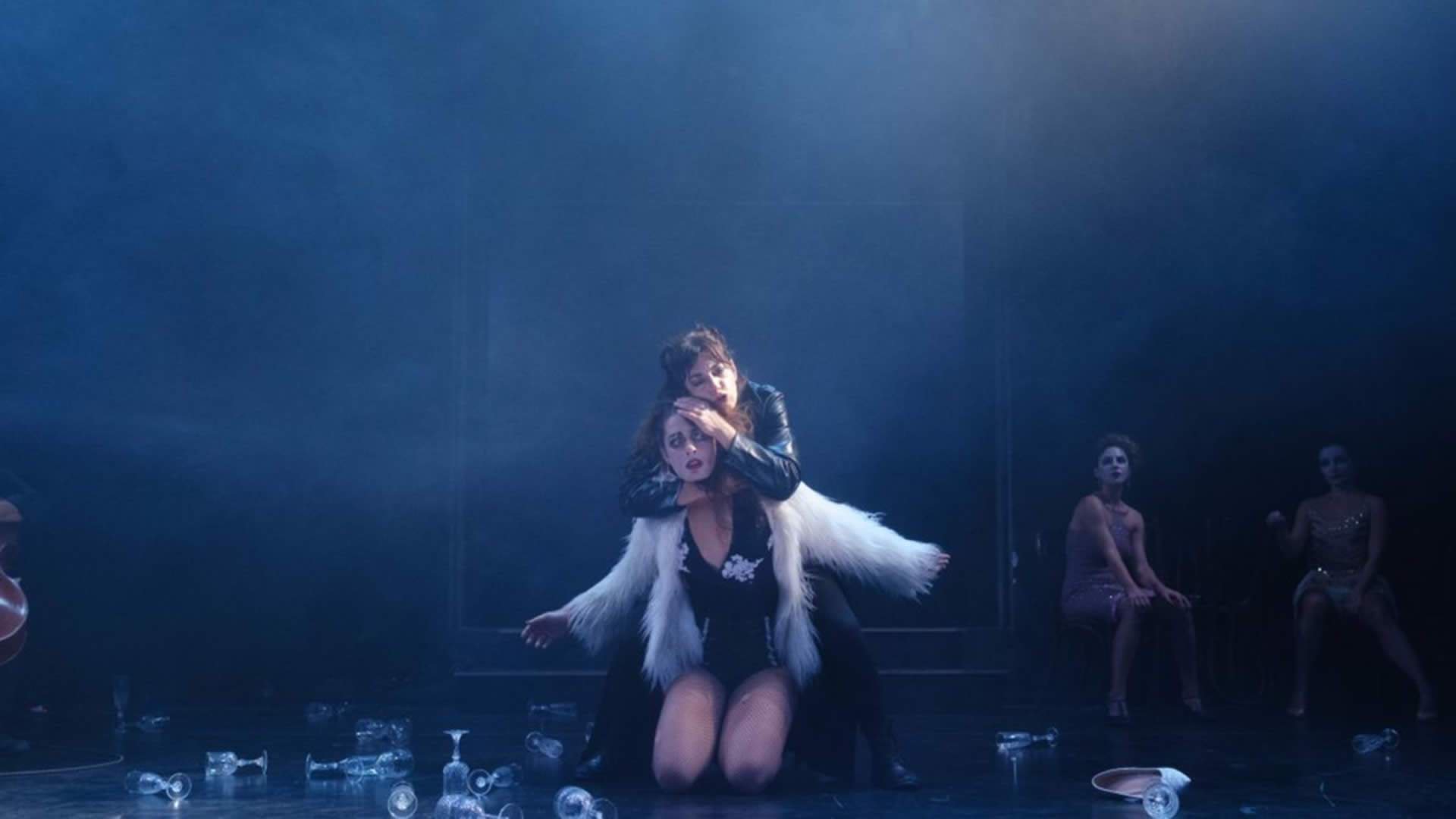
Electra And The Weight Of The Past
The world of Electra begins with a crime that has already happened.
Agamemnon, king of Mycenae and commander of the Greek forces at Troy, has been murdered by his wife Clytemnestra and her lover Aegisthus after returning from war. His daughter Electra remains behind, unable to accept either the killing or the life that follows it.
Years pass, but for Electra the past has never become past.
Her brother Orestes eventually returns, and together they confront the question at the centre of Sophocles' tragedy. What does justice mean when pursuing it requires another act of violence? At what point does revenge become indistinguishable from the crime it seeks to answer?
These questions give the story its enduring tension. Electra is not simply waiting for events to change. She lives inside the consequences of an earlier generation's actions, carrying grief as both memory and purpose.
The production's modern approach does not remove that ancient burden. Instead, it brings the emotional intensity closer to the language of contemporary cinema, using noir aesthetics and a dark cabaret atmosphere to create a world that feels intimate, shadowed and psychologically enclosed.
Sophocles' Electra In A Darker Light
There is something naturally cinematic about the story of Electra.
Its house is full of secrets. Its characters carry hidden motives. People enter and leave with information that changes the meaning of what has come before. Violence is rarely distant, and the atmosphere is shaped by the knowledge that something terrible has already happened and something worse may still be coming.
Tarlow's adaptation leans into that quality.
Rather than presenting the tragedy as a museum piece, the production places it within a noir-inspired visual language. The result is described as a dark cabaret, a setting where theatricality and unease can exist alongside one another. The ancient chorus, family conflict and questions of fate remain at the heart of the story, but the presentation moves away from the expectation of a traditional classical staging.
That shift matters because Electra has always been a story about people trapped within roles imposed by history. The modern setting makes those pressures feel less remote.
Electra is a daughter, a mourner and a member of a cursed royal family. Yet she is also someone who refuses to accept silence. Her persistence becomes its own form of resistance.
A Story Built Around Resistance
The word justice carries considerable weight in Electra.
For the characters, justice is not an abstract principle. It is personal. It has a face, a family name and a body lying somewhere in the past. Electra's demand for retribution grows from her conviction that Agamemnon's murder cannot simply be absorbed into ordinary life.
But Sophocles complicates that conviction.
The play does not offer an easy division between right and wrong. Electra's desire for justice carries the possibility of further destruction. Orestes' return offers the means of revenge, but also draws the siblings deeper into the cycle of violence that has already consumed their family.
This is where the tragedy remains surprisingly close to the modern world.
Families still inherit unresolved histories. Grief can become identity. Anger can be handed from one generation to another. The desire to correct an old wrong can itself create a new one.
The production's focus on Electra as a voice of resistance therefore gives the character a contemporary dimension without needing to modernise the underlying story. She remains a figure from a mythic past, but her refusal to accept the circumstances around her is immediately recognisable.
From Epidaurus To Sydney
The journey of this Electra begins in one of the most significant theatrical landscapes in the world.
The production premiered at Epidaurus in 2025, an ancient Greek theatre renowned for its connection to classical performance. From there it travelled through Greece and Cyprus before being adapted for indoor presentation.
That movement from an open-air ancient theatre to a Sydney cinema creates an interesting cultural passage.
Epidaurus carries the physical memory of classical theatre. Its stone seating rises into the landscape, with the surrounding hills forming part of the experience. Palace Norton Street is something altogether different. It sits on a busy inner-western street, surrounded by contemporary Sydney and the layered Greek-Australian life that has long been part of Leichhardt.
The change in setting does not diminish the connection between the two places. If anything, it emphasises how Greek stories have travelled.
Sydney's Greek community has helped make the city's inner west one of the most recognisable centres of Greek-Australian culture. Norton Street, with its restaurants, bakeries, cafes and community institutions, provides a natural context for a Greek-language production arriving as part of the Greek Film Festival.
Here, Electra does not arrive as a relic from another civilisation. It arrives as part of an ongoing cultural conversation.
The Greek Film Festival Setting
The 2026 Greek Film Festival runs across Sydney cinemas, bringing contemporary Greek cinema, older works and culturally connected stories to audiences across the city. Palace Norton Street is one of its principal Sydney venues, located at 99 Norton Street in Leichhardt.
The cinema itself has a long association with international and art-house cinema, as well as film festivals and special events. Palace describes the venue as an alternative to mainstream multiplexes, with a programme that includes international and local films, festivals and other specialist screenings.
For an audience arriving on a Sunday evening, the surroundings offer a useful transition into the film.
Norton Street is not a replica of Greece, nor does it need to be. Its significance lies in the way Greek culture has settled into Sydney's everyday life. A film in Greek, followed perhaps by dinner nearby, can become part of an ordinary Sydney evening while carrying an older cultural history into the room.
That is one of the quieter strengths of a festival such as this. Culture does not have to be transported intact from one place to another. It changes as it travels.
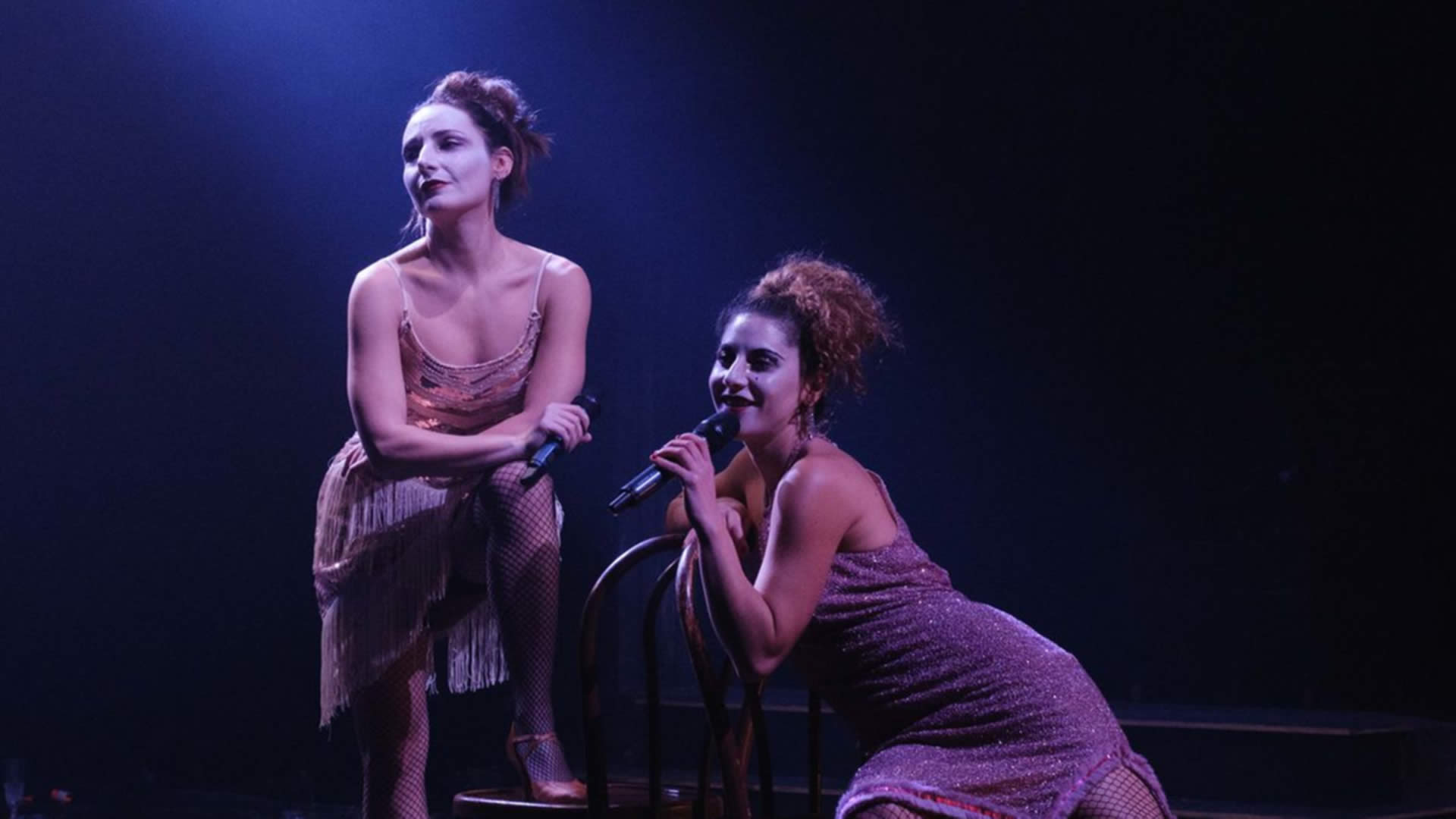
The People Behind The Production
At the centre of the production is Loukia Michalopoulou as Electra, with Aglaia Pappa, Konstantinos Avarikiotis, Konstantinos Zografos, Dimitris Tarlow, Grigoria Metheniti and Periklis Siountas also appearing in the cast. Tarlow directs the production.
Michalopoulou's presence anchors a story that depends heavily on the emotional endurance of its central character. Electra spends much of the tragedy confronting absence, waiting and the consequences of a murder that has transformed her household.
That waiting is important.
Unlike stories driven entirely by action, Electra is a tragedy of anticipation. The characters know that something is coming. The audience knows it too. Much of the tension comes from the space between knowledge and action.
The dark cabaret approach provides another way of exploring that space. Music, performance and stylised atmosphere can make the psychological dimensions of the story more immediate, allowing the production to sit somewhere between theatre, cinema and musical drama. The festival classifies the work as both drama and musical.
What Remains When The Story Ends
Ancient tragedies rarely provide the comfort of a clean ending.
Even when revenge has been carried out, the damage remains. A dead person does not return. A family cannot simply be restored. Justice, once pursued through violence, leaves its own marks.
That unresolved quality is part of why Electra continues to be performed and reinterpreted.
The story asks what people do with grief when there is nowhere obvious to put it. It asks whether resistance can remain morally clear when the world around it has become corrupted. And it asks whether ending a cycle of violence is possible when every act of violence carries the memory of the one before it.
In Sydney, those questions will be encountered not beneath the open sky of Epidaurus but inside a cinema on Norton Street, among an audience gathered for one evening of the Greek Film Festival.
Outside, Leichhardt will continue on as it always does. Cars will move along Norton Street. Restaurants will fill. Conversations will spill onto footpaths. The evening will gradually settle into the ordinary rhythm of the Inner West.
Inside the cinema, however, an ancient household will remain suspended in its own darkness.
Electra will still be waiting.
And for a little while, the distance between ancient Greece and contemporary Sydney will feel considerably smaller.
Event Details
Sophocles' Electra screens on Sunday 25 October 2026 at 7.00pm at Palace Norton Street, 99 Norton Street, Leichhardt NSW 2040. The film runs for 100 minutes, is rated MA15+ and is presented in Greek with English subtitles. It forms part of the 2026 Greek Film Festival Sydney programme.
Official event information: Greek Film Festival Sydney – Electra
Venue information: Palace Norton Street Cinema
Director: Dimitris Tarlow
Cast: Loukia Michalopoulou, Aglaia Pappa, Konstantinos Avarikiotis, Konstantinos Zografos, Dimitris Tarlow, Grigoria Metheniti and Periklis Siountas
Country: Greece
Genre: Drama, Musical
Classification: MA15+
Running Time: 100 minutes
Language: Greek with English subtitles