
A Christmas classic returns to the Sydney Opera House from 28 November to 16 December 2026, bringing Tchaikovsky’s music, Peter Wright’s choreography and a world of snow, soldiers and sweets to the Joan Sutherland Theatre.
By late November, Sydney has begun its gradual turn towards summer. The jacarandas are fading, the evenings are stretching out and the city is starting to feel the familiar pull of Christmas. Along the harbour, tourists and locals mingle around Circular Quay, ferries cross the water beneath the sails of the Opera House, and the streets take on the restless energy that arrives with the end of the year.
Inside the Joan Sutherland Theatre, another kind of season is beginning.
The Australian Ballet returns to Sydney with The Nutcracker from 28 November to 16 December 2026, bringing one of the world's most recognisable ballets into the heart of the city. Sir Peter Wright's production remains faithful to the 19th-century tradition while giving the familiar story a richly detailed stage world of its own.
For Sydney audiences, The Nutcracker has become part of the rhythm of the festive season. It is a story about Christmas, but also about memory, imagination and the strange intensity of childhood, when a decorated room, a toy soldier or the sound of footsteps outside a bedroom door can seem to contain an entire world.
A Christmas Story Told Through Dance
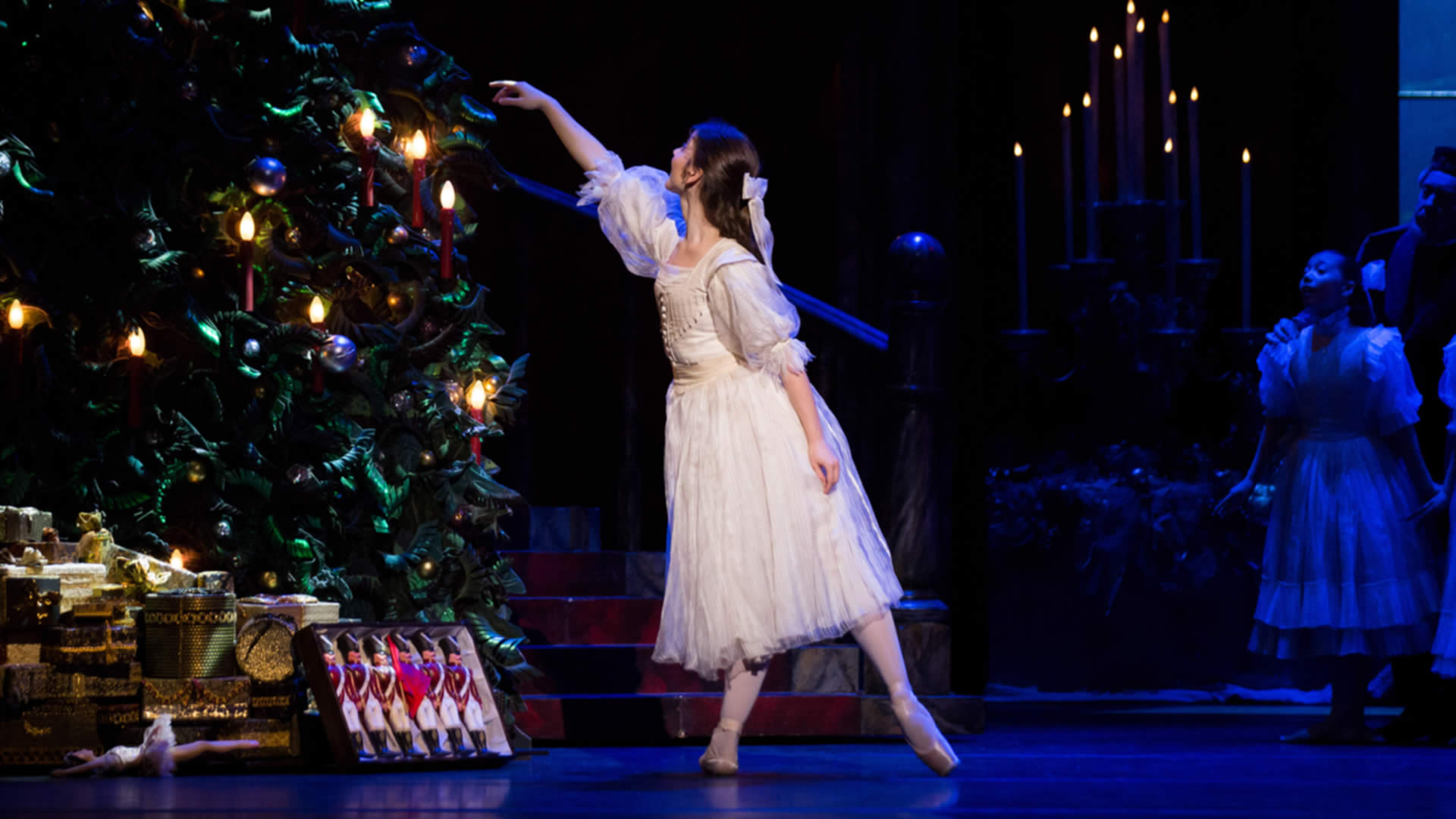
The Nutcracker begins on Christmas Eve, with Clara at the centre of a family celebration. What initially appears to be a conventional festive gathering gradually slips into something more mysterious.
A nutcracker doll becomes more than a toy. The Christmas tree seems to grow beyond ordinary proportions. Soldiers march, mice appear, and the boundaries between the familiar household and Clara's imagination begin to dissolve.
That movement from the ordinary to the fantastical is one reason The Nutcracker has endured for generations. It does not require an audience to know ballet. Its visual language is immediate, even before Tchaikovsky's score begins to work its way into the memory.
There is a family home, a Christmas tree, gifts and dancing. Then there is a battle, a transformation and a journey into a world of sweets and snow.
The story's simplicity leaves room for the stage itself to carry much of the meaning.
The Nutcracker And The World Of Christmas
In Peter Wright's production, designer John F. Macfarlane creates a theatrical Christmas world filled with details that reward close attention. There are crackling fires, bandbox soldiers, whirling snowflakes and a Christmas tree that grows until it brushes the ceiling. The Sugar Plum Fairy appears in a distinctive candy-floss pink.
These images belong to the collective memory of the ballet almost as much as the music does.
Yet the appeal is not simply nostalgia. On stage, these familiar objects become part of the mechanics of ballet. A room has to transform. A child has to become the centre of an increasingly elaborate dream. Snow must appear to move through a theatrical space. Dancers have to make an imaginary kingdom feel physically present.
The result is a production where scenery and costume are not merely decoration. They establish the rules of Clara's world.
That matters particularly in Sydney, where the surrounding city provides such a strong contrast. Outside the Opera House is a harbour, ferries, sandstone and the warm light of an Australian summer approaching. Inside, audiences can find themselves transported to a European Christmas landscape of winter darkness and falling snow.
The contrast is part of the experience.
Tchaikovsky's Music At The Opera House
The Nutcracker would be difficult to imagine without Tchaikovsky's score.
Composed in the final years of the 19th century, the music moves between intimacy and spectacle with remarkable ease. Some melodies have become so familiar that they seem to exist independently of the ballet itself. Others emerge quietly, accompanying the transformation of Clara's Christmas Eve into something less certain and more dreamlike.
For the Sydney season, the ballet is performed with the Opera Australia Orchestra.
Hearing the music live changes its scale.
From the audience, the sound is not simply a sequence of recognisable tunes. The orchestra provides the pulse beneath the dancers, marking changes in mood and giving the stage its sense of movement. A waltz can become expansive. A quiet passage can make the theatre feel unexpectedly still.
Tchaikovsky's music also allows the ballet to move between generations. Someone attending for the first time may recognise melodies without knowing their names, while returning audiences may associate them with earlier Christmases, family outings or childhood visits to the theatre.
That mixture of recognition and discovery is central to the enduring place of The Nutcracker in the festive calendar.
A Sydney Tradition With A European Dream
There is something particularly striking about watching a winter ballet in Sydney.
The Nutcracker is filled with snow, heavy costumes and the visual language of a European Christmas. Yet the audience arrives through the warm air of Sydney Harbour, perhaps after crossing the city by train or ferry, and leaves into a summer evening.
The Opera House provides a natural meeting point between those two worlds.
The Joan Sutherland Theatre sits within one of the city's most recognisable cultural buildings, with the harbour immediately beyond it. Before the performance, the Opera House foyers offer views and spaces to pause, while Circular Quay is only a short walk away. The venue advises that foyer doors for Joan Sutherland Theatre performances generally open 90 minutes before the performance, with theatre doors opening 30 minutes beforehand.
That makes an evening performance of The Nutcracker easy to fold into a broader Sydney outing. A walk around the harbour can become part of the evening, followed by dinner or a drink nearby after the curtain falls.
For families, the matinee performances offer another rhythm. The 1.30pm sessions allow audiences to experience the ballet during daylight hours, when the city outside remains bright and active.
Either way, the transition from Sydney's waterfront to Clara's imagined winter world happens remarkably quickly once the lights go down.
The Nutcracker For A New Generation
The familiarity of The Nutcracker can sometimes obscure how unusual its central idea remains.
Clara is a child whose imagination transforms the most ordinary objects around her. A toy becomes a companion. A family celebration becomes an adventure. A decorated tree becomes something enormous and almost otherworldly.
For younger audiences, that transformation can be experienced quite literally. The stage is full of things that appear to change before their eyes.
For adults, there is another layer. The story can evoke the particular intensity of childhood memory, when Christmas seems to arrive with its own atmosphere and the smallest details become permanent.
This is perhaps why The Nutcracker continues to occupy such a particular place in the cultural calendar. It is not solely a children's story, nor is it simply a showcase for classical ballet. It sits somewhere between the two, allowing different generations to watch the same scenes through different memories.
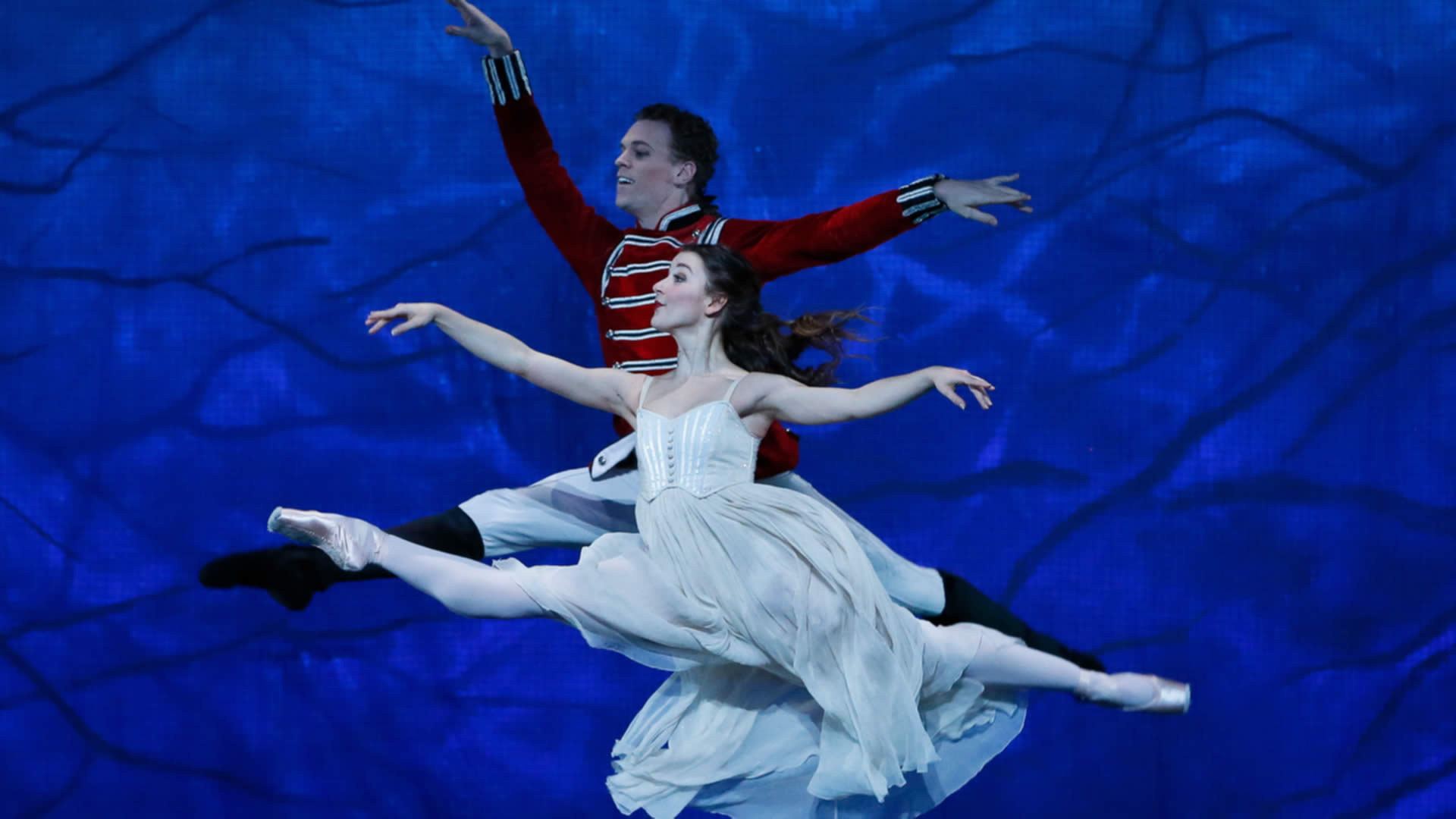
The Australian Ballet's production preserves that balance through the combination of Wright's choreography, Macfarlane's designs and Tchaikovsky's score. The choreography is credited to Peter Wright, Lev Ivanov and Vincent Redmon, with additional choreography courtesy of Birmingham Royal Ballet. Lighting is designed by David Finn.
An Evening At The Sydney Opera House
A performance of The Nutcracker is also an opportunity to experience the Opera House as a theatre rather than simply as a landmark.
For visitors, the building is often first encountered from the outside, photographed against the harbour and recognised as one of the defining images of Sydney. Once inside, its scale changes. The experience becomes more intimate, moving from the broad public spaces of the building towards the theatre itself.
The Joan Sutherland Theatre is located on the northern side of the Opera House foyer. The venue is accessible by ferry, train, light rail, bus, car, bicycle and on foot, with Circular Quay around a seven to ten-minute walk away.
For a summer evening, arriving early can be part of the pleasure. The harbour provides a natural prelude to a story that begins on a Christmas Eve, while the gradual shift from the bright exterior of Sydney to the darker interior of the theatre mirrors the movement from reality into Clara's imagination.
The ballet itself runs for approximately two hours and five minutes, including a 25-minute interval, although the duration is subject to change.
There are also practical considerations for families. Children aged 15 and under must be accompanied, while accessibility services and seating are available through the Opera House. The production includes theatrical haze, strobe and flash lighting, as well as a single gunshot during Act One.
The Nutcracker In Sydney This Christmas
The Sydney season begins on Saturday 28 November and continues through Wednesday 16 December, with evening and afternoon performances spread across the three weeks.
Performances include 7.30pm evening sessions, as well as selected 1.30pm and 6.30pm performances. The full schedule includes Saturday 28 November at 7.30pm, followed by performances on 30 November and 1 to 5 December, 7 to 12 December, and 14 to 16 December. Several dates have both afternoon and evening performances.
At the time of writing, the Opera House lists the Sydney performances as having limited availability on the supplied dates, so anyone planning to attend may want to check the official schedule before making arrangements.
Tickets are available through the Sydney Opera House and The Australian Ballet, which are the authorised agencies for the production.
Official The Nutcracker event page at Sydney Opera House
When The Snow Begins To Fall
There are many ways to mark the approach of Christmas in Sydney. There are markets, lights, carols, family gatherings and the annual movement towards beaches and long summer evenings.
The Nutcracker offers something different.
For a few hours, the calendar seems to turn itself backwards. Sydney's harbour gives way to falling snow. A summer city becomes the setting for a winter story. A theatre fills with the sound of an orchestra, and an audience watches a Christmas tree grow impossibly tall.
Then the curtain falls.
Outside, the harbour is still there, the night is still warm and Sydney carries on around the Opera House. But for a little while, Clara's Christmas has occupied the room, leaving behind the particular sensation that comes from seeing something familiar made strange again.
That may be the quiet strength of The Nutcracker. Each year it returns with the same story, the same music and many of the same images, yet the people watching it have changed.
And that is enough to make the journey into the snow feel new again.
Event Details
The Nutcracker
Dates: 28 November to 16 December 2026
Location: Joan Sutherland Theatre, Sydney Opera House, Bennelong Point, Sydney NSW 2000
Presented by: The Australian Ballet
Music: Piotr Ilyich Tchaikovsky
Choreography: Peter Wright, Lev Ivanov and Vincent Redmon
Additional choreography: Courtesy of Birmingham Royal Ballet
Costume and set design: John F. Macfarlane
Lighting design: David Finn
Orchestra: Opera Australia Orchestra
Duration: Approximately 2 hours and 5 minutes, including a 25-minute interval
Official information and tickets: Sydney Opera House – The Nutcracker