
Hair returns to the stage with music, protest and a vivid portrait of identity, community and change through one enduring musical.
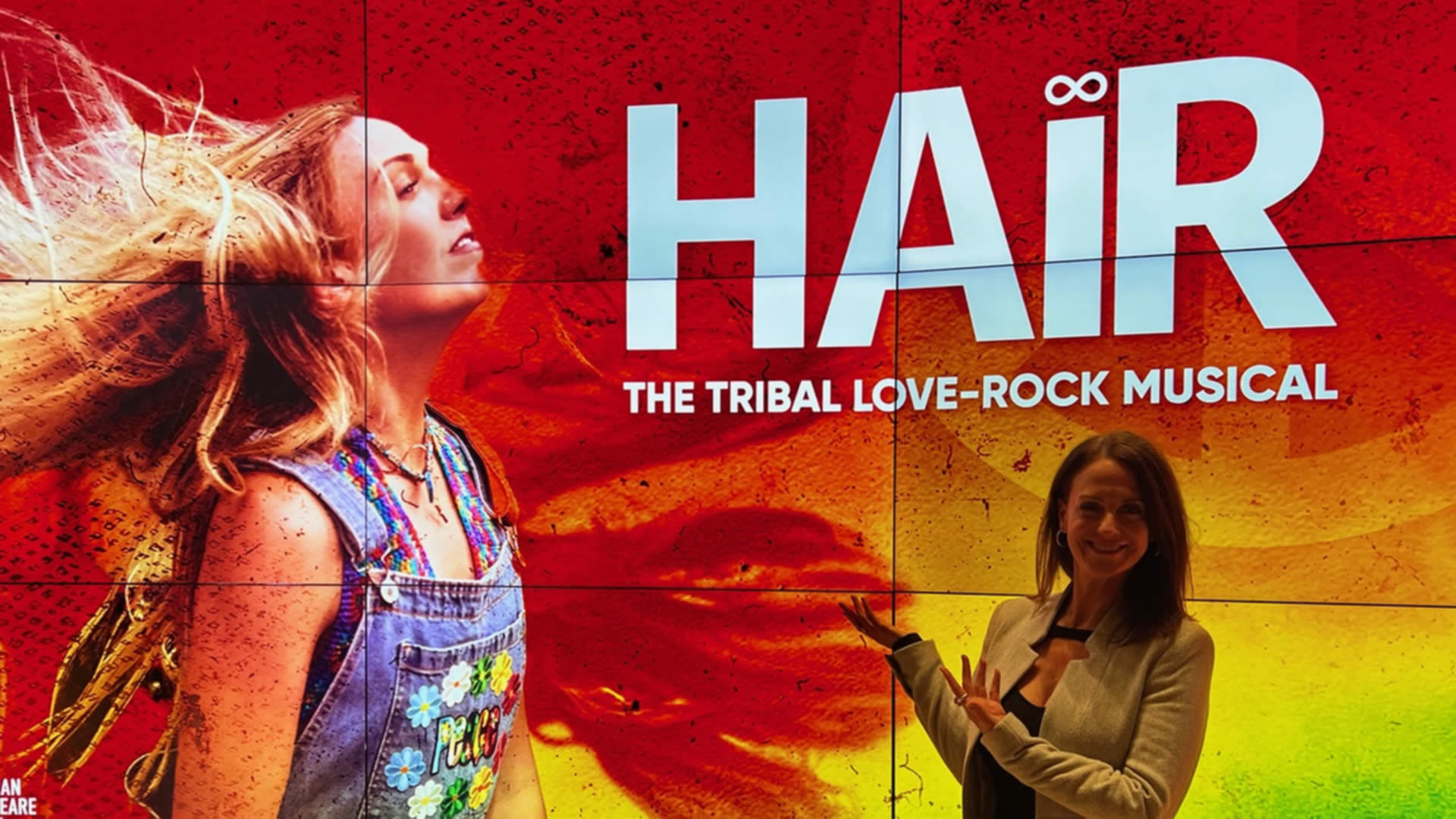
If the exuberance of opening night is anything to go by in terms of whether a show was going to be a hit, HAIR is already a winner. The dress code Flower Power saw many a Boomer decked out in flowers, flares and face paint with peace symbols, ready to dance and sing down memory lane, passionate for a time gone by that shaped decades to come. This was the generation that experienced the musical revolution that was HAIR, which challenged theatrical boundaries and social norms.
First appearing on stage in New York in 1968, it explored freedom of expression against conservatism, the backlash to mandatory drafting for the Vietnam War, drugs, sexuality, gender and ultimately identity, wrapped up in hippie counter-culture: a youth movement promoting artistic expression, alternative lifestyles and sustainability. An important era, HAIR continues to successfully summarise this movement in one big love-rock musical.
Story and Characters
Set in New York, it follows a group of young hippies known as ‘The Tribe’ who rebel against conservative society, trading it in for peace, freedom and love. It centres around a young man called Claude (Alex Cooper) who has been drafted into the Vietnam War, but who is deeply conflicted about defending his country and abiding by his conservative upbringing, or adhering to the anti-war ideals and free-spirited life of his friends, especially best mates Berger (Maxwell Simon); the charismatic anti-establishment leader of the Tribe, and Sheila (Elizabeth Brennan); a politically active student who is in love with Berger and a passionate activist.
Favourite characters throughout include Jeanie (Rosie Meader), a pregnant young woman from her dalliance with a drug addict, Hud (Tane Williams-Accra); outspoken about race and inequality, Apache (Linde Trescott), whose high-energy stunt performances are eye candy, and my favourite Iris (Maverick Newman); a terrific actor who also plays tribe member Leonard but whose role as Iris is particularly hilarious. The LGBTQ+ theme is wrapped up nicely in this character.
Music, Themes and Design
As themes such as peace vs war, community, sexual liberation and identity are explored, the hits roll out wonderfully by Paul Norton (Musical Supervisor), including songs about sodomy, black vs white, masturbation and my two favourites: ‘Let the Sunshine In’ and ‘The Age of Aquarius’.
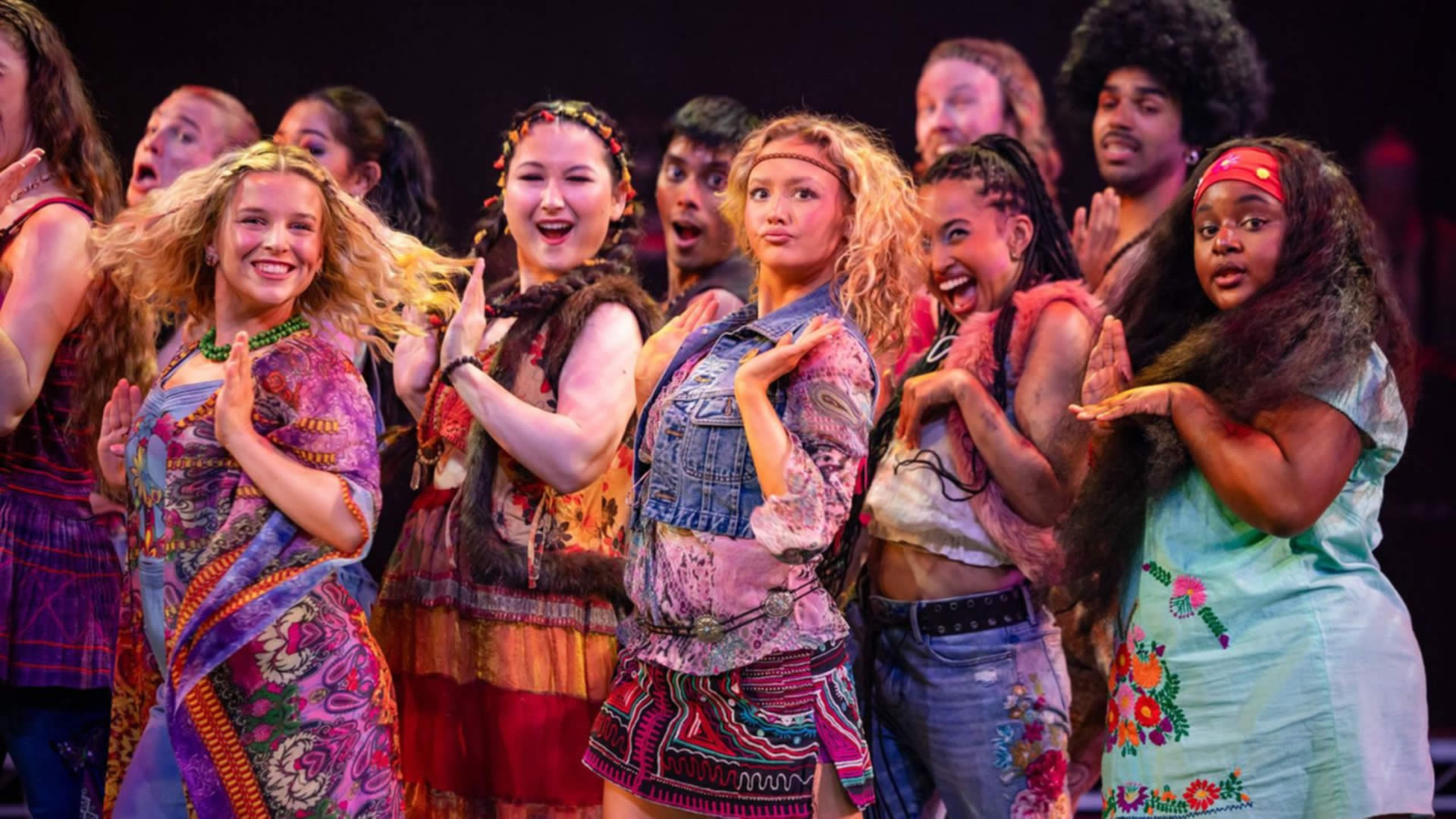
The circular video projection (Zac Kruse), centre stage, featuring continual live footage of the era and kaleidoscopic imagery throughout, is impressive and informative, adding to the circular shapes of the choreography (Sue-Ellen Shoot), fusing beautifully with the kaleidoscopic, colourful costumes of the era (Karla Erenbots). I later learn the circular shapes throughout are a mirror to the way humans gather together in community, in circles, telling stories and joining forces for the good of all.
Themes and Interpretation
While the story structure appears loose and hard to follow, I wondered if this was purposeful, as it was an era where there was no real linear structure; just one big ‘love in’. What was confronting in the story was the choice Claude is forced to make. Does he stay with his free, peace-loving Tribe or adhere to his cultural upbringing and go to war? You will have to see the show to find out. Just like the ending to Act One with its shock nudity stuns, so too does the end of the show; both challenging and thought-provoking; a wonderful dichotomy.
A poignant line that hit home, attributing to the theme of irony, was by a tribe member: ‘Here we are seeing young men killed and dying in war, while also being visited by movie stars singing for them’.
Message and Final Thoughts
While not claiming to be a tight production in terms of narrative structure, it does inform and educate the audience. Every show even honours organisations who continue to educate on the issues at the core of Hair: The Vietnam Veterans Museum and the International Campaign to Abolish Nuclear Weapons (ICAN). Also impressive is the show literally adhering to themes of sustainability: recycled and repurposed materials were used for sets (Kaspa), props and costumes, from second-hand stores, marketplaces or past productions.
Director Glenn Elston OAM (Co-producer Hair in 1992) says: “Our hope is that, through this show, audiences feel inspired not just to reflect but to act. May it challenge you, move you, and remind you of the power of gathering together to ask hard questions.”
If you want to learn, spread love and peace, and fly the freak show flag, this is the show to see!
For more information check out: www.hairthemusical.com.au
Reviewed by: Georgia Cassimatis